
India-Myanmar bilateral trade may rise significantly once rupee trade settlement mechanism is established: EEPC.
Bilateral trade between India and Myanmar could rise significantly from current level of $1.76 billion once rupee trade settlement mechanism is established, said P K Shah, Chairman of the Committee on Foreign Trade Policy & WTO and Past Chairman, EEPC India at an interactive session with U Aung Naing Oo, Union Minister, Ministry of Commerce, The Republic of the Union of Myanmar and his Ministerial Delegation in Kolkata today.
'EEPC India has taken up the issue with the Government of India and we are of the opinion that once this rupee trade arrangement is established, competitiveness of both India and Myanmar would be enhanced and bilateral trade and investments will boost to a significant level as this process will be less complicated in absence of any foreign currency,' said Shah.
The RBI has already allowed payments to be received in Indian Rupees and the Myanmar government intends to initiate the currency convertibility for the Indian rupee for trade. Under this settlement mechanism, Myanmar will accept payment for all its exports to India in Indian rupees and the same export earnings can be used to make payments for goods and services imported from India.
RBI has appointed and authorised Punjab National Bank of India to open a special Rupee Vostro Account (SRVA) for foreign trade with Myanmar. PNB has already approached CB bank and UAB bank of Myanmar to open a SRVA account for trade arrangement in Indian Rupee and MM Kyats under the special arrangement.
Once Indian Rupee Trade arrangement is established, it will boost large value trade from India and Myanmar as this will not involve any foreign currency. All the transactions will be settled with both the local currencies of respective countries.
U Aung Naing Oo & Thant Sin Lwin, Director General of Directorate of Investment and Company Administration, Ministry of Investment and Foreign Economic Relations, The Republic of the Union of Myanmar, appreciated the decision of Government of India and Reserve Bank of India for introducing the system of International Trade Settlement in Indian Rupees.
India is the 11th largest foreign investor in Myanmar with a total investment of $1.736 billion between April 2000 and March 2023. Total merchandise trade between India and Myanmar has reached $1.76 billion in 2022-23 on the back of rising imports from Myanmar. India’s exports to Myanmar however witnessed a decline in both merchandise as well as engineering in the last few years.
Engineering trade more than halved in 2022-23 in comparison to 2019-20 due to drop in exports of Iron and Steel, Auto components/Parts, Industrial Machinery, and Electric Machinery and Equipment among others.
EEPC India appealed to U Aung Naing Oo to expedite the trade settlement in local currencies.
Source: economictimes.indiatimes.com
Food regulator FSSAI proposes new category for 'low alcohol' beverages.
In a significant development, the food regulator, the Food Safety and Standards Authority of India (FSSAI), has created a category of 'Ready to Drink' or low-alcohol beverages, having an alcohol content of 0.5-8 per cent.
It has also laid down the standards, composition, and definition of such beverages as well as the safety parameters to be adopted.
Sources in the regulator said since 2018, the food safety standards for alcoholic beverages had existed but recently standards for low alcoholic and ready to drink products, including their definition and safety parameters, had been specified additionally.
'The said standard is an amendment in regulation and is not changing other existing definitions,' the FSSAI notification said.
The gazette notification, issued a few days ago, said such low alcoholic beverages would be made from spirits, a mixture of spirits, or any alcoholic beverage other than wine and beer as base. They can have natural, nature-identical or artificial flavours, and/or food additives permitted under the regulations concerned. Mixing can be with fruit or vegetable juice with or without added sugar/salt and with or without carbonation.
Welcoming the move, industry players said categorising low-alcohol beverages and ready-to-drink products made things clear for everyone in the value chain.
It helps to get the category of ready-to-drink products identified and treated separately.
It could also give a fillip to the market and facilitate over-the-counter sales sometime in future.
That apart, the FSSAI in the same notification has laid down what should constitute 'country liquor' or 'Indian liquor' and the constituents that should go into its making.
The notification defined country liquor or Indian liquor as alcoholic beverages obtained from distilling fermentable carbohydrates of agricultural origin.
It further said the criterion for being designated 'plain country liquor' or 'plain Indian liquor' was that it should be made from alcoholic distillate obtained from fermented molasses, jiggery (gur), a mash of cereals, potatoes, cassava, fruits, juice or sap of coconut and palm trees, mahua flowers or any other carbohydrates of agricultural origin.
Blended country liquor or blended Indian liquor is a mixture of an alcoholic distillate, rectified spirit, or neutral spirit.
'Country liquor has always existed. The FSSAI notification gives some sort of definition to it,' an industry player said.
Source: business-standard.com

G20 Agriculture Ministers' Meeting in Hyderabad from June 15-17: Kishan Reddy.
The crucial G20 Agriculture Ministers' Meeting would be held in Hyderabad from June 15 to 17, Union Tourism Minister G Kishan Reddy said on Monday.
Talking to reporters here, he said three meetings of the agriculture working group were held earlier in Indore, Chandigarh and Varanasi. The final meeting is in Hyderabad. Besides India, 29 other countries will participate in the three-day event. G20 countries including Argentina, Australia, Brazil, China, Canada, South Africa, Indonesia, Russia, Saudi Arabia, Turkey, the United States and the United Kingdom would attend. The ministers of nine guest countries, including Bangladesh, Egypt, Mauritius, Oman, Nigeria, Spain and Vietnam would also participate.
'The agriculture ministers of 29 countries and high-level officers are going to participate in this meeting with Hyderabad as the venue. It will be held from 15th to 17th,' he said.
Besides the 29 countries, key persons from 10 international organisations would also participate in the meetings. The main agenda of the meeting includes food security, sustainable agriculture for nutritional food, agriculture development under the leadership of women, agriculture and biodiversity, and changes needed in agriculture sector to face climate change. The Union tourism minister said the G20 meeting of ministers on tourism would be held in Goa on June 19, 20, 21 and 22. He said that the third G20 tourism working group meeting was successfully held recently in Srinagar despite the threat of terror groups and objections raised by Pakistan and others. A declaration on tourism, named 'Goa roadmap' would be adopted at the G20 ministers' meeting, the minister said. Reddy, also minister for culture, said the final meeting of ministers on culture would be organised in Varanasi from July 24-26.
Source: timesofindia.indiatimes.com

India-EU work stream on CBAM, FDI, WTO to address trade, tech issues.
India and the EU have identified five areas including Carbon Border Adjustment Mechanism (CBAM) and foreign direct investment that would be discussed in their bilateral Trade and Technology Council.
Officials said that the two sides have established a work stream under the India-EU TTC wherein issues have been clubbed under five broad areas—market access, World Trade Organization, FDI, CBAM and global value chains. The work stream will address key issues in these areas.
'We have established a work stream under the TTC and issues have been clubbed under five broad areas to help address them in a focused manner,' said an official.
The TTC is a platform to address key trade, technology and security challenges of the two sides and its first meeting was held last month in Brussels. It is co-chaired on the Indian side by the ministers of external affairs, commerce and industry, and electronics and information technology.
On the EU side, the executive vice-presidents of the European Commission in charge of digital technology and trade co-chair it.
As per the official, one round of talks have happened on CBAM, which will kick in from October when domestic companies from seven carbon-intensive sectors including steel, cement, fertiliser, aluminium, and hydrocarbon products would have to seek certificates from the EU authorities to comply with the CBAM norms.
'Talks on CBAM are on with the EU,' the official said.
India has asked the EU to recognise its Carbon Credit Trading Scheme being finalised by the power ministry.
Though the EU has said that CBAM is a part of their climate action efforts, countries like India are of the view that it is a trade-related measure. India has told the WTO that carbon border measures are being selectively applied to 'trade-exposed industries' such as steel, aluminium, chemicals, plastics, polymers, chemicals and fertilisers, which reflects the underlying competitiveness concerns driving such measures.
Source: economictimes.indiatimes.com

J&K Department of Agriculture Production want GI Tag for another 18 products.
The J&K Department of Agriculture Production will apply for Geographical indications tag to 18 agricultural products from various regions of Jammu and Kashmir. Products that will be applied for this month are Ambri and Maharaji apples, Naak tang pears, Repora grapes, walnuts, red rice, shallots, Kashmiri long chilli, Lotus stem, water chestnut, Kashmiri haakh, Gushtaba, Tabakhmaaz, dried fish (Hogaad), Gurez Rajmash (kidney beans, pine nuts (Chilgoza), Phari (smoked fish) and Moth (Poonchi).
Additional Chief Secretary, J&K Government Atal Dulloo said that the department was taking proactive steps in increasing the production of indigenous crops as well as securing the identity of products that have a distinction from the region.
Source: freshplaza.com

India-UAE trade up 5.8% on-year in first 12 months of trade pact.
In the first twelve months of the India-UAE Comprehensive Economic Partnership Agreement (CEPA), bilateral non-oil trade reached $50.5 billion, up 5.8% on year.
The two sides have more than doubled their non-petroleum trade target to $100 billion by 2030 from the earlier anticipated $48 billion, commerce and industry minister Piyush Goyal said on Monday after the first meeting of the joint committee of India-UAE CEPA. He also said that India is hopeful of an early outcome on the Rupee-Dirham trade with the UAE.
In the first three months of the year, total bilateral trade reached $13.2 billion, 16.3% higher than the previous quarter.
'There can be little question that our deal is having the desired impact,' said UAE’s Minister of State for Foreign Trade, Thani bin Ahmed Al Zeyoudi.
In the first three months of the year, total bilateral trade reached $13.2 billion, 16.3% higher than the previous quarter.
'For context, these figures came amid a sharp decline in global trade in the third and fourth quarters in 2022, proving that we have created a real nexus of growth,' Al Zeyoudi said.
The re-exports from India rose 24.5% in the first quarter, which as per Al Zeyoudi,
demonstrates the UAE’s role as a gateway to the world and an important bridge between Indian exporters and the markets of Middle East, Europe and Africa.
The CEPA was implemented on May 1 last year.
'Significant decision has been taken to iron out issues that the businesses had faced…We have a mutually agreed (for a) target of $100 billion bilateral trade by 2030,' Goyal said.
Source: economictimes.indiatimes.com
CEA says country's GDP growth for year ending March 2023 was 7.2 per cent, surpassing expectations.
The Chief Economic Advisor to the Government of India, Dr V Anantha Nageswaran, on Monday said the real GDP growth for the year ending March 2023 was 7.2 per cent, which surpassed expectations, as the underlying momentum in the economy was quite strong. During an interaction with the Industry, organised by the Associated Chambers of Commerce and Industry of India (ASSOCHAM) here, Nageswaran explained the current state of the Indian economy and said the government was optimistic about its medium-term performance.
Addressing the gathering, he said while goods exports were on the weaker side in 2022-23 due to the war in Ukraine and oil price rise, services exports did very well for the country.
'We have a good story to share about the Indian economy. The real GDP growth for the year ending March 2023 was 7.2 per cent, surpassing expectations. The underlying momentum in the economy is quite strong. We expect the final number to be even higher than 7.2 per cent,' Nageswaran said.
He pointed out that the data shows that India's 4th quarter GDP of 6.1 per cent was actually much better than several other countries at this point.
Talking about the wholesale price index's deduction, he said it was not a drawback nor a drag on growth but 'it is actually going to lower input cost for our businesses as well'.
'The Wholesale price index is coming down because of the slowdown in oil prices and the slowdown in food prices and in fact it is now negative. So people think when the wholesale prices come down, it may lead to a slowdown in GDP growth. Yes. We are expecting 6.5 per cent GDP growth which is lower than last year's 7.2 per cent. But that is the trend growth that India will continue to achieve. In fact this number can be higher if the export sector also performs, but that is going to be a challenge,' he said.
The CEA acknowledged that merchandise export growth was something which needed continued efforts to maintain in order to keep our market share or gain the market share.
'That's where the industry has to invest in R&D, has to do better marketing etc and diversify our product range and focus on quality. It's going to be a hard grind for the rest of the decade because global growth is not going to be very strong in the rest of the decade but services sector growth is surprisingly doing well for us because many companies now rely on India not only for IT enabled services,' but others as well, he said.
Global companies rely on India even for accounting, risk management compliance, back office work and their dependence on India through global capability centres (GCC) have become much wider, he added.
He claimed that macroeconomic management in India has been prudent during pandemic when compared to other advanced nations.
'The overall macroeconomic management in India has been prudent and sensible, avoiding overstretching ourselves during the pandemic. This has contributed to our stable growth and inflation management,' he said.
Nageswaran said while the country has made significant strides, 'we must remain vigilant and continue our efforts' towards growth and development.
'While progress has been made, there is still work to be done,' he said.
He pointed out that there are nearly one lakh recognised Startups in India out of which over 43,000 are led by women.
Source: economictimes.indiatimes.com

CSIR-CFTRI demonstrates detection of adulterants in oils, spices, sweets, milk, honey.
CSIR-CFTRI, in an effort to ensure total food safety, demonstrated the detection of adulterants in edible oils, spice products, sweets, milk, honey and so on. This was through use of analytical instruments used by food safety laboratories such as EA-IRMS, LC-MS/MS, GC, HPLC, GC-MS/MS, ICP-AES.
The institute also houses the Food Safety and Protection department. Its dual focus is on food protection and infestation control. The other is on food safety and analytical quality control lab.
At a recently-concluded World Food Safety Day 2023 function, observed annually on June 7, this year’s theme was Food Standards Save Lives. In view of this, CSIR-Central Food Technological Research Institute, Mysuru, a constituent laboratory of Council of Scientific and Industrial Research, Ministry of Science and Technology, Government of India, celebrated the event on its campus for the benefit of students.
Here CSIR-CFTRI went on to create awareness among people on food safety, food-borne diseases such as diarrhoea to cancers and fatality due to unsafe food.
It was the World Health Organization (WHO) and the UN Food and Agriculture Organization (UN FAO), which worked together to declare June 7 as the food safety day. This was in a bid to highlight that food safety is a critical global concern as unsafe food can lead to food-borne illnesses, which can have severe health consequences. Each year, World Food Safety Day focuses on a specific theme to address different aspects of food safety.
Demonstration on food hygiene and microbial safety was also arranged. Also, posters on food regulation, food labelling and nutritional labelling, food addition & contaminants were also exhibited. More than 150 students from various colleges participated in the programme which included the students from St. Philomena’s college, JSS College, Jnanodaya PU College and so on from Mysore.
Dr. Navin Kumar Rastogi, Chief Scientist & Director-in Charge, CSIR-CFTRI, formally inaugurated the event and addressed the gathering on the importance and awareness on World Food Safety Day 2023, its significance and its benefits to the society.
Arrangements were made in the Department of Food Safety & Analytical Quality Control Laboratory of CSIR-CFTRI to celebrate the World Food Safety Day on June 7, 2023. Scientists, Technologists, Scholars and Research Students organised the demonstration on detection of adulterants in edible oils, spice products, sweets, milk, honey and so on.
Source: fnbnews.com
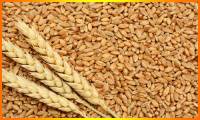
First in 15 years: Government puts stock limit on wheat.
The central government has imposed stock limits on wheat till March 31 next year to arrest the rising prices of the grain, said food secretary Sanjeev Chopra on Monday. This comes despite the government predicting — in the Third Advance Estimate — record wheat production of 112.74 mt. The last time a stock limit was imposed on wheat was in 2008. The price of the cereal has risen 8.13% at the mandi level in the last one month, according to the food department, which may reflect in the domestic wholesale and retail price in the coming days.
The government will also release 1.5 million tonnes (mt) of wheat from its stocks at the reserve price of Rs 2,150 per quintal to cool down the prices. It will also provide rice to bulk buyers under the open market. sale scheme, but the quantity will be decided in due course. However, there are no plans to tweak the import policy of wheat in the near future, Chopra said. Also, the export of sugar will not be permitted as of now.
Wheat wholesalers and traders will be allowed to stock 3,000 mt of the commodity. The stock limit is 10 mt for retailers at each outlet. For big-chain retailers, it is 10 mt for each outlet and 3,000 mt at their depots. Processors can stock 75% of the annual installed capacity or the equivalent to monthly installed capacity multiplied by the remaining months of 2023-24 — whichever is lesser.
Industry watchers said the move spells bad news for the wheat milling industry. 'Most of the flour mills from South India purchased wheat at higher prices,' said Pramod Kumar S, president, the Roller Flour Millers’ Association of India.
Source: economictimes.indiatimes.com
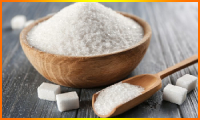
India to cap sugar exports until H1 2024 as El Nino looms- Govt sources.
India is not considering allowing sugar exports until at least the first half of the next season, as the government is worried the El Nino weather pattern could reduce rainfall and dent production, government sources said on Monday.
India, the world's second biggest sugar exporter, usually decides the amount of the sweetener mills can export before the start of the new marketing year on Oct. 1. The delay in shipments from India could support global sugar prices trading near multi-year highs.
'The weather is a big negative factor. Last year, despite good monsoon rains, sugar production fell. This year, with El Nino, we can't take the risk of allowing exports early,' said a senior government official who did not want to be identified in line with official rules.
The El Nino weather pattern, which triggered most droughts that India faced during the past seven decades, could bring about extreme weather later this year.
'In any sugar season, it takes at least a few months to get a clear idea about production, and that's why we will wait until there's an absolutely clear picture about production,' said another government official, who also declined to be identified.
'As far as exports are concerned, we will not be in any hurry at all.'
A government spokesperson did not immediately respond to a request for comment.
At the start of the current sugar season to Sept. 30, 2023, the industry pegged this year's output at 36 million tonnes, which has been scaled down to 32.8 million tonnes.
Due to the lower output, India allowed exports of 6.1 million tonnes for this season. As the quota is exhausted, India is currently not exporting sugar.
Even if India agrees to allow exports later during the 2023-2024 season, New Delhi may not allow more than 4 million tonnes, the officials said. The government is keen to control food prices ahead of some state elections in 2023 and a general election in mid-2024.
The country exported more than 11 million tonnes in 2021/2022, an all-time high.
The world needs more Indian sugar and as early as possible since global prices are trading near 11-years high, said a Mumbai-based dealer with a global trade house.
'The delay in Indian exports will further lift prices, and will allow Brazilian sellers to demand even higher prices,' said a Mumbai-based dealer with a global trade house.
Source: economictimes.indiatimes.com