08 Jun, 2023
Centre hikes kharif crop MSPs, ?143 increase for paddy
Farmers’ organisations protest, demand MSP in tune with rising costs of inputs including fertiliser and irrigation The Centre has set the Minimum Support Price (MSP) for paddy sown in the kharif or monsoon season at ?2,183 per quintal, a hike of ?143 per quintal in comparison to last year. The 2023-24 MSPs for 17 kharif crops and variants were approved at a meeting of the Cabinet Committee on Economic Affairs (CCEA), chaired by Prime Minister Narendra Modi, . The sowing of the crops, mainly paddy, has started in most States. While the Centre said that its aim was to ensure reasonably fair remuneration for the farmers and to encourage crop diversification, several farmers’ organisations said that the increase was not in tune with rising input costs. Highest increase’ Food Minister Piyush Goyal told reporters after the CCEA meeting that farmers will benefit from the increase in the MSP at a time when the retail inflation is declining. 'In agriculture, we have been fixing MSP from time to time based on the recommendations of Commission for Agricultural Costs and Prices (CACP). The increase in MSP of the kharif crops for this year is highest compared to the previous years,' he said. Apart from paddy, new MSPs have been set for major pulses. The MSP for moong is ?8,558 per quintal, an increase of ?803 from last year, one of the highest increases among kharif crops. The MSP for tur or arhar has been set at ?7,000 per quintal, which is estimated to be 58% above the cost of production. This is in keeping with the Centre’s promise to set MSPs which are at least one and a half times the all-India weighted average cost of production. Bajra, tur margins high 'The expected margin to farmers over their cost of production are estimated to be highest in case of bajra (82%) followed by tur (58%), soybean (52%) and urad (51%). For the rest of the crops, the margin to farmers over their cost of production is estimated to be at least 50%,' said an official statement. The MSP of ‘A’ grade variety of paddy has been increased to ?2,203 per quintal from ?2,060. For jowar (hybrid) and jowar (maldandi) the rates are ?3,180 and ?3,225 per quintal respectively. Last season, it was ?2,970 and ?2,990. For maize, the increase is ?128 per quintal and the new rate will be ?2,090. For ragi, this year’s MSP will be ?3,846 per quintal, which is an increase of ?268. Among oilseeds, the MSP for sesamum is ?8,635 per quintal, ?6,377 for groundnut, and ?4,600 for soybean. In the case of niger seed, the new MSP is ?7,734 per quintal, and for sunflower seed, it is ?6,760. For cotton (long stable) and cotton (medium stable), the MSPs are at ?7,020 per quintal and ?6,620 per quintal respectively. ‘Faulty production estimates’ The Samyukt Kisan Morcha, a platform of about 500 farm outfits, questioned the Centre’s claims and said that the new MSPs were not linked to the real expenses of farming. Senior SKM leader Ashok Dhawale said that the MSP for kharif crops is nowhere near the C2+50% formula proposed by the Swaminathan Commission. 'The cost of production estimates given by the government are themselves extremely faulty and underrated, and thus the MSP figures are also very unsatisfactory. The SKM and All India Kisan Sabha express anger at the constant short-changing of farmers by the BJP regime led by Narendra Modi, and vow to intensify their struggle for a fair and just MSP, which can only be won by changing the current BJP government in the general elections next year,' he said in a statement. Senior farm leader Hannan Mollah said that the Centre has not taken into account the increase in irrigation costs and fertiliser costs. 'The government has betrayed the farmers by announcing MSP far below C2+50%. It has not put up the ‘Report on Price Policy of Kharif Crops for 2023-24 Season’ by the CACP yet,' he added.
Source:
thehindu.com
|
08 Jun, 2023
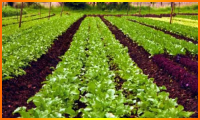
AP plans export park to help organic farmers
Considering huge demand in national and international markets, AP State Organic Products Certification Authority (APSOPCA) will soon set up an integrated export park to promote exports of organic produce. Agriculture minister Kakani Govardhan Reddy attended a workshop on export opportunities for agricultural, horticultural and processed food products conducted by APSOPCA in the city on Tuesday and discussed key issues relating to organic farming. The minister stressed that many farmers were facing losses due to huge investment on pesticides, chemical fertilisers and hybrid variety seeds and organic farming is the only alternative to get better profits. 'Farmers are running behind traditional farming and spending huge amount on pest management and others. Despite huge investment they are earning poor price. Many countries are opposing the products cultivated in traditional way considering residues of pesticides. We are eyeing to encourage organic farming in a big was as it involves less investment. Farmers can generate better profits with organic farming as organic produce has huge demand in national and international markets,' Govardhan Reddy said. He added that many traders were coming forward to offer much higher price to organic produce than the minimum support price (MSP) fixed by the government.
Source:
timesofindia.indiatimes.com
|
08 Jun, 2023
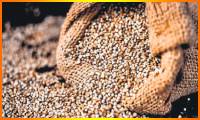
Millet-based workshop held
A district food safety team on Wednesday held a millet theme-based workshop in collaboration with entrepreneur Shreya Maini on the occasion of World Food Safety Day. Maini showcased her millet-based sweet delicacies made without sugar, flour, maida or preservatives. Different types of millet-based cookies were also on display to make people aware of the health benefits of the grain. The workshop was held here under the supervision of Civil Surgeon Dr Raman Sharma. A lecture was also delivered highlighting the benefits of adding millets in diet. District Health Officer Dr Reema Jammu said Maini was also a part of the G20 Summit held in Amritsar this year where she had showcased her recipes before foreign delegates.
Source:
tribuneindia.com
|
08 Jun, 2023
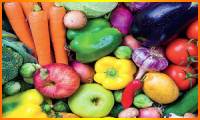
UP s share in fruits & vegetables cultivation in the country up from 7.2% to 9.2% in a decade
As per the Agroforestry Report 2023, cultivation of fruits and vegetables has gradually become a field of immense possibilities for the farmers of Uttar Pradesh. The reasons for this include, the Yogi Government’s consistent appeal to the farmers to diversify cultivation of crops according to market demand for better income; production of high-quality plants in Centers of Excellence and Mini Centers of Excellence, which are then provided to farmers at minimum rates; controlled temperature and humidity for protected cultivation and the modernization of markets (mandis). According to the report, the share of state in the cultivation of fruits and vegetables has increased from 7.2 percent to 9.2 percent in he country within a decade while the Gross Value Output (GVO) obtained from it has increased from Rs 20,600 crore to Rs 38,000 crore. Horticulture center of excellence will be built in every district It is noteworthy that Chief Minister Yogi Adityanath has always encouraged farmers towards cultivation of fruits and vegetables since his first term in view of its immense potential both in terms of its consumption in the domestic and international markets as well as for the growth of processing units. More than a year ago, when the Yogi Government took over for the second time in the state, it set an ambitious target for the Department of Agriculture regarding expansion of the area of cultivation, increase in yield and processing for the next 5 years. As per the plan, the area under horticulture crops has to be expanded from 11.6 percent to 16 percent and food processing from 6 percent to 20 percent in UP by 2027. This has been done considering the possibility of a large number of processing units to be set up, which will require fruits and vegetables as raw material on a large scale. Horticulture infrastructure will in every district by 2027 Quality planting material (plants and seeds) plays the most important role in achieving the set target in horticulture. For this, the government will set up an Excellence Centre, Mini Excellence Center or Hi-Tech Nursery in every district within a stipulated time period. For example, the Center of Excellence is under construction in Chandauli, Kaushambi, Saharanpur, Lucknow, Kushinagar and Hapur. Similarly, Mini Centers of Excellence are functional in Bahraich, Ambedkar Nagar, Mau, Fatehpur, Aligarh, Rampur, and Hapur. Mini centers of excellence/hi-tech nurseries are also under construction at Sonbhadra, Moradabad, Agra, Sant Kabir Nagar, Mahoba, Jhansi, Barabanki, Lucknow, Chandauli, Gonda, Balrampur, Badaun, Firozabad, Shamli and Mirzapur. By 2027, he government plans to have such infrastructure in every district. Encouragement of the government led to increase in area of cultivation & yield Due to the encouragement from the government and increasing possibilities, the area under cultivation of fruits and vegetables has increased by more than 1.01 lakh hectares and the yield by more than 0.7 percent in the last 6 years. To provide quality plants to farmers, the Indo Israel Centres of Excellence for Fruits and Vegetables were established in Basti and Kannauj, respectively. Government promoting protected cultivation to grow off season vegetables To grow quality plants and vegetables out of season by controlling moisture and temperature, the work of promoting protected cultivation is also going on continuously by employing Indo-Israel technology. In the last 5 years, 177 hectares of poly house/ shed net were expanded for the production of flowers and vegetables, benefiting 5549 farmers. Constant efforts are made to continue this trend in Yogi-2.0. Dr. SP Singh, Vegetable Scientist said, 'The most effective means of increasing the income of the farmers in Uttar Pradesh is the cultivation of fruits, vegetables and spices. Having 9 types of agro-climatic zones, cultivation of all types of fruits, vegetables and flowers is possible in different regions. Small-marginal farmers will play an important role because they constitute about 90 percent of the total number of farmers, doing traditional farming of paddy, wheat, sugarcane etc. If their income is to be increased then they should be encouraged for the cultivation of fruits, vegetables and flowers.'
Source:
newsroompost.com
|
07 Jun, 2023

Farmer Producer Organisations will be promoted in a big way in Andhra Pradesh, says Agriculture Minister Kakani Govardhan Reddy.
Minister of Agriculture & Cooperation, Marketing and Food Processing Kakani Govardhan Reddy has said that the Farmer Producer Organisations (FPOs) will be largely promoted in Andhra Pradesh on the lines of the Self Help Groups (SHGs) to help farmers get remunerative prices and explore opportunities in the domestic and export markets. Mr. Govardhan Reddy inaugurated the day-long workshop on ‘Export opportunities for agricultural, horticultural and processed food products from Andhra Pradesh’ organised by the A.P. State Organic Products Certification Authority (APSOPCA), Guntur, and Agricultural and Processed Food Products Export Development Authority (APEDA), New Delhi, in Vijayawada on June 6 (Tuesday). Speaking on the occasion, Mr. Govardhan Reddy said that Andhra Pradesh produces many varieties of horticulture and agriculture products in huge quantities, and remunerative price for the farmers was the most important aspect to be addressed. 'Through the FPOs, focus will be on achieving remunerative prices for the products. The FPOs will be promoted in a big way in the State so that the produce from small farmers is sourced by them on a large scale. The FPOs will trade the products in domestic and export markets,' he added. He said the Good Agriculture Practices (GAP) certification by the State government would make agriculture more beneficial to the farmers as they would be able to export the products to about 100 countries. Special Commissioner of Agriculture C. Hari Kiran said, for the first time, Andhra Pradesh was going to issue GAP certification to the farmers. He said farmers with GAP certification could export their produce to the European countries and the U.S. and get more profits. He said the World Food and Agriculture Organization (FAO) trained 240 farmers from Andhra Pradesh in good agriculture practices, and they in turn trained 9,000 more farmers. Commissioner of Horticulture S.S. Sreedhar said that Andhra Pradesh cultivates more than 135 varieties of agriculture and horticulture crops, and it was in the top three positions in many crops in the country. He said so far the produce was being exported to the Middle East, South-East and South Asian countries, and we were unable to export to other countries due to high amount of pesticide residue in the produce. He said the GAP certification would help explore more opportunities, and Andhra Pradesh now had the permission to certify organic produce too. A.P. State Seeds Development Corporation Ltd. Vice-Chairman and Managing Director Sekhar Babu Geddam, APEDA member Polaiah Kolamgari, A.P. Food Processing Society CEO Sridhar Reddy, representatives of various FPOs, farmers and others were present.
Source:
thehindu.com
|
07 Jun, 2023
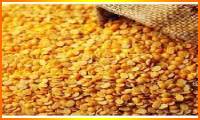
Govt removes 40 pc procurement ceiling for tur, urad, masur under PSS to boost domestic production.
The Centre on Tuesday said it has removed the procurement ceiling of 40 per cent on three pulses -- tur, urad and masur -- under the price support scheme (PSS) for the 2023-24 crop year (July-June) to enhance domestic production. The Food and Consumer Affairs Ministry said farmers are free to sell how much ever quantity of their production of tur, urad and masur under the PSS this year. 'The assured procurement of these pulses by the government at remunerative prices will help motivate the farmers to enhance sowing area in respect of tur, urad and masur in the upcoming Kharif and Rabi sowing seasons in order to enhance the production,' the ministry said in a statement. PSS is operationalised only when prices of agri-produce fall below the minimum support price (MSP). The ministry has also directed state governments to ensure strict enforcement of stock limits on tur and urad and monitor their prices. To check hoarding and price rise, the ministry on June 2 imposed stock limits on tur and urad. The stock limits have been made applicable to wholesalers, retailers, big chain retailers, millers and importers. It has also been made mandatory for these entities to declare their stock position on the portal of the Department of Consumer Affairs. The ministry has directed the state governments to ensure strict enforcement of the limits in their respective states. As part of enforcement, the states have also been asked to monitor prices and stocks position by verifying with various warehouse operators. Parallelly, the ministry has also asked Central Warehousing Corporation (CWC) and State Warehousing Corporations (SWCs) to provide the details about tur and urad held in their warehouses, the statement added. The retail prices of tur and urad have come under pressure in view of a slight fall in domestic production during the 2022-23 crop year.
Source:
economictimes.indiatimes.com
|
07 Jun, 2023

Trade body seeks 50 new agro-processing clusters in state in Rajasthan.
A Rajasthan-based trade body has urged Prime Minister Narendra Modi to provide 50 new agro-processing clusters to the state. Agriculture & allied sectors contribute around 25 per cent to the state’s gross domestic product. Prem Biyani, the executive president of Akhil Rajya Trade & Industry Association (Rajasthan), said the setting up of these food processing clusters would help the state export quality products along with consumption in the local markets. Biyani said this would ensure that farmers get better prices for their produce because agriculture products purchased at support prices by the government would flow to these units, and this awould also reduce the economic burden on the government. The state has in place an agro-processing, agri-business, and agri-export promotion policy, which offers sops and concessions such as capital subsidies, subsidies on the freight for export of ordinary and organic produce, and interest subsidies for agro-processing units and for agro-processing infrastructure projects. Besides, a package of general financial incentives (exemptions and subsidies) is available for agro-processing, agri-business, and agri-export units. Rajasthan contributes 42 per cent of the country's total bajra production, according to statistics. Similarly, it contributes 45 per to mustard, 22 per cent to oilseeds, 17 per to sesame, 19 per cent to groundnut, 20 per to chana, 13 per to jawar, and 85 per to guar. In the fiscal year 2021–22, the total production of fruits was 956,000 tonnes, while that of vegetables stood at 2.37 million tonnes, spices (1.04 mt), food grains and pulses (25.4 mt) and oilseeds (10 mt).
Source:
business-standard.com
|
07 Jun, 2023

India to remain fastest-growing major economy: World Bank.
India will remain the fastest-growing major economy in terms of both aggregate and per capita GDP despite the slowdown in growth, the World Bank said on Tuesday. 'Growth is projected to pick up slightly through 2025-26 as inflation moves back toward the midpoint of the tolerance range and reforms payoff,' World Bank said. The World Bank kept its April forecasts unchanged, projecting India's growth for FY24 at 6.3%, increasing to 6.4% in FY25. For FY26, it has projected a growth of 6.5%. It said India will lift the growth prospects of the South Asian region. 'Unexpected resilience in private consumption and investment, and robust growth in the services sector in India, underlie an upward revision to growth in 2023,' said the report.
Source:
economictimes.indiatimes.com
|
07 Jun, 2023
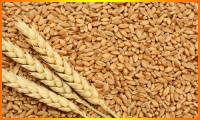
Saudi Arabia buys 624,000 tonnes of wheat in tender.
It was bought at an average price of $261.76 a tonne c&f, GFSA said. The wheat with 12.5% protein content was sought for arrival between September and October in a series of Saudi ports. The purchase was more than the 480,000 tonnes sought in the tender. Traders had been hoping that Middle East importer buying interest would be sparked after US wheat futures hit 2-1/2 year lows last week. The agency, previously called the Saudi Grains Organization (SAGO), was renamed in January as the General Food Security Authority. In its previous reported tender on March 13, Saudi Arabia bought 1.043 million tonnes of wheat for July-August arrival.
Source:
brecorder.com
|
07 Jun, 2023
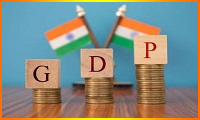
Global GDP is set to climb 2.1% this year: World Bank.
The World Bank on Tuesday raised its 2023 global growth forecast as the US and other major economies have proven more resilient than forecast, but said higher interest rates would cause a larger-than-expected drag next year. However, it trimmed India's GDP growth forecast to 6.3% in FY24 from 6.6% forecast in January.Real global GDP is set to climb 2.1% this year, the World Bank said in its latest Global Economic Prospects report. That's up from a 1.7% forecast issued in January but well below the 2022 growth rate of 3.1%.
Source:
economictimes.indiatimes.com
|