
Third yr in row, Guj tops in exports.
For the third consecutive financial year, Gujarat has remained the top exporter of India. For 2022-23, Gujarat’s total exports have been pegged at Rs 12 lakh crore, which is 27% higher than the exports made in 2021-22. Gujarat’s share in India’s total exports remained 33% in 2022-23. It was 30% in 2021-22.
Among the states, Maharashtra was earlier the highest exporter and Gujarat was in second position. However, in 2020-21, Gujarat overtook Maharashtra with a narrow margin but thereafter the gap has increased and Gujarat has left Maharashtra far behind.
An official of Director General of Foreign Trade (DGFT) said after the full implementation of GST, they get accurate figures of export from all states. 'In 2020-21, we started getting accurate data from the states but that year the world was under Covid-induced lockdown. Thereafter, Gujarat’s export figures jumped over 100%,’’ the official said. Exporters say the major contribution to Gujarat’s export figures is petroleum products. Because of the war between Russia and Ukraine, there is a significant rise in India’s import of crude from Russia and export of refined petroleum products. India’s export of petroleum products increased more than 60% in last financial year and Gujarat was the major contributor.
Among the other major exporting items are ceramics, pharma, engineering goods, jems and jewellery, and chemicals. After implementation of GST, many Surat-based diamond units have started exporting from Surat instead of doing it from Mumbai where they have their offices.
A leading ceramic exporter from Morbi said the weak rupee against dollar also helped exporters in offering competitive rates in the international markets. 'We could reduce our margins to give a tough fight to our competitors and it helped us in getting more orders,' said Anil Detroja.
Source: timesofindia.indiatimes.com

Focus on agriculture exports to raise income of farmers: AP Minister to exporters.
Agriculture Minister Kakani Govardhan Reddy has said the State is taking all measures to ensure more income to farmers with less investment.'There is a great demand for agricultural products sans pesticide residue in the international market. They need to take up organic cultivation for a better price for their produce,' he suggested.
Inaugurating a workshop involving farmers and exporters here on Tuesday, the Agriculture Minister underscored the need to further enhance the farm product exports from the State to increase its share in the total agriculture exports from India.
Revealing that products of agriculture, horticulture and allied sectors are being exported to 100 countries from the State, he said a target has been fixed to double the exports by next year. He urged exporters to come forward to ensure better income to farmers for their produce by focusing on agri exports from the State.
Asserting that Chief Minister YS Jagan Mohan Reddy is making efforts to provide more benefits to the farming community, he said the government is extending all the required support to the farmers.Special Chief Secretary (Agriculture) Gopal Krishna Dwivedi said the government is planning to set up an ‘Integrated Export Park’ to resolve the problems of farmers.
Source: newindianexpress.com

India's palm oil imports hit 27-month low, buyers pick cheaper soft oils: Dealers.
India's palm oil imports sank to a 27-month low in May as buyers cancelled expensive cargoes of the edible oil and replaced them with cheaper soyoil and sunflower oil, six dealers told Reuters on Tuesday.
Palm oil imports by India fell to 441,000 tonnes last month, down 14% from 510,094 tonnes in April, according to average estimates from the dealers. May imports were the lowest since February 2021, the dealers added.
The drop in purchases by the world's biggest importer of vegetable oils could weigh on palm oil prices, which are already trading near their lowest level in 30 months.
India buys palm oil mainly from Indonesia, Malaysia - the top two producers - and Thailand, while it imports soyoil and sunflower oil from Argentina, Brazil, Russia and Ukraine.
Price-sensitive Asian buyers typically rely on palm oil because of the low cost and quick shipping times.
But the edible oil started trading at a premium to soyoil and sunflower oil over the past few months, prompting buyers to shift to the cheaper soft oils, said Sandeep Bajoria, CEO Sunvin Group, a vegetable oil brokerage and consultancy firm.
In April, buyers opted to cancel large amounts of palm oil purchases for May shipments for the first time in many years.
India's average monthly palm oil imports in the first six months of the 2022/23 marketing year that started on Nov. 1 were 818,203 tonnes, according to the Solvent Extractors' Association of India, up 52% from a year earlier. The trade body is likely to publish its May import data by mid-June.
India's sunflower oil imports in May jumped 28% from a month ago to 319,00 tonnes, while soyoil imports rose 10% to 290,000 tonnes, according to an average estimate from the dealers.
'Palm oil has been losing market share for the past few months and is unlikely to regain it unless it becomes competitive, said Rajesh Patel,' managing partner at GGN Research, an edible oil trader and broker.
Source: economictimes.indiatimes.com

India, UAE to review CEPA progress next week, to chalk out data sharing.
Key officials from India and the United Arab Emirates (UAE) will meet for two days from June 11 to review the progress of the year-old Comprehensive Economic Partnership Agreement (CEPA).
A delegation from the UAE will be in Delhi next to meet key officials from the department of commerce, a person aware of the matter said.
'Officials of Customs departments from both sides are also expected to meet and work out a mechanism towards data sharing, which will aid in deciphering the utilisation of the trade deal,' the official cited above told Business Standard.
Besides, committees will also be set up on each policy area or chapter, such as services, investment, under the trade deal. A business delegation will also be present to discuss investment opportunities in India.
The India-UAE CEPA entered into force on May 1, 2022. Under the deal, both countries have exchanged tariff concessions on products of mutual export interests. The UAE offered tariff concessions to India on over 97 per cent of its tariff lines amounting to 99 per cent of trade in value terms. India, on the other hand, has offered preferential access to the UAE on over 90 per of its tariff lines, including lines of export interest to the UAE.
The UAE is India’s second largest export market, after the United States (US), and third largest trading partner after the US and China at $31.61 billion and $84.84 billion, respectively.
India is hoping to export goods worth $50 billion to the West Asian nation by FY27.
While total trade between both nations grew 16 per cent year-on-year to $84.84 billion in FY23, it was mainly due to higher imports, driven by inbound shipments of oil hitting the domestic shores from the UAE.
Trade deficit stood at $21.62 billion. Government officials, however, pointed out that the deficit was expected to narrow amid cooling down of petroleum prices globally.
During the CEPA implementation period, the bilateral trade increased to $76.9 billion, up 14 per cent YoY. During the same period, India’s exports to the UAE witnessed an 8.5 per cent jump on year to $28.5 billion, while exports to the rest of the world, excluding the UAE grew 3.1 per cent. The jump in exports was mainly due to higher demand for sectors, such as gems and jewellery, machinery and automobiles. Export of products, such as iron and steel and textiles, contracted due to imposition of export restrictions and tepid demand, respectively.
According to the commerce department’s analysis shared last month, during May-March (2022-23), the India-UAE CEPA has surpassed almost all other free trade agreements in terms of utilisation. The number of certificates of origin has been the highest in the case of India-ASEAN FTA at 149,000. This was followed by the trade deal with the UAE as 54,142 certificates of origin were issued to exporters to avail concessional duty advantage under the trade pact.
Source: business-standard.com

Traditional sweet delicacy Launglata of Banaras heads for GI tag .
The famous sweet delicacy of Varanasi - Launglata - is heading towards getting the Geographical Indication (GI) tag. The crisp envelope-shaped dessert coated with sugar syrup and a clove embedded on it is a must if you visit Varanasi. Even, Prime Minister Narendra Modi had praised the sweet during his visit to Varanasi on March 24.
Shopkeeper Dinesh Yadav said that the sweet is available in many districts of Uttar Pradesh but, the taste of Varanasi Launglata is unique as the technique involved in preparing this sweet is special. 'The dessert is cooked on low flame for a long time. After which, it is left in the sugar syrup for five minutes. The syrup has to be hot and slowly, the sweets turn red. It contains cloves and cardamom and with a wrapping of flour,' Yadav said.
Apart from Launglata, many more sweets are lining up for the coveted GI tag. GI expert Dr. Rajinikanth said three more traditional Varanasi desserts have been finalised for the tag. These are namely Lal Peda, Tirangi Barfi and Jaunpur's Imrati. He said that Jaunpur is considered to be a part of Kashi that makes Imrati a traditional delicacy of Varanasi.
This apart, sweets like Malai Gilauri, Palangtod, Ras Madhuri, Rabri and Launglata are also being considered for GI tag, he said. The famous Varanasi's tomato chaat, red chilli and potato papad that have always been in high demand among people are also being filed for GI tag.
This comes in the wake of Modi's efforts to promote Varanasi's products at the global level. Rajnikanth said that efforts are on to bring several items ranging from vegetables to wooden artefacts under the tag.
The GI tag is given to products that have a specific relation with geographical locations and is a certification that the product is produced as per traditional methods and carry a particular importance due to its geographical origin.
Source: etvbharat.com
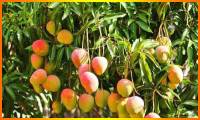
In a 1st, Amrapalli mango of Dhenkanal exported to Dubai.
Owing to the abundant mango harvest in Dhenkanal this year, the district has bagged the top spot in the state with the production of 50,000 metric tonne mangoes. While this seasonal fruit usually has high demand in India’s metro cities such as Mumbai, Kolkata, and Delhi, this year, a direct consignment of 2.5-tonne Amrapalli mangoes was exported to Dubai from Dhenkanal for the first time ever.
The Agricultural and Processed Food Product Export Development Authority(APEDA) under the Union Ministry of Commerce and Industry played the mediator for this trade. Mango farmer Subrata Kumar Das at his ‘Nature Eco Farm’ along Kalapani-Banasingh road under Dhenkanal Sadar cultivates mango and cashew on a 30-acre land.
On the 30-acre land, Amrapalli, Mallika, Daseri, and Keshar varieties of mangoes are being cultivated in 6 acre area. Fruits are cultivated here through organic methods and supplied to different states in India as well as foreign countries every year. But each time there was a mediator who coordinated the trade. This year, however, mango export was done through an agency under the Government of India. The officers of APEDA, the district Horticulture department, Paaf global private limited who purchased these mangoes from Subrat first visited 'Nature Eco Farm' and examined the quality of the Amrapalli mangoes ahead of export. The mango consignment will be transported from Dhenkanal to Kolkata in an air-conditioned truck.
From there Paaf global private limited will send the consignment of mangoes to Dubai on a flight. The market price of Amrapalli mango is Rs 90 per kg, while in foreign countries; it will be sold approximately at Rs 200 per kg. Packets of these mangoes to be exported have been labeled with stickers mentioning ‘Nature Farm Dhenkanal’. 'Dhenkanal mangoes will surely get a special identity in Dubai,' said Subrat Kumar Dash, owner of the farm.
District Collector Saroj Kumar Sethi flagged off the consignment for export in the presence of district Horticulture department assistant director Geetashree Padhi, eastern zonal head of APEDA Sitakanta Mandal, all India member and eastern region board member Sukanta Kumar Panigrahi, Paaf global private limited managing director Subrat Ghosh, and mango farmer Subrat Das were present. Mayurbhanj district has the record in mango cultivation in terms of land area but Dhenkanal district is on top in terms of mango production, said Padhi.
Around 200 farmers are cultivating over the 10,000-hectare area in the Dhenkanal district. Various workshops on mango farming will be organised for creating awareness among the farmers for mango cultivation in the coming days. 'It is a matter of great pride for us to export Dhenkanal mango directly to foreign countries. Our farmers will get training about mango production and packaging on their own to get more benefits in the future,' said Collector Sethi.
Source: orissapost.com

FSSAI issues draft related to provisions for 'country liquor or spirits'.
The Indian food regulator has issued a draft related to provisions for ‘country liqour or spirits’ and asked the stakeholders to comment.
According to the draft, country liquors/Indian liquors or spirits are alcoholic beverages obtained from distillation of fermentable carbohydrates of agricultural origin.
Country liquors/Indian Made Liquors may include plain country liquors/plain Indian liquors made from alcoholic distillate obtained from fermented molasses, jaggery (gur), mash of cereals, potato, cassava, fruits, juice or sap of coconut and palm trees, mahua flowers or any other carbohydrates of agricultural origin and ‘Blended country liquors /Blended Indian liquors’, which is a blend of an alcoholic distillate, rectified spirit or neutral spirit.
The food authority has listed 28 country liquor or India distilled liquor and 3 undistilled liquor. Apart from this, the draft also lists 51 low alcoholic Indian liquors.
The Indian distilled liquor includes Acham made of Rice, Ark orara made of barley, apple, wild apricot, ArakorHor-Alank made of Rice, Aara made of Cereals, Basi made of Rice, BattaSarai, which is clear distilled alcoholic drink, Daru made of Cereal, Handia made of Rice, Haria made of Rice, Juharo made of Rice, Kiad made of rice, Maddafeni made of cashew fruit, Madhu made of rice, MaduaApong made of fingermillet, Mahua made of dried corollas of Madhucalongifolia and NavaSagara made of jaggery, molasses amongst other.
Similarly the three undistilled liquor include Angoori or Kinnauri made from Grapes, Chulli made of Apricot and Ghanti made of apple and apricot.
Source: fnbnews.com
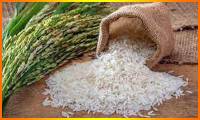
Indian rice rates recover slightly as recent dip attracts Asian buyers.
Prices of rice exported from top hub India edged higher this week from a near six-month trough as weaker rates attracted buyers from other Asian countries, while comparatively higher rates in Vietnam posed risks to demand in the near term.
India's 5% broken parboiled variety was quoted at $375-$380 per tonne, up from the last week's $374-$378.
'Buying from Asian countries has improved a bit because of lower prices, although the majority of buyers are still on the sidelines,' said an exporter based at Kakinada in the southern state of Andhra Pradesh.
Neighbouring Bangladesh, which often requires imports to cope with shortages caused by natural calamities such as floods, doesn't need to import rice this year, its food minister said.
'There is a good harvest in the country, so there is no need to import rice,' Food Minister Sadhan Chandra Majumder told reporters.
Vietnam's 5% broken rice was offered at $490-$495 per tonne, unchanged from a week ago, which was the highest level since late April.
'Trading activity is quiet as some buyers are slowing their purchases due to high prices,' a trader based in Ho Chi Minh City said.
Vietnam's rice exports in the first five months of this year are estimated to have risen about 40.8% from a year earlier to 3.9 million tonnes, government data showed on Monday. Rice shipments from the country in May were estimated at 1 million tonnes.
Thailand's 5% broken rice prices stood at $495 per tonne, little changed from $495-$500 quoted last week, amid subdued demand and a weaker baht.
'We have to wait for additional supply to be released,' said a Bangkok-based trader
Source: economictimes.indiatimes.com

Bananas are India s horticulture success story. Time to up the game in international markets.
Horticulture is a success story of Indian agriculture. The production of horticulture crops has increased from 169.8 million tonnes in 2004-05 to 342.32 mt in 2021-22. This transformation was initiated in 2005-06 when the National Horticulture Mission was launched by the Union government. The Centre’s share in the scheme was 85 per cent and the states were required to provide only 15 per cent. The Centre also provided 100 per cent of funds under Horticulture Mission for North East & Himalayan States.
The objective of NHM was to provide an integrated development by ensuring that forward and backward linkages were provided. Clusters were identified in 384 districts. The emphasis was on the supply of high-quality planting material. For this nurseries and tissue culture units were supported. Within five years, from 2005-06 to 2010-11, an additional area of 18.92 lakh hectares was brought under horticulture crops and 2,239 nurseries were established for the production of planting materials.
In 2014-15, NHM and HMNEH were subsumed in Mission for Integrated Development of Horticulture (MIDH) and the Centre’s share in funding for Northeastern and Himalayan states was fixed at 90 per cent. For other states, it was reduced from 90 per cent to 60 per cent.
Banana is one of the success stories of NHM. Due to the efforts of successive governments, bananas are affordable, and they are available around the year across India. Its price has stayed around Rs 50 to 60 per dozen for several years.
In 2004-05, 5.3 lakh ha area was under banana cultivation. By 2021-22 the area had increased to 9.6 lakh ha. In this period, the production of bananas increased from 16.2 mt to 35 mt. The productivity increased from 30.6 mt per ha to 36.5 mt per ha.
In 2021-22, India’s export of bananas reached 0.38 mt at a value of $159.09 million. But India’s share is minuscule. In 2019, global trade in bananas was valued at $13.5 billion by the Food and Agricultural Organization of the United Nations.
In 2020, then director of ICAR-National Research Centre for Banana said India is targeting 10-15 per cent of international trade with $2-3 billion of exports over the next seven to 10 years.
More than 90 per cent of banana exports are from Central and South America and the Philippines. Chiquita, Dole and Del Monte brands dominate the global markets.
India is the largest producer of bananas in the world. It produced about 35 million metric tonnes in 2021-22 which was about a quarter of global production. The highest banana-producing states are Andhra Pradesh, Maharashtra, Gujarat, and Tamil Nadu. In the last few years, farmers of nontraditional states have also taken to banana cultivation. Uttar Pradesh had a 10.45 per cent share in India’s production in 2021-22.
Growth story
The success of banana production is also attributed to Jain Irrigation Systems Limited which set up a tissue culture laboratory in 1995.
Under tissue culture, a part of the plant or even a single cell or group of cells is cultured under highly controlled and hygienic conditions. Jain Irrigation propagates genetically pure, high-yielding and disease-free planting material.
Before that, they were prone to several diseases such as Panama wilt, bacterial soft rot and viral diseases. This resulted in decreased yield and lower quality.
Tissue culture plants are true to the type of mother plant and are free of disease and pests. They grow uniformly and give higher yields. Tissue culture plants enable round-the-year planting as the seedlings can be procured by farmers throughout the year. Two successive ratoons are possible in a short duration which minimises the cost of cultivation. Tissue culture enables the introduction of new varieties as multiplication is possible in a short duration.
Banana is a water-intensive crop and its water requirement is about 1,500-2,000 mm per annum. Therefore, micro-irrigation is strongly recommended in banana cultivation. It is claimed that drip irrigation and mulching can save 56 per cent of water. It also results in an increase in yield by 23-32 per cent. Precision farming can give better yields to farmers.
A 2015 Indian Council of Agricultural Research-CIPHET study on food losses found that losses in bananas were 6 per cent at the farm level and 1.7 per cent in the supply chain (up to retailers). A 2022 study by Nabcons has found that the losses were 5.2 per cent at the farm level and 2.4 per cent in the market supply chain.
Better farm practices, and improved storage, ripening and transportation by reefer vans can reduce losses and enhance the quality of Indian bananas in the international market. Going forward, high-density planting techniques developed by ICAR-National Research Centre for Banana, Tiruchirappalli can improve banana yields.
For an edge in the global market, investment in the post-harvest infrastructure of sorting, grading and packaging is needed. Even if horticulture is not covered by Agricultural Produce & Livestock Market Committee regulations in most states, the investment in such infrastructure can only be made by them. Additionally, phytosanitary standards need to be enforced.
As a healthy and affordable fruit, bananas will continue to remain important for Indian diets.
Source: theprint.in

Australian industry is nuts about Indian markets.
A burgeoning market for nuts in India is beckoning the Australians, among the biggest growers of nuts in the world. India has largely kept them at bay, but the potential has proved too vast for the Australians to hold off their almonds, pistachios, and walnuts.
The nut industry in Australia is now pinning its hopes on the proposed India-Australia Comprehensive Economic Cooperation Agreement (CECA) to gain faster and deeper market access in India through higher duty cuts and the removal of quotas.
'With rising economic conditions, the Indian middle class is driving greater consumption of nuts. The Indian CECA provides the Australian nut industries the opportunity to diversify our export markets and hedge for any complications with our major market, China,' says a representation made by the Australian Nut Industry Council (ANIC) to the Department of Foreign Affairs and Trade.
As part of the India-Australia Economic Cooperation and Trade Agreement ratified at the end of December 2022, India agreed to eliminate tariffs on macadamias, cashews in-shell, shelled pistachios, and hazelnuts over a period of six years and reduce tariffs by half for almonds subject to a quota of 34,000 tonnes.
‘Not enough’
But the Australian industry says it is not enough. They are pushing their agenda even more now that both sides are working on the full-fledged CECA, which could include previously excluded areas.
'India has no almond production. It cannot claim any sensitivity for almonds, so it is difficult to understand why any tariff should apply to Australian almonds or why there should be a quota,' their representation to CECA noted.
They questioned India’s decision to exclude pistachio in shell from the ECTA on grounds of 'sensitivity' from producers in Kashmir and Jammu. There isn’t any evidence of an Indian pistachio industry in Kashmir or Jammu other than a few trees mainly in old research stations, they argued.
'In the next decade, Australia could not supply India with more than a few thousand tonnes per annum of pistachio inshell, compared with current Indian imports of more than 15,000 tonnes per annum. The few thousand tonnes will have a trivial impact on total Indian demand but will be of critical importance to the expanding Australian pistachio industry,' they said.
Conceding that India did have a long-established walnut growing industry, largely located in Kashmir and Jammu, the ANIC argued that production was being overstated by growers at 60,000 tonne per annum in shell, while other sources estimated production at 30,000–36,000 tonne. 'Australia has limited production of the sweeter-flavored Chandler variety (preferred by many Indian consumers over the older varieties grown in Kashmir/Jammu) and has a strong Australian demand, limiting the potential exports to India to below a number that could have any impact on Kashmiri sales,' it said.
Source: thehindubusinessline.com