
Kerala comes first in national food safety index.
Kerala has secured the first position in the national food safety index of the Food Safety and Standards Authority of India (FSSAI).
Health Minister Veena George, in a statement here, claimed that the ranking secured by the State was in recognition of the streamlined and consistent activities of the State in the area of food safety.
She said the Food Safety Department’s revenue in 2022-23, through the imposition of fines for violation of food safety and standards, registered an increase of 193% more than the previous year. In 2022-23, the department’s revenue was ?28.94 crore. Till now, the highest revenue registered by the department was in 2018-19, when the fines totalled ?15.41 crore.
The award for securing the ranking was received by Food Safety Commissioner V.R. Vinod from Union Health Minister Mansukh Mandaviya.
The food safety index, at the national level, is determined on the basis of enforcement activities such as food safety checks, sample collection, sample examination prosecution cases, number of NABL-recognised food safety labs in the State, efficiency and expertise of labs, FoSTaC training received by the food safety laboratory staff, State-level implementation of FSSAI’s Eat Right initiatives, and food safety awareness efforts of the department.
The statement said some of the initiatives taken up by the department, including the implementation of the food safety village scheme in 140 panchayats, the Safe and Nutritious Food at Schools initiative, and the 3,000-odd food safety awareness classes helped Kerala secure the first place in the index.
Ms. George said as per a directive of FSSAI, the State celebrated International Year of Millets (2023) by organising 26 millet fests across districts. Also, 148 eat right fests were also held, for which the State received accolades.
Source: thehindu.com
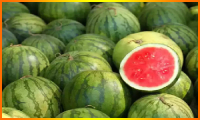
Government details procedure for watermelon seeds imports.
The Directorate General of Foreign Trade (DGFT) on Thursday said that the imports of watermelon seeds up to October 31 this year would not exceed 35,000 metric tonnes and will be allowed on an actual user basis only.
The DGFT laid out a procedure for imports up to October 31, 2023 and has invited fresh applications for licenses for the imports till June 15.
'The applications shall be considered on actual user basis to processors only, based upon their own processing capacity is required to be provided,' the DGFT said in a public notice, adding that the quantity of the imports for each applicant would be decided by the Exim Facilitation Committee.
In June last year, the government partially eased the norms for the import of these seeds.
Source: economictimes.indiatimes.com
India is beginning to punch its weight in global exports.
India is rising in the ranks of global trade. Between 2010 and 2020, its global export share stagnated below 1.8%. But since 2021, its goods exports have held up much better than other economies in Asia. Its global export share has reached 2.6%, much higher than Vietnam's 1.5%, and only slightly below South Korea's 2.7%. Although it is still trailing far behind China, India is beginning to punch its weight in global exports.
So, what's happening? There are five structural shifts:
Geopolitics: Since the US-China trade war, MNCs have intensified their search for manufacturing alternatives to China. China's share in US imports has slid by 2.5 percentage points to 15.5% since end-2019. Its Asian peers, including India, have benefited from this shift. India's share of US imports has risen from 2.3% to 2.7% over the same period. In absolute terms, India's share is still small. But there is considerable room to grow, given the large scale of production that India offers.
Some other economies, like Vietnam, have already won a larger share of the shifting supply chains. This is partly due to long-standing preferential access that Vietnam enjoys in the US market - it signed a free trade deal way back in 2000 - which India does not.
Offshoring of services: India already has an established business model for (offshored) IT service exports. The surge in labour costs in developed markets and a global push to digitisation during the pandemic meant a host of other services - financial, business, research, consulting, etc - are increasingly being offshored to India.
In FY2021 and FY2022, combined fixed FDI into financial and business services rose to $45.6 billion, much higher than the $25.6 billion into manufacturing. This surge in investment has led to a rapid expansion of global capability centres (GCCs), a market expected to reach $85 billion from an estimated $40 billion currently. This also marks a welcome diversification in India's service export basket. Business services, for example, have had a stronger run than IT services in recent quarters, keeping aggregate services exports resilient.
Make in India: GoI has focused on infrastructure build-up via record budgetary allocations to capex, alongside production-linked incentive (PLI) schemes to boost manufacturing and exports. Some of it is already yielding results. India's mobile phone exports, for example, have spiked in the last two years.
Exchange rate management: RBI has probably actively pursued a depreciated nominal effective exchange rate (NEER) to support manufacturing and exports. This is evident from the continuous decline in NEER in recent years, simultaneous to the rise in forex reserves. In fact, RBI has not allowed the rupee to appreciate, although external headwinds that led to the currency's decline in 2022 have receded.
This shift in RBI's forex policy is not surprising. Policymakers have considered stable, undervalued exchange rates as necessary (if not sufficient) tools in the policy arsenal to support manufacturing and exports in the early phases of growth and industrial development.
Trade deals: Unlike the four other structural forces already playing out, a greater focus on trade deals, which will lead to greater gains in the medium term, may not be showing up in the data yet. But it will be a vital cog in the wheel.
For about a decade since 2011, India did not negotiate a single trade deal with any major economy. It is also the same period when its share of global exports stagnated. Preferential market access is undoubtedly vital to export ambitions. New Delhi has made a good start with the India-UAE Comprehensive Economic Partnership Agreement (CEPA) and the India-Australia Economic Cooperation and Trade Agreement (ECTA) coming into force last year. It still needs to put a lot of diplomatic effort in this direction.
For perspective, Vietnam's numerous trade deals bestow it preferential access to more than 80% of global GDP. For India, this metric is only about 20-25%. India has much lower labour costs than other major Asian economies and, more importantly, offers scale with its large labour force. In the past, these were insufficient to attract MNCs into export-oriented investments. But the structural forces discussed above have cast India in a new light.
The structural boosts to exports are still at a nascent stage and have a considerable way to go. Take the supply chain diversification out of China. For every 1% gain in US import share, India can add an estimated $30-40 billion to its annual exports. Thanks to 'Make in India', global electronics giant Apple is looking to increase India's production share to 40-45% by 2027, up from less than 5% currently. For perspective, Apple's iPhone sales in 2022 reaped $206 billion in revenues.
For India to emerge as the new export powerhouse, it needs to enhance the whole foreign trade ecosystem. Isolated boosts won't cut it. It needs increased preferential access via free trade deals with more countries, stable and competitive exchange rates, improving infrastructure and policy support for manufacturing, and continued supply of inputs like labour with required skills will all be indispensable. From here on, much depends on whether policymakers can maintain the momentum.
Source: economictimes.indiatimes.com

NABARD s Mango Fest 6.0 from June 8
In the fest, different varieties of mangoes including Sundarja, Kesar, Chosa, Langda and Dussehri, produced from the different NABARD-supported Wadi projects in the state will be exhibited and put on sale. The mangoes will be directly sourced from the farmers’ fields and no chemicals are used for ripening of the produce.
In this scheme, fruit production is not the only objective, but it also includes sanitation, soil and water conservation, making barren land cultivable and empowering women.
Mango stalls will be set up at NABARD Regional Office, Bittan Market. All the city dwellers can visit here for chemical free mangoes. These stalls will open on June 08 from 11.00 am and will remain open till June 12.
Since, the year 2023 is being celebrated as International year of Millet (IYOM) hence in addition to mangoes, products of millets from the Wadis and NTFP products are also available to the residents of Bhopal city.
Source: freepressjournal.in
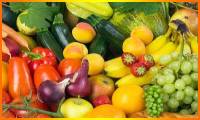
Horticulture emerges as eco growth driver in Telangana
Telangana’s horticulture sector is driving agricultural innovation and economic growth. Covering an extensive area of 12.94 lakh acres, the sector produces a remarkable 61.64 lakh MTs of crops. Despite occupying only 7 percent of the total agriculture area, horticulture contributes 34 percent to the Agriculture Gross Value Output (GVO) and excels in various crops, ranking high in areas such as chillies, turmeric, mangoes, and vegetables.
After the formation of Telangana, the government prioritised the horticulture sector through various subsidy programmes, including the NMEO-Oil palm, Per Drop More Crop (PDMC - RKVY) for micro-irrigation, Mission for Integrated Development of Horticulture (MIDH), National Bamboo Mission (NBM), and Sub-Mission on Agro-Forestry (SMAF).
The establishment of Centres of Excellence (COEs) in Jeedimetla and Mulugu further enhanced training and demonstration opportunities for farmers. The first CoE, dedicated to vegetables and flowers, is located in Jeedimetla (V), Medchal district, covering an area of 10.35 acres. The second CoE, focused on fruits, is situated in Mulugu (V), Siddipet district, spanning an area of 53.25 acres.
Pandal cultivation, promoted under the RKVY scheme, has gained popularity, covering 4,564 acres and benefiting 3,945 farmers with financial support of Rs 45.54 crore. Urban farming initiatives have encouraged households to cultivate vegetables in backyards and terraces, with over 5,900 kits distributed to 4,330 households. The National Bamboo Mission focuses on increasing bamboo plantation in non-forest lands, with 2.21 lakh bamboo plants distributed. The Sub-Mission on Agro-Forestry promotes tree plantation alongside crops and livestock, benefiting 1,064 farmers with 7.61 lakh plantations.
Telangana participates in the Cluster Development Programme, with Mahabubnagar district selected as a pilot cluster for mango cultivation. This initiative addresses various aspects of the horticulture value chain, and Prasad Seeds Pvt Ltd has been accepted as the Implementing Agency for the Mahabubnagar Mango Cluster.
Encouraged new varieties in Fruit Crops: Mango, Guava, Citrus, Pomegranate, Custard apple and many more
Varieties –
Mango: Dashehari -35, Arunika, Ambica.
Sweet Orange: Katol Gold & Brazilian Oranges
Mandarins: Nagpur mandarins
Acid Lime: NRCC-7
Lemon: Konkan lemon
Guava: Arka Kiran &Arka Rashmi, VNR – Bihi
Pomegranate: Bhagwa, Super Bhagwa
Custard Apple: NMK-1
Tamarind: Ananta Rudhira&TettuAmalika
Jamun: CISH-J 37 From CISH Lucknow, Konkan bahadoli.
Turmeric: ACC 48 (Pragathi), ACC79, Released by IISR, Calicut,
♦ Encouraged New Fruit crops suitable for Telangana: Apple ber, Date Palm and Dragon Fruit.
♦ Encouraged New Technologies / Best practices: High Density Plantations in Mango, Trellies, Creeper Mesh for Vegetables, Mulching, Raised Bed, Poly house & Shade net.
Source: thehansindia.com
Kolkata to host BIMSTEC Expo and Conclave next week
Kolkata, Jun 7 (PTI) A BIMSTEC Expo and Conclave will be held in Kolkata next week, aiming at bringing together government officials, policymakers and business leaders from the member countries.
The three-day event starting on June 13 will be attended by over 400 trade and industry representatives from seven BIMSTEC member countries – Bangladesh, Bhutan, India, Myanmar, Nepal, Sri Lanka, and Thailand, according to an ICC statement.
The conclave will also have a high-level session with over 140 speakers from the BIMSTEC region.
The event will focus on a range of issues, including trade facilitation, agri-food, infrastructure development, digital connectivity, sustainable tourism, advancement of healthcare, tea, gems and jewellery, climate change, startups, and fostering innovation.
The Bay of Bengal Initiative for Multi-Sectoral Technical and Economic Cooperation (BIMSTEC) is a regional organisation that was established in 1997. The region has a combined population of over 1.68 billion people and a GDP of around USD 2.88 trillion.
The programme is being held at a time when Sri Lanka and Bangladesh are facing economic headwinds.
The event will provide a platform for businesses to showcase their products and services, and to network with potential buyers and partners among the countries, the statement said.
It will also help promote cross-border collaboration and contribute to the growth of regional trade and investment.
The region has the potential to become a major economic powerhouse, but it needs to address a number of challenges, including trade barriers, infrastructure bottlenecks, and regulatory issues, the statement said. PTI BSM NN NN
This report is auto-generated from PTI news service. ThePrint holds no responsibility for its content.
Source: theprint.in
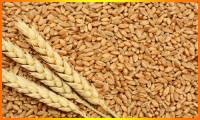
As we have ample stocks, no need for wheat imports now: DGFT
At 26.2 million tonnes currently, wheat procurement has surpassed last year’s total procurement of 18.8 million tonnes
As wheat procurement for the current season draws to a close, the Government is optimistic that there is enough stock available with farmers and traders to meet domestic demand and there will unlikely be a need for imports.
'As of date, the need for import has not been felt. Production has been good. Since there is a prohibition in force, that means there is adequate stock with farmers and traders. The FCI (Food Corporation of India) also has adequate stocks,' Santosh Sarangi, Director General of Foreign Trade (DGFT), told businessline.
Wheat procurement in the current rabi season was at 26.2 million tonnes (mt) as of June 6, which has already surpassed last year’s total procurement of 18.8 mt. The wheat stock with the Food Corporation of India (FCI) has improved to 31.2 mt as of May 30 from 29.03 mt as of May 1, whereas the annual requirement of the government for public distribution and other welfare schemes is 18.4 mt.
Despite untimely rains, major contributing factors to healthy procurement this year have been the grant of relaxation by the government in quality specifications of wheat affected by rains, opening of procurement centres at village and panchayat level, carrying out procurement through co-operative societies, gram panchayats, and arhatias, and permission to engage FPOs for procurement operations, the Food Ministry said last week in a statement.
However, looking at the mandi prices prevailing in Uttar Pradesh and Bihar during the current procurement season, where normally farmers used to sell below minimum support price (MSP), many traders are sceptical about the government’s estimate of record production of nearly 112 mt. The Roller Flour Millers Association of India, which hired a private agency, has pegged the production close to 103 mt.
Some traders may be spreading rumours about a possible shortage of wheat and the need to import as they want a rate increase for the wheat stock they have aggregated, another official tracking the matter said.
'It is difficult to believe that any stockist will buy at a higher price. Had the production been at record, prices could not have gone above MSP when exports are banned, and there is no possibility of opening the window this year,' said a trader. With current duty of 40 per cent at $290/tonne free-on-board, wheat is unlikely to be imported even in southern ports, the trader said. Any decision on import has to be at zero duty, and it may help cool the sentiments, he added.
The all-India average retail price of wheat has softened from a peak of ?33.21/kg in February to ?31.27/kg in May, but it is still higher by 6.5 per cent from a year ago (May 2022). Atta (wheat flour) prices were higher by 10.5 per cent at ?36.42/kg last month from a year ago, though down from a record ?37.8/kg in February this year, consumer affairs ministry data show.
Source: thehindubusinessline.com

India, US hold 1st meet of Strategic Trade Dialogue ahead of PM Modi's visit
The new dialogue mechanism was launched during commerce secretary Gina Raimondo’s visit to New Delhi in March
Foreign secretary Vinay Mohan Kwatra meets US Under Secretary of State for Political Affairs Victoria Nuland and Under Secretary for Industry and Security Alan Estevez at the first meeting of the India-US Strategic Trade Dialogue (IUSSTD), in Washington on Tuesday. (Victoria Nuland Twitter)
Washington Two weeks before Prime Minister Narendra Modi’s State visit, India and the US held the first Strategic Trade Dialogue with a focused agenda of reviewing existing US export control regulations that affect the development of strategic trade in emerging and critical technologies in Washington DC on Tuesday.
Foreign secretary Vinay Mohan Kwatra led the Indian delegation while State department’s undersecretary for political affairs Victoria Nuland and Commerce department’s undersecretary for industry and security Alan Estevez led the US side during the talks. The new dialogue mechanism was launched during commerce secretary Gina Raimondo’s visit to New Delhi in March and represents a key institutional innovation to unlock the potential of high-tech trade between the two countries envisaged as a part of the initiative on critical and emerging technologies (ICET).
In a statement after the talks, the Indian side said that the dialogue 'focused on ways in which both governments can facilitate the development and trade of technologies in critical domains such as semiconductors, space, telecom, quantum, AI, defence, biotech and others'.
Source: hindustantimes.com

Malaysia: Bernas increases rice imports by 150,000 tonnes to prevent supply disruption
Deputy Agriculture and Food Security Minister Chan Foong Hin said the additional rice import was decided during its engagement session between the ministry and Bernas last week which found higher demand for the staple food in the market now compared to last year.
'The government frequently holds engagement sessions directly with Bernas to ensure the issues of the industry are dealt with quickly.
'Therefore, the possible shortage of rice as raised in the Chinese media is inaccurate. In the current situation, retailers are facing lower domestic rice supply and they will import more rice via Bernas,' he said.
He was speaking at the winding up of the debate on the Auditor-General’s Report Series 2 at Dewan Rakyat on Wednesday (June 7) in reply to Khoo Poay Tiong (PH-Kota Melaka) who wanted to know the measures taken by the government to ensure an adequate supply of rice for the people.
While touching on the 30% profit sharing of rice imports with rice farmers, Chan said it was not part of the 10 social obligations contained in the company's concession agreement with the government.
'This is one of the proactive steps taken by Prime Minister Datuk Seri Anwar Ibrahim in his negotiations with Bernas to assist padi farmers... we welcome the proposal to include the matter as one of the social obligations after being finalised by the ministry.
'The ministry is still in the process of finalising the detailed mechanism for the implementation of this 30% profit sharing and will make an announcement once it is resolved,' he said. - Bernama
Source: thestar.com.my
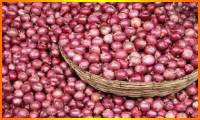
Bangladesh government approves import of 280,800 tons of onions
In a press release on Monday, the Ministry of Agriculture stated that the government of Bangladesh has approved the import of 280,800 tons of onions. Earlier, Agriculture Minister Md. Abdur Razzaque told reporters that the Ministry of Agriculture will give permission or IP to import onions from Monday. The ministry has taken this decision to protect the interests of all consumers, including mitigating the suffering of the working people and the limited income people due to the abnormal increase in onion prices.
The price of onion fell to Tk 75 per kg after the announcement of the imports from India. In the wholesale market of Khatunganj, onions that sold above Tk 90 to 95, have been offered for sale at Tk 75 per kg at the beginning of the day on Monday. However, buyers are hard to find.
Retail traders do not want to buy onions from the market due to the fear that the price will fall further. As a result, no matter what price is given, buyers are not found in the wholesale market. Because onion is mainly bought by retail traders.
Source: freshplaza.com