
G20 agri ministers meet: India-Canada hold talks, discuss bilateral relations.
Canada’s minister of agriculture and agri-food Marie-Claude Bibeau took part in the G20 agriculture ministers meeting in Hyderabad last week where she also held a bilateral meeting with minister of agriculture and farmers welfare Narendra Singh Tomar on the sidelines of the multilateral event.
'Agricultural clean technologies, sustainable development and India’s potential as a driver of global food security through its agricultural sector and millet production', Bibeau wrote on her official Twitter account after her meeting with Tomar.
She later added that they discussed agricultural clean technologies, sustainable development and India’s potential as a driver of global food security through its agricultural sector and millet production.
After his meeting with Bibeau, Tomar said, 'Canada has a huge agricultural production and agro-technological advancements, which offer potential for cooperation with India'.
He added that their discussions focused on reforms in agricultural relations between the two countries.
This is the second visit by a Canadian cabinet minister to India for G20 events after the relationship took a hit due to the appearance of a parade float featuring the assassination of late Indian Prime Minister Indira Gandhi, during an event on June 4 in Brampton on the 39th anniversary of Operation Bluestar, the military action ordered by the late PM in 1984 to flush out separatist leader Jarnail Singh Bhindrawale and his supporters from the Golden Temple in Amritsar.
The incident had sparked a huge outrage in India.
Reacting to the developments, minister of external affairs S Jaishankar expressed his disappointment.
'Frankly, we are at a loss to understand other than the requirements of vote bank politics why anybody would do this... I think there is a larger underlying issue about the space, which is given to separatists, to extremists, to people who advocate violence,' Jaishankar said while addressing the media.
Recently, India has sent a note verbale, an official diplomatic communication, to Global Affairs Canada (GAC), over pro-Khalistan groups planning a car rally to a memorial in Toronto established in memory of the 331 victims of the bombing of Air India flight 182, the Kanishka, on June 23, 1985.
The rally, which is scheduled for June 25 has, riled India over the fact that it honours Talwinder Singh Parmar, the Babbar Khalsa International leader, considered the mastermind of the terror attack.
Canada’s minister of international development Harjit Sajjan participated in the three-day G20 development Ministers meeting in Varanasi after the rally’s report surfaced.
Canada’s minister of international trade, export, small business and economic development, Mary Ng’s department has issued an invitation to Canadian companies interested in exploring new business opportunities in India, while announcing the dates for the trade mission from October 9 to 13.
Ng is also expected to visit India in August for the G20 trade ministers meeting where she is expected to meet commerce and industry minister Piyush Goyal and carry forward their discussions towards putting together the Early Progress Trade Agreement (EPTA) between the two countries.
Goyal visited Ottawa in May and held bilateral talks with Ng providing momentum to the negotiations.
Source: hindustantimes.com
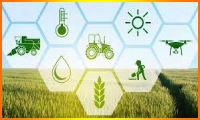
We need to empower farmers with innovation: PM Modi.
Expressing his strong belief that the ‘fusion approach’ being taken by India is the best way to address several issues in agriculture, Prime Minister Narendra Modi said that India’s policy of a fusion of ‘back to basics’ and ‘march to future’ has been promoting natural farming as well as technology-enabled farming, resulting in the farmers across the country taking up natural farming.
Virtually addressing the Agriculture Ministers as part of the G20 Agriculture Working Group meetings being held at Novotel, HICC, Madhapur on Friday, Modi asserted that India’s G20 priorities in agriculture focused on healing our ‘One Earth,’ creating harmony within our ‘One Family’ and giving hope for a bright ‘One Future.’
He said that the farmers practising natural farming were not using synthetic fertilisers or pesticides, and their focus has been on rejuvenating the mother earth, protecting soil health, producing ‘per drop, more crop,’ and promoting organic fertilisers and pest management solutions.
The PM pointed out how farmers have been using technology to boost productivity, generating and using solar power in their farms, using soil health cards to optimise crop selection, and using drones to spray nutrients and monitor their crops.
Explaining how due to the influence of markets and marketing the value of traditionally grown food crops like millets has been lost, Modi appealed to the world to embrace 'Shri Anna Millets as the food of our choice,' as 2023 was being celebrated as the International Year of the Millets.
Opining that the traditional practices from different parts of the world could inspire us to develop alternatives for regenerative agriculture, the PM emphasised the need to empower the farmers with innovation and digital technology and to make solutions affordable for small and marginal farmers in the Global South, where 60% jobs were in the agriculture sector.
He said that the responsibilities of an agriculture minister were not only limited to handling one sector of the economy but also extended towards securing the future of humanity. He urged the Agriculture Ministers to deliberate on how to undertake collective action to achieve global food security, find ways to build a sustainable and inclusive food system that focused on marginal farmers and strengthen the global fertiliser supply chains.
Around 200 delegates from G20 member countries, nine special invitee countries and representatives of international organisations have attended the meetings, which will conclude on Saturday, with the AWG adopting resolutions for future action.
Source: newindianexpress.com
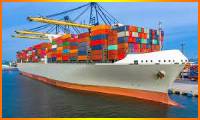
Indian trade delegation visits Russia to explore agriculture exports.
A trade delegation from India is on a four-day visit to Russia to explore opportunities of boosting Indian farm and processed food exports from $750 million to $3 billion in three years to balance burgeoning Russian goods imports that saw over 369% year-on-year growth in 2022-23 to $46.33 billion, mainly on purchase crude oil.
Sensing robust demand for food and food products in Russia, a 50-member delegation of the Federation of Indian Export Organisations (FIEO) is visiting the country between April 24 and 27, which will 'further deepen the economic ties' between the two countries, director general and CEO Ajay Sahai told HT from Moscow.
There is a 'massive push' from governments of the two countries to enhance bilateral trade, he said. The Indian exporters are in Russia close on the heels of Russian deputy prime minister Denis Manturov’s India visit last week that revived a dormant free trade agreement (FTA) negotiations involving Russia-led Eurasian Economic Union (EAEU). Manturov is also Russia’s trade minister.
'We see significant demand for India food items, soy, animal feed and processed food,' Sahai said. 'Indian exporters can supply these items. We are also discussing the possibility of rupee-rouble trade.' Other potential areas of exports are automobiles and auto components, he said. The demand for these items have jumped in Russia because many foreign manufacturers and suppliers have shut Russian operations.
The delegation is taking part in buyers and sellers’ meetings in Moscow and St Petersburg, he said. FIEO signed a memorandum of understanding with Business Russia to promote trade and investment between the two nations. Business Russia is an apex industry association representing the private sector.
'The two organizations will cooperate to arrange exhibitions, buyer-seller meetings, workshops, seminars and encourage enterprises to work in tandem with their counterparts for joint ventures,' Sahai said. 'We are looking to increase our agro and processed food exports from about $750 million to over $3 billion in next three years,' said FIEO board member NK Kagliwal, who is leading the Indian delegation.
India can diversify exports to other areas such as electronics, medical devices, solar cells and textiles to reduce the trade deficit, Sahai said.
During the India visit of Manturov, external affairs minister S Jaishankar had highlighted the urgent need to address the trade imbalance created by the recent increase in two-way trade to over $45 billion.
India-Russia trade saw a jump since 2022, mainly driven by India’s increased purchases of discounted Russian crude oil after the producers’ cartel – the Organization of the Petroleum Exporting Countries (OPEC) -- and its allies resorted to unprecedented output cuts to keep international oil prices high. Due to Western sanctions on Moscow over the invasion of Ukraine, India and China have emerged as two preferred buyers of crude from Russia.
The two countries have also agreed to revive the FTA negotiations. 'The EAEU FTA is being renewed, which could not progress much due to pandemic,' a government official said, requesting anonymity. Russia-led five-member EAEU includes Armenia, Belarus, Kazakhstan, Kyrgyzstan. A joint statement to launch negotiations for FTA between India and the bloc was signed on June 3, 2017.
In fact, a meeting between India and EAEU was scheduled on March 16-18, 2020, in Moscow after a report of a joint feasibility study group was prepared to launch the negotiations. The meeting could not take place due to the spread of the Covid-19 pandemic, the official said.
The FTA will help the two partners to collaborate in key areas such as oil and gas, gold and diamond, timber, pharmaceuticals, agriculture, aviation, railways and logistics, he added.
Source: hindustantimes.com
From Rs 84,000 crore to Rs 174k crore, UP exports up 100% in 6 years.
An assessment undertaken by the UP State Export Promotion bureau has noted that exports from the state have gone up over 100% in the past six years.
Data from the department indicated that UP undertook exports to the tune of Rs 84,000 crore in 2016-17. The corresponding figure for the 2022-23 year was Rs 174,000 crore. The department is eying to make exports cross Rs 200,000 crore in the present financial year.
Details indicated that the top 10 buyers of goods from UP are USA, UAE, Nepal, UK, Germany, Vietnam, the Netherland, France, China and Egypt. Together they contribute to 60% of Uttar Pradesh's exports.
Among the products which are driving up the state’s exports are telecom instruments, buffalo meat, RMG cotton, including accessories, RMG manmade fibre, leather footwear, saddlery and harness, aluminum and aluminum products, silk and handmade carpets, machinery and engineering goods, wheat, rice, sugar, iron and steel, handicrafts etc.
When contacted, Nand Gopal Gupta Nandi, cabinet minister for industries, export promotion,
NRI and Investment Promotion said: 'The plan for the 2023-24 financial year includes widening the export basket and increasing the number of exporters in the state, capacity building on export processes, unlocking the export potential of ODOP and geographical indication, leveraging e-commerce for exports growth, hand holding expertise at ground level, facilitate product development among other things.'
Earlier, as per an assessment by Federation of India Exports Organisation (FIEO), the reasons for UP’s growth have been the export promotion schemes of the state government. If an exporter is registered with the export promotion bureau, they will be helped with 60% of the stall charges at foreign fairs, up to a maximum of Rs 2 lakh, 60% of economy air fare up to a maximum of Rs 1 lakh, 60% of the total expenditure on publicity up to a maximum of Rs 75,000 annually, 75% of the cost of sending samples to a foreign buyer, up to a maximum of Rs 1 lakh per annum and 50% of the cost of certification, up to a maximum of Rs 2 lakh per annum.
Source: timesofindia.indiatimes.com
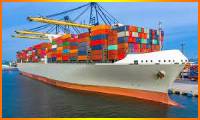
India weighs barter trade with crisis-hit Egypt in credit line talks - sources.
India is weighing a proposal to begin barter trade in goods like fertiliser and gas with Egypt as part of a wider deal that could see New Delhi extending a credit line worth several billion dollars to Cairo, sources told Reuters.
An agreement is likely to be announced later this month during Indian Prime Minister Narendra Modi's first visit to Egypt, which faces a prolonged foreign currency shortage, a source with knowledge of the matter said.
'The agreement would allow Egypt to make purchases in rupees and bartering is being considered as a means to settle this debt through the sale of Egyptian products that might be of use for India,' the source said.
India's foreign ministry is consulting with departments on their appetite for fertiliser and gas from Cairo as part payment for the credit line, an Indian official said.
New Delhi is keen to diversify its fertiliser imports, especially after 2021, when some Indian states faced shortages due to Chinese export restrictions and a record price surge.
As part of the facility, Egypt is keen to take wheat supplies, among other items, but New Delhi is unlikely to ship the grain due to its wheat export ban, the Indian official added.
India, the world's second-largest wheat producer, banned wheat exports in May 2022 to help control rising domestic prices, rescinding a plan to export 3 million tons of wheat to Egypt in the year 2022/23. Egypt now depends mostly on Russia for the grain.
'It's a negotiation. Which companies will be involved and in which commodities? All of that is still in discussion,' Egypt's supply minister Ali Moselhy told Reuters.
'There are a lot of discussions but up until now the model is not defined,' said Moselhy, who did not specify the size of a possible credit line.
The other sources from India and Egypt did not wish to be identified as they are not authorised to speak to the press.
India's external affairs ministry, finance ministry, trade minister, and Egypt's foreign ministry and trade ministry did not immediately respond to requests for comment.
India exported $4.11 billion of goods to Egypt in the last fiscal year, while importing $1.95 billion.
Egypt has deferred payments for its large wheat purchases, in some cases by months, due to shortage of funds, Reuters reported last month.
Egypt is trying to stabilize an economy hit by the pandemic and high commodity prices, prompting foreign investors to pull about $20 billion out of its financial markets.
Source: economictimes.indiatimes.com
Govt likely to come out with logistics cost estimate by Sept: DPIIT Official.
The government is working on a framework to assess the logistics cost in the country and is expected to get a realistic estimate by September, a senior DPIIT official said on Friday. At present, the government is going by certain estimates, which suggest that India's logistics cost stands at about 13-14 per cent of the country's GDP (gross domestic product).
Special Secretary in the Department for Promotion of Industry and Internal Trade (DPIIT) Sumita Dawra said that the government is coming out with its logistics cost framework.
'So our framework is being done with the help of our technical partner and it's almost done. But then we have to calculate and I think by the month of September, we will have realistic logistics costs in the country. We will define what are the components and we will have our own estimates,' she said while speaking at CII's conclave on trade facilitation.
Logistics cost plays a key role in facilitating trade and enhancing the competitiveness of traders.
The department conducted a workshop in March on the logistics cost framework, and a task force was set up to formulate a framework to determine the cost in the country.
The task force members include representatives from Niti Aayog, the Ministry of Statistics and Programme Implementation (MOSPI), the National Council of Applied Economic Research (NCAER), academic experts, and other stakeholders.
The government has rolled out a national logistics policy and PM Gati Shakti initiative to boost the competitiveness of the industry and cut logistics costs.
Speaking at the conclave, Sanjay Budhia, Chairman of CII National Committee on EXIM and Managing Director of Patton Group, said that continued focus on creating a paperless trading ecosystem by measures like faceless assessment, risk management system, and direct port delivery have started showing results at the ground level.
Source: economictimes.indiatimes.com

Revolutionising agriculture & FMCG: India s ambitious plan for world s largest grain storage capacity.
Agriculture remains a vital pillar of the Indian economy and plays a central role in the nation’s socio-economic development. It contributes approximately 19 per cent to the GDP and supports a significant majority of the population, with about two-thirds of people relying on it.
The performance of agriculture has far-reaching implications for the growth of other industries and the overall economy, as it is interconnected through backward and forward linkages. It not only serves as a source of livelihood and food security for a large portion of the Indian population but also holds special importance for many FMCG organisations.
According to the National Sample Survey, the average monthly income per agricultural household has witnessed a notable increase from Rs.6,426 in 2012-13 to Rs.10,218 in 2018-19. The government has implemented various measures in targeted areas to bolster farmers’ income. The PM KISAN Scheme ensures income support for farmers, while the Pradhan Mantri Fasal Bima Yojana provides crop insurance coverage. Additionally, the Pradhan Mantri Krishi Sinchai Yojana focuses on enhancing irrigation facilities.
Farmers also have access to institutional credit through initiatives such as the Kisan Credit Card and other channels. More recently, the Union cabinet approved a scheme that plans to allocate Rs.1 trillion towards expanding cooperative sector storage capacity by 70 million tonnes. This ambitious project, set to become the world’s largest grain storage plan within the cooperative sector, aims to address key challenges faced by farmers and strengthen the country’s food security.
Let us delve into the significant benefits that this ambitious plan holds for India.
Empowering farmers, expanding opportunities
The increase in grain storage capacity on such a monumental scale will empower farmers to think beyond traditional boundaries. With the ability to store their produce effectively, farmers can now explore large-scale production and tap into export markets. This newfound flexibility will enable them to maximise their outputs, leading to increased incomes and a brighter future for farming communities across the nation.
Price stability, reduced distress sales
Inadequate storage facilities often force farmers into distress sales, negatively impacting their income and perpetuating a cycle of losses. However, with a significant expansion in storage capacity, the risks associated with crop damage and distress sales can be minimised. The availability of proper storage infrastructure will ensure that farmers can store their produce efficiently, reducing wastage and stabilising prices. This stability will not only benefit the farmers but also provide consumers with a consistent supply of essential food grains at reasonable prices.
Economic impact, raw material availability
The scale of this storage capacity expansion will have a profound impact on the Indian economy as a whole. With a more stable agricultural sector, India can become a reliable source of raw materials throughout the year, bolstering various industries such as food processing, FMCG, and agribusinesses. This reliable availability of raw materials will enable these sectors to flourish, attracting investment, creating jobs, and boosting economic growth in both rural and urban areas.
Strengthening food security, meeting global commitments
Food security is a global concern, and India, as a member of the G20 and currently holding the G20 presidency, recognises the importance of addressing this issue. By significantly increasing grain storage capacity, India aims to enhance its food security measures, reducing its reliance on food grain imports. With a more robust storage infrastructure, the country can better manage its buffer stock and ensure a consistent supply of essential food grains to its citizens. This achievement aligns with the goals set by the G20 in achieving sustainable food security for all. Through this concerted effort, India aims to contribute to a more secure and resilient food system, ensuring a consistent supply of nutritious food for its citizens and beyond.
Job creation, rural development
The expansion of storage facilities in rural areas will create numerous employment opportunities. The construction, management, and maintenance of warehouses and storage units will generate jobs, boosting rural development and improving the standard of living for those residing in agricultural communities. The increased economic activity in these regions will lead to overall prosperity and contribute to the equitable growth of the nation.
Boosting FMCG sector, sustainable agriculture
The FMCG sector will experience a significant boost as a result of this ambitious storage capacity plan. With improved storage infrastructure, the sector can rely on a consistent and abundant supply of raw materials, enabling them to scale up production and meet growing consumer demands. This expansion will foster innovation, investment, and competition, resulting in a dynamic FMCG sector that contributes to the country’s economic growth. Additionally, sustainable agricultural practices can be encouraged through the efficient management of stored grains, reducing wastage and promoting resource conservation.
Conclusion
India’s ambitious plan to establish the world’s largest grain storage capacity in the cooperative sector is poised to revolutionise agriculture and the FMCG industry. By empowering farmers, stabilising prices, strengthening food security, creating jobs, and bolstering the FMCG sector, this visionary scheme promises to transform the agricultural landscape of the country. As India works towards achieving its global commitments and fostering sustainable agricultural practices, the storage capacity expansion plan stands as a shining example of India’s dedication to economic growth, food security, and rural development.
Source: thehindubusinessline.com
India, US authorities working to quickly conclude pact for faster customs clearances.
India and the US are working to ‘quickly conclude’ the mutual recognition agreement (MRA) for authorised economic operators of both countries to expedite customs clearances, CBIC Chief Vivek Johri said on Friday.
The two countries in September 2021 entered into anA to recognise the AEOs of both countries. The AEO programme enables Customs administration to identify safe and compliant exporters and importers and to provide them with better facilitation.
Talking to reporters on the sidelines of a CII event, Johri said the customs authorities of India and the US had discussions to recognise the AEOs of both countries and give reciprocal benefits.
As part of the agreement, customs authorities of one country visit the other and evaluate their AEO programme and make sure that the features that are there for accrediting an entity as an AEO are strong enough to make the entity risk-free.
'That evaluation has already been done, and the language and the text of the agreement have also been worked out. Now it is going through vetting so we will try and conclude it quickly,' Johri said.
Asked by when the AEOA would be implemented, Johri said there is no fixed timeframe for it.
'There is a process that we have to go through and it goes to Cabinet for approval because it’s an international agreement. So we are going through the process,' said the chief of the Central Board of Indirect Taxes and Customs (CBIC).
In 2022-23, the US was India’s biggest trading partner and bilateral trade between the two countries stood at USD 128.8 billion.
India’s exports to the US were USD 78.54 billion, while imports were USD 50.24 in 2022-23.
India already has implemented similar AEOA agreements with other countries, like Korea. 'We are talking to the US and some other countries also,' Johri added.
Source: indianexpress.com
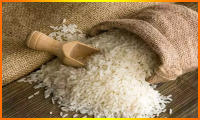
Enabling clause. G2G demand for broken rice mostly from African nations, say officials.
The Directorate General of Foreign Trade (DGFT) put an enabling clause last month in its prohibition order for export of broken rice allowing exports on government to government (G2G) basis in order to meet requests from some African nations, official sources have said.
'There is only limited G2G demand for broken rice. It is mostly from African nations. When the DGFT came up with prohibition order on export of broken rice, the government had thought that there would be no demand from governments as there are sources other than India. But then the situation changed,' an official tracking the matter told businessline.
According to a notification issued by the DGFT on May 22, while the export policy of broken rice is prohibited, exports will be allowed on the basis of permission granted by the government to other countries to meet their food security needs and based on the request of their government.
'If you look at our previous export ban notifications for wheat and wheat flour banning, we kept a provision like this allowing exports on a G2G basis in the original notification itself. In the case of notification on export ban on broken rice, such a provision was not there. Hence, an amendment had to be done when requests for exports started coming in,' the official said.
The requests for exports have come in for small quantities which will not affect India’s domestic stocks or food grain availability, the official said.
'It is mostly African countries that put in requests for broken rice, at least till recently. The exports on a G2G basis are unlikely to make a any significant dent in India’s food grain stocks,' the official said.
Export ban impact
The Centre placed a ban on export of broken rice in September 2022 due to an increase in its price, a shortage in supply for domestic requirements, and a steep increase in exports.
India’s exports of broken rice fell 13.9 per cent in 2022-23 to $983.5 million from $1.13 billion the previous fiscal. Exports got heavily curbed after the export ban.
India’s wheat and rice stock in the Central Pool is comfortable at over 57.9 million tonnes (mt) and the country can meet its foodgrain requirements, the Food Ministry said in a statement earlier this month.
Source: thehindubusinessline.com

Mango exports to US double, realisation high.
India’s exports of Alphonos, Kesar and Banganpalli mangoes to the high-value the United States market has more than doubled in the current season (April-June) compared to the year-ago period, because of a decline in air freight and a new irradiation facility in Ahmedabad.
Sources told FE that mango exports to the US have crossed 2,000 tonne in the current season, up from 891 tonne in the 2022-23 season. The exports of Banganpalli and Kesar varieties have commenced this season to South Korea, another high value market. Exports to the United Kingdom is currently being undertaken.
Exporters said that Alphonso and Kesar varieties have been sold in the US market at a premium of $ 9/a kg and $ 7/ a kg respectively.
Trade sources said that one of the factors behind the spike in mango exports to the US and the UK this year has been the low cost of air freight rates, which rose sharply in the last few years because of the pandemic, has ‘normalised’ since then.
'The price gap between an Indian mango and those sourced from South American countries has reduced and because Indian mangoes are sent through air freight, its aroma and freshness is preserved while mangoes from South America is transported through road to the USA,' Kaushal Khakhar, CEO, Kay Bee Exports, one of the leading mango exporter from Maharashtra, told FE.
Currently, mangoes exported to the US undergo an irradiation process, where fruit is exposed to gamma radiation, which kills insects or pesticides inside the fruit while countries such Japan and South Korea seek imports of fruits which have undergone vapour heat treatment and hot water treatment for eliminating presence of pests.
Officials said that the irradiation facility at Gujarat Agro Industries Corporation, Ahmedabad, along with similar facilities at Vashi (Navi Mumbai), Nasik and Bengaluru has helped expand mango exports to a high value market such as the United States.
The exports of mangoes were halted in 2020 and 2021 as inspectors from the United States department of agriculture (USDA) could not visit India for inspection of irradiation facilities due to travel restrictions because of Covid19.
The Agricultural and Processed Food Products Development Authority (APEDA) has assisted state government agencies in setting up vapour heat treatment facilities in Saharanpur (Uttar Pradesh), Vashi (Maharashtra), Nuzvid and Tirupati (Andhra Pradesh).
India is the world’s largest producer of mangoes, followed by China. However, it exports less than 1% mainly because of lack of sea container protocol and air freights are expensive. The uniqueness of Indian mangoes is its sweetness and smaller size.
For mangoes exports, APEDA has identified 15 clusters in Maharashtra (Ratnagiri and Sindhudurg), Gujarat (Junagarh, Valsad, Kutch and Navsari), Uttar Pradesh (Saharanpur, Meerut and Lucknow), Telangana (Rangareddy, Mehboobnagar and Warangal) and Andhra Pradesh (Krishna, Chittoor and Kurnool).
In 2022-23, the United Arab Emirates (46%), United Kingdom, US (9%), Qatar (8%) and Kuwait (6%), had 84% share in India’s value of fresh mango exports.
Source: financialexpress.com