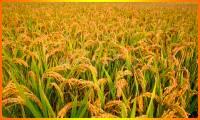
Paddy sowing picking up in some areas: Agriculture Commissioner.
Sowing of paddy, the main kharif crop, is underway in areas which received monsoon rains and the planting is picking up as the monsoon progresses in different parts of the country, Agriculture Commissioner P K Singh said on Tuesday. 'Paddy sowing has just started and it has been good so far in areas which have received rainfall. It is picking up as the monsoon progresses in different parts of the country,' Singh told PTI. In some parts, farmers have started preparing nurseries, he said.
In nurseries, the paddy seeds are first sown and raised into young plants. The plants are then uprooted and replanted in the main field.
Till last week, area under paddy was lower by 14.66 per cent at 5.32 lakh hectare as against 6.23 lakh hectare in the year-ago period, as per the Agriculture Ministry data.
In case of pulses, the Agriculture Commissioner said the pulses are grown in rainfed areas and sowing will pick up with the progress of monsoon rains.
Pulses were sown in 1.80 lakh hectare till last week of the 2023 kharif season, as against 4.22 lakh hectare in the year-ago period, the data showed.
Area sown to oilseeds too remained slightly lower at 4.11 lakh hectare till last week, but coarse cereals were covered in higher area at 12.43 lakh hectare till June 16.
Paddy is the main kharif crop, sowing of which normally starts with the onset of southwest monsoon. About 80 per cent of the country's total rice production comes from the kharif season.
India Meteorological Department (IMD) has projected normal southwest monsoon this year. After initial delay in its onset, the monsoon has advanced to other regions.
Except in east and northeastern region, there was rainfall deficit during June 8-14 period in other parts of the country as per the IMD data.
Source: economictimes.indiatimes.com

Ministry of Agriculture and APPPC organizes workshop on Management of Fruits Flies on Mango.
The Asia Pacific Plant Protection Commission unanimously elected India as chair of the Standing Committee on Integrated Pest Management (IPM) for the biennium 2023-24 during their 32nd Session held in Bangkok in November last year. The APPPC Workshop on Systems Approach for the management of fruit flies on mango has been scheduled from 19-23 June 2023 at Hotel Fortune Select Exotica, Vashi, Navi Mumbai.
The Minister of State for Agriculture & Farmer Welfare, GOI, Shobha Karandlaje inaugurated the workshop in the presence of Ashish Kumar Shrivastav, Joint Secretary (PP), Department of Agriculture and Farmer Welfare, Dr. YubakDhoj G.C., Executive Secretary, APPPC Secretariat, Dr. S.N. Sushil, Director, ICAR-NBAIR, MoA&FW and Dr J.P. Singh, PPA, DPPQS.
Shobha Karandlaje emphasized on the production of pest free as well as residue-free fruits and vegetables for getting market worldwide so that farmer’s income can be increased. She further linked the agricultural export/trade, measures to be taken, and the need to strengthen the working together for export promotion.
Ashish Kumar Shrivastava, Joint Secretary (PP) has briefed on the International Plant Protection Convention (IPPC), APPPC, and their role in Phytosanitary mitigation for safe transboundary movement of commodities. He shared his experiences with the implementation of the Systems Approach for mango in India. In this aspect, he further emphasized on development of a Systems approach for all the important Agricultural commodities by farm registration/ orchard registration with the State Agriculture Department, application of Integrated Pest Management at the farmer level, regular monitoring of pests, and timely management of pest so that even smaller farmer and marginal farmer can also produce export quality produce and stringent treatment can be avoided.
Source: en.krishakjagat.org
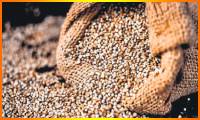
Procure millets such as ragi, jowar and provide them instead of rice .
As the newly-elected Congress government in Karnataka grapples with the challenge of securing rice supplies to fulfill its electoral pledge, farmer leaders and experts propose an alternative solution — that the State explore the possibility of procuring millets like ragi and jowar directly from local farmers at the minimum support price.
Such a move would help address the nutritional security besides encouraging farmers to grow more millets, they said.
After the Food Corporation of India (FCI) decided to halt the sale of rice and wheat through the Open Market Sale Scheme to States, Karnataka is now seeking rice supplies from Chhattisgarh, Telangana, and Punjab to fulfil its commitment of providing 10 kg rice to each member of households below the poverty line. The Union government discontinued the OMSS sales to States, with the exception of the North-East region, citing delayed monsoon and escalating cereal prices as the reasons behind this move.
'Instead of buying rice from other States to provide under public distribution system, the Government should procure ragi and jowar from local farmers and provide them to beneficiaries. Ragi is consumed in southern parts of the State, while jowar is consumed in the northern districts. This will also encourage farmers to grow more of these cereals and lead to employment opportunities in the state,' said Chamras Malipatil, President of Karnataka Rajya Raitha Sangha (KRRS). Also, the Government can look at providing sona masuri rice to the beneficiaries, he added.
Echoing similar views, farmer leader Kurubur Shantakumar, said by procuring ragi and jowar directly, the State should come to the rescue of farmers.
Prakash Kammaradi, agri-economist and former chairman of Karnataka Agriculture Prices Commission, said the State should look at providing 5 kg of jowar/ragi along with rice under the PDS. Such a move will help address the nutritional security, while giving a signal for farmers at the start of the kharif cropping season to plant more of these coarse cereals, he added.
'In the year of millets, it will be a win-win situation for the farmers, the government and the beneficiaries,' Kammaradi added.
Source: thehindubusinessline.com

Israel Farming: The companies that revolutionized Israel's agriculture set foot in India, emphasizing on sustainable agriculture.
Israel is known as a very small country. This country has done the work of creating a great example by revolutionizing agriculture in the world. Innovation in agriculture is nothing new in Israel. Meanwhile, Israel is now all set to revolutionize agriculture in India. Companies such as ICL Group, Netafim and BioBee are experimenting with different changes in agriculture in India.
ICL is one of the world's leading fertilizer companies. The company claims that if these fertilizers are given to the crops, they get a lot of nutrients. This nutrient boosts crop performance and increases crop yield and is of great use for sustainable agriculture.
ICL's eqo.x biodegradable fertilizer technology is a milestone in the evolution of agriculture. This fertilizer can be used to produce a large amount in agriculture without degrading the environment. eqo.x calls for a transformation in agriculture without environmental degradation.
eqo.x builds nutrients in the soil with sustainable agriculture and has a long-term impact with biodegradable release technology. They say that only one Eqo.x contains all the ingredients used to produce more in less agriculture. ICL is working to stop wrong dosages through bulk fertilisers.
ICL's big move in India
ICL is also building its presence in India with the launch of ICL Leaf. They aim to provide nutrients for efficient and profitable crops. Along with this, ICL Leaf is currently helping Indian farmers grow several crops including grapes, cotton, bananas, tomatoes and pomegranates. It is known that other crops are also using it.
Netafim's major contribution to irrigation technology
Netafim, known worldwide for drip irrigation, has made a big move in India. Netafim develops sustainable solutions to make agriculture more efficient and less damaging to our environment.
Their smart irrigation technology is a game-changer, enabling farmers to use water and nutrients more efficiently, increasing crop yields while reducing environmental impact.
BioBee-Pest Management
At present, if any crop is to have a high yield, it is first hit by pesticides. Different drugs are used to control these pesticides. Meanwhile, Israel has made a big revolution in this.
BIO-BEE is working to control pesticides through this company. Bio Bee is currently gaining ground in India. The feature of this is that it does not cause any environmental damage, the company says.
Currently, Israeli companies like ICL, Netafim and BioBee have made a big move in India. The crisis in agriculture worries us about the future, but Israel's agricultural progress is reawakening optimism.
Source: agrowon.com

Revolutionising agriculture & FMCG: India s ambitious plan for world s largest grain storage capacity.
Agriculture remains a vital pillar of the Indian economy and plays a central role in the nation’s socio-economic development. It contributes approximately 19 per cent to the GDP and supports a significant majority of the population, with about two-thirds of people relying on it.
The performance of agriculture has far-reaching implications for the growth of other industries and the overall economy, as it is interconnected through backward and forward linkages. It not only serves as a source of livelihood and food security for a large portion of the Indian population but also holds special importance for many FMCG organisations.
According to the National Sample Survey, the average monthly income per agricultural household has witnessed a notable increase from Rs.6,426 in 2012-13 to Rs.10,218 in 2018-19. The government has implemented various measures in targeted areas to bolster farmers’ income. The PM KISAN Scheme ensures income support for farmers, while the Pradhan Mantri Fasal Bima Yojana provides crop insurance coverage. Additionally, the Pradhan Mantri Krishi Sinchai Yojana focuses on enhancing irrigation facilities.
Farmers also have access to institutional credit through initiatives such as the Kisan Credit Card and other channels. More recently, the Union cabinet approved a scheme that plans to allocate Rs.1 trillion towards expanding cooperative sector storage capacity by 70 million tonnes. This ambitious project, set to become the world’s largest grain storage plan within the cooperative sector, aims to address key challenges faced by farmers and strengthen the country’s food security.
Let us delve into the significant benefits that this ambitious plan holds for India.
Empowering farmers, expanding opportunities
The increase in grain storage capacity on such a monumental scale will empower farmers to think beyond traditional boundaries. With the ability to store their produce effectively, farmers can now explore large-scale production and tap into export markets. This newfound flexibility will enable them to maximise their outputs, leading to increased incomes and a brighter future for farming communities across the nation.
Price stability, reduced distress sales
Inadequate storage facilities often force farmers into distress sales, negatively impacting their income and perpetuating a cycle of losses. However, with a significant expansion in storage capacity, the risks associated with crop damage and distress sales can be minimised. The availability of proper storage infrastructure will ensure that farmers can store their produce efficiently, reducing wastage and stabilising prices. This stability will not only benefit the farmers but also provide consumers with a consistent supply of essential food grains at reasonable prices.
Economic impact, raw material availability
The scale of this storage capacity expansion will have a profound impact on the Indian economy as a whole. With a more stable agricultural sector, India can become a reliable source of raw materials throughout the year, bolstering various industries such as food processing, FMCG, and agribusinesses. This reliable availability of raw materials will enable these sectors to flourish, attracting investment, creating jobs, and boosting economic growth in both rural and urban areas.
Strengthening food security, meeting global commitments
Food security is a global concern, and India, as a member of the G20 and currently holding the G20 presidency, recognises the importance of addressing this issue. By significantly increasing grain storage capacity, India aims to enhance its food security measures, reducing its reliance on food grain imports. With a more robust storage infrastructure, the country can better manage its buffer stock and ensure a consistent supply of essential food grains to its citizens. This achievement aligns with the goals set by the G20 in achieving sustainable food security for all. Through this concerted effort, India aims to contribute to a more secure and resilient food system, ensuring a consistent supply of nutritious food for its citizens and beyond.
Job creation, rural development
The expansion of storage facilities in rural areas will create numerous employment opportunities. The construction, management, and maintenance of warehouses and storage units will generate jobs, boosting rural development and improving the standard of living for those residing in agricultural communities. The increased economic activity in these regions will lead to overall prosperity and contribute to the equitable growth of the nation.
Boosting FMCG sector, sustainable agriculture
The FMCG sector will experience a significant boost as a result of this ambitious storage capacity plan. With improved storage infrastructure, the sector can rely on a consistent and abundant supply of raw materials, enabling them to scale up production and meet growing consumer demands. This expansion will foster innovation, investment, and competition, resulting in a dynamic FMCG sector that contributes to the country’s economic growth. Additionally, sustainable agricultural practices can be encouraged through the efficient management of stored grains, reducing wastage and promoting resource conservation.
Conclusion
India’s ambitious plan to establish the world’s largest grain storage capacity in the cooperative sector is poised to revolutionise agriculture and the FMCG industry. By empowering farmers, stabilising prices, strengthening food security, creating jobs, and bolstering the FMCG sector, this visionary scheme promises to transform the agricultural landscape of the country. As India works towards achieving its global commitments and fostering sustainable agricultural practices, the storage capacity expansion plan stands as a shining example of India’s dedication to economic growth, food security, and rural development.
Source: thehindubusinessline.com
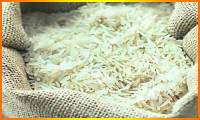
Procure millets such as ragi, jowar and provide them instead of rice .
As the newly-elected Congress government in Karnataka grapples with the challenge of securing rice supplies to fulfill its electoral pledge, farmer leaders and experts propose an alternative solution — that the State explore the possibility of procuring millets like ragi and jowar directly from local farmers at the minimum support price.
Such a move would help address the nutritional security besides encouraging farmers to grow more millets, they said.
After the Food Corporation of India (FCI) decided to halt the sale of rice and wheat through the Open Market Sale Scheme to States, Karnataka is now seeking rice supplies from Chhattisgarh, Telangana, and Punjab to fulfil its commitment of providing 10 kg rice to each member of households below the poverty line. The Union government discontinued the OMSS sales to States, with the exception of the North-East region, citing delayed monsoon and escalating cereal prices as the reasons behind this move.
'Instead of buying rice from other States to provide under public distribution system, the Government should procure ragi and jowar from local farmers and provide them to beneficiaries. Ragi is consumed in southern parts of the State, while jowar is consumed in the northern districts. This will also encourage farmers to grow more of these cereals and lead to employment opportunities in the state,' said Chamras Malipatil, President of Karnataka Rajya Raitha Sangha (KRRS). Also, the Government can look at providing sona masuri rice to the beneficiaries, he added.
Echoing similar views, farmer leader Kurubur Shantakumar, said by procuring ragi and jowar directly, the State should come to the rescue of farmers.
Prakash Kammaradi, agri-economist and former chairman of Karnataka Agriculture Prices Commission, said the State should look at providing 5 kg of jowar/ragi along with rice under the PDS. Such a move will help address the nutritional security, while giving a signal for farmers at the start of the kharif cropping season to plant more of these coarse cereals, he added.
'In the year of millets, it will be a win-win situation for the farmers, the government and the beneficiaries,' Kammaradi added.
Source: thehindubusinessline.com
Encourage farmers to enhance area covered under millets, FM Sitharaman tells NABARD.
Finance Minister Nirmala Sitharaman on Monday advised NABARD to take steps to augment rural credit by correcting regional imbalances for better productivity in rural areas including in the non-farm sector.
Chairing a review meeting on NABARD, Sitharaman also emphasised the need for concerted efforts to sensitise farmers to shift towards more remunerative but less water-guzzling crops, especially millets, pulses and oilseeds.
With production and marketing of Shree Anna as a national priority in the ongoing international year of millets 2023, Sitharaman directed NABARD to encourage farmers to enhance the area covered under millets, and to protect the returns of farmers who are already growing millets.
The detailed review of working of NABARD was undertaken by the Union Finance Minister in the presence of Nabard Chairman KV Shaji and Department of Financial Services (DFS) Secretary Vivek Joshi and other senior officials of DFS.
Sitharaman took note of the significant initiatives of NABARD in recent years and advised the institution to work towards ensuring efficiency and outcomes at the ground level with improvement in rural income as top priority.
She also directed NABARD to facilitate the aggregation of organic producers by Farmer Producer Organisations (FPOs), with a focus on the North-East.
Sitharaman said that improving the digital capabilities of Rural Financial Institutions, including RRBs, be facilitated on priority for augmenting meaningful financial inclusion.
In reference to various measures taken by NABARD in the aftermath of the Finance Minister’s visit to various States to drive development and financial inclusion, the NABARD Chairman apprised Sitharaman about the development package of Rs.25,991 crore for infrastructure development, FPOs, SHGs, off farm development for Jammu and Kashmir.
North East focus
He also informed the FM about the enhanced RIDF allocation for 2022-23 from Rs.800 crore to Rs.1,400 crore. NABARD Chairman also pointed out to the Finance Minister that Rs.366.93 crore has been released for Jammu & Kashmir towards recapitalisation of 3DCCBs.
For Nagaland, the Finance Minister was apprised about the saturation of all Government schemes and also about 256 credit outreach camps that were organised in the State by the banks where 38,370 loans have been sanctioned.
For Karnataka, the NABARD Chairman told the Finance Minister that RIDF support of Rs.25 crore has been approved for UAS, Raichur of Millet Value Chair Park.
Source: thehindubusinessline.com

US share in India's merchandise exports up despite diversification move.
Notwithstanding India’s efforts to diversify its merchandise exports, the country’s dependence on the US for its outbound shipments has increased over the past 12 years by 7 percentage points to touch 17.4 per cent share in 2022-23 (FY23).
In contrast, the share of the US in India’s total exports has continuously declined from a high of 21.7 per cent in 1998-99 to a low of 10.1 per cent in 2010-11, reveals India’s Department of Commerce data. During the pandemic years of 2020-21 and 2021-22, the export share of the US was even higher than the FY23 levels.
In its vision statement released during the mid-term review of the 2015-2020 foreign trade policy in 2017, the Ministry of Commerce said the policy of market diversification that has stood India in good stead during the global economic downturn will continue to be a key determinant of the country’s trade policy, together with product diversification.
Source: business-standard.com

India, UK discuss draft trade pact text, next round of talks in July.
India and the UK concluded the tenth round of talks for a proposed free trade agreement (FTA) last week, and the next round of negotiations is due to take place in the coming month, the government said on Monday.
Technical discussions were held across 10 policy areas in over 50 separate sessions and detailed draft treaty text discussions took place in these areas.
'On June 9, India and the United Kingdom concluded the tenth round of talks for an India-UK FTA,' the commerce and industry ministry said in a statement.
The negotiations for the agreement were launched on January 13, 2021.
The talks included detailed draft treaty text discussions in these policy areas, it said, adding, that the eleventh round of negotiations is due to take place in the coming month.
The bilateral trade between the countries has increased to $20.36 billion in FY23 from $17.5 billion in FY22.
India’s main exports to the UK are ready-made garments and textiles, gems and jewellery, engineering goods, petroleum and petrochemical products, while key imports include precious and semi-precious stones, ores and metal scraps, and engineering goods.
Source: economictimes.indiatimes.com
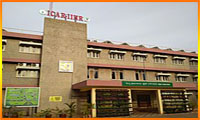
IIHR chief asks farmers to get their unique jackfruit varieties registered under PPVFRA.
There is a need for farmers to get their unique jackfruit varieties registered with PPVFRA (Protection of Plant Varieties and Farmers’ Rights Authority), according to Sanjay Kumar Singh, Director of the Indian Institute of Horticultural Research (IIHR).
Speaking to businessline on the sidelines of a jackfruit festival at Puttur in Dakshina Kannada district of Karnataka, he said the varieties registered under this get royalty on the price at which the plant is sold.
Research institutions like IIHR help farmers get such varieties’ medicinal value, usage, and processing value. These registered varieties can be commercialised. IIHR also aids in propagating the farmers’ varieties. When such varieties are cultivated on large areas, quantity increases, and this paves the way fororganised retail.
He said jackfruit grows in different States of the country and in tropical, sub-tropical, arid and semi-arid regions.
Process at least 60% of output
Stating that IIHR, Bengaluru, has conserved around 400 varieties of jackfruit, he said it is collaborating with farmers in different regions where the jackfruit diversity is there. Apart from cataloguing, the institute conserves them at its centre. These varieties have different characteristics in size, colour of the flake, nutritional value and the season of ripening.
He suggested that the state biodiversity boards spend money on conserving unique varieties of jackfruit. Such an effort can help conserve such varieties at research institutes and germ-plasm sites designated by the Indian Council of Agricultural Research.
Stakeholders in jackfruit sector should make efforts to bring at least around 60 per cent of the production to the processing sector so that processed products are available throughout the year. He said there is a need to develop jackfruit joints like modern food joints. All the dishes, processed products and planting materials should be available in such joints, he said.
In fact, raw jackfruit is emerging as a vegan meat in India and abroad, and the stakeholders should take advantage of such preferences of consumers, he said.
Source: thehindubusinessline.com