
Iran, India agree on forming joint agricultural co-op committee.
Agricultural officials of Iran and India have agreed to form a joint committee for agricultural cooperation between the two countries within the next three months.
As reported, the agreement was reached in a meeting between Iran’s Deputy Agriculture Minister Mohammad Mehdi Borumandi and Secretary of India’s Agriculture and Farmers Welfare Ministry Manoj Ahuja in New Delhi.
Borumandi, who has traveled to New Delhi to hold talks on the agricultural cooperation between Iran and India, met with his Indian counterpart to review the latest status of bilateral cooperation in the field of agriculture.
The officials also agreed to hold the first joint working group on agricultural cooperation between the two countries in the near future.
In the meeting, Borumandi stressed Iran’s readiness for cooperation in various fields including horticultural products, medicinal plants, combating plant pests, agricultural technologies, exchange of professors and experts, and cooperation between research institutions of the two countries.
He considered the removal of tariff barriers on agricultural trade as a necessity for the future expansion of relations.
Manoj Ahuja, for his part, highlighted the cultural and geographical affinities between the two nations and expressed his country’s readiness to develop agricultural relations with Iran.
Welcoming the fields proposed by the Iranian side for cooperation, the Indian official announced that the ban on the exports of kiwi to India, which had been temporarily prohibited since last year due to quarantine considerations, has been lifted.
The trade between Iran and India reached $510 million in the first quarter of the current year, according to the data released by India’s Ministry of Commerce and Industry.
According to the report, agricultural products and especially rice had the largest share in India’s exports to Iran. Rice accounted for 63 percent of the total volume of exports, while fruits with $15 million, and tea with $10 million ranked second and third.
Source: en.krishakjagat.org
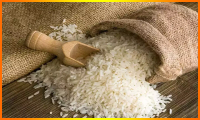
India approves export of broken rice to Senegal, Gambia and Indonesia.
India has approved exports of broken rice to Senegal, Gambia and Indonesia following a request from the three nations, the Directorate-General of Foreign Trade (DGFT) has said. However, the quantity of broken rice allowed for export to these nations is not known.
In a trade notice issued on Tuesday, the DGFT said only exporters who have shipped all types of rice over the past three years to Senegal, Gambia and Indonesia will be given the shipments quota for exporting broken rice.
The Centre had banned exports of broken rice on September 8, 2022, and then amended it on May 24 allowing shipments to countries to meet their food security needs and 'based on the request of their government'.
Minimum threshold
The DGFT said exporters could file applications online from Thursday till June 30 seeking to ship a minimum threshold of 8,000 tonnes by sea. 'Application will be allowed only if the exporter applies for a quantity more than the minimum threshold,' it said. The allocation will be made on the basis of pro-rata to average export of rice (all varieties) respectively to the country concerned in three years before the financial year when the shipments were barred.
The permit given to exporters will be valid until December 31 and they will have to submit a 'landed certificate' within a month completion of export of allocated quota of broken rice.
Earlier in February, the Centre approved exports of 2.5 lakh tonnes of broken rice to Senegal and one lakh tonnes of the rice to Gambia as a special consideration when the ban on shipments was in force. In addition, it allowed 9,900 tonnes of broken rice to Djibouti.
Trade analysts said export of broken rice is being allowed on request from these governments for strategic reasons since the Ministry of External Affairs is involved.
The Centre banned exports of broken rice and imposed 20 per cent duty on shipments of white and brown rice after the kharif paddy production was affected by deficient monsoon in key rice-growing regions in the eastern parts last year.
In the kharif season, rice production was estimated lower at 108.07 million tonnes (mt) in 2022 compared with 111 mt in 2021. However, the production was raised to 110 mt in the third advance estimate by the Agriculture Ministry.
Overall, rice production for the current crop year ending June 30 has been pegged at a record 135.54 mt.
Source: thehindubusinessline.com
Irradiated mango exports may rise 200% this season on demand from US, Australia.
Mango exports to countries such as the US and Australia are likely to register nearly 200 per cent growth this season at between 2,200 and 2,500 tonnes on higher demand and improved availability of quality produce. Also, factors such as the decline in international air freight rates and the commencement of additional irradiation facility in Gujarat have aided the shipments, APEDA sources said.
Indian mango exports to US and Australia undergo an irradiation process, where the fruit is exposed to gamma radiation that kills the insects or pests inside the fruit. The irradiation facility are located in Mumbai, Nashik, Bengaluru and the latest one in Ahmedabad operationalised this year.
'By the end of this season in July, we expect the mango exports from irradiation facilities to be in the range of 2,200-2,500 tonnes, almost a 200 per cent increase over last year’s 891 tonnes, mainly to the US,' an APEDA source said.
Air freights
Kaushal Khakhar, CEO, Kay Bee Exports, a large exporter, said the rationalisation of air freights have made Indian mangoes viable for the consumers in the US this season. Also the price gap between the Indian mango and the Latin American one, which was in multiples earlier, has now reduced giving an incentive for the Indian diaspora to try it out. That’s why the shipments have more than doubled this year, Khakhar said.
KS Ravi, Managing Director, Innova Agri Bio Park in Bengaluru, said the shipments from his facility will be touching a record high of 500 tonnes this year, an increase of 100 per cent over the previous year, on strong demand from the US and Australia. Innova, the only gamma irradiation facility for fruits and vegetables in South India, gets mangoes from registered farms in Vijayawada, Nellore, Kadapa, Chittoor and Kolar among others.
'We export all varieties of mangoes such as Banganapalle, Imampasand, Rasalu and Kesar among others. There is a huge demand, but we are unable to meet as we are not getting enough quality mangoes,' Ravi said.
Exporters said the shipments to other countries have also seen an increase and the overall Indian mango exports, which stood at 22,923 tonnes during 2022-23, are expected to rise this year.
Source: thehindubusinessline.com
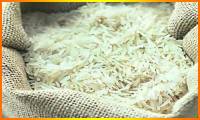
Govt's rice procurement reaches 55.8 million tonnes and wheat 26.2 million tonnes so far.
The government's rice procurement has reached 55.8 million tonnes so far in the ongoing 2022-23 marketing season, benefitting 1.22 crore farmers with MSP of Rs 1.7 lakh crore, the food ministry said on Tuesday.
Wheat procurement has reached 26.2 million tonnes so far in the 2023-24 rabi marketing year (April-March), more than the last year's total procurement of 18.8 million tonnes.
'With the current procurement of wheat and rice, adequate food grains stock in government granaries is maintained,' the ministry said in a statement.
The combined stock position of wheat and rice has reached 57 million tonnes, which puts the country in a comfortable position to meet its requirements of food grains, it noted.
The Food Corporation of India (FCI) along with state agencies undertakes procurement of paddy and wheat under price support scheme. Paddy is procured and converted into rice through milling.
According to the ministry, a total of 83 million tonnes of paddy (55.8 million tonnes in terms of rice) was procured up to June 19 of the current kharif marketing season (October-September).
After the milling, around 40.1 million tonnes of rice has been received in the central pool so far, another 15 million tonnes of rice is yet to be received, it said.
'Rice delivery against the procured paddy is also in progress,' it added.
As many as 1.22 crore farmers have benefited from the procurement operation. About Rs 1,71,000 crore has been paid as minimum support price (MSP) to them.
The Centre has set a target to buy 62.60 million tonnes of rice in the 2022-23 marketing season. The FCI had procured 57.58 million tonnes of rice during the 2021-22 marketing season.
According to the third estimate of the agriculture ministry, rice output is pegged at a record 135.54 million tonnes for 2022-23 crop year, as against 129.47 million tonnes in the previous year.
In case of wheat, about 21.29 lakh farmers have already benefited from the ongoing wheat procurement operations with MSP outflow of about Rs 55,680 crore, it said.
Major contribution in the procurement has come from Punjab, Madhya Pradesh and Haryana with procurement of 12.12 million tonnes, 7.09 million tonnes and 6.31 million tonnes, respectively.
The ministry said the government has ensured that all arrangements are in place for hassle-free procurement operations.
Source: economictimes.indiatimes.com

Exports of mangoes from India to US more than doubled YoY in the current season.
Exports of Alphonos, Kesar and Banganpalli mangoes from India to the US market has more than doubled in the current season (April-June) compared to the year-ago period, because of a decline in air freight and a new irradiation facility in Ahmedabad.
Sources told that mango exports to the US have crossed 2,000 ton in the current season, up from 891 ton in the 2022-23 season. The exports of Banganpalli and Kesar varieties have commenced this season to South Korea, another high value market. Exports to the United Kingdom is currently being undertaken.
Trade sources said that one of the factors behind the spike in mango exports to the US and the UK this year has been the low cost of air freight rates, which rose sharply in the last few years because of the pandemic, has 'normalised' since then.
Source: freshplaza.com
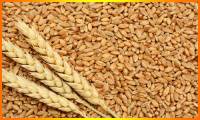
India approves wheat, broken rice exports requests from 4 countries.
India has decided to approve wheat and broken rice exports to few selected countries following their requests to allow the shipments of the grains, the government said in two separate notifications issued late on Tuesday.
The South Asian country banned exports of wheat and broken rice in 2022 to lower local prices.
But following requests, India would allow broken rice exports to Indonesia, Senegal and Gambia in 2023/24 financial year started on April 1.
New Delhi also approved request from Nepal and allowed wheat exports in the current financial year.
Indian exporters, which were exporting grains to these countries, need to bid for the allocated quota of wheat and broken rice, the government said in notifications.
Indonesia has signed an agreement with the Indian government to potentially import 1 million tonnes of rice if the El Nino weather pattern hits domestic supply, media quoted the trade minister as saying on Friday.
Source: economictimes.indiatimes.com

India under PM Modi has realised her potential, capabilities in 9-years: Piyush Goyal.
India has scripted a history in exports in the last two years both in terms of growth rate and absolute numbers with the shipments reaching at worth USD 500 billion in 2020-21 and USD 776 billion in 2022-23, senior BJP leader and Union Minister Piyush Goyal said on Tuesday. India under Prime Minister Modi has continued to maintain a 'robust economy' despite the global challenges of 'depression, recession and inflation', to name a few, Goyal said.
India is standing firm and is realising 'record exports' at a time when the economies of even the developed countries are in a struggling situation, the Union Commerce and Industry Minister added.
'India has scripted history in exports in the last two years both in terms of growth rate as well as absolute numbers. It is our resolve to increase India's export to worth 2 trillion dollars by 2030,' he told reporters while highlighting the achievements of the nine years of the Prime Minister Narendra Modi government at a press conference at the BJP headquarters.
The Modi government is working towards making India a 35 trillion dollar economy in the next 25 years from the current 3.5 trillion dollar economy along with taking care of India's heritage, and destroying the 'mindset of slavery', he added.
Replying to questions at the press conference, the Union minister said India's import from China increased by 33 times in ten years of the erstwhile Congress-led UPA government and reached nearly worth USD 45 billion from 'perhaps 1.5 billion dollars' in 2004.
'We don't know what MoU Congress leader had signed (with China) ...India's own industry kept on dying one after another in those ten years due to this,' he charged.
Goyal said that the Modi government has kept both import and export open with China as per the World Trade Organisation's rules.
Over the nine years, the Modi government has taken several efforts to give a boost to various industries in India to increase indigenous production and reduce India's dependence on other countries, he said.
'Through quality control order, we will be able to stop cheap and substandard products that come from other countries including China, and our consumers will get good quality products,' he added.
The Commerce Minister said India has emerged as a robust economy under Prime Minister Modi's leadership.
'Many Fortune 500 companies want to come to India in the manufacturing sector, service sector and open R&D centres here for which the commerce and industry ministry is extending them complete support,' he said.
Under the leadership of PM Modi, Goyal said India has realised her potential and capabilities in the last nine years in ensuring 'Seva, Sushasan and Garib Kalyan' (service, good governance and welfare of poor).
The Modi government's 'consistent efforts' have resulted in the transformation of the country through empowering the poor, youth, women and downtrodden, he added.
'Lakhs of people have been trained under the Samarth scheme in the field of textiles and technical textiles. I am happy to inform you that in technical textiles, out of 11 lakh beneficiaries who have been trained so far, 74 per cent have got jobs. Of these, 73 per cent were women,' he added.
Goyal, who also holds food, consumer affairs and public distribution portfolio, said there was a time when the sugarcane farmers were in trouble as they did not get the price of sugarcane for months and 'sometimes even years'.
'The way Modi ji gave importance to the sugar sector and sugarcane farmers, facilitated their work and also added ethanol. This saved our foreign exchange, reduced the import of crude petroleum and reduced pollution,' he said.
Source: economictimes.indiatimes.com/

India seeks import duty relaxations for basmati rice in FTA with UK.
India may be seeking a reduction in import duties on some basmati rice varieties from the UK as part of the Free Trade Agreement (FTA) negotiations.
This is to ward off a growing challenge from its nearest competitor in basmati rice Pakistan and also create a wider demand for domestic products, trade and industry sources said.
The duty concession is being sought for basmati varieties that have been recognised by the UK in the last few years. Already, in some traditional basmati varieties, there are some duty relaxations.
Source: business-standard.com

Indi 2nd Indian lime variety to earn GI tag.
Indi lime, belonging to the ‘Kagzi’ variety, has earned a geographical indication (GI) tag for eight years from the Union government. This is the second lime after the Assam lime to be accorded this recognition.
The Karnataka State Lime Development Board (KSLDB), University of Horticultural Sciences Bagalkot (UHSB) and the Horticulture Department Vijayapura had worked relentlessly for the last five years to get this tag, with which growers can now expect exports of lime to about 25 countries.
Vijayapura district accounts for 58% of all lime produced in Karnataka, which ranks fourth among the states in lime cultivation.
Santosh Sappandi, the managing director, KSLDB, told TOI a fresh proposal had been submitted to the Geographical Indications Registry of the Union government on March 26, 2021. 'Our proposal has been registered on the website of Intellectual Property India, with validity until March 25, 2031. We are now awaiting the certification from Delhi,' Sappandi said.
Historian Krishna Kolhar Kulkarni noted that though there is no evidence on cultivation of lime in the 15th century, during the rule of Yusuf Adil Shah, it is still widely believed that lime was much in vogue around that time in the Muslim community and the sultans had encouraged lime cultivation on the banks of River Bhima. 'It is believed that the Vijayapura region served as the hub for cultivation of lime, grapes, oranges, mangoes and various other fruit varieties,' Kulkarni said.
Explaining the unique features of Indi lime, Sappandi said it’s rich in ascorbic acid and has lesser seeds. 'It has a very thin rind, but is highly juicy. It is high on demand in national and international markets. The GI tag will now help further enhance its popularity across the world,' he added.
Ashok Allapur, former chairman, KSLDB, said Indi lime is now the main crop for about 11,000 growers in the region. 'Experts from UHSB and the Horticulture Department have played a crucial role in creating awareness on growing this variety, with the fruit deriving its name from Indi taluk that alone accounts for 50% of the ‘Kagzi’ lime production in Vijayapura,' he added.
Source: timesofindia.indiatimes.com

Shri Parshottam Rupala held a bilateral meeting today with Canada s Minister of Agriculture and Agri-Food, Ms. Marie-Claude Bibeau.
Minister of Fisheries, Animal Husbandry and Dairying, Shri Parshottam Rupala held a bilateral meeting today with Canada’s Minister of Agriculture and Agri-Food, Ms. Marie-Claude Bibeau.
The two sides discussed the potential bilateral cooperation to strengthen livestock health management system, genetic upgradation of livestock, biosecurity measures, capacity building etc. Both sides felt that there is much to learn from each other in the related fields.
Exchanging information and expertise will help build the knowledge and capability of each other’s animal husbandry sector, which will have mutual benefits for both countries.
Both the dignitaries have discussed the various ideas to further strengthen the close and special unique India- Canada friendship.
Source: pib.gov.in