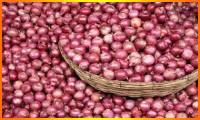
71 trucks of Indian onion enter Bangladesh.
Some 71 trucks carrying Indian onion entered Bangladesh through four land ports of the country on Monday (June 5).
The onion-laden trucks entered the country through Benapole, Bhomra, Hili and Sonamsjid land ports from the noon to 8:00pm on Monday. It was understood that the onions are being imported at USD 220-250 per ton.
According to the reports sent by risingbd district correspondents, some 57 trucks of onion entered the country through Sonamsjid land port in Chapainawabganj on Monday. The amount of imported onion was estimated around 1,097 metric tons. Earlier, the last onion came through this port on March 15.
Apart from this, eight trucks of onion were imported through Bhomra land port in Satkhira. Officials of Bhomra customs station said that 10 more onion-laden truck are likely to reach the port tonight.
On the other hand, a company named N Alam Traders started importing onion from India through Hili land port in Dinajpur after about two months. On Monday, three trucks of onion entered the Hili Port.
N Alam Traders representative Sukumar Sarkar confirmed the information.
He said, 'Around 6:00 pm on Monday, onions were imported through Hili Land Port by trucks. A total of 110 metric tons of onion were supposed to be imported by five trucks. Of which, three trucks with onion arrived at the port on Monday. The rest two trucks are expected to reach the port on Tuesday (June 6).'
Meanwhile, three onion-laden trucks entered the country through Jashore’s Benapole Land Port around 8:00 pm on the day. Though the onion was imported at USD 150 per metric ton, but tariffed at USD 320. Traders have to pay 10% duty on the customs value to get clearance.
Rafiqul Islam, the owner of C&F Royal Enterprise, said, 'Some 75 metric tons (three trucks) of onion of the importer entered Benapole port. After customs and port formalities, these onions will be sent to Dhaka. With imported at USD 320 per metric ton, this onion costs Tk39 per kg after paying government duties and taxes. after port charges, truck fare and other expenses, the onion will cost Tk 45 per kg.
Hemant Kumar Sarkar, the officer of plant pest control center of Benapole port, said instructions to import onions have arrived. Royal Enterprises, a C&F agent, applied to the Plant Protection Center for the importation of 75 metric tons of onion on behalf of their importer. The clearance has been granted.
Meanwhile, due to the news of onion import from India, wholesale traders started selling onions at low prices in different markets of Hili and Birampur in Dinajpur. They said, if the sale of imported onion starts, the price of onion in the market may decrease by Tk 20 to Tk 30 per kg. So, the onions remaining stock in the godowns are being sold at a loss of Tk 9 to 10 per kg.
Mentionable, the government imposed a ban on importing of Indian onions from March 15 to ensure fair price of domestic onions. Then due to the unusual increase in the prices, the Ministry of Agriculture announced to allow the import of onions from Monday (June 5).
Source: risingbd.com

President Murmu holds delegation level talks with Surinamese counterpart.
President Droupadi Murmu on Monday held delegation level talks with her Surinamese counterpart Chandrikapersad Santokhi.
'Both the presidents discussed ways to deepen India-Suriname relations and held wide ranging discussions on multiple areas including defence, agriculture, IT and capacity building,' Rashtrapati Bhavan said in a series of tweets.
'India and Suriname exchanged four MoUs in various fields including health and agriculture,' official sources said.
President Murmu had arrived in Paramaribo on Sunday on her first state visit as President. She will there till June 6.
'In a special gesture, President @CSantokhi of Suriname received the President at the airport with full state honours,' Rashtrapati Bhavan said in a tweet.
Source: business-standard.com

Invest India desks in states to guide trade, investment: Goyal.
The Union ministry of commerce and industry plans to shut down all the Directorate General of Foreign Trade offices and convert them into trade and investment offices under the Invest India platform, said Union commerce minister Piyush Goyal here on Friday.
The move comes nearly five years after the Directorate General of Foreign Trade (DGFT) closed its office in Goa.
'I have already instructed them to close all DGFT offices in the country,' said Goyal while interacting with industry leaders. 'I am converting DGFT and moving those officers to Invest India and now they will facilitate trade and investment promotion. All the DGFT offices will be made into trade and investment offices.'
He said that these officials will promote exports by handholding the industry but will also provide support for domestic and foreign investments. 'Don’t ask me to start the DGFT office (in Goa) again because I have moved everything online,' said Goyal.
He said that the DGFT officers have been asked to hold a virtual meeting with the industry every morning to address concerns and regulatory glitches.
The Union minister also expressed readiness to promote Goa’s tourism and pharmaceutical sectors.
'We will be inviting 20-30 of the top pharma companies, and in that, I will look at four or five hubs, including Goa, where we can try and expand the pharmaceutical industry,' said Goyal. He named Gujarat, Goa, Hyderabad and Himachal Pradesh as likely hubs for expansion of India’s pharmaceutical manufacturing and exports.
He also urged major pharmaceutical firms to come together, create a corpus, and collectively form a Centre of Excellence instead of waiting for the government to create such a facility.
Addressing the tourism sector, Goyal indicated that the Centre could create a joint working group with representatives of various departments and the Goa government to see how Goa’s tourism sector could be promoted. Citing the example of the Maldives, Goyal said that Goa should pursue a high-value tourism model.
Meanwhile, chief minister Pramod Sawant, who was also present for the interaction, informed the pharmaceutical sector that Manohar International Airport at Mopa will soon commence cargo operations. Transport minister Mauvin Godinho said that while the airport at Mopa continues to add more flights to new destinations, Goa International Airport at Dabolim has also witnessed an increase in flights.
Source: timesofindia.indiatimes.com
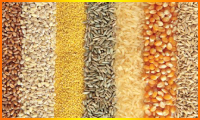
Karnataka eyes higher area under cereals, pulses during this kharif season.
Karnataka may see an increase in the acreage under cereals such as rice and ragi and pulses like tur in the ongoing kharif 2023 season. The total area under kharif crops is targeted to be higher at 82.35 lakh hectares (80.40 lakh hectares).
The Karnataka Agriculture Department has targeted an increase in the area under cereals and pulses. The State is eyeing an increase in area under paddy at 10.59 lakh hectares in kharif 2023 against 10.31 lakh hectares last kharif season.
Other cereals
Similarly, other cereals under which the State is targetting higher acreage include jowar 0.87 lakh hectares (0.62 lakh hectares in the previous season), ragi at 7.39 lakh hectares (6.42 lakh hectares), bajra at 1.94 lakh hectares (1.36 lakh hectares) and minor millets at 0.37 lakh hectares (0.31 lakh hectares).
The area under maize is targeted marginally lower at 14.20 lakh hectares (14.65 lakh hectares). Considering the decline in maize prices, the State may see a section of farmers shifting to other crops. Total area under kharif cereals is targetted at 35.36 lakh hectares (33.96 lakh hectares).
Regarding pulses, the State is eyeing an increase in acreage under tur at 15.79 lakh hectres against previous season’s sown area of 14.15 lakh hectraes. Karnataka is the largest producer of tur crop, which is planted during kharif season and harvested during mid-rabi season. The prevailing uptrend in tur prices may attract more growers this season. Similarly, the targetted area under green gram is 3.99 lakh hectares (4.14 lakh hectares). Total pulses acreages this kharif are likely to be higher at 22.13 lakh hectares against the previous season’s sown area of 20.38 lakh hectares.
Rainfall
The State has seen actual rainfall of 86.30 mm against normal of 73.70 mm during the month of May 2023.
Regarding oilseeds, the groundnut acreage is seen higher at 4.04 lakh hectares (3.72 lakh hectares), sunflower at 1.30 lakh hectares (1.72 lakh hectares) and soyabean at 4.10 lakh hectares(4.41 lakh hectares). Considering the prevailing bearish trend in oilseeds, the total area is expected to be lower at 9.84 lakh hectares (10.10 lakh hectares).
The acreage under cash crops such as cotton is seen lower at 8 lakh hectares (8.25 lakh hectares), sugarcane at 6.20 lakh hectares (7.18 lakh hectares) and tobacco at 0.81 lakh hectares (0.77 lakh hectares).
Source: thehindubusinessline.com

Traders in Mumbai express interest in exporting mango varieties from UP to other countries.
Mango traders and exporters in Mumbai expressed interest in exporting different mango varieties from UP to other countries in the mango buyer seller meet organised in Mumbai on Thursday. Dussehra, Chausa, Langda were some of the varieties from UP that were exhibited in the mango exhibition that was also held on the occasion.
Minister of state for Horticulture (independent charge) Dinesh Singh said that exporters willing can get in contact with mango growers in UP directly to procure the fruits and also seek help from the department.
He said that the buyer seller meet is organised to promote commercial varieties of mangoes. HoFED is working in a planned manner to encourage export of mangoes from UP.
UP accounts for 23% of total mango production in the country, which is more than 48 lakh tonnes of the total production of over 279 lakh tonnes in the country. Lucknow, Saharanpur and Meerut are main mango producing regions.
In the last few years, mango varieties from the state have been exported to Singapore, Malaysia, England and Dubai.
Source: timesofindia.indiatimes.com
Government imposes stock limits on tur and urad dal to control prices.
To check the prices, the government on Friday imposed the stock limit for tur dal and urad dal. This means wholesalers, retailers, big chain retailers, millers, and importers cannot keep pulses more than the specified limit.
New limits will be applicable from immediate effect i.e., June 02 and till October 31.
According to the Removal of Licensing Requirements, Stock Limits and Movement Restrictions on Specified Foodstuffs (Amendment) Order, 2023 order, stock limits have been prescribed for tur and urad for all States and Union Territories. Stock limits applicable to each pulse individually will be 200 mt for wholesalers, 5 mt for retailers, 5 mt at each retail outlet and 200 mt at the depot for big chain retailers. In the case of millers, the limit would be the last three months of production or 25 per cent of annual installed capacity, whichever is higher, for the millers. In respect of importers, the importers are not to hold imported stock beyond 30 days from the date of Customs clearance.
In a statement, the Ministry of Food and Consumer Affairs said: 'In order to prevent hoarding and unscrupulous speculation and also to improve affordability to the consumers in respect of tur dal and urad dal, the Government of India has issued an order where it has imposed stock limits on the pulses applicable to wholesalers, retailers, big chain retailers, millers and importers.'
The order also said that entities are to declare the stock position on the portal (https://fcainfoweb.nic.in/psp) of the Department of Consumer Affairs. In case the stocks held by them are higher than the prescribed limits, they will be required to bring the same to the prescribed stock limits within 30 days of issuing the notification.
'The imposition of stock limits on tur and urad is another step in the consistent efforts taken by the Government to crackdown on prices of essential commodities,' the statement said.
Further, it added that the Department of Consumer Affairs had been closely monitoring the stock position of tur and urad through the stock disclosure portal, which has been reviewed weekly with the State Government. Extensive interactions with various stakeholders such as importers, millers, retailers had been held to ensure disclosure of stocks, including visits by senior officers to the states of Karnataka, Madhya Pradesh, Maharashtra and Tamil Nadu to assess the ground situation, it added.
Source: thehindubusinessline.com
FSSAI re-operationalises stds for fortified rice kernels.
The Indian food authority has re-operationalised the standards for fortified rice kernels and issued an order in this regard asking food businesses to comply with the standards.
The standards for fortified rice kernels were proposed under the Draft FSS (Food Product Standards & Food Additives) Amendment Regulations issued by the FSSAI in May 2022 and were made operational in June 2022.
According to the FSSAI, the draft amendment regulations are in the process of final notification which is likely to take further more time for finalisation and publication in the gazette of india.
'Meanwhile, to strengthen the national level fortification programme and its implementation, it has been decided to operationalise the provisions related to the fortified rice kernel, vitamin & mineral premix for fortified rice kernels with effect from 23.12.22,' reads the order.
However, FSSAI added that the provisions related to yeast and mould count and aerobic plate count parameter of ‘Rice Flour’ for preparation of fortified rice kernel stand withdrawn.
The draft regulations say that Fortified Rice Kernels (FRKs) are rice shaped kernels containing vitamins and minerals produced through extrusion.
These fortified kernels required to follow physio-chemical requirements including moisture 12%, uric acid at 100 mg/kg with no damaged kernels, no discoloured grains, no chalky grains and no admixture with any other grain including non-fortified rice.
Also, the standards lay requirements for fortification with iron, folic acid and vitamin B12 with recommended sources. The draft lays requirement for fortification with micronutrients singly or in combination that include zinc, vitamin A, thiamine, riboflavin, niacin, and pyridoxine.
Besides, the regulations prescribe standards for rice flour preparation of fortified rice kernels, and vitamin-mineral premix for preparation of fortified rice kernels.
Source: fnbnews.com

Maharashtra agriculture minister assures marketing of GI-tagged Kashmiri Saffron.
Our government will provide all facilities for marketing of GI-tagged Kashmiri Saffron, Maharashtra Agriculture Minister Abdul Sattar said on Thursday here. He hoped that the government of Jammu and Kashmir UT will reciprocate by providing a market to agricultural produce from Maharashtra.
The minister said this during a visit to the Indian International Saffron Trading Centre at the Dusoo Pampore area of Pulwama district. During the visit, he visited various sections of the IIKSTC Dusoo. He was briefed by the officers about different activities in the international trading centre.
In addition to the Stigma Separation Centre, the minister also inspected the drying, grading, packing and e-Auction centres at the park. He also held a meeting with IIKSTC officials and Saffron growers during which discussions were held to make the Saffron industry more stable.
Joint Director Agriculture Ghulam Mohammad Dhobi, Administrator IIKSTC Shahnawaz Ahmad Shah, Khursheed Ahmad, Dr Abdul Nayeem, Dr Majid Ali, Tariq Ahmad Parray, Saffron growers association president Abdul Majeed Wani and other officials of IIKSTC were present on the occasion.
'We have a huge market for agriculture business in Maharashtra where we will provide shop and other facilities for marketing of Saffron,' the agricultural minister from Maharashtra told Kashmir Reader. He said his visit is aimed at strengthening bilateral trade between Maharashtra and Jammu and Kashmir for the benefit of the farming community at both places.
'I want to send a message that the original (saffron) product is being sent from Kashmir after processing at a world-class laboratory. In this international-level laboratory, there are no chances of duplicity and I am really impressed with its functioning,' he said. He promised to provide all facilities to Jammu and Kashmir government for selling in Mumbai.
Abdul Sattar hoped that the bilateral trade between Maharashtra and Jammu and Kashmir will strengthen the mutual brotherhood between the people of the two places. He thanked the Government of India for providing farmers of Jammu and Kashmir with this facility in 2016.
He further said that farmers are being empowered and their produce is sold globally. 'As the agriculture ministry from the government of Maharashtra, I assure all facilities for selling Kashmiri Saffron at Mumbai, Thane and Pune. I also wish the agricultural produce of Maharastra to sell in Jammu and Kashmir at good prices,' he said.
It is a big thing that the Government of India has set up a high-tech lab here where around 16,000 saffron growers get benefited.
'Growers process their produce here and after following due procedure it is given a GI tag authenticating its purity,' he said and thanked all the employees of the lab for their work.
'Once the saffron is given GI tag at the India International Kashmir Saffron Trading Centre, it is a guarantee for its purity beyond an iota of doubt,' he said, adding that the saffron growers should have the market in all parts of India so that Kashmiri saffron growers’ income gets doubled.
Source: kashmirreader.com

Meghalaya CM flags-off agriculture response vehicles in Tura.
Meghalaya chief minister Conrad Sangma flagged off 10 PRIME Agriculture Response Vehicles in Tura for farmers and farmers’ organisations of the Garo Hills region.
Further, another 35 ARVs will be handed over soon.
The lack of transportation facilities has been a major hurdle as highlighted by farmers & farmers’ groups in rural areas.
The access to the ARVs at a 50 per cent subsidy will bridge this gap by lowering the transportation cost and will help them gain fair prices for their agricultural produce.
The CM further distributed of seed balls for the Garo Hills region- 59.4 Lakh seed balls to be distributed to 297 Schools in the region.
A total of 3.6 Million seed balls will be distributed across the state.
Financial assistance of Rs 3.02 Crores has also been provided under Green Meghalaya or the Payment for Ecosystem Services (PES) Scheme.
The CM along with his cabinet minister participate in GoI’s Mission LIFE initiative by planting samplings.
Meghalaya has set a target to plant 5 Lakh saplings in the run-up to World Environment Day. West Garo Hills District alone will plant over 75 Thousand saplings.
The Meghalaya government also distributed of ‘KYAN’, an Integrated Digital Teaching Device for the Garo Hills region
The ‘KYAN’ portable device has a high-end computer, high luminosity projector, powerful Audio, Wi-Fi and Bluetooth connectivity, audio video conferencing facility and an in-built interactive touch feature all packed into a single device.
Source: indiatodayne.in
Robust farm growth key driver of FY23 GDP expansion.
Robust farm growth, apart from the services sector, was one of the key drivers of India’s better-than-expected economic performance in 2022-23 in contrast to just 1.3% expansion in the manufacturing sector.
Despite setbacks, such as extreme weather and damage to staples, gross value added (GVA) in agriculture and allied activities grew a targeted 4% for 2022-23. In the January-March quarter of 2022-23, farm sector GVA accelerated to 5.5%, the highest in 11 months, provisional estimates released by the National Statistical Office on Wednesday showed. GVA is a measure of growth that strips out net taxes.
Agriculture continues to be vital for the overall economy because nearly half of India’s population depends on a farm-based livelihood. Job losses in other sectors due to the pandemic shifted a large chunk of the workforce back to agriculture. This is likely to have increased disguised employment in the sector, which refers to redundant labour.
Strong growth in agriculture and allied activities was largely propelled by a rebound in the third and fourth quarters of 2022-23 at 4.7% and 5.5%. To be sure, farm growth was a muted 2.4% in the first quarter while it was 2.5% in the second quarter.
The momentum in farm growth however does not tie in with muted private final consumption expenditure (PFCE), a measure of people’s spending power. Also, since extreme weather roiled wheat for a second straight year in 2023, the share of allied farm activities in agricultural GVA could have been more than that of crops.
“Obviously, private consumption has been stagnating. But it is important to remember that, relatively speaking, that is also because the share of government capital expenditure has become larger. Plus, you also have a bit of crowding in of private investment,” economist M Govinda Rao said.
While the share of PFCE in GDP in 2022-23 (provisional estimates) stood at 58.5%, it was 58.3% in 2021-22 (first revised estimate).
With higher government investment, the economy will see a pick-up in household consumption with a lag in the current financial year, said NR Bhanumurthy, vice-chancellor of Dr BR Ambedkar School of Economics University, Bengaluru.
Record official projections of food output, especially of wheat and mustard, during the winter-sown season, is a key reason for higher fourth-quarter growth, said Abhishek Agrawal, an analyst with Comtrade, a commodity trading firm.
Despite a prolonged spell of untimely rain and hailstorms, which were feared to have damaged wheat, the government’s third advance estimates of agricultural production on May 25 pegged the staple’s output at a record 112.7 million tonne. Mustard output was also pegged at a record 12.4 million-tonne.
Source: hindustantimes.com