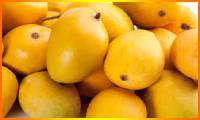
Traders in Mumbai express interest in exporting mango varieties from UP to other countries.
Mango traders and exporters in Mumbai expressed interest in exporting different mango varieties from UP to other countries in the mango buyer seller meet organised in Mumbai on Thursday. Dussehra, Chausa, Langda were some of the varieties from UP that were exhibited in the mango exhibition that was also held on the occasion.
Minister of state for Horticulture (independent charge) Dinesh Singh said that exporters willing can get in contact with mango growers in UP directly to procure the fruits and also seek help from the department.
He said that the buyer seller meet is organised to promote commercial varieties of mangoes. HoFED is working in a planned manner to encourage export of mangoes from UP.
UP accounts for 23% of total mango production in the country, which is more than 48 lakh tonnes of the total production of over 279 lakh tonnes in the country. Lucknow, Saharanpur and Meerut are main mango producing regions.
In the last few years, mango varieties from the state have been exported to Singapore, Malaysia, England and Dubai.
Source: timesofindia.indiatimes.com
Robust farm growth key driver of FY23 GDP expansion.
Robust farm growth, apart from the services sector, was one of the key drivers of India’s better-than-expected economic performance in 2022-23 in contrast to just 1.3% expansion in the manufacturing sector.
Despite setbacks, such as extreme weather and damage to staples, gross value added (GVA) in agriculture and allied activities grew a targeted 4% for 2022-23. In the January-March quarter of 2022-23, farm sector GVA accelerated to 5.5%, the highest in 11 months, provisional estimates released by the National Statistical Office on Wednesday showed. GVA is a measure of growth that strips out net taxes.
Agriculture continues to be vital for the overall economy because nearly half of India’s population depends on a farm-based livelihood. Job losses in other sectors due to the pandemic shifted a large chunk of the workforce back to agriculture. This is likely to have increased disguised employment in the sector, which refers to redundant labour.
Strong growth in agriculture and allied activities was largely propelled by a rebound in the third and fourth quarters of 2022-23 at 4.7% and 5.5%. To be sure, farm growth was a muted 2.4% in the first quarter while it was 2.5% in the second quarter.
The momentum in farm growth however does not tie in with muted private final consumption expenditure (PFCE), a measure of people’s spending power. Also, since extreme weather roiled wheat for a second straight year in 2023, the share of allied farm activities in agricultural GVA could have been more than that of crops.
“Obviously, private consumption has been stagnating. But it is important to remember that, relatively speaking, that is also because the share of government capital expenditure has become larger. Plus, you also have a bit of crowding in of private investment,” economist M Govinda Rao said.
While the share of PFCE in GDP in 2022-23 (provisional estimates) stood at 58.5%, it was 58.3% in 2021-22 (first revised estimate).
With higher government investment, the economy will see a pick-up in household consumption with a lag in the current financial year, said NR Bhanumurthy, vice-chancellor of Dr BR Ambedkar School of Economics University, Bengaluru.
Record official projections of food output, especially of wheat and mustard, during the winter-sown season, is a key reason for higher fourth-quarter growth, said Abhishek Agrawal, an analyst with Comtrade, a commodity trading firm.
Despite a prolonged spell of untimely rain and hailstorms, which were feared to have damaged wheat, the government’s third advance estimates of agricultural production on May 25 pegged the staple’s output at a record 112.7 million tonne. Mustard output was also pegged at a record 12.4 million-tonne.
Source: hindustantimes.com

Indian ambassador to Saudi Arabia meets Kashmir s business associations.
India's ambassador to Saudi Arabia, DrSuhelAjaz Khan, today had an extensive interactive session with industry and trade associations of Kashmir to discuss and plan strategies towards exploring business opportunities between the regions.
The session, organised by Jammu and Kashmir Trade Promotion Organization (JKTPO), was aimed at providing a platform to foster stronger economic ties and explore mutually beneficial trade opportunities.
DrSuhelAjaz Khan, while speaking on the occasion, emphasized the importance of strengthening bilateral trade between UT of J&K and Saudi Arabia. He acknowledged the rich cultural heritage and entrepreneurial spirit of Kashmir and expressed his admiration for the region's contribution towards the nation's economy. He observed that the unique and niche products of J&K have a lot of potential as far as the markets of Saudi Arabia are concerned.
Responding to issues and concerns raised by the participants, DrSuhelAjaz Khan praised the efforts of JKTPO in promoting trade and investment opportunities in Kashmir. He conveyed Embassy's commitment towards supporting such initiatives.
He assured the participants that the Indian government is continuously working hard towards creating a conducive business environment for all to flourish their businesses. He added that necessary support is being extended for trade and investment activities, especially for the export of GI-tagged products of Jammu & Kashmir. He assured to create of business linkages for the exporters of J&K, adding that efforts would be made to organise delegation visits, B2B meets, exhibitions, road shows and related events in Saudi Arabia.
'This interaction marks a significant milestone in strengthening economic ties between the two regions. It reflects the shared commitment towards exploring new avenues of cooperation and leveraging the vast potential for trade and investment', maintained the ambassador.
Managing Director, Jammu and Kashmir Trade Promotion Organisation (JKTPO), Khalid Jahangir welcomed the Ambassador of India to the Kingdom of Saudi Arabia, DrSuhelAjaz Khan, during a meet held in Srinagar, and appreciated the interest shown by him in reaching out to the Trade and Industry partners of Jammu and Kashmir.
He also gave an overview about the prevailing trade scenario with special reference to products having competitive advantage for export to Saudi Arabia.
KCCI discusses promotion of Kashmir crafts, tourism
Kashmir Chamber of Commerce and Industry (KCCI) held an interaction with the Indian Ambassador to Saudi Arabia, DrSuhelAjaz Khan at the office of Jammu and Kashmir Trade Promotion Organisation (JKTPO).
'The team brought the matter of holding market promotion exhibitions/ fairs /marts /road shows for marketing and promotion of Handicrafts, Carpets, Shawls, tourism, Direct Air connectivity between Kashmir and Saudia, export of horticulture,' the statement said.
The team also sought Ambassador’s help in facilitating Buyer- Seller Meet/ Reverse Buyer-Seller Meet/ Buyer to Buyer Meet/ Inter Chamber consultations to enable local entrepreneurs/exporters to have market assess for Kashmir products which already have a presence in Saudi and Gulf Countries.
'The KCCI sought the Ambassador’s help in organising a Tourism FAM Tour from Saudi to showcase the incomparable natural beauty and landscape of Kashmir in order to attract tourists from that country,' it said.
FCIK urges for diversification of India-KSA trade ties beyond oil
The Federation of Chambers of Industries Kashmir (FCIK) has underscored the need for diversification of bilateral trade ties between India and Kingdom of Saudi Arabia beyond the conventional field of oil in order to explore opportunities in other areas such as handicrafts, textiles, food processing, horticulture produce, sports goods, trout fish, organic vegetables and tourism.
The issue was raised by a delegation of FCIK during its interactive session with Indian Ambassador to KSA Dr. SuhailAijaz Khan at SanatGhar, Srinagar. The delegation of FCIK was led by ShahidKamili and included M.D Qureshi and AfaqQadiri.
The delegation told the Ambassador that given the fact that India and KSA were currently in the process of reinventing their economic strategy, Jammu and Kashmir offered varied products and services to help in balancing the trade between the two countries. India was currently at a disadvantageous position in the bilateral trade of 42.8 billion US dollars with exports of 8.76 billion dollars against imports of 34.1 billion dollars during the year 2021-22.
FCIK informed the Ambassador about the goods manufactured by local industrialists that had all the potential of exports to KSA.
PHDCCI Kashmir discusses business opportunities
A team of PHD Chamber of Commerce and Industry Kashmir, led by chair Vicky Shaw recently had an interactive session with DrSuhelAjaz Khan, the Ambassador of India to the Kingdom of Saudi Arabia.
A statement said that they discussed the current state of Kashmir and explored opportunities for growth and development in sectors such as Golf Tourism, Carpet Export, Apples, Walnuts, Saffron, Handicraft Export, and Walnut Wood Carved Furniture.
Shaw seized the opportunity to extend an invitation to Dr Khan, urging him to become the Ambassador of Kashmir. He emphasized the region’s potential for investment and highlighted how it could lead to mutually beneficial growth for both India and Saudi Arabia. Additionally, he emphasized the rich potential of Kashmir’s handicraft industry and the exceptional craftsmanship of its artisans.
Source: greaterkashmir.com

Meghalaya CM flags-off agriculture response vehicles in Tura.
Meghalaya chief minister Conrad Sangma flagged off 10 PRIME Agriculture Response Vehicles in Tura for farmers and farmers’ organisations of the Garo Hills region.
Further, another 35 ARVs will be handed over soon.
The lack of transportation facilities has been a major hurdle as highlighted by farmers & farmers’ groups in rural areas.
The access to the ARVs at a 50 per cent subsidy will bridge this gap by lowering the transportation cost and will help them gain fair prices for their agricultural produce.
The CM further distributed of seed balls for the Garo Hills region- 59.4 Lakh seed balls to be distributed to 297 Schools in the region.
A total of 3.6 Million seed balls will be distributed across the state.
Financial assistance of Rs 3.02 Crores has also been provided under Green Meghalaya or the Payment for Ecosystem Services (PES) Scheme.
The CM along with his cabinet minister participate in GoI’s Mission LIFE initiative by planting samplings.
Meghalaya has set a target to plant 5 Lakh saplings in the run-up to World Environment Day. West Garo Hills District alone will plant over 75 Thousand saplings.
The Meghalaya government also distributed of ‘KYAN’, an Integrated Digital Teaching Device for the Garo Hills region
The ‘KYAN’ portable device has a high-end computer, high luminosity projector, powerful Audio, Wi-Fi and Bluetooth connectivity, audio video conferencing facility and an in-built interactive touch feature all packed into a single device.
Source: indiatodayne.in
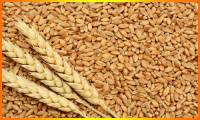
India s wheat, rice stocks comfortable to meet needs, says Food Ministry.
India’s wheat and rice stocks in the Central Pool is comfortable at over 57.9 million tonnes (mt) and the country can meet its foodgrain requirements, the Food Ministry said on Thursday. 'The combined stock position of wheat and rice in the Central pool is over 57.9 mt (wheat 31.2 mt and rice 26.7 mt) which has placed the country in a comfortable position to meet its requirements of food grains,' the Ministry said in a statement.
The situation is better than as of May 1 when the Central pool stocks were 55.53 mt with wheat making up 29.02 mt and rice 26.5 mt. In addition to rice and wheat, the Food Corporation of India, which maintains the Central pool, holds 22.69 mt of paddy (which can yield 14.52 mt of rice) and 0.5 mt of coarse grains.
Six-year low
The stocks are well above the mandatory norm of 21.04 mt for the period, including strategic reserves of 3 mt of wheat and 2 mt of rice. However, the Central pool stocks are at a 6-year low with wheat stocks at 15-year low and rice at 4-year low. The Ministry said the procurement of rice is going on smoothly, while that of wheat 'has progressed smoothly'.
The FCI has procured 38.5 mt of rice till May 30 during the kharif marketing season with another 11 mt set to be purchased further. In addition, 10.6 mt rice has been estimated to be procured during the rabi marketing season,' it said. The progressive procurement of wheat is 26.3 mt till May 30, surpassing last year’s purchase of 18.8 mt. The procurement has ended in some of the key States.
About 21.27 lakh farmers have benefited from the wheat procurement at the minimum support price (MSP) of ?2,125 a quintal resulting in an outflow of about ?47,000 crore for the government. Major contributions in the wheat procurement came from Punjab, Madhya Pradesh and Haryana with procurement of 12.13 mt, 7.09 mt and 6.32 mt, respectively.
The government’s decision to relax quality specification in wheat, which were affected due to untimely rains, and opening up of procurement centres in village and panchayat level helped in 'healthy procurement', the Ministry said.
Procurement through co-operative societies, gram Ppanchayats and arhatiyas (commission agents) and engaging farmer producer organisations for the Central pool purchase were additional factors that aided the Centre.
Source: thehindubusinessline.com

Huge opportunities will open up when exports touch $2 trn by 2030: Goyal.
Commerce and Industry Minister Piyush Goyal on Thursday said huge opportunities for people and businesses will be opened up when the country's goods and services exports touch USD 2 trillion by 2030.
In the last two years, he said the country's exports jumped from USD 500 billion to USD 767 billion in 2022-23.
India is a USD 3.5 trillion-economy today and will become at least USD 35 trillion- economy by 2047 and 'imagine what opportunities it will open up for all the people of India,' he said.
According to him, by 2030, 'we will see USD 2 trillion of exports from India, imagine the opportunities that it will open up'.
At the Times Network India Economic Conclave here, the minister also said the country's economy is growing at a faster pace and it is clearly reflected from the 7.2 per cent GDP growth in 2022-23.
'India is in the mode of stability with a proactive government strengthening every element of the economy in a manner which will hold us in good stead in our pursuit to make India a developed nation by 2047,' he said, adding that 'this is the work in progress'.
India's exports contracted by 12.7 per cent, third month in a row, to USD 34.66 billion in April due to the global demand slowdown even as the trade deficit reduced to a 20-month low of USD 15.24 billion, according to the government data.
Source: business-standard.com
55% rise in exports in 2 years has added jobs: Piyush Goyal.
Commerce and industry minister Piyush Goyal on Thursday said India's exports have gone from $500 billion to $776 billion, a 55% increase, in only two years and that the additional exports have added to jobs.
At the Times Network India Economic Conclave 2023, he also said the government is looking at pro-incumbency after 10 years of being in power.
'Our exports have gone from $500 billion, which was about ?38 lakh crore, to $776 billion, close to ?62 lakh crore... a 55% increase. That's the growth... this 24 lakh additional exports adds to jobs and I can't say that this work is over,' Goyal said, adding that by 2030, India will see $2 trillion of exports. He said the country is going to go from $3.5 trillion today to at least $35 trillion by 2047.
The minister said India's economy could achieve a 7.2% growth in FY23 because of 'nine years of the pursuit of a strong foundation of the Indian economy', which has strengthened the country's foreign exchange reserves.
'We have strengthened the story on interest rates. We brought down interest rates significantly... inflation also has now come down to below 5%,' he said.
Source: m.economictimes.com
Nitin Gadkari for doubling agriculture share in GDP to achieve higher economic growth, says Modi govt focussed on rural sectors.
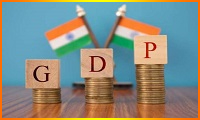
Union road transport and highways minister Nitin Gadkari on Thursday pitched for doubling the share of agriculture in GDP to achieve higher economic growth as he asserted that the present government has put special focus on agriculture and rural sectors.
Speaking at the Times Network India Economic Conclave here, Gadkari said, 'The current share of agriculture in our GDP is barely 12%. We need to increase that to 24% to achieve the targeted economic growth. Even now 65% of our population is dependent on agriculture. In the last nine years, our government has put a thrust on agriculture and rural sectors.'
Responding to a question on the 2024 general elections, Gadkari exuded confidence that the people will vote for the Modi government again because of the development that has happened in the last nine years. '2024 hum jitne wale hai (We will win 2024 Lok Sabha elections)…We believe in doing our work and don’t think much about the future,' the minister said. He added that the government doesn’t discriminate between NDA and non-NDA governed states for development work.
Gadkari said the government’s focus is to make farmers 'urjadata' (creator of energy) and not just 'annadata' (provider of food). He said the government’s thrust on use of ethanol as vehicle fuel is now bearing fruit and the next focus is on putting an ecosystem in place to produce bitumen from rice stubble to reduce the import of this key road construction material.
On his focus to promote green and alternative fuel, the minister said the government is mulling whether some interest subsidy can be provided for buying construction equipment vehicles that run on ethanol, methanol or electricity. 'Presently, construction equipment run on diesel. I would like them to operate on green hydrogen, LNG and electricity. I am thinking of coming out with a policy under which loans can be provided to them at cheaper rates,' he said.
The minister told the business leaders attending the conclave to focus more on 'performance audit' of their work force rather than just 'financial audit'. Gadkari said while chairing a review meeting at the NHAI headquarters on Monday, he directed its chairman and highway secretary to carry out the performance audit of officers. 'Now performance audits of officers will be the basis for their appraisal and promotion,' he said.
On the massive scale of highway development, he said soon people can reach Manali from Delhi in just six hours as highways have been expanded and new tunnels have been built.
Gadkari also said that his ministry is looking at completing nearly 90% of ongoing highway projects worth Rs 65,000 crore in Delhi and surrounding areas by this year-end. 'We are also looking at the option of a sky bus from SP Marg in Delhi via Dhaula Kuan to Gurgaon. Our focus is to make Delhi free from air, water and sound pollution. Delhi is the most polluted city,' he added.
In response to a question on political faceoff between treasury and opposition, the minister said power politics is not the only politics. 'We need to redefine the definition of politics. According to me, to serve the people, is the true meaning of politics,' he said.
Source: timesofindia.indiatimes.com
India may export 75,000 tonnes of broken rice to three African nations.
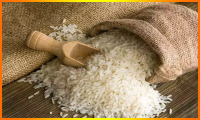
India will likely export 75,000 tonnes of fully broken white rice under government-to-government (G2G) deals to Senegal, Gambia and Djibouti soon, traders have said.
The move follows the Indian government’s decision last week to permit exports of fully broken white rice — which were banned from September 8, 2022 — on the basis of permission given by it to other countries to meet their food security needs.
'However, the policy is yet to be announced by the Directorate-General of Foreign Trade,' said Rajesh Paharia Jain, a New Delhi-based trader.
Earlier shipments
The development comes amidst demand from African countries which look to India for supply of fully broken white rice, besides parboiled rice.
Earlier in March, the Government permitted exports of 2.5 lakh tonnes of broken rice to Senegal and one lakh tonnes to Gambia. In addition, about 10,000 tonnes of the rice variety were permitted to be shipped to Djibouti, Ethiopia.
The development augurs well when demand for rice from South-East Asia is a bit slack. The slackness in demand is despite Indian prices being far more competitive to the rates offered by Thailand or Vietnam or Pakistan.
'Indian origin rice is still cheaper than Vietnamese and Pakistani origin rice. It is widely accepted unlike in the past and despite a 20 per cent duty on free-on-board (FOB) value which is $65-75 depending upon the grades,' said Jain.
Enquiries taper
'Though we are competitive, Indian rice prices have gained of late. But overall, prices are a bit unstable,' said VR Vidya Sagar, Director, Bulk Logix.
'After we shipped a good quantity to South-East Asia, enquiries have tapered down now,' said M Madan Prakash, President, Agri Commodities Exporters Association (ACEA).
'For unexplained reasons, there is some dullness in rice exports to South-East Asia. Maybe, they will pick after June,' said S Chandrasekaran, a Delhi-based trade analyst.
Jain said 5 per cent broken white is ruling at $480 a tonne and 25 per cent broken at $460. The offer price includes the 20 per cent export duty.
In contrast, Thailand is quoting these varieties at $511 and $494, respectively. Vietnam is offering these at $498-502 and $483-87, respectively. These prices are free-on-board (FOB).
India’s advantage
Sagar said demand for Indian rice will continue as in the previous years since its prices are lucrative. 'India is centrally located and freight charges too are below compared to Thailand or Vietnam. People are also buying,' he said.
On the other hand, parboiled rice is quoted over $80 a tonne cheaper than the nearest competitor, said Jain. 'We are offering parboiled rice around $385 f.o.b for July and August shipments,' he said, adding that demand from other countries for the parboiled rice is shifting to India.
India is offering 5 per cent broken parboiled rice at $385 a tonne f.o.b, while Thailand is quoting at $523 and Pakistan $583-87.
Record output
India’s rice exports are expected to be boosted by a record production of 135.54 mt this crop year to June against 129.97 mt last crop year. Rice production gained during the rabi season and will likely be good during the ongoing zaid season between rabi and kharif sowings.
This crop year, kharif production was 1 mt lower compared to last crop year as deficient rainfall in key growing regions of West Bengal, Odisha, eastern Uttar Pradesh and Jharkhand were affected.
As a result, the Government imposed 20 per cent export duty on white rice shipments from September 8, 2022, and banned fully broken rice exports, which was relaxed last week. However, it exempted basmati and parboiled rice exports from any curbs.
Jain said Bangladesh is expected to be in the market for importing rice under G2G deals.
Source: thehindubusinessline.com
India moves to strengthen grain storage.
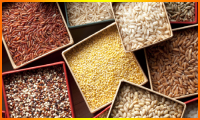
The government of India is launching a program to address a shortage of grain storage infrastructure, particularly at the local level, and strengthen the food security of the world’s most populous country.
The Union Cabinet chaired by Prime Minister Shri Narendra Modi approved an Inter Ministerial Committee (IMC) on May 31 to facilitate the 'World’s Largest Grain Storage Plan in Cooperative Sector,' program, which entails setting up a variety of agricultural infrastructure, including warehouse, custom hiring center and processing units at the level of Primary Agricultural Credit Societies (PACS), transforming them into multipurpose entities.
The IMC brings together programs from the Ministry of Agriculture and Farmers Welfare, Ministry of Consumer Affairs, Food and Public Distribution, and Ministry of Food Processing Industries under the auspices of the Ministry of Cooperation to implement a pilot project to provide insights from 10 selected districts that can then be expanded nationwide.
PACS are the lowest tier of the Short-Term Cooperative Credit (STCC) structure in the country, providing short-term and medium-term credit and other input services such as seed, fertilizer, pesticide distribution and more to about 130 million farmer members.
Within its diversified agriculture sector, India produces wheat, rice, corn, millet, sorghum, barley and soybeans, almost exclusively for domestic consumption by its 1.4 billion people. It is the world’s second-largest producer of wheat and rice behind only China.
The multipronged plan foresees creation and modernization of grain storage infrastructure at the PACS level reducing food grain waste by creating sufficient storage capacity, strengthening food security and enabling farmers to realize better prices for their crops.
'In view of the important role played by PACS at the grass-roots level in transforming the agricultural and rural landscape of Indian economy and to leverage their deep reach up to the last mile, this initiative has been undertaken to set up decentralized storage capacity at the level of PACS along with other agri-infrastructure, which would not only strengthen the food security of the country, but would also enable PACS to transform themselves into vibrant economic entities,' the government said.
Source: world-grain.com