ICAR-IIHR s BESST-HORT spots promising prospects for food entrepreneurs and SHGs.
ICAR- Indian Institute of Horticulture Research (IIHR) BESST-HORT (Business Entrepreneurship and Start-up Support through Technology in Horticulture) has spotted promising potential for entrepreneurs interested in starting micro food enterprises, start-ups, self help groups (SHGs), homemakers and students.
In order to give them a platform to meet, BESST-HORT is organising a 3-day hands-on training programme on ‘Production of Fruit & Vegetable Powder’ from June 20- 22, 2023 at the ICAR-IIHR, Hesaraghatta Lake, Bengaluru. The training programme will include theory, practicals, demonstration & discussion.
The last date to receive applications is June 17. The objective of the training is to provide detailed information about the scope of fruit and vegetable powders, their nutritional quality and packaging. There platform will provide hands-on training on production of moringa, tomato, onion and banana flour and value-add the preparation. This is especially at a time when there is excess production in the market and fall in price of these fruits and vegetables, stated Dr MV Dhananjaya who is the course coordinator along with Dr Venkatt Kumar and others from the BESST-HORT team.
Now BESST-HORT is a technology business incubator of ICAR-Indian Institute of Horticulture. The training will also guide on the licensing requirements and detailed project report preparation, besides provide information on various schemes launched by the government.
The training according to the organisers will help to improve the working knowledge of fruits and vegetables drying especially moringa, tomato and banana flour. The training will help to network and offer a first-hand information to the participants on the viable marketing avenues.
'We will also provide incubation centres for the prospective entrepreneurs and hand-hold them to take off the business. The charges for this training are Rs 7,500 per participant, registration of the participants is compulsory and including accommodation, food and certifications,' said the organisers.
While the course director is Dr Bhuvaneswari S, the course co-directors are Dr CK Narayana, Dr Pushpa Chetan Kumar and Dr Preethi P.
According to Dr Dhananjaya, the use of fruit and vegetable powders is key to fortification of ragi, wheat and rice powders used in the preparation of items for breakfast, lunch, snacks and dinner. There is a need for added nutrition to the end product and this is seen to catch up across food business.
'In fact such new thinking possibilities allow us at ICAR- IIHR and BESST-HORT to help explore avenues for new business opportunities to be explored by the food entrepreneurs. Such value-addition will strengthen the product development and give entrepreneurs the ability to have an edge in the market with their offerings,' stated Dr Dhananjaya while speaking to FnB News.
Source: fnbnews.com
Food regulator FSSAI to come up with stricter norms for ready-to-eat food sold in plastic wrap.
The Food Safety and Standards Authority of India (FSSAI), the food regulator of India under the Ministry of Health & Family Welfare, may soon issue guidelines on ready-to-eat food sold in plastic wrap. These guidelines will aim to ensure the sellers are maintaining the quality of food that is sold without any information on its wrapper.
According to the new guidelines, shops will have to provide customers with all information regarding the product, such as its expiration date, from where it has been sourced, and all other details that are mentioned on packaged food.
The plastic wrap on the food should be food-grade.
According to the Zee Business report, the authorities are looking into creating a process that will help shopkeepers determine the best-before date of the product.
Recently, FSSAI had also taken action against Bournvita after concerns about various health claims made by food business operators, a person or company responsible for running a food business, in the country.
In order to regulate the advertisement and claims on food products by food business operators (FBOs), FSSAI has notified a regulation, the Food Safety and Standards (Advertisements and Claims) Regulations, 2018, under which deceptive claims or advertisements are prohibited and are punishable offences under Section 53 of the FSS Act, 2006.
In reference to misleading promises made by companies, the FSSAI said any nutrient function claims and other functional claims made on food products should be based on current and relevant scientific evidence.
Source: zeebiz.com

Agricultural products trade via e-NAM surges 41% in FY23.
Agricultural products trade through the electronic-National Agriculture Market (e-NAM) surged 41% to 18.6 million tonnes in 2022-23 from 13.2 million tonnes in the previous financial year.
'Several innovative products have started trading through these mandis,' said a senior official, who did not wish to be identified, adding that several products such as silk cocoons, saffron and bamboo are being sold on the platform.
In terms of value, agricultural products trade through the e-NAM platform increased 32% to Rs.74,656 crore from Rs.56,497 crore in 2021-22.
The trade between interstate mandis increased 36% to 2,36,140 metric tonnes in 2022-23 from 1,74,268 metric tonnes in the previous year. It was worth Rs.2.41 crore, up 117% from last year's Rs.1.11 crore.
As on November 30, 2022, 1,260 mandis of 22 states and three Union Territories (UTs) have been integrated with the e-NAM platform. The government has been working on more interstate mandis with the e-NAM to promote trade between mandis located across the country.
The states are Andhra Pradesh, Bihar, Chhattisgarh, Goa, Gujarat, Haryana, Himachal Pradesh, Jharkhand, Karnataka, Kerala, Madhya Pradesh, Maharashtra, Nagaland, Odisha, Punjab, Rajasthan, Tamil Nadu, Telangana, Tripura, Uttar Pradesh, Uttarakhand and West Bengal, and the UTs using the facility are Chandigarh, Jammu & Kashmir and Puducherry.
The e-NAM, launched in April 2016, is being implemented by the Small Farmers Agribusiness Consortium, a central government agency, with the support of state governments.
Source: economictimes.indiatimes.com

Sri Lanka expands egg imports from Indian farms to tackle growing demand.
Sri Lanka will import one million eggs daily from five chicken farms in India to meet its growing market demand, the crisis-hit island nation's top importing agency said on Tuesday.
Sri Lanka State Trading Corporation (STC) Chairman Asiri Valisundara said that 20 million eggs were imported from India, of which 10 million have been released to the market.
The eggs were being imported from two chicken farms in India, and the Animal Production Department has additionally approved the purchase of eggs from three other farms, Valisundara was quoted as saying by the Colombo Page news portal.
STC Chairman Walisundara said it has been decided to import one million eggs daily from five chicken farms in India.
He said that permission was received to import eggs from three more farms according to the report given by the three officials of the Animal Production Department and the State Trading Corporation who visited poultry farms in India.
The further import of eggs is based on market demand, Valisundara said, the News First TV station reported.
He added that the imported eggs would be released to bakeries, biscuit manufacturers, catering services and restaurants at a price of SLR 35 each, the report said.
Sri Lanka has been facing a severe and unprecedented economic crisis since last year. The high inflation has eroded purchasing power, and the livelihoods of many people have been affected, and past development gains have been reversed. The island nation is struggling to normalise its crisis-hit economy after it declared its first-ever debt default in April last year.
Source: thehindubusinessline.com

India s sugar output next season may rise to 36 million tonnes, says USDA.
India’s sugar production is projected to increase by 4 million tonnes (mt) to 36 mt in 2023-34 season (October 2023-September 2024), the US Department of Agriculture (USDA) has said. But the output could be affected in the case of El Niño turning out to be a strong event in Asia, say analysts.
'India’s production is estimated up 4 mt to 36 mt on higher sugarcane area and yields. Consumption is anticipated to be up on increased demand from bulk buyers and processed food manufacturers,' the USDA said in its bi-annual 'Sugar: World Markets and Trade' report.
India’s sugar production in the 2022-23 season has been estimated at 32.8 mt, down from 3.8 mt last season, by the Indian Sugar Mills Association (ISMA), a body of private mills. The output was initially estimated over 36 mt.
Impact in 2015-16
This season, India’s sugar production was affected by unseasonal rains affecting production in Maharashtra and Karnataka. ISMA will likely come up with its projections on 2023-24 sugar production in July.
Research agency BMI, a unit of Fitch Solutions, said in India, on an average, a climatic shift to El Niño brings about below-average precipitation levels during monsoon season. This is not always the case, though, it said. 'Looking at India’s sugar output during a strong El Niño 2015-16, domestic production declined sharply, falling by around 10 per cent,' BMI said.
Similarly, output was hampered in other important Asian markets, including Thailand, where output was also curbed by approximately 10 per cent during the last strong El Niño, it said, noting that a transition to El Niño could have significant consequences for major sugar-producing countries.
Global output seen up
Tarun Sawhney, Vice-Chairman and Managing Director, Triveni Engineering and Industries Ltd, said El Nino might have some impact. 'But from a sugar perspective, I think we will still have surplus sugar in the country. We will have enough sugarcane to meet the ethanol blending programme and we will have surpluses,' he told businessline. Triveni Engineering owns seven sugar mills in Uttar Pradesh.
The USDA in its report said global sugar production is forecast up 10.6 mt at 187.9 mt with higher production in Brazil and India more than offsetting a decline in Russia.
International sugar broking firm Czarnikov’s portal Czapp has projected the commodity’s production next season at 178.8 mt. This is lower than its April estimates as it expects El Nino to affect the crop in Thailand.
BMI forecasts that if weather conditions are favourable, there could be a 6.9 mt sugar surplus in 2023-24. However, during the 2015-16 El Niño, global production contracted by 7.1 per cent year-on-year, which applied to its 2023-24 production figures, would suggest that global production balance forecasts will swing from a surplus to a deficit.
Rising consumption
One of the fears as regards the 2023-24 season is increasing consumption and demand-supply balance. The USDA has projected global demand rising to 180.04 mt. This will leave ending stocks at 33.45 mt. Czapp sees consumption outstripping supply at 178.9 mt.
Indian demand is projected to top 31 mt by USDA, while it may export 7 mt against 6.1 mt this year. 'Exports are expected to rise only slightly on the likelihood that the government maintains export caps to control inflation,' it said.
In 2021-22 and 2022-23 seasons, India capped sugar exports to ensure ample supply in the domestic market. In 2021-22, exports were capped at 10 mt, though eventually 11.2 mt were shipped out. This season, exports were capped at 6 mt. 'If India does not export sugar next season, global prices could go up substantially,' said Sawhney.
Harvest may be hit
BMI said, 'Looking at Brazil, while an El Niño event would typically lead to increased rainfall in the world’s largest producer, as it did in 2015-16, heavy rain will delay the progress of the country’s harvest, which runs from May to December.'
However, as yet, the strength of the looming El Niño remains unclear, and much will depend on the severity of it, the research agency said. 'Should it be a strong El Niño, we expect global production to be further constrained and concerns to grow over global supply, ensuring that prices find further support,' BMI said.
Source: thehindubusinessline.com
FSSAI to conduct PAN-India Milk & Milk Products Surveillance 2023.
The Food Safety and Standards Authority of India (FSSAI), the country's apex food regulator, will conduct nation-wide surveillance on milk and milk products (such as milk, khoa, chenna, paneer, ghee, butter, curd, and ice cream), in its ongoing effort to curb adulteration of milk and milk products.
This Pan-India surveillance will be done on a large scale by collecting samples from both the organised & unorganised sectors in all the districts of the States/ UTs.
The rationale behind choosing milk is due to its indispensable role in our food culture either as a fresh fluid or as processed dairy products. Milk contains vital micronutrients and macronutrients. People of every age group include milk or milk products in their daily diet. Changing lifestyle patterns and increasing health consciousness are the key growth drivers for milk and high value milk products in India.
In order to sustain the mandate of providing safe and wholesome food for human consumption, the said survey will be initiated with an objective to assess milk and milk products sold in the country for compliance of the quality and safety parameters as given in FSSR, to identify hotspots for adulteration in milk and milk products & to devise corrective actions/ strategies based on the results of the study and suggest a way forward.
It is noteworthy to state that in the past few years, FSSAI has conducted several PAN India Surveys on commodities, which includes the Survey on Milk in 2011, and 2016, with sample size of 1,791 and 1,663, respectively. The National Milk Safety and Quality Survey 2018 was conducted in all States and UTs. A total of 6,432 samples of milk from organised and unorganised sectors were collected from 1,103 towns/cities with population above 50,000. All samples collected were tested for critical parameters of quality and safety.
Further FSSAI conducted the PAN India Milk Products Survey 2020, to understand the true picture of safety and quality of milk products and desserts being sold in the market during festivals. In all 2,801 milk product samples from organised and unorganised sector (Paneer, Khoa, Chhena, Khoa based desserts and Chhena based desserts), were collected from 542 districts across the country. The milk products were tested for all the quality and safety parameters including pesticide residues, heavy metals, crop contaminants, melamine and microbiological parameters.
Similarly, in 2022, FSSAI conducted Milk Survey in selected 12 States (which includes 10 States where the Lumpy Skin Disease (LSD) was prevalent & 2 States as control with no reported outbreak of LSD) due to the outbreak of LSD in cattle in India. The administration of antibiotics/veterinary drugs in
affected animals and spraying insecticides in the sheds may result in residual contamination in milk. In order to ascertain the safety of milk, the presence of antibiotics, pesticide residues & heavy metals were assessed in the samples collected. The outcome of the survey revealed that the milk sold in the selected 12 States is largely safe for consumption.
FSSAI has conducted five surveillances on milk and milk products since 2011 and continue to monitor the safety and quality of the food products and always plan to conduct surveillance based on the outbreak of any food related issues and emerging risks.
Source: fnbnews.com
Non-basmati exports pip basmati for third year.
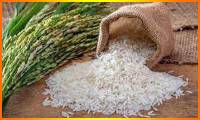
For the third consecutive year, exports of non-basmati have surpassed that of basmati. In FY23, non-basmati comprised 24% of the country’s total agricultural and processed food products exports (in terms of value), followed by basmati (18%). Besides this, it was the largest item in agri export basket in FY21 and FY22. Last time, it was in FY20 when the basmati exports were the highest from India.
As per data of the Agricultural and Processed Food Products Exports Development Authority (APEDA), the exports of non-basmati during FY23 have been to the tune of Rs 51,089 crore against Rs 45,725 crore in FY22.
According to industry, competitive pricing has ensured a surge in rice exports in the last fiscal and adherence to quality parameters has resulted in a significant demand for Indian rice from across the globe.
Exporters attribute the rise in exports to robust global demand, especially from the West Asian countries, Africa and Europe.
Source: tribuneindia.com
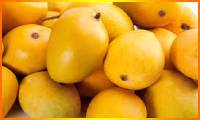
Mango exporters from Uttar Pradesh tap markets in Gulf and Europe.
Amid expectations of a bumper mango production of nearly 3.5 million tonnes (mt) in Uttar Pradesh, the state mango exporters are gearing up for shipments to the Gulf. Exports are also expected to European countries, Mango Growers Association of India President Insram Ali said.
Traditionally, UP mango is exported to the Gulf apart from shipments to a few South East Asian countries viz. Malaysia, Singapore from South India.
Mango shipments are likely to begin after the first week of June.
If the inclement weather including hailstorms and the unseasonal rainfall had not played a truant with plantations, the state’s mango output, especially Dussehri, could have touched 5 mt in the season.
'The flowering of the mango crop was robust, but the adverse weather played a spoilsport. Yet, we are expecting the production to touch 3.5 mt this year,' he added.
Apart from the flagship Dussehri variety, other UP mango varieties include Langda, Chausa, Amprapali and Mallika. Dussehri forms the bulk of the state mango exports owing to its sweet taste and lilting aroma.
Meanwhile, Western UP-based Shahnaz Exports Promoter Nadeem Siddiqui said mango shipments would mainly head to Saudi Arabia, Bahrain, and Kuwait. 'We have received bulk orders from the Gulf markets, and now it is for the exporters to fulfill them within the stipulated time frame.'
However, he lamented that the frequency of flight from Lucknow to the Gulf has come down, hampering the state mango export potential.
Meanwhile, Ali demanded that the government allow the setting up of mango-based food processing industries, such as pickles, juice etc, in Lucknow Dussehri belt to incentivise farmers and create a sustainable value chain.
'The state government should promote tourism in the mango belts and allow setting up of hotels in the larger interests of the beleaguered farmers,' he added.
Source: business-standard.com

Cheers Made in Uttar Pradesh Liquor In HIGH Demand in Foreign Countries Whopping 23 Pc Surge in Export.
Made-in Uttar Pradesh alcohol, which is extremely popular within the country, seems to be in high demand in the overseas market as well. The demand for bottled liquor that is exported out of the state to foreign destinations has grown significantly during the year 2022-23, as per IANS report.
The excise department released provisional figures which showed that the demand for bottled UP-based liquor brands has increased at least 23 per cent between April 1, 2022, and December 31, 2022, as compared to the previous fiscal year.
During the 2021-22 fiscal year, a total of 7.74 lakh cases of alcoholic beverages were sold abroad and during the nine-month period of the FY 2022-23, the state has already exported 9.48 lakh cases.
Though the sale volume for UP-made liquor in the last quarter (January to March 2023) is yet to be compiled, the final figures are expected to be much higher, added the IANS report.
Mohan Meakin and Radico Khaita create demand globally
About more than two dozen different IMFL (India-made foreign liquor) companies are present in Uttar Pradesh. But only Mohan Meakin and Radico Khaitan have been able to create demand for their brands internationally.
The dark rum produced by Mohan Meakin in Ghaziabad continues to be the hot seller internationally, said officials concerned.
'Of late, the demand for Indian single malt and craft gin has also picked up. The two premium products are produced in Rampur by Radico Khaitan,' said a senior officer from the department, as quoted by IANS.
For the past six years, barring the pandemic-induced slowdown, the two companies have been recording steady growth in the business and are catering to 38 countries. They have operations in other states as well and could be exporting more brands.
Dark Rum, premium products in demand in THESE countries
Popular dark rum and premium products have demand in developed countries like the US, UK, Canada, Australia, Germany, Finland, Switzerland, Norway, New Zealand, Russia, Japan, South Korea, Singapore, Hong Kong, Qatar, and Oman among others.
Least developed countries, including Congo, Liberia, Zambia, Djibouti in Africa, and Haiti in the Caribbean also procure affordable and cheap IMFL brands from Uttar Pradesh.
Excise Commissioner Senthil C. Pandian, meanwhile, said that handholding sessions for other liquor manufacturers will be organised in the coming months to improve the business prospects.
'We are going to create awareness over the procedure that needs to be followed while exporting liquor products. We have observed that both premium, mid-range, and affordable products are being sold internationally but the quality required in the various international markets needs to be maintained,' said Pandian as quoted by IANS.
Source: timesnownews.com
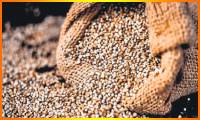
North-East goes big on millets.
Over the past few years, the North-East has been seeing a silent but determined movement to promote local millets, such as foxtail, sorghum and pearl, and revive some that had virtually gone extinct. Millet raishan, for instance, used to be a staple food in Nongtraw, in Meghalaya’s Khasi Hills, until the early 1970s. 'It was our rice,' remembers Pius Ranee, executive director of the Meghalaya-based North East Slow Food and Agrobiodiversity Society (Nesfas)— even used in soups, breads, biscuits and local beer. Job’s tears, megaru in Garo and sohriew in Khasi, too had given way to rice and wheat.
Now, organisations such as Nesfas, the Nagaland-based Northeast Network and Assam-based Caritas India (FARM North East programme) are working to revive of millet cultivation; it helps that 2023 is being celebrated as the International Year of Millets. Meghalaya’s Mei-Ramew cafés, for instance, have introduced millet dishes, with Nesfas’ support. Mei-Ramew, incidentally, translates to mother earth. After a Nesfas-promoted workshop, Naphisa Mawroh, a local baker in Shillong, has begun producing and marketing millet-based products, including breads, cookies, cupcakes and pizzas, at her café, Samanbha Bakery.
Source: lifestyle.livemint.com