
J&K s Gucchi mushrooms, 5 more indigenous products set to get GI tag
The famed and world’s costliest Gucchi mushrooms, a forest product cultivated from many districts of Kashmir and Jammu region is all set to get a Geographical Indications (GI) Tag.
Three more edibles from J&K are also in the ‘final examination stage at GI Registry Chennai’.
Locally known as Kanngech, and as morel mushrooms and Gucchi in markets outside, the Morchella esculenta is a prized harvest for people in districts of Kupwara, Baramulla, Budgam, and Anantnag.
It is also found in many regions of Jammu province and sold across markets of J&K and even abroad in both fresh and dried forms.
These sought after mushrooms, with their characteristic texture, flavor, and culinary value have passed many stages of scrutiny by the Geographical Indications Registry, Chennai, India.
As per the J&K government, Gucchi is in the ‘final examination stage’ at GI Registry Chennai.
As per estimates, in Kashmir division alone, 25 tonnes of Gucchii are harvested every year.
Men, women, and even children living near the forests carefully comb the forest floors, searching for these prized fungi every spring.
The market price of a kilogram of good quality dried Gucchi ranges between Rs 25,000 to Rs 30,000 in the retail market.
The official document of status of GI tagging of different crops and products of J&K backed by Agriculture Production Department, Government of J&K reveals that the application for GI tag of Gucchi mushrooms had been filed by Borderless Foundation, Marh Jammu facilitated by Director Agriculture and Food Production Jammu.
Additional Chief Secretary J&K Government, Atal Dulloo told Greater Kashmir that Morel Mushrooms had been in the process of examination by GI tag authority for about two years.
'The documentation is complete now,' he said, expressing delight over the development.
Dulloo said that the J&K government had applied for a GI tag of 10 local products, which had a significant differentiation and value for the communities.
Of these, six are in the final stages of the process.
These include the aromatic rice from Kashmir – Mushqbudgi.
This round and short rice variety mostly grown in district Anantnag and some other parts of Kashmir, is popular but less available. Over the past decade, the J&K government has intensified efforts to increase the cultivation of this commercial variety and has also applied for its GI tag, and now stands at the final stage of grant.
The application had been filed by Sagam Mushkbudgi Farmer Producers and facilitated by MRCFC SKUAST, Department of Agriculture, Kashmir and NABARD J&K.
This variety is different from the Basmati variety of rice produced in the Jammu region, which has already received the GI tag.
Kashmir’s saffron has also been granted GI tag in the past.
In addition, Bhaderwah Rajmah, Sulai honey, Kaladi cheese and Anardana are also at the same stage of bagging the coveted GI tag. Prof F A Nehvi, who was instrumental in getting J&K’s first GI tag to saffron and who recently retired as Chief Scientist Saffron Research Station said that GI tag to Gucchi would be a great development for the people who are involved in collecting and selling these mushrooms.
He said that the GI tag application must include the map of the area where this product is found.
'If the application has been forwarded from Doda, a separate application cannot go from some other district. The tag includes the geographical area and would include the entire expanse of J&K where the Gucchii mushrooms are harvested from,' Prof Nehvi said.
He said he was not sure whether the application of Gucchii had included the Geographical Identification of the entire location.
Prof Nehvi said that the GI tag confirms the authenticity to the consumer and prevents misuse of a term for other similar products. 'Consumers get satisfied about the genuineness in addition to enhancing its market value,' he said.
Source: greaterkashmir.com
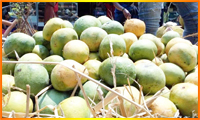
Kari Ishad mango of Ankola in Uttar Karnataka gets GI tag
According to the Geographical Indications Journal of the government, the Kari Ishad is accepted as one of the finest quality mangoes due to its unique aroma, luscious taste, high amount of pulp, shape, and size
The Kari Ishad mango prominently grown in Ankola taluk of Uttara Kannada has bagged the Geographical Indication (GI) tag from the Geographical Indications Registry under the Union Government.
The GI certificate issued to Matha Totagars Farmer Producer Company Limited, Ankola is valid till March 1, 2032 from March 31, 2023.
According to the Geographical Indications Journal of the government, the Kari Ishad is accepted as one of the finest quality mangoes due to its unique aroma, luscious taste, high amount of pulp, shape, and size.
In addition to Ankola, the mango is grown in Karwar and to a certain extent in Kumta of Uttara Kannada. The trees are prominently spread over Belse, Shetgeri, Belambara, Mogata, Vandige villages of Ankola. Vandige village produced the highest amount of about 600 tonnes of fruits a season. Belse village houses 1,500 plants. The fruit is famous because of its sweet taste and pulp. Hichkad Group Vividhoddeshagala Sahakari Sangha Niyamita, Ankola, which runs the Oriental Canneries and Industries produces about 12,000 tons of pulp every year.
According to the Registry, the fruits are large and oblique to oval shape. Each panicle usually bears one fruit. A well grown tree produces/bears up to 2,000 fruits in a season. The fruit has a short shelf life of about five days.
Its trading is limited to Ankola, Karwar and Hubballi markets.
One of the Directors of Matha Totagars Farmer Producer Company Limited, Mahadev Indra Gouda, told The Hindu that a Kari Ishad mango mela (fair) will be held at Ankola on June 6, 2023.
“Many trees lost fruits when heavy winds swept Ankola earlier this week. It resulted in huge loss of fruits,” he added.
Mr. Gouda, who was the applicant for the GI certificate, said that the FPO has yet to adopt a business model for the better marketing of the product.
He said that the exact extent of area under Kari Ishad is yet to be found out scientifically.
Extraction and marketing of Ishad mango pulp has an interesting background, Shivananda Kalave, a Sirsi-based environmentalist, writer and green activist, told The Hindu. Oriental Canneries and Industries set up a unit in Ankola in 1908 to extract pulp from Ishad for making value-added products. The then Bombay Government supported it by supplying wood. The pulp, which was also being exported, was being marketed by the then Bombay-based Veerachand Panachand Company.
An old marketing brochure printed at Basel Mission, Mangaluru, says that the pulp was used for making juice, syrup, salad and ice cream.
According to the brochure, the pulp can be used for making 48 recipes. It was being used in the United States, Australia and Sri Lanka. According to the brochure, the Hichkad Group purchased the processing unit in 1970 for `95, Mr. Kalave said.
The Ishad mango has two variants — Kari Ishad, which has thin skin, more pulp and is sweeter, and Bili Ishad, which has thick skin and has less pulp and sweetness.
Source: thehindu.com
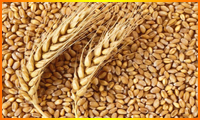
India clears export of 300,000 tonnes of wheat to Nepal
India has widened the door for wheat exports allowing Nepal to obtain a 300,000-tonne shipment it had requested in April to plug a gap in domestic output.
According to Indian media reports, India has permitted exports of around 1.05 million tonnes of food grains to Nepal, Indonesia, Senegal and Gambia as part of its economic diplomacy, waiving curbs on exports.
Nepali government officials say they are yet to receive official notification of the export restriction being removed.
'We had made a request to the Indian side. We have not received official notification from them,' said Radhika Aryal, joint secretary of the Ministry of Industry, Commerce and Supplies.
Nepal had sent a request to the Indian government through the Foreign Ministry to provide wheat as local flour mills were struggling to get raw materials.
Mill owners had been pleading with the government that they needed at least 600,000 tonnes of wheat to get them through the upcoming fiscal year beginning mid-July.
'The wheat quota set by India may be insufficient as domestic production has declined,' said Radheshyam Agrawal, general secretary of the Nepal Flour Mills Association.
'We have to make further requests to import wheat or else the flour industry will have to shut down again,' he said.
The Economic Survey unveiled by the government shows that Nepal’s wheat production is estimated to drop by 2.14 percent to 2.09 million tonnes this fiscal year.
'We do not have authentic data, but demand for flour is rising by more than 10 percent annually as bakery manufacturers have large needs,' said Agrawal who owns Kamdhenu Agro Mill in Chitwan.
Kathmandu consumes 2,100 tonnes of flour daily, 80 percent of which is refined flour and 20 percent wheat flour, the association said.
Government officials say demand for wheat has been increasing dramatically.
Ram Krishna Regmi, chief statistician at the Ministry of Agriculture and Livestock Development, said that wheat imports barely amounted to 100,000 tonnes before Covid.
'Now, traders and manufacturers are saying that 600,000 tonnes of wheat need to be imported to fulfil their requirement. It is surprising how demand has increased sixfold in a few short years.'
According to the Department of Customs, Nepal imported 170,517 tonnes of wheat in the last fiscal year 2021-22.
In the fiscal year 2020-21, imports reached 386,789 tonnes worth Rs11.92 billion.
Flour mills supply refined flour to makers of biscuits, noodles, bread and other bakery products.
Domestic flour mills say they have started procuring wheat locally with the onset of the harvest season. 'But domestic production is enough to keep the mills running for only around six months,' Agrawal said.
Nepal suffered a severe shortage when India imposed a ban on wheat exports last May after unseasonably hot weather hit harvests there. The embargo caused 80-85 percent of Nepali flour mills to shut down. It was eventually lifted in December.
India instituted a quota system for its neighbours in December last year and allocated 50,000 tonnes of wheat to Nepal.
'We were buying wheat at Rs4,000 to Rs4,500 per quintal, but the price jumped to Rs5,500 per quintal as soon as India imposed the ban,' Agrawal said.
Amid pressure from the flour industry and fears of a wheat shortage due to rising prices, the Ministry of Industry, Commerce and Supplies sent a letter to the Indian government in April requesting a consignment of 300,000 tonnes of wheat.
According to Indian media reports, the Indian Department of Food and Public Distribution has allowed exports of 300,000 tonnes of wheat to Nepal at the behest of the Ministry of External Affairs.
India has set a quota despite low domestic wheat stocks, the report said.
The Department of Food and Public Distribution of India, according to reports, deals with the import and export of only wheat and non-basmati rice from central pool stocks available with Food Corporation of India.
'World Trade Organisation norms restrict the export of food grains from public stocks procured for domestic consumption through welfare schemes,' the report said.
Source: kathmandupost.com
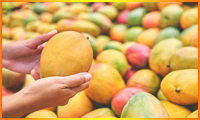
Mango exports this season to start from early June
Kolkata, May 28 (PTI) Mango exports from West Bengal are expected to begin from early June with shipments to Middle East countries, an official said on Sunday.
There have also been inquiries for export orders from Europe, which are currently being finalised, the official said.
“Exports are expected to commence from early June, as we are finalising the last shipments from some orchards. Orders have already been received from the Middle East,” said Ujjal Saha, president of the Malda Mango Association, in an interview with PTI.
Source: theprint.in
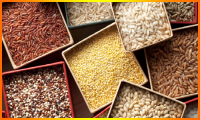
India to ship grains to Indonesia, Nepal, Senegal, Gambia.
India will despatch around 1.05 million tonnes of food grains to Nepal, Indonesia, Senegal and Gambia as part of its economic diplomacy in the current financial year, waiving curbs on exports.
India banned wheat and broken rice exports and imposed a 20% export duty on non-basmati rice varieties last year to keep prices down.
In what is likely to add heft to India’s role in providing food security on the global stage, the department of food and public distribution has allowed exports of 300,000 tonnes wheat to Nepal; 200,000 tonnes of broken rice to Indonesia; 500,000 tonnes broken rice to Senegal, and 50,000 tonnes of broken rice to Gambia on a request by external affairs ministry. This comes despite low domestic wheat stocks.
The Food Corp of India (FCI) so far has procured a little over 26 MT wheat in the 2023-24 (October-March) rabi marketing year against a target of 34.5 MT. A hot February and heavy rains in March and April lowered wheat production to below the agriculture ministry’s second estimate of 112.2 MT. As per government officials, the amount procured so far will be enough to meet wheat requirement for the public distribution system (PDS). After ensuring 18.5 MT for PDS, there will be 8.7 MT available in the central pool, which will be more than sufficient for the open market sale scheme if required. Hence, there is no cause for concern, the government claims.
In the case of rice, the government had 26.5 MT rice in its central pool as of 1 May. Up to 21 May, FCI had procured 77.2 MT paddy in the ongoing 2022-23 (April-September) kharif marketing season and 3.2 MT paddy in the current 2023-24 rabi marketing season against an estimated target of 15.7 MT.
In response to Mint’s query, the Department of Food and Public Distribution said it deals with the 'import and export of only wheat and non-basmati rice from central pool stocks available with FCI. WTO norms inter-alia restrict the export of foodgrains from public stocks procured for domestic consumption through welfare schemes.
However, humanitarian assistance, fully in grant form under the reference of the Ministry of External Affairs, to the deserving countries, is only allowed. During the 2022-23 financial year, no quantity of wheat and rice was supplied or exported to any foreign countries from the department’s central pool stocks,' the official said. Queries sent to the external affairs ministry remained unanswered.
Wheat and non-basmati rice exported as humanitarian assistance from central pool stocks during FY15 to FY22 to countries like Sri Lanka, Afghanistan, Zimbabwe, Bhutan, Myanmar, Mozambique among others was 256,427 tonnes, the official disclosed.
'In the past two years, foodgrains have been provided to some countries as humanitarian aid on the recommendation of Ministry of External Affairs by DGFT. The data will be available with MEA or DGFT,' the official notified.
Emails sent to MEA, Embassy of Nepal on Friday containing queries remain unanswered till press time.
Last year, until 22 June of FY23, India shipped 1.8 MT wheat, including 33,000 tonnes of 50,000 tonnes committed to Afghanistan as part of humanitarian assistance, said then Food Secretary Sudhanshu Pandey. Other than Afghanistan, India also exported food grains to Bangladesh, Bhutan, Israel, Indonesia, Malaysia, Nepal, Oman, Philippines, Qatar, South Korea, Sri Lanka, Sudan, Switzerland, Thailand, UAE, Vietnam and Yemen during last financial year.
Source: livemint.com
Capacity-building programme on GI products to be held.
The Federation of Indian Export Organisation and the Ministry of Commerce, Government of India, will organise a capacity-building programme for local artisans and entrepreneurs for promotion of products with Geographical Indications tag, in the city on Friday.
The focus will be on export of agarbathi, silk, traditional paintings, sandalwood oil and soap, jasmine, betel leaf, rosewood inlay, Ganjifa paintings of Mysuru, and the sessions will be held in association with District Industries Centre and the Mysore Chamber of Commerce & Industry and MSME Development Institute.
The programme will be held at Hotel Pai Vista from 10.30 a.m. and the organisers said that the sessions will help create awareness among the entrepreneurs, start-ups, and business professionals about various opportunities available in the international market for GI products.
In addition, the participants will also be apprised of support and the facilitation being offered by both State and Centre governments under the GI tag initiative for promotion of exports.
Businessmen and merchants, manufacturers, entrepreneurs, start-ups involved in manufacture and export of GI products will participate and take advantage of the deliberations and interactions with experts.
Senior officials from the office of the Additional Director General of Foreign Trade, Bengaluru, DIC Mysore, Handicrafts Service Centre, MCCI, FIEO, MSMEDI will also interact with the participants.
Source: thehindu.com
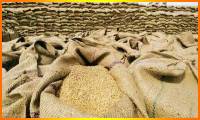
India estimates wheat, rice production at new high.
Allaying fears over indifferent weather in February and March affecting rabi crops, the Indian government on Thursday raised its estimates for foodgrain production by another 2.1 per cent from the projections made in February.
In a new development, the Centre has come out with projections of the 'Zaid' crop — sown between the rabi and kharif crops — separately unlike earlier years when they were treated as part of rabi crops.
In its third advance estimate of agricultural crops for the current crop year (July 2022-June 2023), the Ministry of Agriculture pegged foodgrains output at a record high of 330.53 million tonnes (mt). This is against 323.55 mt projected in the second advance estimate and 315.61 mt last crop year.
Contentious forecast
In what could turn out to be contentious in the following months, the Ministry projected wheat output at a new high of 112.74 mt (112.18 mt second advance estimate/107.74 mt last year).
The estimate comes amidst other agencies such as the Roller Flour Mills Federation of India pegging the production lower than 105 mt. Traders, too, say wheat production is lower, pointing to the procurement for the Central Pool stocks by the Food Corporation of India this year.
According to official sources, wheat procurement as of May 24 is 26.17 mt against a target of 34.51 mt.
Comfortable situation
With the Centre raising the kharif rice production by 2 mt to 110 mt (108mt/111 mt), overall output for the year has been pegged at a new peak of 135.54 mt with rabi projected at 15.89 and the 'Zaid' crop at 9.61 mt.
The comfortable rice production this season is seen as one reason why the Government has permitted exports of fully broken rice, banned since September 8, 2022, under certain conditions such as meeting food emergencies of neighbouring and African countries.
The maize crop seems to have gained from the March rains with its production being raised to 35.91 mt (34.61 mt/33.73 mt). Overall, cereals production has been pegged higher at 303.03 mt (295.74 mr/288.31 mt).
Inflation concern
Coarse cereals production has been raised to 54.74 mt (52.72 mt/51.10 mt) with other gains forming from bajra and Shri Anna (nutri-cereals). Output of the rest such as jowar, small millets and barley is seen lower.
In what could be a concern for the Centre to control inflation, pulses production has been lowered to 27.5 mt (27.8 mt/27.30 mt). The output of tur has been cut to 3.43 mt (3.66 mt/4.22 mt) that of gram to 13.54 mt (13.62 mt/13.54 mt) and urad to 2.61 mt (2.68 mt/2.77 mt).
The production of nine oilseeds has been projected higher at 40.99 mt (40.01 mt/37.96 mt) with the output of rapeseed/mustard lowered to 12.49 mt (12.81 mt/11.96 mt). The production will still be a record high.
On the other hand, soyabean production has been pegged higher at 14.97 mt (13.97 mt/12.98 mt) which should cause concern for farmers in a market where edible oil prices are falling.
Catching the eye
Another estimate catching the eye is the increase in cotton production to 343.47 lakh bales from the earlier estimate of 337.23 lakh bales. This comes amidst confusion in the trade over the exact production of cotton.
While the Cotton Association of India lowered production estimate to lower than 300 lakh bales this month, cotton arrivals have zoomed to a nine-year high in May as farmers have begun releasing stocks they had held so far hoping to fetch higher prices.
Some traders are estimating the production between 340 lakh bales and 360 lakh bales.
Source: thehindubusinessline.com

Trade partners want to fast-track FTAs with India: Goyal.
The countries and economic blocks with which India is negotiating trade and economic agreements want to fast-track negotiations and reach a conclusion, commerce and industry minister Piyush Goyal said Wednesday. 'Everybody wants us to fast-track agreements. Free-trade part is separate. They want an agreement…,' he said at a CII’s Annual Conference.
India is at present negotiating such agreements with Canada, EFTA (European Free Trade Association), the UK, and the European Union (EU) among others.
'It shows the increased importance of India in the global order,' the minister said. 'We have to choose whether we are going to be bold, whether we are going to engage with confidence or are going to let this opportunity go by,' he said.
'FTAs are two way traffic… I feel very sad when I am being told sometimes that I (industry) want access to the EU market, but please do not allow them to come into our market.'
Goyal said that no other developing country in the world is in such a 'sweet spot' as India is.
'I believe this is a compelling case for investments, for growth and for expanding our international outreach, for bringing technology, for bringing innovation into the country,' he said, suggesting the industry should focus on quality, innovation and skilled manpower.
On exports, the minister said that India will achieve $2 trillion worth of goods and services exports by 2030.
He suggested the industry expand markets with an open mind, and engage with the world.
'Look at our import basket, the basket largely gets affected by oil, which will have its own trajectory, possibly a lowering trajectory or a downward trend in the years to come. Our export basket has all the things that the world wants,' he said.
He said the India has strong foreign exchange reserves and the country is in a comfortable position to meet all the requirements even in any worst-case scenario in the next five-six years.
India’s forex reserves jumped $3.553 billion to $599.529 billion for the week ended May 12, according to data released by the Reserve Bank of India.
Source: financialexpress.com

WTO reforms a top priority for India: Anupriya Patel.
There is an urgent need to address World Trade Organisation (WTO) reforms on a top priority basis, said Anupriya Patel, Minister of State for Commerce and Industry.
India has been pitching for WTO reforms and also pressing for better dispute settlement mechanisms during G20 talks. The emphasis of these discussions would be on reaffirming WTO’s foundational principles, as embodied in the Marrakesh Agreement and its multilateral trade agreements, thus recognising the need for the open, fair, inclusive and transparent functioning of WTO.
The minister was speaking at the 2nd Trade and Investment Working Group meeting in Bengaluru on Wednesday.
Ms. Patel said the priorities pursued by G20 under India’s Presidency of the Trade and Investment Working Group were a mix of continuity from the previous Presidencies and these reflect upon the additional challenges which need global attention.
'There is an urgent need for addressing the World Trade Organisation reforms on a top priority basis as WTO assumes a vital role in ensuring fairness and transparency in global trade and forms the backbone of the multilateral trading system,’‘ she insisted.
In his remarks, Sunil Barthwal, Secretary, Department of Commerce said the process of WTO’s reformation necessitated inclusive efforts aimed at bolstering the multilateral trading system.
Som Parkash, Minister of State for Commerce and Industry, remarked that India was aiming to emerge as the global leader in the international trade landscape. The country was already set to become the second-largest e-commerce market globally.
'We have witnessed a remarkable transformation through embracing open markets and global integration. This has also been driven by a robust entrepreneurial spirit and steadfast government support,’‘ the minister noted.
Source: thehindu.com
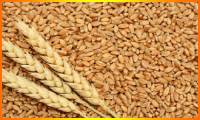
Foodgrain output seen at record 330.5 MT in 2022-23.
The total foodgrain production in the country in 2022-23 is estimated to go up to a record 330.5 million tonnes (MT) from 315.6 MT with a record production of wheat, rice, maize, oilseeds and sugarcane, according to the third advance estimate of the Ministry of Agriculture & Farmers Welfare on Thursday.
The total production of wheat during 2022-23 is estimated at 112.7 MT, higher by 5 MT as compared to the previous year. The production of rice in the country is estimated at 135.5 MT which is higher by 6 MT as compared to the previous year's production.
The production of maize during 2022-23 is estimated at 35.9 MT, which is higher by 2.1 MT than the previous year's production.
While the production of nutri and coarse cereals is estimated at 54.7 MT, 3.6 MT higher than the previous year's production, that of sugarcane is estimated at 494.2 MT, 54.8 MT higher than last year.
The total production of pulses is estimated at 27.5 MT in 2022-23.
The production of soybean, rapeseed-mustard is estimated at 14.9 MT and 12.4 MT respectively, which is higher by 1.9 MT and 0.5 MT respectively than the production of the previous year.
The total oilseeds production in the country during 2022-23 is estimated at 40.9 MT.
The production of cotton is estimated at 34.3 million bales (of 170 kg each).
Source: economictimes.indiatimes.com