
States should adopt innovative models and offer package deals for faster investments: Sh. Piyush Goyal.
Union Finance and Corporate Affairs Minister, Smt. Nirmala Sitharaman today chaired the 2nd meeting of the Apex Monitoring Authority constituted to review the activities of National Industrial Corridor Development and Implementation Trust (NICDIT). Union Minister of Commerce & Industry, Consumer Affairs, Food and Public Distribution & Textiles, Shri Piyush Goyal and Union Minister of Ports, Shipping and Waterways & Ministry of Ayush, Shri Sarbananda Sonowal also attended the meeting.
The Apex Monitoring Authority comprises of Finance Minister as Chairperson, Minister-in- charge, Ministry of Commerce & Industry, Minister of Railways, Minister of Road Transport & Highways, Minister of Shipping, Vice Chairman, NITI Aayog, and Chief Minister(s) of States concerned. Chief Ministers from four states, viz. Gujarat, Haryana, Uttarakhand, and Maharashtra; Ministers from 9 States viz. Bihar, Uttar Pradesh, Madhya Pradesh, Andhra Pradesh, Kerala, Punjab, Jharkhand, Karnataka, and Rajasthan besides senior officials from all the states attended the meeting.
Smt. Nirmala Sitharaman at the very outset, thanked the State Chief Ministers and Ministers for their continued support and cooperation in the development of NICDIT projects and appreciated the efforts made by the NICDIT team in the successful implementation of its projects.
She emphasized upon the need to ensure continued coordination between the Central and the State Governments and said they should work collectively as ‘Team India.’ Union Finance Minister stated that “FIRE Corridors = F – Freight; I – Industrial; R – Railways; E – Expressways” will ignite industrialization & economic development in India.
The Finance Minister stated that the rapidity with which the infrastructure is being developed since 2014 needs to be maintained. She urged the State Governments and NICDIT to maintain the same momentum for realizing the vision of Prime Minister Shri Narendra Modi of a Developed India by 2047.
She urged all the States to tie up loose ends and move forward and resolve all pending issues through greater exchange and sharing of information to expedite the progress of works in the respective States.
Shri Piyush Goyal emphasized upon the financial viability of the projects. He urged the States for faster allotment of lands at reasonable rates. He stated that States should adopt innovative models and offer package deals etc. for faster investments. He said that electricity rates should be affordable and consistent as high rates of electricity are a deterrent to the industry.
Union Commerce and Industry Minister urged the State Governments to expedite acquisition of contiguous, litigation encumbrance free land and grant early environmental clearances for the NICDIT projects. He further stated that States should focus on expediting the finalization and execution of the Shareholders Agreements and State Support Agreements.
He directed NICDC to foreclose the projects where the State Government is not able to provide committed land in a time bound manner and to conceive projects in other states that are willing to offer land to expedite investments in their respective states.
He concluded by saying, India is making rapid strides towards Aatmnirbharta and continuous support from States will be the best contribution in this nation building process.
Shri Sarbananda Sonowal stated that the development of economic zones in and around ports may also be looked into. This was followed by a special address by Shri Suman K Bery, Vice Chairperson, NITI Aayog.
The meeting started with a brief overview of the National Industrial Corridor Programme by the Secretary, DPIIT & Chairman, NICDC, Shri Rajesh Kumar Singh who talked about the status of land allotment and investment mobilized till date in his welcome address.
Smt. Sumita Dawra, Special Secretary- Logistics, DPIIT and CEO & MD, NICDC presented action taken on the directions of the 1st meeting and further spoke about the recent developments in the industrial corridor projects and gave a brief overview about the projects which are in the pipeline. During the presentation, she highlighted the adoption of PM’s GatiShakti National Master Plan in Industrial Corridor projects. Smt. Dawra also apprised that as per the directions of the Union Finance Minister in the previous meeting, Round Table Conferences, Roadshows & meetings with international associations are being organised at different places with the support of States & SPVs.
Chief Ministers/Ministers of Industries/Senior Officials of the respective states spoke about the projects which are/or will be undertaken in their jurisdiction and the steps they are taking to ease the land allotment process and to give faster clearances. They assured that all possible support will be extended to the projects under NICDIT for early implementation on the ground.
The meeting proved to be a valuable platform for key stakeholders to discuss and exchange ideas on the progress, challenges, and future strategies related to the National Industrial Corridor Development Program. It presented an opportunity to align efforts, foster collaboration, and accelerate the development of industrial infrastructure across the country. Further steps to be taken into consideration for the advancement of the National Industrial Corridor Development Programme were the main points of discussion during the meeting of Apex Authority.
The National Industrial Corridor Development Program aims to establish a network of industrial corridors that will serve as engines of economic growth, promote industrialization, and create employment opportunities across India. The program focuses on developing world-class infrastructure, attracting investments, and fostering sustainable industrial development.
Source: pib.gov.in
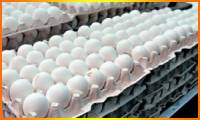
Sri Lanka expands egg imports from Indian farms to tackle growing demand.
Sri Lanka will import one million eggs daily from five chicken farms in India to meet its growing market demand, the crisis-hit island nation's top importing agency said on Tuesday.
Sri Lanka State Trading Corporation (STC) Chairman Asiri Valisundara said that 20 million eggs were imported from India, of which 10 million have been released to the market.
The eggs were being imported from two chicken farms in India, and the Animal Production Department has additionally approved the purchase of eggs from three other farms, Valisundara was quoted as saying by the Colombo Page news portal.
STC Chairman Walisundara said it has been decided to import one million eggs daily from five chicken farms in India.
He said that permission was received to import eggs from three more farms according to the report given by the three officials of the Animal Production Department and the State Trading Corporation who visited poultry farms in India.
The further import of eggs is based on market demand, Valisundara said, the News First TV station reported.
He added that the imported eggs would be released to bakeries, biscuit manufacturers, catering services and restaurants at a price of SLR 35 each, the report said.
Sri Lanka has been facing a severe and unprecedented economic crisis since last year. The high inflation has eroded purchasing power, and the livelihoods of many people have been affected, and past development gains have been reversed. The island nation is struggling to normalise its crisis-hit economy after it declared its first-ever debt default in April last year.
Source: thehindubusinessline.com
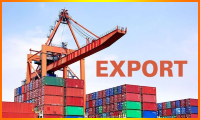
India to export cereals under humanitarian assistance.
The government has cleared nearly 1.06 million-tonne of grains, including wheat and rice, for export under the country’s diplomatic food assistance programme to four countries while an overall ban on wheat shipments out of the country and curbs on rice export will continue, an official said on Tuesday, requesting anonymity.
India banned wheat export in May 2022 and introduced a 20% tariff on that of non-basmati rice in August 2022 to shore up domestic supplies and control prices after poor harvests. It also banned the export of broken rice, which is a key ingredient of cattle feed.
The ban exempted grain export for countries that request India for shipments to overcome shortages. At that time, food minister Piyush Goyal said although India was not a major exporter of wheat, it would supply to 'friendly countries facing a food crisis'.
The food ministry has cleared over 300,000-tonne of wheat shipments to Nepal, 200,000-tonne of broken rice to Indonesia, 500,000-tonne of broken rice to Senegal, and 50,000-tonne of broken rice to Gambia after discussions with the external affairs ministry under humanitarian food assistance.
The country curbed grain exports after a heatwave plunged federally-held wheat reserves to a 14-year low last year. This year, the Food Corporation of India has purchased nearly 27 million of wheat for state-owned stockpiles, short of a targeted 34 million tonne.
Under the World Trade Agreement rules, India cannot export publicly held grains intended for domestic welfare schemes. Food exports from government stocks can be exported only for humanitarian assistance through diplomatic channels.
Last year, despite India’s ban, requests for food shipments were received from over a dozen countries as a global food crisis triggered by the Ukraine war crimped availability, pushing up prices. 'Outbound shipments had gone to Bangladesh, Oman, UAE, and Afghanistan among others with an undertaking by their governments that Indian wheat should be used for their own consumption and not trade or exports,' the official cited above said.
Unlike wheat, India is a major exporter of rice. In 2021-22, the country exported nearly 22 million-tonne of rice, about a sixth of its total output. India accounts for 40% of the world’s rice shipments.
The government procures, or purchases, cereals at minimum support prices, which are then distributed to nearly 800 million beneficiaries through the public distribution system (PDS) under the National Food Security Act.
According to the food ministry’s calculations, the government will require 18.5 million-tonne of cereals for distribution under PDS and other welfare schemes, leaving it with a surplus of nearly 8.6 million-tonne.
Official figures released on May 26 showed the government procured 52.06 million-tonne of rice during the kharif marketing season (2022-23) at minimum support prices, resulting in a payout of Rs.1.6 lakh crore to over 10 million farmers.
Source: hindustantimes.com

India's growth momentum may continue in FY24: RBI.
India's standout growth momentum should sustain through this year of poor global economic expansion on moderating inflation, the central bank said in its annual report, attributing durability of the country's world-beating growth credentials to recent structural reforms undertaken by the Centre.
Inflation is already moderating and the external account is sound, the Reserve Bank of India (RBI) said, but the El Nino and its adverse impact on rainfall remain potential threats to macroeconomic stability and food prices. Furthermore, moderating global growth, protracted geopolitical tensions and a possible upsurge in financial market volatility, evident in the implosion of many regional US banks, pose downside risks. 'It is important, therefore, to sustain structural reforms to improve India's medium-term growth potential,' the RBI said.
While the growth outlook appears to be more uncertain for several emerging markets as they face food and energy shortages and unsustainable debt overhangs, the RBI credited India's stellar performance to sound macro fundamentals, fiscal policy thrust on capital expenditure, healthy corporate and financial sector balance sheets, and structural reforms implemented over the recent years by the government.
'Private Capex may Go Up'
'Domestic economic activity does face challenges from an uninspiring global outlook going forward, but resilient domestic macroeconomic and financial conditions, expected dividends from past reforms and new growth opportunities from global geo-economic shifts place India at an advantageous position,' the central bank said.
To be sure, India contributed more than 12% to global growth on average during the past five years. The country is expected to have recorded economic expansion of 7% in real GDP in 2022-23 despite several global shocks.
The government's sustained expenditure on building capital assets is expected to be mimicked by the private sector, with several industries already reaching thresholds that should demand addition to capacity.
'The crowding-in effects of sustained increase in government capex over recent years is expected to spur higher private investment in 2023-24,' the central bank said.
Inflation is also moderating, creating a stable platform for growth sustainability.
'Risks to inflation have moderated with downward corrections in global commodity and food prices and easing of the pass-through from high input cost pressures of last year,' the RBI said.
Crop Prospects Hinge on Rainfall
Still, food prices could turn erratic in case of rainfall deficiency due to the anticipated El Nino event. Summer-sown (kharif) crop prospects would depend on the progress of rainfall. Otherwise, the inflation trajectory is expected to move down over 2023-24, with headline inflation edging down to 5.2% from the average level of 6.7% recorded last year.
The Centre has set the target for grain production at 332 million tonnes in FY24, which is 0.4% above previous year's output.
In the external sector, the current account deficit is likely to remain moderate, backed by robust services exports and the salubrious impact of moderation in commodity prices of imports. India Ratings and Research expects the current account to be in surplus of around $6 billion, which is 0.7% of GDP, in the fourth quarter of FY23 after a gap of six quarters.
Source: economictimes.indiatimes.com
Indian delegation participates in 47th session of Codex Committee on Food Labelling.
An Indian delegation, led by Dr Harinder Singh Oberoi, Advisor (Science & Standards, Codex), Food Safety and Standards Authority of India (FSSAI), took part in the 47th session of the Codex Committee on Food Labelling held from May 15 to 19, 2023, in Gatineau (Ottawa), Québec, Canada.
The delegation participated in various discussions at the global meet that saw the participation of delegates from 59 countries and 23 International Government and Non-Governmental Organisations, including representatives from WHO and FAO.
The issues that were discussed at the session included standards related to food labelling norms, use of new technologies in labelling, labelling of food allergens, labelling for e-commerce. Further, India has been made the co-chair in two E-working groups (EWGs) on labelling for E-commerce and the use of new technology in labelling.
The Indian delegation also included Ajith Kumar, Assistant Commissioner, Department of Animal Husbandry and Dairying; Dr Aditya Jain, Senior Manager, National Dairy Development Board; and Dr Heena Yadav, Technical Officer, FSSAI; which brought diverse expertise on the table.
During their visit, the team also met Sanjay Kumar Verma, High Commissioner of India to Canada, and a discussion took place on wide issues ranging from harmonisation with the Codex standards to import and export of food items, with an emphasis on the export of traditional food products, keeping in mind the sizeable and growing Indian population in Canada.
Verma stated that he is likely to meet the President of CFIA soon to discuss the mutual recognition of food certification system to improve the export of Indian food products to Canada.
During the visit, Dr Oberoi also met Dr Harpreet Kochhar, President of the Canadian Food Inspection Agency, and discussed about signing of MoU between FSSAI and CFIA. During his meeting with Dr Kochhar, Dr Oberoi also emphasised on the mutual recognition of few of the Food Testing Laboratories in India and Canada for facilitating trade of food products.
The Indian delegation also got an opportunity to have a detailed discussion with the officials of CFIA on the labelling of food allergens, use of technology in labelling, and visited the Food Emergency Response Centre and a Food Testing Laboratory in Ottawa, Canada. Previously, India has signed an MoU with Canada for the mutual recognition of food labs in both the countries.
During the visit, Dr Oberoi also visited the Ontario Food Terminal at Toronto to get an insight into the inspection system for imported fresh fruits and vegetables.
Source: fnbnews.com

Vocational training on dairy farming conducted by KVK langroya.
A vocational training on dairy farming was conducted at Krishi Vigyan Kendra, Langroya, District Shaheed Bhagat Singh Nagar from 12 to 26-5-2023. During this training, the trainees were given practical as well as theoretical knowledge about dairy farm management, feeding of dairy animals in scientific way, layout and planning of various types of dairy sheds, taking green fodder throughout the year, silage making, breeding planning and heat synchronization for efficient use of farm labour and resources & prevention, control and treatment of various diseases of dairy animals.
The training was imparted by the experts-Dr. Aparna, Asstt. Professor ( Livestock management), KVK Rupnagar and Dr Gurinder Singh, Farm Manager, KVK Langroya, Distt Shaheed Bhagat Singh Nagar. Dr. Harwinder Singh, Deputy Director, Dairy Development Department, Shaheed Bhagat Singh Nagar also participated in the training and appraised the trainees about various financial and other assistances provided by the Dairy Development Department for upliftment of dairy profession in the district. Representatives of other allied departments also guided the farmers regarding finance and insurance schemes available for dairy farmers.
On the concluding day of the training, Dr. Maninder Singh Bons, Associate Director (Training), Krishi Vigyan Kendra, Langroya, District Shaheed Bhagat Singh Nagar, shared important tips for success in dairy farming profession and thanked the trainees for their participation in the training with full enthusiasm.
Source: en.krishakjagat.org
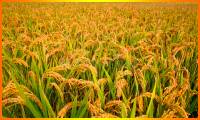
Telangana set to advance kharif and rabi sowing of paddy.
The Telangana Government has asked the farmers to advance sowings in both kharif and rabi seasons by 3-4 weeks so that they do not face problems due to untimely rains or hailstorms during the harvest time.
It is probably the first State to consider advancing sowing of paddy on the heels of climate change affecting agricultural production.
Recently, the Telangana Cabinet recently set up a sub-committee headed by Agriculture Minister S Niranjan Reddy to study the feasibility and come out with a set of recommendations on how to go about it. This, perhaps, is first such attempt by any State government in the country to attempt to advance the sowing seasons.
Telangana Chief Minister K Chandrashekar Rao reiterated the suggestion to advance sowing at the District Collectors’ meeting held in Hyderabad on Thursday.
'The sowing process must be completed between May 25 to June 25. Similarly, the rabi sowings should be started by November 15 and competed in the following 2-3 weeks,' he said.
This, in turn, would help advance the harvesting seasons by a month. 'It would help the farmers protect themselves from untimely rains and hailstorms during the harvesting period, causing heavy losses,' the Chief Minister said.
State’s choice
Official sources in New Delhi said States are free to decide on sowing of crops as agriculture is a State subject. However, Punjab and Haryana have banned sowing of paddy before June 1 in order to ensure that farmers do not exhaust depleted groundwater resources.
Analysts, on the other hand, see this as a political move so that the ruling Bharat Rashtra Samiti (BRS) party will not be in trouble in case rains or floods affect paddy crop when the North-East monsoon sets in during October.
Elections to the Telangana Assembly are scheduled during the year-end. Another political angle to it is that in case Telangana faces problems again in the procurement of rice by the Food Corporation of India (FCI), BRS can play it up during elections, analysts said. Last year, Telangana faced problems in rice procurement as the Centre said it would not buy parboiled rice from the State.
Irrigation the key
'It is good if the sowing is advanced before the monsoon arrives, provided the land has irrigation facilities for the germination of seeds. It has been observed that in many years, the later part of the season gets drier compared to the initial period. In the event of sowing in July, the crop does not get water in the later part of the season in the rainfed area,' said a senior rice breeder at the Indian Council of Agricultural Research.
Just advancing the sowing period will not help. It must be accompanied by better technology. 'For instance, CR 801 and CR 802 are paddy varieties that can survive without water for 22 days after germination and such climate-smart varieties have to be adopted,' the scientist said.
R Jagadeeshwar, former Director of Research at the Prof. Jayashankar Telangana State Agricultural University, early sowings in kharif were already in vogue in areas such as Nizamabad where farmers use borewell water for irrigation. 'Technologies are available. Direct sowing of seeds (instead of growing nurseries and planting them later) would be an ideal method to advance the sowings. A good number of farmers have been doing this in Khammam and Nalgonda districts,' he said.
Another scientist, on condition of anonymity, felt that it (advancing sowings) may not be suitable for all regions of the State. 'It is suited for areas under assured irrigation facilities,' he felt.
Two back-to-back bouts of heavy rains and hailstorms during February-April this year caused extensive damage to the crops in the State.
On his part, Rao asked district collectors and officials of the Agriculture Department to take measures to sensitise farmers on the need for advancing the sowing and harvesting seasons by a month. There was a misconception among farmers that the crop growth wouldn’t be healthy if sown during the winter.
He said farmers now can bank on abundant groundwater and 24-hour quality power and advance their sowings. The State has come up with irrigation projects such as Kondapochamma Sagar reservoir and Kaleswaram lift irrigation project.
Farmers’ concern
Farmers, however, are not quite convinced about the idea. 'Not all parts of the State have bankable groundwater. We don’t get monsoon rains till late June or mid-July,' S Malla Reddy, a leader of Telangana Rythu Sangham, told businessline.
'If you go for early sowings in the rabi season, the crop growth wouldn’t be at the optimum level. Farmers generally prefer to go for rabi sowings after January 15,' he said.
Meanwhile, the Chief Minister said there is a misconception among farmers that if paddy is harvested in November duringYasangi (Rabi) season, the fibre will not grow due to severe cold, it is not true. The Agriculture Department should sensitise farmers in this direction and make arrangements so that the crops grown due to untimely rains are not damaged and the grain does not get wet.
Grain quality
Another reason why the government is pushing for the advancement of sowings in the rabi season is the issue of rice breaking up during milling of paddy. Due to rising temperatures in late March and April, the grain gets brittle, adversely impacting the conversion rate (the quantity of paddy converted into rice after milling.)
With the grain getting brittle reducing the quantity of rice that they get, millers prefer to go for parboiled rice. However, the Centre has made it clear that it won’t be procuring parboiled rice since it doesn’t have enough takers in the country.
The issue, in fact, triggered a political row between the TRS Government and the BJP Government. The Centre said it would take only raw (white) rice, and not parboiled rice, in this procurement season.
The Telangana Government’s decision is seen as a move to make farmers harvest the produce in March itself so that the paddy-to-rice conversion rate is higher. This is the second time in three years that the Telangana Government is trying to intervene in the sowing process.
In May 2020, the Telangana government said it would decide what crops farmers in the State will grow as part of its efforts to make agriculture more profitable through scientific cultivation, based on market demands. But nothing was heard of it in 2021 after Telangana faced problems in helping farmers sell their produce.
Source: thehindubusinessline.com
52% of cultivated land has access to irrigation for first time: Niti Aayog.
For the first time, more than half of India’s cultivated land now has access to assured irrigation led by an expansion in micro projects, which have higher water-use efficiency, official data for 2022-23 show.
In 2022-23, of the 141 million hectares of gross sown area in the country, nearly 73 million hectares, or 52%, had irrigation access, up from 41% in 2016, according to updated data from Niti Aayog, the state-run think-tank.
The increase in irrigation cover, especially in dryland agricultural zones of states, such as Telangana and Andhra Pradesh, will help mitigate the increasing impacts of drier summers and patchy monsoons that are partly linked to the climate crisis, analysts say.
Agriculture accounts for nearly 80% of the country’s annual available water use, or 700 billion cubic metres. The June-September monsoon, vital for the world’s fifth largest economy, still waters much of the kharif or summer-sown crops.
When the monsoon is poor, farm incomes take a hit. Its effects ripple into the broader economy because rural demand is key to the country’s economic growth. For instance, rural customers account for nearly half of all two-wheelers sales in a year.
Global warming has made the rain-bearing system more erratic, with too much rain in a short period or too little, according to Roxy Mathew Koll, a scientist with the Indian Institute of Tropical Meteorology.
A micro-irrigation fund (MIF) with corpus of Rs.5000 crore was created with the National Bank for Agriculture and Rural Development (NABARD) during 2018-19 to help states mobilise resources. Under the fund, central assistance worth Rs.12,696 crore has been released to states, of which Rs.11,845 crore was utilized till the last financial year.
The increase in irrigation cover since 2017-18 was driven by six programmes and projects, according to data seen by HT. These are the Pradhan Mantri Krishi Sinchai Yojana (PMKSY) and the Accelerated Irrigation Benefit Programme (AIBP), under which Rs.11,505 crore was released between 2017-18 and 2021-23; Har Khet Ko Paani-Surface Minor Irrigation ( Rs.4,000 crore); PMKSY-groundwater projects ( Rs.787 crore); special package for Maharashtra ( Rs.1,988 crore); Rajasthan and Srihind feeder ( Rs.300 crore) and Shahpur-Kandi project ( Rs.298 crore). In Madhya Pradesh, 21 prioritised irrigation projects have been identified under PMKSY-AIBP. Out these, 17 projects have been completed, increasing the state’s irrigation cover by 16%.
Of the total irrigation-infrastructure expansion, micro irrigation facilities through sprinklers and drip systems were installed in 8 million hectares. Out of the total irrigated area in the country, 40% is currently watered through canal networks, while 60% through groundwater, which in several states has plunged to severely depleted levels, the data show.
'There’s much more to do. The total potential for micro-irrigation in the country is estimated to be 60 million hectares. Conventional surface irrigation provides only 60% efficiency but drip irrigation has nearly 90% efficiency,' said SK Jayashankar, an expert with the Watershed India Trust.
The country can create irrigation potential in about 60% of its arable land and 40% of the cultivable area will remain dependent on rains because it is not possible to create irrigation networks in certain regions due to hydrological and geographical reasons, according to a document of the Jal Shakti ministry.
Source: hindustantimes.com
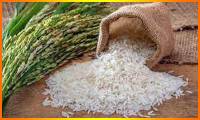
Rice exports to certain European countries exempted from mandatory inspection certificate for 6 months.
India on Monday deferred the mandatory requirement of a certificate of inspection by export inspection agencies for shipping both basmati and non-basmati rice to certain European countries by six months. The Directorate General of Foreign Trade (DGFT) said that it is amending a notification dated August 17, 2022, to the extent that export of rice (basmati and non-basmati) to EU member states and other European countries namely Iceland, Liechtenstein, Norway, Switzerland, and UK 'only' will require certificate of inspection from Export Inspection Council/Export Inspection Agency.
'Export to remaining European countries will not require a certificate of inspection by the Export Inspection Council/Export Inspection Agency for export from the date of this notification for a period of six months,' the DGFT said.
It was earlier stated by the directorate to make the certificate must for export to these countries from January this year.
EIC is the official export certification body of India which ensures quality and safety of products exported from India.
Source: economictimes.indiatimes.com

India, Singapore agree to make knowledge, skill development key pillar of strategic partnership.
India and Singapore on Monday agreed to create opportunities for lifelong learning, building a future-ready workforce, and making knowledge and skill development a key pillar of strategic partnership, according to the Ministry of Education. Union Education Minister Dharmendra Pradhan is on a three-day visit to Singapore to strengthen existing ties and to explore the possibility of widening the scope of bilateral engagement in education and skill development.
Pradhan met various key ministers of the Singapore Government and visited Spectra Secondary School on Monday.
'Pradhan had a constructive meeting with Deputy Prime Minister and Minister for Finance, Singapore, Lawrence Wong on strengthening the existing cooperation between India and Singapore with a focus on deepening engagements in skill development,' the ministry said in a statement.
'During the meeting, it was agreed to work together, aiming to create opportunities for lifelong learning, building a future-ready workforce, and making knowledge and skill development a key pillar of strategic partnership,' it added.
Later in the day, Pradhan visited Spectra Secondary School and interacted with the students as well as teachers to know more about the teaching-learning environment and pedagogy, among others.
'Pradhan had an insightful discussion with Singapore's Minister of Trade and Industry Gan Kim Yong. The ministers had fruitful conversations on strengthening our skill development and vocational training linkages through all mechanisms for creating a seamless architecture for skilling and lifelong learning.
'Building on the outcomes of the G20 Future of Work workshop in Bhubaneswar, they also discussed ways in which India can leverage the expertise and knowledge of Singapore for addressing common challenges and transforming the Indian skills ecosystem,' the ministry said.
It also said the education minister had the opportunity to have a greater overview of the best practices and models being followed in Singapore for the training of the workforce.
'Both the ministers agreed to advance mutual priorities in skilling, create new opportunities for lifelong learning and collaborate together for the benefit of our countries as well as other emerging economies,' the ministry added.
Source: economictimes.indiatimes.com