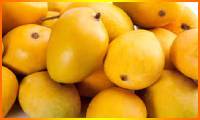
Kari Ishad mango of Ankola in Uttar Karnataka gets GI tag.
The Kari Ishad mango prominently grown in Ankola taluk of Uttara Kannada has bagged the Geographical Indication (GI) tag from the Geographical Indications Registry under the Union Government.
The GI certificate issued to Matha Totagars Farmer Producer Company Limited, Ankola is valid till March 1, 2032 from March 31, 2023.
According to the Geographical Indications Journal of the government, the Kari Ishad is accepted as one of the finest quality mangoes due to its unique aroma, luscious taste, high amount of pulp, shape, and size.
According to the Registry, the fruits are large and oblique to oval shape. Each panicle usually bears one fruit. A well grown tree produces/bears up to 2,000 fruits in a season. The fruit has a short shelf life of about five days.
In addition to Ankola, the mango is grown in Karwar and to a certain extent in Kumta of Uttara Kannada. The trees are prominently spread over Belse, Shetgeri, Belambara, Mogata, Vandige villages of Ankola. Vandige village produced the highest amount of about 600 tonnes of fruits a season. Belse village houses 1,500 plants. The fruit is famous because of its sweet taste and pulp. Hichkad Group Vividhoddeshagala Sahakari Sangha Niyamita, Ankola, which runs the Oriental Canneries and Industries produces about 12,000 tons of pulp every year.
According to the Registry, the fruits are large and oblique to oval shape. Each panicle usually bears one fruit. A well grown tree produces/bears up to 2,000 fruits in a season. The fruit has a short shelf life of about five days.
Its trading is limited to Ankola, Karwar and Hubballi markets.
One of the Directors of Matha Totagars Farmer Producer Company Limited, Mahadev Indra Gouda, told The Hindu that a Kari Ishad mango mela (fair) will be held at Ankola on June 6, 2023.
'Many trees lost fruits when heavy winds swept Ankola earlier this week. It resulted in huge loss of fruits,' he added.
Mr. Gouda, who was the applicant for the GI certificate, said that the FPO has yet to adopt a business model for the better marketing of the product.
He said that the exact extent of area under Kari Ishad is yet to be found out scientifically.
Extraction and marketing of Ishad mango pulp has an interesting background, Shivananda Kalave, a Sirsi-based environmentalist, writer and green activist, told The Hindu. Oriental Canneries and Industries set up a unit in Ankola in 1908 to extract pulp from Ishad for making value-added products. The then Bombay Government supported it by supplying wood. The pulp, which was also being exported, was being marketed by the then Bombay-based Veerachand Panachand Company.
An old marketing brochure printed at Basel Mission, Mangaluru, says that the pulp was used for making juice, syrup, salad and ice cream.
According to the brochure, the pulp can be used for making 48 recipes. It was being used in the United States, Australia and Sri Lanka. According to the brochure, the Hichkad Group purchased the processing unit in 1970 for `95, Mr. Kalave said.
The Ishad mango has two variants — Kari Ishad, which has thin skin, more pulp and is sweeter, and Bili Ishad, which has thick skin and has less pulp and sweetness.
Source: thehindu.com
Tripura minister bats for GI tag for rice beer, tribal food, more.
Tripura Farmers’ Welfare Minister Ratan Lal Nath on Friday said that the state has no dearth of unique products that can qualify for all the parameters of Geographical Indication tag.
Addressing an awareness oriented seminar on Geographical Indication, the Minister listed a few of the products that are exclusively produced in Tripura and deeply rooted to the state’s culture.
Referring to the indigenous rice beer, which is largely produced by the tribal communities in Tripura, the Minister said, 'Indigenous rice beer–popularly called Langi – is brewed in the rural households of our tribal brothers and sisters, and is part of the state’s culture. This beer not only tastes far better than the bottled beer sold in the licensed foreign liquor shops, it is also brewed in a hygienic atmosphere.'
Apart from that, he said, the state has plenty of fruits, vegetables and dishes that are unique and could not be found elsewhere.
'For example, jackfruit is an important fruit of our state. In summer, a huge quality of jackfruit is produced here mostly in stand alone trees. The taste of Tripura jackfruit is the best. ‘Gudak’ is another traditional dish that is inseparable from the state’s food culture. Despite being an indigenous dish primarily, ‘Gudak’ is a part of platter even in the plains,' the Minister told the gathering of farmers associated with pineapple cultivation.
The event was organized by North Eastern Regional Agricultural Marketing Corporation (NERAMAC) under the assitance of Ministry of DONER, Government of India. Recently the Queen Variety of Pineapple secured place in 13 North East produced that were GI tagged.
A total of 200 farmers received GI tagging certification from NERAMAC.
Source: eastmojo.com
Cheers Made-in-UP bottled liquor exports witness 20% hike.
Extremely popular within the country, made-in-UP alcohol seems to be doing brisk business in the overseas market as well. The demand for bottled liquor that is exported out of the state to foreign destinations has grown significantly during the 2022-23 fiscal year.
The provisional figures released by the excise department (demand between April 1, 2022 and December 31, 2022) established at least 23% increased demand for UP-based liquor brands compared to the previous fiscal year.
While during the 2021-22 fiscal year, a total of 7.74 lakh cases of alcoholic beverages were sold abroad, during the nine-month period of the FY 2022-23, UP has already exported 9.48 lakh cases. The sale volume for the last quarter (January to March of 2023) is yet to be compiled and the final figures are expected to be much higher.
Only Mohan Meakin & Radico Khaitan create demand globally
Though UP is home to about more than two dozen different IMFL (India made foreign liquor) companies, only Mohan Meakin and Radico Khaitan have been able to create demand for their brands internationally. Officials said that the dark rum produced by Mohan Meakin in Ghaziabad continues to be the hot seller internationally. 'Of late, the demand for Indian single malt and craft gin has also picked up. The two premium products are produced in Rampur by Radico Khaitan,' said a senior officer from the department.
The two companies have been recording steady growth in the business for the past six years (barring the pandemic-induced slowdown) and are catering to 38 countries. 'I want to add that the two companies have operations in other states as well and could be exporting more brands,' the officer added. While the popular dark rum and premium products have demand in developed countries such as US, UK, Canada, Australia, Germany, Finland, Switzerland, Norway, New Zealand, Russia, Japan, South Korea, Singapore, Hong Kong, Qatar, Oman among others, the least developed countries (as per United Nations Conference on Trade and Development), including Congo, Liberia, Zambia, Djibouti in Africa and Haiti in the Caribbean, also procure affordable and cheap IMFL brands from UP.
Meanwhile, excise commissioner Senthil C Pandian said that handholding sessions for other liquor manufacturers will be organised in the coming months to improve the business prospects. 'We are going to create awareness over the procedure that needs to be followed while exporting liquor products. We have observed that both premium, mid-range and affordable products are being sold internationally but the quality required in the various international markets needs to be maintained,' said Pandian.
Source: timesofindia.indiatimes.com

India's mango exports to USA double this year.
Mango exports to USA from India have witnessed unprecedented success in 2023. Experts remarked that the presence of a substantial Indian diaspora, numbering 4.7 million strong, has been the primary driving force behind the surge in demand for Indian mango varieties in the North American country.
Favourable weather conditions and an early start to the mango season in India have played a pivotal role in the abundance and quality of this year's crop.
With optimal growing conditions, Indian mango producers have experienced a bountiful harvest, providing an ample supply to meet the surging demand in USA. The current season is projected to double the volume achieved in 2022, marking a remarkable milestone for the Indian mango industry.
Kaushal Khakhar, CEO, Kay Bee Exports, highlighted the global demand for Indian mangoes, particularly in countries with a large Indian-origin population. He mentioned the United Kingdom as another example, where 70% of the total Indian population in Europe resides. Programmes have been established with major retailers in the UK to supply mangoes throughout the three-month season. Furthermore, he mentioned Japan as a country focused on the aesthetic appearance of fresh produce, where Indian mangoes have seen success for the past two seasons.
'With the demand for Indian mangoes on the rise, the volume of mangoes exported is expected to exceed 2,000 tonne this year, doubling the previous year's volume. The quality of fruits available is also excellent, thanks to high temperatures experienced since February. The season started a couple of weeks early in mid-March and is expected to last until the second half of June. To meet the growing demand in USA, a fourth irradiation facility has opened in Gujarat, adding to the existing facilities in Maharashtra and Karnataka. These strategically located facilities near mango-growing regions and international airports facilitate quick shipping of the fruits after treatment,' he added.
One of the defining characteristics of Indian mangoes is their exclusive air-freighted transportation, which meticulously preserves their aromatic essence and unparalleled freshness during transit.
Source: fnbnews.com
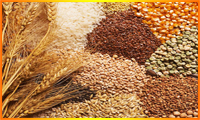
Record 330.5 million tonne foodgrain estimated for 2022-23 crop year: Govt
Third advance estimates of production of major crops for the agricultural year 2022-23 have been released by the Union Ministry of Agriculture and Farmers Welfare. Total foodgrain production in the country is estimated at a record 330.5 million tonnes which is higher by about 15 million tonnes as compared to the previous year 2021-22.
The assessment of the production of different crops is based on the feedback received from States and validated with information available from other sources. This assessment shall undergo further revision over successive estimates based on feedback and inputs.
As per Third Advance Estimates, here is the estimated production of major crops for 2022-23:
Among the foodgrains, record rice (135.5 million tonnes), wheat (112.7 million tonnes), and maize (35.9 million tonnes) are estimated to be produced.
The total production of Rice during 2022-23 is estimated at a record 135.5 million tonnes. It is higher by 6.7 million tonnes as compared to the previous year.
Oilseeds are also expected to be recorded at 41 million tonnes. Cropwise, groundnut, soybean, rapeseed and mustard are seen at 10.2 million tonnes, 14.9 million tonnes, and 12.4 million tonnes, respectively.
Sugarcane production too is expected to be recorded at 494.2 million tonnes.
Source: economictimes.indiatimes.com
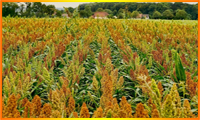
In International Year of Millets, Guj Agri Minister says drafting scheme to increase cultivation area
To incentivise millet cultivation in Gujarat, the state government is in the process of drafting a scheme to provide assistance to farmers for purchasing seeds, fertilisers and crop protection chemicals, Agriculture Minister Raghavji Patel said in Rajkot
on Friday. He added that procurement of millets from farmers by the government has already begun.
The announcement comes in the backdrop of farmers largely remaining indifferent to government operations for procuring millets at minimum support price (MSP) during the ongoing Rabi marketing season.
Underlining that the state Budget for 2023-24 has allotted Rs 30 crore to the Gujarat State Civil Supplies Corporation to procure millets from farmers, Patel said that farmers need encouragement in form of assistance in purchasing inputs also to persuade them to sow millet in more area.
Speaking to The Indian Express on the sidelines of a media event, Patel, also the minister in charge of Rajkot, said: 'The government wants to give assistance to farmers in purchasing inputs like seeds, fertilisers and pesticides for cultivation of millets. We are drafting a scheme and tentatively, we will provide assistance to each farmer with an upper limit of two hectare of cultivation area for millets.'
At the request of India, the United Nations is celebrating 2023 as the ‘International Year of Millets’ (IYM). Millets require very less irrigation, are resistant to changes in climate and can be cultivated in arid land also.
India, the largest millets producer of the world, had celebrated 2018 as the year of millets. In 2020, India’s production of pearl millet (bajra) and sorghum (jowar) was 124.88 million tonne (mt) and 34.75 mt, respectively. They respectively accounted for 40.51 per cent and 7.58 per cent of the global production. Rajasthan, Karnataka, Maharashtra, Uttar Pradesh, Haryana and Gujarat account for more than 83 per cent of total millet production.
Gujarat is a major producer of pearl millet and sorghum. As per state government data, farmers sowed bajra in 1.85 lakh hectare (lh) in 2022 Kharif season and 2.79 lh in 2023 summer season, with cumulative production pegged at 1.14 mt. To celebrate IYM, the state had for the first time decided in March to procure bajra, jowar (hybrid), jowar (maldandi), ragi (finer millet) and maize from farmers at MSP and then distribute the same among the poor through the pubic distribution system.
The government had originally decided to procure these grains at the Union government-fixed per quintal MSP of Rs 2,350 for bajra, Rs 2,970 for jowar (hybrid), Rs 2,990 for jowar (maldandi), Rs 3,578 for finger millet and Rs 1,962 for maize.
The government had opened the window of registration for farmers between March 1 and 31. 'But the response from farmers was lukewarm, as market prices are either at par or higher than the MSP. This forced the government to declare Rs 300 bonus for bajra, jowar and finger millet over and above their respective MSP on May 9 and keep the registration window open till date,' a government source said.
The state food, civil supplies and consumer affairs department has set a target of procuring 45,000 metric tonne (MT) of bajra, 4,000 MT of jowar, 1,000 MT of finger millet and 10,000 MT of maize during Rabi marketing season of 2022-23. The Rs 300 bonus per quintal (10 quintals make one MT) took the effective procurement price of bajra, jowar and ragi to Rs 2,650, Rs 3,270 and Rs 3,878, respectively. The government opened procurement centres on April 1. They are scheduled to remain open till June 15.
Nonetheless, farmers seem to have shown little enthusiasm to sell their harvest to the government. Official data shows that as of May 26, only 7,432 farmers had registered for selling bajra, 178 for jowar, 526 for maize and only two for selling ragi.
In around two-month-long operations, only 44 of the 7,432 farmers have turned up at government procurement centres with their 168 quintal of bajra. Jowar and ragi procurement is nil, as no farmer has responded to SMS alerts of the government to cart their produce to procurement centre. Only 17 farmers, all from Mahisagar district, have sold 99 quintal of maize to the government.
Patel agreed that farmers are not queuing up to sell their harvest to the government. 'The process of procurement is on but even after our announcement of bonus, farmers are not making a beeline as yet. This indicates that market prices are high,' he said.
According to official data, cultivation area of pearl millet – the widely cultivated millet variety in Gujarat – fell from 10.86 lh in 1995-96 to 9.15 lh in 2005-06. It plummeted to 3.9 lh by 2015-16. In 2022-23, the cumulative bajra acreage is 4.63 lh. However, the data shows that production has remained stable at an average of 1 mt.
'It is a fact that the acreage and production of millets has fallen in Gujarat. This calls for a two-pronged strategy. We need to incentivise farmers by providing them inputs so that they bring more area under millets cultivation and then try to ensure that they get good price of their harvest,' Patel told mediapersons, for whom he hosted a luncheon where various preparations of millets were served.
Source: indianexpress.com
Negotiations on supply chain agreement under IPEF substantially concludes: Commerce Ministry
Members of the 14-nation bloc IPEF have 'substantially' concluded the negotiations on the supply chains agreement, including improving logistics and connectivity; promoting investments in critical sectors and cooperation for mitigation of disruptions to ensure business continuity, the commerce ministry said on Sunday. The IPEF was launched jointly by the US and other partner countries of the Indo-Pacific region on May 23 in Tokyo. The framework is structured around four pillars relating to trade, supply chains, clean economy and fair economy (issues like tax and anti-corruption). India has joined all the pillars except the trade one.
The talks on supply chains, clean economy and fair economy were held on May 27 in Detroit, US. Commerce and Industry Minister Piyush Goyal virtually participated in the ministerial meeting.
'At this meeting, negotiations under the Supply Chains (Pillar-II) were substantially concluded; while good progress was reported under the other IPEF Pillars,' the ministry said.
The proposed agreement on supply chains aims to increase the resilience, efficiency, productivity, sustainability, transparency, diversification, security, fairness and inclusivity of their supply chains through collaborative activities and individual actions taken by each IPEF partner.
IPEF partners will undertake the necessary steps, including further domestic consultations and a legal review, to prepare a final text of the proposed IPEF supply chain agreement.
Once finalised, the proposed agreement will be subject to IPEF partners' domestic processes for signature, followed by ratification, acceptance or approval.
Under this pact, the partners also seek to improve crisis coordination and response to supply chain disruptions and work together to support the timely delivery of affected goods during a crisis.
A press statement issued after the meeting by IPEF members said that the proposed supply chain pact contemplates the establishment of three new IPEF Supply Chain bodies to facilitate cooperation among the partners.
The three bodies will be - the supply chain council; the supply chain crisis response network, and IPEF Labor Rights Advisory Board.
'The proposed agreement would establish a new advisory board, consisting of government, worker and employer representatives, as well as a subcommittee composed of government representatives, to support the IPEF partners' promotion of labour rights in their supply chains, promotion of sustainable trade and investment, and facilitation of opportunities for investment in businesses that respect labour rights,' the statement added.
Under the supply chain agreement, IPEF partner countries are seeking to make supply chains more resilient, robust and well-integrated through crisis response measures; cooperation for mitigation of disruptions to better ensure business continuity and improve logistics and connectivity; promoting investments, particularly in critical sectors and production of key goods and worker role enhancement through requisite upskilling and reskilling.
During his intervention under this pillar, Goyal urged for expeditious implementation of all the action-oriented cooperative and collaborative elements identified as part of this agreement.
As part of the clean economy pillar, the member countries are aiming to advance cooperation on research, development, commercialisation, availability, accessibility, and deployment of clean energy and climate-friendly technologies.
Besides, they are talking to facilitate investment towards climate-related projects in the region.
Further, interested IPEF partners are introducing a regional hydrogen initiative to encourage the widespread deployment of renewable and low-carbon hydrogen and its derivatives in the region.
Goyal said that India would like the pillar focus to be centred on action-oriented elements, such as the mobilisation of low-cost long-tenure climate finance and enhanced access to clean energy technologies.
Under the fair economy pillar, IPEF partners are working towards the development of the text of an agreement that will strengthen the implementation of effective anti-corruption and tax measures to boost commerce, trade and investment among IPEF economies.
IPEF partners represent 40 per cent of global GDP and 28 per cent of global goods and services trade.
The 14 countries include the US, Japan, Australia, New Zealand, the Republic of Korea, India, Fiji, and seven ASEAN countries (Brunei, Indonesia, Malaysia, the Philippines, Singapore, Thailand, and Vietnam).
Source: economictimes.indiatimes.com

India s exports to Latin America increase by an impressive 19% in 2022-23
The exports have increased by an impressive 19% from 18.89 billion dollars in 2021-22, exceeding the 6.86% increase of India’s global exports.
India’s exports to Latin America reached a record high of 22.41 billion dollars in 2022-23 (April-March), according to the Commerce Ministry of India. The exports have increased by an impressive 19% from 18.89 billion dollars in 2021-22, exceeding the 6.86% increase of India’s global exports.
Source: financialexpress.com
India grows when state grows, says PM Modi addressing governing council meeting of NITI Aayog
Prime Minister Narendra Modi urged states to take financially prudent decisions so as to become fiscally strong and capable of delivering programmes that meet the dreams of citizens.
Addressing the 8th governing council meeting of NITI Aayog, PM Modi stated that when states grow, India grows, emphasizing on the need to evolve a common vision to achieve a Vikasit Bharat by 2047.
The council, which is the apex body of NITI Aayog, includes all chief ministers, lieutenant governors of union territories and several union ministers. The PM is the chairman of NITI Aayog.
Some of the top ministers of Modi's cabinet who attended the meeting included finance minister Nirmala Sitharaman, home minister Amit Shah, education minister Dharmendra Pradhan and commerce minister Piyush Goyal among others.
Deliberating on the skills development agenda, the Aayog said India is one of the youngest nations in the world with 20% of the global youth population. 'This gives India an opportunity to become the skill capital of the world,' it said in a tweet. 'By 2030, India's gig and platform economy is estimated to expand to 23.5 million workers,' it said.
Further, deliberating on the GatiShakti initiative of the government for area development and social infrastructure, the Aayog said PM GatiShakti NMP uses a ‘whole of government’ approach for infrastructure planning & implementation based on six pillars, namely comprehensiveness, prioritization, optimization, synchronization, analytics and dynamism
'GatiShakti with nearly 1,600 layers of data ensures evidence-based policy making in the infrastructure sector,' it said, adding it also ensures effective socio-economic planning and adoption of an area-development approach.
The 8th governing council meeting of the Aayog aimed at charting out a roadmap for a Vikasit Bharat by 2047 where the centre and states collaborate as Team India. 'This will play a key role in the global context as India's socio-economic growth and transformation have the power to produce a positive multiplier effect.
Some of the chief ministers who have boycotted the governing council meeting on Saturday included Delhi chief minister Arvind Kejariwal, Punjab CM Bhagwant Mann, West Bengal CM Mamata Banerjee and Bihar CM Nitish Kumar.
Source: economictimes.indiatimes.com
Amid reports of shortage, FSSAI to conduct pan-India milk and milk products surveillance
The dairy sector continues to grapple with the hit it took during COVID-19 and more recently the Lumpy Skin Disease (which caused the death of 1.9 lakh cattle) and fodder inflation at 30%. File | Photo Credit: The Hindu
Aimed at curbing adulteration of milk and milk products, in both organised and unorganised sectors in all the districts of the States/Union Territories, the Food Safety and Standards Authority of India (FSSAI) will conduct nationwide surveillance on milk and other products (such as milk khoa, chenna, paneer, ghee, butter, curd, and ice cream).
The announcement on Thursday comes in the backdrop of the country facing an alleged milk shortage with cooperatives reporting an increase in production of only 1-2 % this year and organised and unorganised sector points registering stagnation. The sector also continues to grapple with the hit it took during Covid-19 and more recently the Lumpy Skin Disease (which caused the death of 1.9 lakh cattle) and fodder inflation at 30%.
Source: thehindu.com