
Eurasian economic union meets to speed up proposed FTA with India.
The Eurasian Economic Union (EAEU) has decided to expedite the proposed free trade agreement with India that would give Indian companies market access to resource-rich Eurasia where China is making deep inroads.
The decision was taken at the EAEU meeting under Russia's presidency in Moscow on Wednesday and Thursday. The EAEU comprises Russia, Armenia, Belarus, Kazakhstan and Kyrgyzstan.
The EAEU meet, which was attended by the presidents of Russia, Kazakhstan and Kyrgyzstan besides over 2,000 delegates, also discussed synergies between the grouping and Brics-SCO ahead of the Shanghai Cooperation Organisation summit in India in July and the Brics (Brazil, Russia, India and China) summit in South Africa in August.
Meanwhile Foreign Minister S Jaishankar met Russian Ambassador Denis Alipov here on Thursday evening. 'Discussed our bilateral cooperation, including in the IRIGC-TEC framework. Looking forward to taking that to a higher level. Also spoke about the forthcoming BRICS Foreign Ministers’ meeting in South Africa,' Jaishankar tweeted following the meeting.
During his visit to India last month, Russian deputy prime minister Denis Manturov had discussed the FTA in detail with external affairs minister S Jaishankar. During a dialogue hosted by Ficci, Manturov and Jaishankar had said that they had entered 'advanced negotiations' over the FTA.
'We pay special attention to the issues of mutual access of production to the markets of our countries. Together with the Eurasian Economic Commission, we are looking forward to intensifying negotiations on a free trade agreement with India,' Manturov had said, referring to the executive body of the EAEU.
Trade preferences and a mechanism that guarantees protection of investments 'will be in demand among Russian and Indian businessmen', according to Manturov.
Jaishankar had conveyed that the FTA talks between India and the Russian-led EAEU were hampered by the Covid pandemic. He said that the ministry of external affairs was in favour of resumption of talks because the proposed pact 'will make a real difference to trade relationship'.
Jaishankar had also mentioned how India and Russia have already met their bilateral trade target of $30 billion before the target year of 2025. He further stated that the two-way trade rose to $45 billion between April 2022 and February 2023.
Russian experts say an India-EAEU FTA makes better sense for India as there is a feeling that Russian companies are unlikely to compete in India as vigorously as the Chinese would do.
Source: economictimes.indiatimes.com
FSSAI issues manual of methods of analysis of honey, seeks comments.
The FSSAI has issued a manual of methods of analysis of honey and sought comments from stakeholders on the same.
The methods include determination of specific gravity, moisture, total reducing sugars, sucrose, fructose, total ash, acidity, hydroxyl methyl furfural, water insoluble matters and pollen and plant elements.
According to the FSSAI, the test methods given in the manual are standardised / validated and were taken from national or international methods or recognised specifications, however it would be the responsibility of the respective testing laboratory to verify the performance of these methods onsite and ensure that it gives proper results before putting these methods in to use.
Meanwhile, the manual defines specific gravity as the ratio of the density of a substance to that of a standard substance. The determination of specific gravity shall be for all types of honey including carvia callosa and honey dew.
The determination of Total Reducing Sugars, Sucrose and Fructose-Glucose Ratio (Titrimetric Method) looks for the difference in the concentrations of invert sugar multiplied by 0.95 to give the apparent sucrose content.
The free acidity is defined as the acidity titratable with sodium hydroxide up to the equivalence point.
And amongst other, diastase is defined as an enzyme that is found naturally in honey and degrades over time, especially when exposed to heat.
Source: fnbnews.com
No currency swap, partial trade with India now in rupee only.
The Bangladesh Bank has permitted Sonali Bank and Eastern Bank Limited (EBL) to open nostro accounts in rupee with the State Bank of India and ICICI Bank.
Only the income earned in rupee from exports can be deposited into these accounts. And the money deposited in these accounts can only be used to meet the cost of goods and services imported from India.
Besides, in the case of imports, advance payments can be made from these accounts with approval from the Bangladesh Bank. Overdrafts and short-term loans can be taken against these accounts following the central bank's guidelines for forex transactions.
Sonali, EBL apply to open nostro accounts
Sonali Bank and EBL have already applied to the Reserve Bank of India for opening nostro accounts, according to officials of the two Bangladeshi banks.
A nostro account refers to an account that a bank holds in a foreign currency in another bank. nostros, a term derived from the Latin word for 'ours', is frequently used to facilitate foreign exchange and trade transactions.
Talking to The Business Standard, EBL Managing Director Ali Reza Iftekhar said, 'The Bangladesh Bank has given us the approval to open a nostro account in Indian banks.'
Accordingly, an application has been sent to the Reserve Bank of India for opening a nostro account in the State Bank of India, he added.
Amid the dollar crisis caused by the Russia-Ukraine war, there have been talks for months on settling parts of bilateral trade in local currencies, enabling Bangladeshi businessmen to sell goods or services to Indian counterparts for rupees.
Similarly, Indian businessmen will sell their goods and services to Bangladeshi businessmen for taka.
It was discussed that Sonali Bank and EBL will open accounts with the State Bank of India and ICICI Bank. Both the Indian banks will also open similar accounts with the two Bangladeshi banks.
But at one stage of the discussions, the Indian side asked for transactions only in rupee and Bangladesh agreed.
Banks hope to be ready by June
Officials from the two banks concerned hope the banks of the two countries will be able to finish preparations for such transactions by next June. After that, the official announcement will be made regarding the opening of LCs under the initiative.
Banks other than Sonali Bank and EBL will be able to conduct transactions with India through these two banks in this manner.
'Initially we said the Indian banks will open vostro accounts in our banks. But now the Indian side says it will not be necessary. Transactions can be done without opening an account in Bangladesh,' Ali Reza said.
A vostro account is an account held by a foreign bank in domestic currency at our bank.
'Many transactions will not be possible in the beginning. You have to proceed step by step. As much as rupees will be available against Bangladesh's exports, the liabilities of import from India has to be paid with the same amount of rupees,' said Ali Reza Iftekhar.
In the fiscal 2021-22, Bangladesh's exports to India amounted to $2 billion, while imports from India to Bangladesh were approximately $13.69 billion. Over the past two years, Bangladesh's exports to India have increased, and it is expected that the volume will further increase.
Majbaul Haque, executive director and spokesperson of Bangladesh Bank, recently told TBS that the central bank of India had issued guidelines for direct transactions in rupees several months ago.
'Bangladesh has reviewed the matter in the light of this decision of the Reserve Bank of India and has taken a policy decision to conduct bilateral transactions in rupees.'
In a commerce minister-level meeting of the two countries held in New Delhi in December last year, the Indian side gave a verbal proposal to use their rupee in bilateral commercial transactions. Bangladesh then asked India to make a formal proposal.
RBI, the Indian central bank, in a circular on 11 July last year, has allowed international trade transactions to be settled in rupees. It is said that all import-export transactions will be in rupee. The exchange rate between the two countries will be market-based.
India trades in rupee with 18 countries
In March, Indian Union Minister of State for Finance Bhagwat Krishnarao Karad told the Rajya Sabha that the Reserve Bank of India has already arranged for trade with 18 countries to be settled in rupees.
This arrangement has already started with Malaysia. India wants to increase the value of the rupee in the international market. For this, the country has initiated discussions with several countries, including Russia, besides Bangladesh.
Bangladeshi businessmen and analysts, however, recommended proceeding with caution about this and said this arrangement may create dependency on rupee.
Besides, Bangladesh has a big trade deficit with India and therefore, it may be at risk in dealing in rupees.
Businessmen, bankers express apprehension
A businessman, on condition of anonymity, said he fears that at some point it will be seen that banks in India are not accepting LCs in any currency other than rupees. Then rupees have to be bought with dollars and in that case, the exchange rate may suffer losses.
A banker also thinks so. He said the raw materials of the products that are being exported to India are imported from other countries.
'Where will the exporter get the money to import the raw material by exporting in rupees? There is doubt if any bank will be found in the country to buy dollars with rupees. As a result, such initiatives will take time to succeed.'
And exports to India should increase, he added.
Of late, there have been discussions in countries around the world about free trade agreements and currency swaps to increase bilateral trade. Asian Clearing Union (ACU) countries are negotiating payment of import duties in their own currencies.
Last year, Bangladesh Bank approved the opening of LCs in the Chinese currency yuan. Some banks including Uttara Bank have opened such LCs. Bangladesh is also working on signing a currency swap agreement with Russia.
Amid the rise in commodity prices due to the Russia-Ukraine war, several countries are facing a dollar crisis. Apart from this, due to geopolitical reasons, different countries around the world are becoming interested in doing transactions in their own currencies, avoiding the dollar. India also wants to increase international transactions in its currency.
The BRICS countries – India, Russia, China, Brazil and South Africa – have also started discussions on starting import and export in their own currencies, avoiding the dollar. Saudi Arabia has also decided to export fuel oil to China in yuan.
Economist advises proceeding with caution
Executive Director of South Asian Network on Economic Modeling (Sanem) Selim Raihan thinks the initiative to trade in other currencies other than the dollar is fine in the current foreign currency crisis.
'And it is better if it can be done with a big trading partner like India. But we need to check how realistic it is for Bangladesh. Because the import of Bangladesh from India is about 15 billion dollars. And Bangladesh is exporting 2 billion dollars to India,' he said.
'Where will Bangladeshi traders or banks get enough rupees to pay the entire import bill from India? If rupees have to be bought with dollars, it needs to be reviewed,' he added.
On the other hand, Indian currency is not an internationally convertible currency. Therefore, the rupees available against exports to India cannot be used to meet the liabilities of any other country.
For this reason, Selim Raihan says, Bangladesh should do the transaction in rupees as much as it will get from export to India. If the rupees earned by Bangladesh can be used to import from India, it will reduce the pressure on the dollar.
Source: tbsnews.net
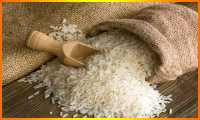
India allows broken rice exports to meet other nations food security needs.
The government on Wednesday allowed the exports of broken rice on the basis of permission given by the government for shipments to other countries for meeting their food security needs, though the export of broken rice is banned in general.
'The export policy of broken rice is prohibited, however, export will be allowed on the basis of permission granted by the Government of India to other countries to meet their food security needs and based on the request of their government,' the Directorate General of Foreign Trade (DGFT) said in a notification.
India had banned the exports of broken rice and imposed a 20% duty on exports of various grades in September.
In December last year, it allowed the exports of organic non-Basmati rice including organic non-Basmati broken rice.
China is the largest importer of Indian broken rice at $418.29 million in FY23 followed by Senegal, Indonesia and Vietnam.
Source: economictimes.indiatimes.com

India, Australia aim to conclude comprehensive trade deal by end of 2023.
India and Australia on Wednesday inked a migration and mobility partnership pact to open up opportunities for students, academic researchers and business people and resolved to conclude a comprehensive trade deal by the end of year to significantly expand economic ties. The pact was signed after wide-ranging talks between Prime Minister Narendra Modi and his Australian counterpart Anthony Albanese.
In his media statement, Albanese said the aim is to conclude the comprehensive economic cooperation agreement (CECA) by the end of the year.
'We reiterated our shared ambition for an early conclusion of the Australia-India comprehensive economic cooperation agreement later this year,' he said in the presence of Modi.
Last year, India and Australia finalised the Economic Cooperation Trade Agreement (ECTA) and it came into force in December last. The two sides are now working on the CECA.
'Today, in my meeting with Prime Minister Albanese, we talked about taking India-Australia Comprehensive Strategic Partnership to greater heights in the next decade,' Modi said.
'We discussed in detail the possibilities of cooperation in new areas. Last year India-Australia ECTA came into effect. Today we have decided to focus on CECA -- Comprehensive Economic Cooperation Agreement,' he said.
Modi said the pact will give further strength and new dimensions to trade and economic cooperation between the two countries.
'We had constructive discussions on strengthening our strategic cooperation in the sectors of mining and critical minerals. We have identified concrete areas for cooperation in renewable energy,' Modi said.
'It was decided to set up a task force on Green Hydrogen,' he added.
Foreign Secretary Vinay Kwatra said the next two rounds of talks on the economic partnership pact have been scheduled for June and July.
Modi and Albanese also witnessed the signing of the terms of reference of the Australia-India Green Hydrogen Taskforce which will explore opportunities in the area of renewable hydrogen.
'Renewable energy was once again a focus and an important topic in our discussions,' Albanese said.
On the migration and mobility pact, Albanese said it will promote the exchange of students, graduates, researchers and business people; expand our people-to-people ties and enhance cooperation in 'preventing people smuggling'.
The Ministry of External Affairs (MEA) said Modi and Albanese welcomed the signing of the Migration and Mobility Partnership Arrangement (MMPA).
It said the MMPA will further facilitate mobility of students, professionals, researchers, academics and others, including through a new skilled pathway named MATES (Mobility Arrangement for Talented Early Professionals Scheme) specifically created for India.
It said they also welcomed the finalisation of terms of reference of the India-Australia Hydrogen taskforce.
The taskforce will advise on opportunities to accelerate manufacture and deployment of clean hydrogen, focusing on hydrogen electrolysers, fuel cells as well as supporting infrastructure and standards and regulations.
In his remarks, Modi also highlighted the importance of India-Australia relations for the region.
'The scope of India-Australia relations is not limited to merely our two countries. It is also linked to regional stability, peace and global welfare,' he said.
'A few days ago, along with Prime Minister Albanese, at the Quad Summit in Hiroshima, we also discussed the Indo-Pacific. India-Australia cooperation can also be beneficial for the progress of the Global South,' Modi said.
He said the Indian tradition of 'Vasudhaiva Kutumbakam, which sees the whole world as one family, is the central theme of India's G-20 Presidency.'
The prime minister described his meeting with Albanese as 'constructive'.
Source: economictimes.indiatimes.com

India being looked upon as the bright spot by the world: Shri Piyush Goyal.
Union Minister of Commerce and Industry, Consumer Affairs, Food and Public Distribution and Textiles, Shri Piyush Goyal said that India has emerged from the shadows of the past and is being looked upon as the bright spot by the world. During his address at the CII Annual Session 2023, 'Future Frontiers: Competitiveness, Technology, Sustainability and Internationalization' in New Delhi today, the Minister said that with adequate focus on innovation, quality and talent of the people, sky's the limit for growth of India. Shri Piyush Goyal said that it is incumbent to educate and enlighten the population as the demographic dividend with its technological and managerial talent is a treasure for the country.
The Minister said that Prime Minister Shri Narendra Modi is hailed as the leader of the global South and India is emerging as the global leader of the developing countries. He highlighted that many countries across the globe are keen on fast-tracking the FTAs with India now. Shri Goyal said that India is now not just talking but negotiating with Canada, EFTA, UK, EU over FTAs and this shows the increased importance of India in the global order. He said that this is a new India which engages with the world from a position of strength believing in its capabilities and calibre.
Shri Piyush Goyal said that over the last 9 years a successful journey has been undertaken by the Government, Regulators and the people to bring back the economy on track. He said that 9 years ago, there were many challenges stalling the economic development of India and at that time India was amongst the fragile 5 countries in the world, but the 9 years of government under the leadership of Prime Minister Shri Narendra Modi has led to transformation beyond imagination.
Shri Goyal said that people expected the Government to be populist but the Government under Prime Minister Shri Narendra Modi chose to take hard decisions to bring the economy back on track and up the morale of the public by bringing in structural fundamental macroeconomic reforms that promised long lasting benefits for the country. The Minister said that today India is the fastest growing economy of the world with low inflation and strong foreign exchange reserves. He said that the last 9 years have been unprecedented as inflation has been consistently under control in the range of 4-4.5% except for a short period last year. Shri Piyush Goyal said that interest rates in other developed countries are almost at par with India now.
Shri Piyush Goyal stressed upon expanding international outreach, bringing innovation and technology from across the world to grab the opportunities available for growth. He encouraged businesses to invest and engage with world markets through quality products and using Indian missions abroad. The Minister highlighted that India’s G20 Presidency is an opportunity for the businesses to expand markets with open mind and engage with the world with confidence.
Shri Goyal said that the target of achieving US$ 1 Trillion export of goods and US$ 1 Trillion of services is a modest target now. He said that the overall exports had been at US$ 500 Billion for almost a decade and reached US$ 676 Billion last year despite the difficulties being faced across the world. The Minister said that the overall exports of US$ 776 Billion in FY 2022-23 with US$ 450 Billion of merchandise exports and US$ 326 Billion of services exports is a laudable achievement for the country.
Shri Goyal said that the increased export basket will help India increase surpluses and reduce deficits. He said that now is the opportunity for businesses and industry to establish leadership in global trade. The Minister said that businesses should look for reliable partners in the supply chain, focus on comparative advantage, acquire technology and work in the spirit of collaboration.
Shri Piyush Goyal termed the Confederation of Indian Industry (CII) as the captain of India Inc. The Minister congratulated President-Designate, CII, Shri R. Dinesh on taking over as the CII President for 2023-24. He also praised the leadership of the President, CII, Shri Sanjiv Bajaj and appreciated the role played by him in leading CII during the challenging times of uncertainty across the world.
Source: pib.gov.in
'Export profile revamp needed to meet $1tn target by 2030'.
India needs to change its profile of exports dramatically to achieve the target of $1 trillion goods exports by 2030 and all attempts are being made to do that.
Santosh Kumar Sarangi, director general foreign trade (DGFT), said here on Tuesday that exports must grow at 14.5% hereon to reach the target of $2 trillion in goods and services amid geopolitical challenges like the Russia-Ukraine war and China's relation with Taiwan on one hand and the US and the EU on the other.
'There are emerging challenges like building supply chain resilience for critical minerals, energy resources and high-end technology. There are new non-tariff barriers like sustainability and labour standards. Plus the return to industrial policy of some countries like the CHIPS Act (in US and EU) and Inflation Reduction Act of the US focus on promoting some industries (basically a renewed push for manufacturing from services),' he said at an event organised by TPCI. However, India is well placed to tackle the challenges and is on the way forward to meet its targets.
Source: timesofindia.indiatimes.com

Beijing looking to import quality mangoes.
While Pakistani mangoes have traditionally been more affordable compared to those from other countries, Ghurki highlighted the shift in the Chinese market towards prioritising quality over price. As a result, he emphasised the need for Pakistan to diversify its mango varieties and produce high-quality mangoes to cater to the discerning Chinese consumers. To facilitate mango exports, PCJCCI is planning to establish a Pak-China Trade Portal, leveraging the preference for online shopping among Chinese consumers.
PCJCCI, Senior Vice President, Fang Yulong emphasised the significance of effective mango packaging, preservation, deep processing, and transportation. He stressed the utilisation of three-dimensional transportation channels, including land, sea, and air, to ensure rapid delivery of mangoes. Additionally, Yulong proposed the establishment of large warehouse supermarkets in major Chinese cities to cater to the growing demand for the 'king of fruits' among Chinese consumers.
PCJCCI, Vice President, Hamza Khalid highlighted the current status of mango exports to China, revealing that Pakistan’s mangoes account for less than 0.36% of China’s total mango imports.
Source: tribune.com.pk
GDP growth could top 7% in FY23: RBI governor Shaktikanta Das.
India's gross domestic product growth could be above 7% for 2022-23, the RBI governor said on Wednesday, adding that such an outcome, if realised, should not come as a surprise. There is also a possibility that GDP growth for the last financial year could be higher, Shaktikanta Das said at an event in New Delhi.
Source: economictimes.indiatimes.com
India s agricultural economy will be strengthened by Millets.
Ever since the United Nations declared the year 2023 as the International Year of Millets, the Central and State Governments are actively working to increase the area and production of Millets in the country. Millet missions are being run in the states under Shri Anna Yojana, under which farmers are being encouraged to take nutritious crop millets by providing subsidies on inputs.
The area under Millets or coarse grains in the country has increased from 38.37 lakh hectares to 41.34 lakh hectares in the year 2022. If the government procures millet at the support price, then the area, production, and income of farmers will increase rapidly. Because the cost of growing millets is less and much care is not required, it becomes easy to grow. According to Prime Minister Narendra Modi, the International Year of Millets campaign will increase the income of 25 million small and marginal farmers who grow millets in the country, which will strengthen the rural economy.
India is the largest producer of millets. The country is enriched with a wide range of millets produced in major millet-growing states like Madhya Pradesh, Rajasthan, Maharashtra, Karnataka, Andhra Pradesh, etc. At present, about 50 million (500 lakh tonnes) of coarse grains are produced in the country. About 80 percent of Asia’s and 20 percent of the world’s coarse grains are produced in the country. Cultivation of millets or coarse grains takes less labor and also requires less water. Only 25-30 percent of India’s total agricultural land is irrigated or semi-irrigated. When the demand for millet will increase, then its price will increase in the market, only then the income of small farmers with uncultivated land will also increase.
Export of coarse grains
At present, most of the millets like ragi, caneri, jowar, and buckwheat are exported from the country. We supply these to the USA, UK, Nepal, Saudi Arabia, Yemen, Libya, Tunisia, Oman, and Egypt. India’s export of coarse cereals is $64 million in the year 2021-22. India is exporting coarse cereals to 139 countries across the world. APEDA has put in place a strong strategy to expand millets and its value-added products to achieve a target of $100 million by 2025 with efforts to widen its global reach.
Shree Anna Yojana
Coarse grains are also being encouraged in the Union Budget. Nowadays almost every person is suffering from some or the other disease. But in ancient India, people used to fall ill very rarely. The main reason for this is that in the past people used to eat coarse grains. Millets are more nutritious than wheat and rice. The Central Government is organizing several programs under the International Millets Year 2023. On the other hand, the state governments are providing technical and financial help to the farmers to increase millet production. In many states, grants are being received for agricultural inputs along the lines of the Millet Mission, while in some states, farmers are being linked with training and millet processing.
On these lines, the Madhya Pradesh government is also giving grants to the farmers for the promotion of Shree Anna under the State Millet Mission Scheme. For the Madhya Pradesh State Millet Mission, the government has kept a budget of Rs 23.25 crores for 2 years.
Center’s efforts to popularize coarse grains
The central government has increased the target for procurement of millets in the central pool. The target for 2021 was 6.5 lakh tonnes. For 2022, it was increased by 1.3 million tonnes. In the Kharif season, till November, more than the target has already been procured. Under the National Food Security Mission (NFSM), the ‘Nutritious Food Mission’ scheme will be implemented in 212 districts of 14 major millets producing states of the country. Under this scheme, the farmers growing millet will be given information about better varieties of seeds, improved methods of cultivation, crop protection measures, and proper methods of storage and processing of produce.
Cultivation of Millets
Maharashtra, Chhattisgarh, Rajasthan, Madhya Pradesh, Uttar Pradesh, Haryana, Gujarat, Jharkhand, Tamil Nadu, Andhra Pradesh, Karnataka, and Telangana farmers cultivate coarse grains on a large scale. At the same time, the highest consumption of coarse grains is in Assam and Bihar. This year, the area under coarse cereals in the country has increased from 38.37 lakh hectares to 41.34 lakh hectares.
In this way, if India becomes the global hub in food grain production, then the export of agricultural produce will increase. Export growth will have a positive impact on the country’s economy, as well as there will be a revolutionary increase in the income of farmers. According to a report, in the last few years, more than 500 startups are working in the country on activities related to food. At the same time, employment opportunities will also increase.
Source: en.krishakjagat.org