
Indian grape export soars, beats uncertainty and crop loss.
Indian grape export to Europe for the 2022-23 season (December to April) has soared despite initial concerns about global freight bottlenecks and two spells of unseasonal rains. Till April 10, India has exported 7,932 containers (each container has 15 tonnes of grapes), up from the 7,626 containers shipped out during the same period last season.
Over the last two seasons, Indian exports, especially agri exports, have suffered due to the global bottleneck in freight and shipping. Grape exporters were wary of lower-than-normal demand from Europe due to the fear of recessions at the start of the 2022-23 season. Vilas Shinde, chief managing director (CMD) of Nashik-headquartered Sahyadri Farms (the largest grape exporter of the country), had talked of around 10-15 per cent lower exports due to the dual whammies they expected this season.
Exporters were in for a surprise as demand from European markets picked up right at the start of the season. Maharashtra, the country’s largest producer and exporter of grapes, did not witness any unseasonal rains in the crucial growth months from September to November. 'Thus, we were able to meet the export demands from Europe and the United Kingdom as quality produce was easily available,' Shinde said.
Pointing to the data, Shinde said had it not been for the unseasonal rains in March and April, Indian exports would have touched an all-time high. Nashik, Pune and Ahmednagar, the three main grape producers in the state, saw unseasonal rains in March, with grapes, pomegranate and vegetable crops bearing the brunt. Shinde said the rains in March reduced expected export figures by 15 per cent.
The state is under the spell of another season of rains and hailstorms, which have resulted in extensive damage to the harvest-ready crops. 'The last 10 per cent of the crop has reported berry cracking due to the hailstorms,' he said.
Fresh or table grapes from India have made their mark in the European and other international markets thanks to them being available when produce from South Africa and South America is not otherwise available. European Union countries are the biggest destination for Indian grapes in terms of quantity and monetary value. In the 2021-22 season, India exported 2.63 lakh tonnes of grapes and the total earning from the shipment was $305 million.
Source: indianexpress.com
Union Minister Shri Tomar visits remote village of Dungti, Ladakh under the Vibrant Village Program.
Union Minister of Agriculture and Farmers Welfare, Shri Narendra Singh Tomar visited Dungti village on the eastern border of Changthang region in Ladakh under the Vibrant Village Program of the Government of India. During the public dialogue there, Shri Tomar met the residents and patiently listened to their problems and took suggestions, while he also visited the ITBP post and KVK, Nyoma.
Interacting with the public at Dungti, Shri Tomar said that the Government of India is committed to the development of this entire region. He said that the border villages of the country are generally known as the last villages, but under the vision of Prime Minister Shri Narendra Modi, these villages are the first priority of the Government of India for development. Shri Tomar said that the aim of the Central Government is to give benefits of all the schemes of the Center while providing facilities to the people of remote areas. He said that whatever proposals the Center will receive for the overall development of this region, those will be worked upon promptly and whatever can be done by the Center from the point of view of Agriculture and Animal Husbandry Development, will be done. Shri Tomar said that the entire country is getting the benefit of the welfare schemes implemented by Prime Minister Shri Narendra Modi. All the eligible beneficiaries are getting the full money of the schemes with transparency.
Shri Tomar also visited the stalls put up by various departments including Ladakh's Health Department, Sheep Husbandry and Animal Husbandry Department, Krishi Vigyan Kendra (KVK), Nyoma. During the programme, demonstration kits, machines etc. were handed over to many beneficiaries by the Union Minister. Shri Tomar also visited the ITBP post at Dungti, where he interacted with the officers and jawans and encouraged them. The Union Minister also had food with them. MP Shri Tsering Namgyal and DIG Shri Ranveer Singh were also present on the occasion.
Shri Tomar also visited KVK, Nyoma and said that this area is favourable for both agriculture and animal husbandry projects. He said the KVKs have a very important role in this sector, which is trying to advance agriculture. He stressed on converting agriculture into advanced agriculture, so that the farmers get more profit, besides mentioning the agriculture and farmer-friendly schemes of the Center in the interest of the farmers of the area. Shri Tomar later inaugurated the Micro-Irrigation Unit and Mushroom Lab and inspected the Green House Unit. He visited the house of a beneficiary of Nal-Jal Yojana and discussed with them about the benefits of the scheme.
Source: pib.gov.in

Ministers exchange views on India-Italy trade & economic partnership.
Union Minister of Commerce & Industry, Consumer Affairs, Food & Public Distribution and Textiles Shri Piyush Goyal met the Deputy Prime Minister and Minister of Foreign Affairs and International Cooperation in Foreign Office, Government of Italy, H.E. Mr. Antonio Tajani yesterday to review the entire gamut of bilateral trade and economic relations. Shri Goyal arrived in Rome yesterday for his two-day visit to Italy.
The Ministers exchanged views on how the India-Italy trade & economic partnership can be leveraged for growth across diverse sectors. During the meeting, both Ministers expressed happiness over elevation of the bilateral relations to the level of Strategic Partnership following the recent state visit of the Prime Minister of Italy, Ms. Giorgia Meloni to India. Mr. Tajani suggested the formation of a Joint Working Group in the strategic areas such as space, technology, defence, agriculture, etc. to follow up on the important developments under these areas.
Both Ministers further expressed satisfaction at the high growth in bilateral trade between India and Italy, which has reached around US$ 16 Billion in 2022 and resolved to expand it further. Shri Goyal briefed Mr. Tajani on the progress made on India-EU FTA negotiation. The Ministers underlined the importance of achieving a free, balanced and fair Free Trade Agreement and hoped that it would be concluded soon. They also agreed to the convening of the next session of the Joint Commission on Economic Cooperation (JCEC) in Rome in the last week of September 2023.
Mr. Tajani suggested strengthening the Parliamentary friendship group diplomacy between the Parliaments of the two countries and exploring scope for having a cyber dialogue. Shri Goyal briefed Mr. Tajani about India’s G-20 priorities and extended an invitation to him for the G20 Trade Ministers Meeting in India in August 2023. Mr. Tajani assured of his full support to make India’s G20 Presidency successful.
Shri Goyal emphasized on enhancing the bilateral cooperation in the field of clean energy to achieve sustainability to mitigate the negative impact of climate change. He stated that developed countries make the low cost climate financing and technology available to the developing countries to deal with the climate change issue effectively.
Mr. Tajani gave the guided tour to Shri Goyal of the art gallery of Farnesina, the office of Foreign Ministry, Government of Italy.
Source: pib.gov.in

Make globalization more transparent, Finance Minister Nirmala Sitharaman says during US visit.
India's Finance Minister Nirmala Sitharaman on Tuesday said that the country wasn't lookin to reverse the benefits of globalization, but wants it to be more transparent.
'It's not to say that we have to reverse the benefits of globalization. It is more to say, make globalization more transparent,' Sitharaman told American think-tank Peterson Institute for International Economics in response to a question.
Sitharaman is in Washington for a week, starting Tuesday, attending spring meetings and a G20 finance ministers' meet.
'We have a big play. We also don't import final consumer goods, which we are capable of manufacturing. However, when you have price discrepancies or price competitiveness affecting your purchasing decisions, you end up buying those which you can produce because they come at a far more, cheaper rate,' Sitharaman said.
The Finance Minister also talked of India's manufacturing prowess and the need for the country to battle cheap imports.
'So, Indians have always had this difficulty in having to come back to producing certain things which are your day-to-day domestic necessities, but you are unable to produce because you find cheaper imports coming or the very same requirement. But now we've seen that there is an opportunity which lies, one from the consumer point of view, that even within India, there's enough purchasing power. And many of these goods which can be produced in India will have a definitive large consumer base within the country,' the Finance Minister said.
'The phase manufacturing programmes that we have come up with, have identified several such goods, which at the first stage, we would gradually incentivize producing and selling within India, then move over to a higher level of sophistication in the making of such goods. So, the domestic market itself is available for you to produce, gradually stop imports of such things which you can produce yourselves,' she added.
However, this is only one side of the story, according to Sitharaman, pointing out that the country will have to prioritise production.
'The other side is where you need to have value chains come to India, come and produce in India, not just for India, but to export from India, for which again, we have come up with a production-linked incentive scheme, particularly in 13 such areas, which are priority sectors, sunrise sectors, where India didn't produce at all earlier'.
By doing that, India hopes to have production of many of these large bulk manufactured goods, which can go from India to meet demands which exist outside, and also of course to meet domestic demand.
Mobile manufacturing is a classic example, she noted.
Goods which are largely consumed in India are going to be manufactured in India despite a very, very predatory pricing, which prevails in some export countries in some export markets. 'So we are stopping that by giving the face manufacturing and we are incentivizing through the PLA,' she said.
The finance minister said even as one wants to incentivize India's own production, there can always be some collateral, but it has to be very smartly tailored to make sure that India's unique demands can be met by its own manufacturing. 'But at the same time, you need to get your raw materials and intermediaries which otherwise you do not have. So, it's not as if you're going to be so blindfolded to see that you'll just take a decision and it'll have no impact whatsoever outside,' she said.
'It can't be so. It'll have an impact. We have to assess each for itself and take a call. But however, I don't think India's alone in doing this, particularly after, let's say the global view of China after, let's say the pandemic after also this changing perspective of what indeed is globalization, how far globalization, to what extent globalization. So, when all these questions are happening and being discussed all over the world, India cannot be in isolation,' the minister said.
'So, if that's going to, the discussions elsewhere are going to have some impact. So, we will have in India as well. It indicates to a dynamic position globally on globalization itself, and also looking at how just tariff is not going to be one way of controlling or preserving your capacities in manufacturing. So it is a strand, I suppose, in a larger debate of how the global trade will have to happen,' she said.
Responding to a question, she said, India has shown very clearly, its initiative is working out well in pursuing with countries and agreeing to have Free Trade Agreements (FTA) with them.
Free trade agreements are being signed, in fact far speedy nowadays, she said in response to a question. 'We have just concluded one with Australia. We've concluded earlier, one with the UAE, Mauritius, and as it is, we've, had agreements with ASEAN, both in goods and services. We have with S Korea, with Japan. So free trade agreements have bilaterally or with multilateral groups, been the route which India has had till before 2014,' she said.
'And now between 2019 and today, we've had at least three major agreements signed. So, we shall proceed in that route. Also with the United Kingdom, with the European Union and with Canada. All the three are happening now as we speak, the negotiations are going on. So, we shall go in those preferential route,' she said, but remained uncommitted on plurilateral agreements.
Source: economictimes.indiatimes.com
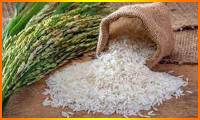
Indonesia to import two million tonnes of rice against impending drought in country.
Indonesia will import two million tonnes of rice by the end of this year to deal with the impending drought caused by El Nino, said Indonesian President Joko Widodo had announced.
Rice imports aim to keep the State Logistics Agency's stockpiles and stabilize domestic prices because El Nino will cause a protracted drought and affect the country's rice production, Widodo said after planting rice in East Java province.
Head of the National Food Agency, Arief Prasetyo, said the first batch of rice imports will be up to 500,000 tons and be sent as soon as feasible.
The harvest of rice from March to May is a priority (for rice supply), Prasetyo added, but it is not enough to meet the needs of a population of over 270 million.
The South-East Asian country imported about 400,000 tons of rice in 2021 and 320,000 tons in 2022, according to Statistics Indonesia.
Source: thestar.com
Export duty on husk rice scrapped.
The central government has scrapped export duty of 20% on rice of seed quality in the husk (paddy or rough).
Officials said the duty was scrapped after review of rice stocks. The exemption will be effective from April 11.
The centre in September, 2022 had imposed an export duty of 20% on Rice in Husk (Paddy or Rough), Husked (Brown Rice) and Semi-milled or Wholly milled Rice.
This was done to lower prices of rice and to make stocks available for the domestic market.
The measures did not affect export of basmati or parboiled rice.
Finance Ministry had said that changes in India’s rice-export rules have helped keep a check on domestic prices without reducing the availability for exports.
Source: economictimes.indiatimes.com

FSSAI replaces stds for atta, resultant atta through food additives norms.
The food authority has replaced the standards for wheat flour (atta) and resultant wheat flour (resultant atta) through the Food Safety and Standards (Food Products Standards and Food Additives) Second Amendment Regulations, 2023, which shall come into force from September 1, 2023.
According to the notified regulations 'Wheat Flour (Atta)' means the product obtained exclusively by milling or grinding of clean wheat, and 'Resultant Wheat Flour (Resultant Atta)' means the product obtained by blending of various fractions in roller mills after separating semolina or maida during the processing of wheat.
The regulations also specify the parameters for the wheat flour (atta) or resultant wheat flour (resultant atta) which include moisture, % by mass, not more than 14.0, total ash, % by mass (on dry basis), not more than 2.0, ash insoluble in dilute HCL, % on dry mass basis, not more than 0.15, gluten, % on dry mass basis, not less than 6.0, alcoholic acidity (with 90 per cent alcohol) expressed as H2SO4, % on dry mass basis, not more than 0.18, crude fibre, % on dry mass basis, not more than 2.5, granularity not less than 98 per cent by mass of that material shall pass through 500 micron I.S. sieve (35 mesh) and uric acid (not more than) 100 mg/kg.
The regulation also lays down that the parameter ‘Granularity’ shall not be applicable for intermediate products which are not meant for direct consumption.
Source: fnbnews.com
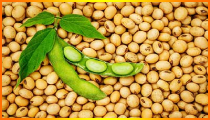
Soyabean meal exports may touch 14L tonne.
Soybean Processors Association of India (SOPA) has estimated exports of soyabean meal from India in the oil year 2022-2023 to touch 14 lakh tonne, higher than the last year.
The oil year 2022-2023 began in October 2022 and will end in September 2023.
SOPA executive director DN Pathak said, 'We expect to achieve slightly better exports in soybean meal in the oil year 2022-23 at 14 lakh ton.' A jump in demand from South East Asian buyers has pushed exports of soyabean meal from India, said exporters. Vietnam, Sri Lanka, Nepal and Bangladesh have emerged as major buyers for Indian origin soyabean meal.
Madhya Pradesh is a leading soyabean producing state contributing over 70 per cent to total national output.
Soyabean meal exports during October to March stood at 9.9 lakh ton. Exports of soyabean meal in the corresponding period last year were 4.7 lakh ton, according to data compiled by SPOA. In March, soyabean meal exports were 2 lakh ton as against 48,000 ton in the same period a year ago, SOPA said in a statement.
Arrivals of soyabean has declined in the spot market in March as compared to the previous month, the data showed.
Pathak said, 'Farmers have held back stocks due to a decline in soyabean prices and this has hit arrivals in the spot market in March. Soybean crushing was also lower than expected in March and demand for soybean food products also saw a drop.'
Exporters have estimated better bookings from overseas buyers for the ongoing season if soyabean prices remain stagnant in the spot market.
Source: timesofindia.indiatimes.com
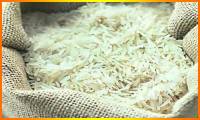
India may stand to gain $1 billion revenue from rice exports.
Non-basmati rice exports during the April-February period of the 2022-23 fiscal were up nearly three per cent at 16.09 million tonnes (mt), but the shipments were lower in February by nearly six per cent.
But the underlying fact is that the Indian government stands to gain good revenue to the tune of a billion dollars in view of the export duty on the shipments as the global market has accepted the duty, besides India’s market share remaining intact.
According to data from the Agricultural and Processed Food Products Export Development Authority (APEDA), exports in the first 11 months of the 2022–23 fiscal were up compared with the 15.64 mt shipped out in the same period of 2021–22. In terms of value, exports fetched $5.72 billion, against $5.56 billion in the year-ago period.
Two factors to consider
However, there are two factors to consider in the data, exporters and traders say. One, shipments seemed to have been dragged a tad since September 2022 due to the Centre announcing export curbs, including imposing a 20 per cent duty on non-basmati consignments and banning fully broken rice shipments.
For example, exports in February were 1.53 lakh tonnes (lt) compared with 1.63 lt in the year-ago period. But earnings were higher at $563.88 million against $552.02 million.
The second factor is that India holds on to its leadership in the market, with importers absorbing the duty hike.
'India will get an additional billion dollar revenue from the exports by imposing duty. With the country enjoying 45 per cent market share, the global rice market has absorbed the impact of the Indian duty,' said BV Krishna Rao, President, The Rice Exporters Association (TREA).
In terms of rupee, rice exports should now be able to fetch the Indian government Rs.8,000 crore, he said.
Demand still strong
According to available data, rice exports region-wise in the April-February period of 2022–23 were mixed. Shipments to Bangladesh, Nepal, and South-East Asia dropped. But exports to Africa, the European Union, the Americas, and Gulf countries increased.
According to the Foreign Agricultural Service (FAS) New Delhi Post of the US Department of Agriculture, despite Indian imposing curbs on exports, demand for Indian rice in the global market remains strong. 'Global rice prices have risen to absorb the export tax,' it said.
The USDA’s FAS Post said Indian domestic supplies are forecast to be ample and the government is unlikely to impose additional export restrictions in the near term.
No problem till kharif
At the same time, the Government will be reluctant to relax existing restrictions out of fears of food inflation. 'While India’s export restrictions have not dampened export demand, they have generated an additional source of tax revenue for the government,' it said.
Rao said rice exports should have no problem until November-December this year, before the new crop from competing nations such as Thailand, Vietnam, and Pakistan enter the market.
'Pakistan might not face the problems it faced last year due to its worst flood in 61 years. Our kharif could be arriving by then. The Centre can review its export curbs based on market conditions then,' he said.
Though the Centre has banned exports of fully broken rice, it is permitting its shipments on a case-by-case basis. Recently, it permitted 3.5 lakh tonnes of consignments to Gambia and Senegal based on the Ministry of External Affairs’ recommendations.
Improving competitiveness
'We have to see if there is a shift to white rice in a small way or other alternative before reviewing the decision on duty. But we are still improving our hold on the market despite the duty,' Rao said.
The USDA’s FAS Post sees the export duty on Indian rice exports continuing in the near future.
Meanwhile, India’s competitiveness in the global market has improved again over Vietnam, Thailand, and Pakistan. From being competitive by around $10 a tonne a month ago, it has improved by over $25 now. The competitiveness has improved as Indian prices have been lowered, while countries such as Vietnam and Thailand have raised their offer rates. (See table)
Rice exports are likely to be boosted by projections of a record high production of 130.83 mt this crop year, despite kharif output being affected due to a deficient monsoon in eastern parts of the country.
Source: thehindubusinessline.com
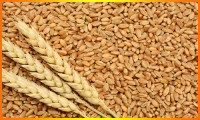
Jordan buys estimated 60,000 tonnes wheat in tender -traders.
Jordan's state grains buyer purchased about 60,000 tonnes of hard milling wheat to be sourced from optional origins in an international tender which closed on Tuesday, traders said.
It was bought from trading house CHS at an estimated $303.30 a tonne c&f for shipment in the second half of September, they said.
Traders said these other trading houses participated in the tender (with their estimated offers in dollars per tonne c&f): Ameropa $306.49, Buildcom $309.77, Farm Sense $315, Cargill $309.95, Viterra $317.50 and Agro Chirnogi $326.
Traders expected a new wheat tender to be issued in coming days closing on Aug. 18 seeking shipment in October and the first half of November.
Source: nasdaq.com