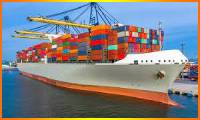
Gujarat govt set to announce policy to boost exports.
The Gujarat government has taken up an exercise to formulate a policy to boost exports from the state. The state policy, which will adopt features of the Union government's recently announced Foreign Trade Policy (FTP), will among other things, incentivize goods and products which have export potential.
A state-level export promotion authority will shortly be formed, whose functioning will be monitored by a high-level committee headed by the chief secretary. Similarly, export promotion committees will also be formed in each of the districts of Gujarat.
'An action plan will be prepared for boosting exports from the state. Each district also will have its own action plan for boosting exports. The potential for exports from each district will be worked out and the state government is considering appropriate incentivization for goods and products that have export potential,' state minister for industries, Balvantsinh Rajput said.
The minister added that the state government's policy will be modelled on lines of the Union government's trade promotion policy.
'Incentives that the Union government has offered, along with the state government's incentives, will be provided to give a boost to exports,' Rajput said.
The FT of the Union government has laid stress on developing districts as export hubs by setting up district export promotion committees and drawing up district export action plans for every district. The Union government policy also has asked states and Union territories to set up state-level export promotion committees and ensure online monitoring of all district-level export action plans.
'This decentralized and focused approach will shift the focus on district-led export growth for self-sufficiency and self-reliance by providing global platform to products and services from districts,' says chapter 3 of the FTP, 2023, which envisages districts as export hubs.
The most exported goods from Gujarat include petroleum products, organic and inorganic chemicals, gems and jewellery, engineering goods and the like.
Under the 'Districts as Export Hubs Initiative' (DEH), products and services with export potential, including agricultural and industrial products, have been identified in all 33 districts of Gujarat, government sources said.
Source: timesofindia.indiatimes.com
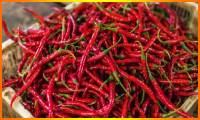
Chilli becomes hotter due to huge demand in export market.
The export market has driven chilli prices in retail market northwards. The price per quintal is hovering between Rs 25,000 and Rs 30,000.
Sources said there is huge demand for chilli from China, Bangladesh, Indonesia and the UAE. Exports to these nations have gone up steadily for the past two years but the demand has surged unprecedentedly in the current season. Sources said reports about crop damage in chilli producing states including AP, Telangana, Maharashtra, and Karnataka due to unseasonal rains too have triggered market sentiments prompting traders to offer high prices to farmers.
The farmers are hopeful of recovering losses incurred due to crop damage. About 10 to 20 per cent crop was damaged due to unseasonal rains in chilli producing areas last month. 'There is massive demand from China, Bangladesh, Indonesia and the UAE. We believe that early onset of Ramzan has triggered sales. Special eateries were opened during Ramzan across the globe to facilitate fasting devotees,' said Sanjay Jain, a leading chilli exporter.
Local traders involved in powder making had waited for the price to fall but joined the race when they realised that the markets are on a bull run. This has led to increase in prices as it became a procurement tussle between local traders and exporters. Chilli oil firms which estimated prices to come down at least by April were left red faced and started offering higher prices. 'It is a dream season for farmers and those who have picked up the stocks in advance.
Majority of the traders did not anticipate the massive jump in prices and joined the price war only out of compulsion,' said Venkateswara Rao, another chilli exporter. While export quality brands like Teja and Byadigi fetch nearly `30,000 per quintal, even common varieties too have ended with over `22,000 to `25,000 per quintal.
The prices were around `8,000 to `14,000 per quintal during the last season. The arrival of stock in the biggest market place for chilli trade in Asia, Guntur Agriculture Market Yard, have come down in the last three weeks as agents of traders went to fields to pick up leftover stocks from farmers. Merchants are lifting stocks directly from farms and shifting to cold storages without bringing to the market yard.
Source: timesofindia.indiatimes.com

France and India have truly been friends, partners and vibrant democracies working for global good: Sh. Piyush Goyal.
Union Minister of Commerce and Industry, Consumer Affairs, Food and Public Distribution, and Textiles, Shri Piyush Goyal said that France and India have truly been friends, partners and vibrant democracies working for global good during his address at the India-France Business Summit in Paris, France today.
He said that H. E. Emmanuel Macron, President of the French Republic and Prime Minister Shri Narendra Modi have strengthened the strategic partnership between the two countries which has completed 25 years now. The Minister said that both the leaders have taken India-France ties to the next level with expanded engagement in trade, technology, tourism and investment. He noted that the friendship between the leaders and the people of both the countries is a force multiplier for global good.
The Minister said that India and France are concerned for stable global economic order and both believe in consensus and cooperation both at regional and global level. He said that the business leaders from both countries and the Indian community in France have further strengthened this bond of friendship and trust between India and France through their relentless efforts to grow the trade and economic partnership.
He appreciated that the industry leaders from various areas of manufacturing and services sector from India attended the Business Summit. The Minister said that the industry leaders from India will share their experiences of working and growing in an economy which is growing rapidly, expanding both in the domestic and international sphere.
The Minister said that India’s potential over the next 25 years has been termed as the Amrit Kaal or the golden era of India by the Prime Minister Shri Narendra Modi. He said that there is a huge delta of opportunities which has never been seen in global economic history in India now. He cited the example of India’s demographic dividend with significant managerial and technological skills and immense talentpool.
The Minister said that the basic needs of Indian citizens have been taken care of in the last 9 years and that has led to an empowered nation brimming with aspirations. He said that seamless digital connectivity has aided this process and now India offers a huge opportunity to businesses around the world. He said that India offers Scale, Speed and Skills to the world.
The Minister said that India is rapidly expanding its international engagement and the goods and services exports over the last 2 years have grown significantly. He said the increase in exports is expected to continue on its high growth trajectory. He also said that India has an infrastructure pipeline to strengthen logistics in the country. He said that India is attracting investment and technology in the defence sector from around the world as indigenous manufacturing is being promoted.
He said that innovation and technology are driving growth in India with sustainability at the core. He said that the green economy is emerging as a massive thrust area for technology and investments. The Minister noted that in addition to this the government is also focussing on gender parity and gender equality in India.
The Minister said that India and France will continue their dialogue at an accelerated pace with trade and investment expanding manifold to further aid the development journey. He quoted the Prime Minister Shri Narendra Modi and said that 'When you associate with India’s growth journey, India gives you the guarantee of growth…'
Source: pib.gov.in
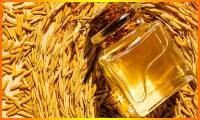
Global meet on rice bran oil in Hyderabad from April 21 to 23.
The International Association of Rice Bran Oil (IARBO), in association with the Solvent Extractors Association of India (SEA), will organise the seventh International Conference on Rice Bran Oil from April 21 to 23 in Hyderabad.
Focussing on the theme ‘Awesome rice bran oil for sustainable ecosystem’, the three-day conference will explore avenues to tap the rice bran opportunity across the world.
Over 400 delegates, including those from rice bran oil-producing countries like China, Thailand, Japan, Pakistan, and Bangladesh, will attend the conference.
'The conference will discuss the latest research on rice bran oil and value-added products. It will also discuss country-specific challenges, if any, in exploring opportunities in this space,' BV Mehta, Secretary-General of IABRO and Executive Director of SEA India, said.
Addressing a press conference here on Tuesday, he said the conference would promote interaction between rice bran producers, industry groups, academic researchers, and local governments.
Ajay Jhunjhunwala, President of SEA India, said it would be the second time for the country to host the conference.
RBN Prasad, a former Chief Scientist with the Indian Institute of Chemical Technology (IICT), wanted the conference to establish the international scientific standard of rice bran oil and value-added products derived from the oil.
P Chandra Shekhara Reddy, Joint Convener of the Conference and Senior Vice-President (Sales and Marketing) of Gemini Edibles and Fats India, said rice bran oil is stable at high temperatures, making it an ideal choice for Indian way of cooking.
Source: thehindubusinessline.com
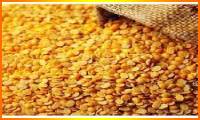
Govt urged to increase MSP of pigeon peas (tur dal).
Traders and millers of pulses have requested the government to increase the minimum support price (MSP) of pigeon peas (tur dal) to encourage the farmers to grow the pulse.
'The production of pulses has been low this year and hence the prices were ruling high. Encouragement from the government will help farmers choose the crop,' said Suresh Agrawal, president, Dal Mill Association.
Prices of tur and urad jumped 8-10% last month which prompted the central government to set up a committee to monitor the situation pulses, although the prices have dropped since then.
Agrawal added that tur takes longer time in the field compared to moong and other pulses, which makes it the least preferred legume for farmers. The MSP of tur is also lower than moong at Rs 6600/quintal as opposed to Rs 7755 of moong.
India has already decided to import additional quantities of tur dal (pigeon peas) in the marketing year 2023-24 to meet the domestic demand as production in the country is expected to drop.
The marketing year for tur is from December to November.
Tur is mainly imported from east African nations and Myanmar. The Centre had earlier extended the import of tur and urad pulses under the 'free' category for another year, till March 31, 2024, according to a notification by the Department of Commerce.
The decision has been taken to ensure seamless import of these pulses and palm oil to augment the domestic availability and ensure affordable rates for consumers.
Source: economictimes.indiatimes.com
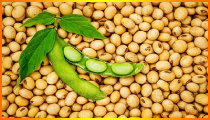
Soyameal shipments rise 110 per cent during Oct-March.
Exports of soyameal and value-added soya products were up by 110 per cent for the first six months of the oil year 2022-23 starting October. This was mainly on account of huge purchases by Vietnam and neighbouring Nepal and Bangladesh.
According to Soyabean Processors Association of India (SOPA), shipments of the meal were up at 9.99 lakh tonnes for the October-March period of oil year 2022-23 against 4.74 lakh tonnes in the year-ago period.
The production of soyameal for the period was higher at 48.59 lakh tonnes (33.52 lakh tonnes). However, due to the dip in market arrivals of soyabean during March, crushing also slowed down.
'Due to falling soyabean prices, farmers are holding stocks due to which, arrivals in March were much lower compared with the previous month. Soyabean crushing was also lower than expected. Demand for soyabean food products was also lower. We expect to achieve or slightly better the export target for soyabean meal which is 14 lakh tonnes,' DN Pathak, Executive Director, SOPA said.
Vietnam, a major buyer
Vietnam has bought over 4.34 lakh tonnes (lt) of soyameal, accouting for about 43 per cent of the overall Indian shipments. Nepal was the second largest buyer followed by Bangladesh.
Other large buyers of the Indian soyameal include the US, Japan, Sri Lanka, and Thailand among others. SOPA has targeted exports of 14 lt, higher than 6.44 lt logged in last year.
SOPA has estimated the production of soyabean during 2022 kharif season at 120.4 lt. Including the carry forward stocks of 25.15 lt and likely imports of 2 lt, the total availability is expected to be 147.55 lt.
Market arrivals of the bean during the Octpber-March were up 26 per cent at 77 lt against 61 lt a year ago. Imports of soyabean are lower at 1.57 lt compared with 2.48 lt a year ago.
Source: thehindubusinessline.com

Kashi to host agriculture chief scientists of G-20 nations in Varanasi
A three-day meeting of Agricultural Chief Scientists (ACS) of G-20 countries will take place as first of five meetings of G-20 slated in Varanasi from April 17.
Talking to TOI on Saturday, district magistrate S Rajalingam said, 'First of the series of five G-20 events scheduled in Varanasi will be meet of ACS. All necessary preparations on the part of district administration has been completed to host the event.'
The PIB released the agenda of ACS meet as per which senior level officials, policymakers, scientists, and experts of the G-20 member states and invited countries and international organizations will participate to discuss and identify R&D priorities in agriculture and strengthen cooperation for sustainable agriculture and food systems transformation.
This year the theme of the ACS meet is sustainable agriculture and food systems for healthy people and planet under the overarching G-20 theme ‘One Earth-One Family-One Future’.
The important areas for discussion during the MACS are role of scientific innovations in sustainable agriculture and food systems for food security and nutrition, promoting millets and ancient food grains, resilient and nature-positive agriculture, digital agriculture, and public-private partnership in agricultural R&D.
The excursion for delegates to Sarnath, Ganga aarti, and trade facilitation is also included in the program. The meeting will be held under the Chairmanship of Secretary, DARE & DG, ICAR with active involvement and support of the state government and district administration.
Source: timesofindia.indiatimes.com

Telangana agriculture exports jump by 40%, pegged at Rs 10,000 crore.
In a positive sign for state government's efforts in the agriculture sector, Telangana has witnessed almost 40% increase in agriculture exports between 2020 and 2022. While agriculture exports stood at Rs 6,337 crore in 2020-21, it rose substantially to about Rs 10,000 crore in 2021- 22.
According to the data recently released by the central government, Telangana and Maharashtra are two states which have shown marked growth in agriculture exports. In just five years, from 2017-18 to 2021-22, it has increased from Rs 5,000 crore to Rs 10,000 crore in Telangana.
Telangana's top exports include cotton, spices, cereals and meat. According to experts, the exports from Telangana have improved due to innovative methods, increased use of technology and cold storage facilities.
'Considering that Telangana has no coastline, the improvement clearly shows how better infrastructure has helped the sector grow substantially,' said Kotha Bhaskar Reddy, an exporter from NiIzamabad who deals in fruits.
As per the data, cotton exports totalled Rs 3,055 crore in 2021-22, while spices, coffee and tea accounted for Rs 1,936 crore. Cereals contributed Rs 1,480 crore and meat exports accounted for Rs 268 crore. The state also exports rice, maize, lemon, grapes, mango and soyabean.
The data from the state also shows that total foreign direct investment inflows in the agriculture sector in the country have a high share from Telangana. The state attracted FDI worth Rs.3,000 crore between 2019- 2021.
Currently, state is focussing on increasing the exte-nt of oil seed farming which will increase exports base.
Source: timesofindia.indiatimes.com

Free Trade Agreement negotiations are going on with United Kingdom, EU and Canada: Nirmala Sitharaman.
Union Finance Minister Nirmala Sitharaman on Monday (local time) while speaking at the Peterson Institute for International Economics (PIIE) on Free Trade Agreements in Washington said that FTAs are being signed in a much 'faster' way nowadays and also informed that the India-UK Free Trade Agreement (FTA) negotiations are 'going on as we speak.'
This confirmation comes at a time when a recent report suggested that the FTA talks between the two countries are suspended over the UK's failure to denounce vandalism by Khalistsupporters outside the Indian High Commission in London last month.
'Free Trade Agreements are being signed in a much faster way nowadays. We've just concluded one with Australia. Earlier we concluded with UAE, Mauritius and with ASEAN. We have extended quota-free and tariff-free regime to Least Developed Countries,' the Finance Minister said.
Speaking on India's wish to pursue trade with multilateral groups, she said, 'I think India has shown very clearly its initiative is working out well in pursuing with countries and agreeing to have FTA with them. We've had agreements with ASEAN, free trade agreements both in goods and services with ASEAN, we have had with Korea, with Japan. So free trade agreements have bilaterally or with multilateral groups been the route which India has had till before 2014 and now between 2019 and today, we've had at least three major agreements signed. So, we shall proceed in that route, with the United Kingdom, the European Union, and Canada. All three are happening now as we speak, the negotiations are going on. So we shall go in those preferential routes.'
Earlier today India dismissed as 'baseless' reports in British media stating that it had halted talks for a free trade agreement with the United Kingdom over the attack on the Indian high commission in London last month, government sources said on Monday.
London-based newspaper The Times in its April 10 edition citing senior British government sources reported that the Indian government has 'disengaged' from trade talks and made it clear that there would be no progress 'without a public condemnation of the Khalistan movement.'
The India-UK Free Trade Agreement talks were launched on June 17, 2022.
Sitharaman further urged World Trade Organisation (WTO) to bring transparency in terms of moratorium.
Source: economictimes.indiatimes.com
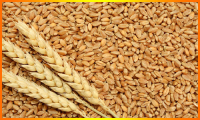
Nepal looks to India easing its wheat export quota restriction to address domestic shortage.
Nepal has requested India to supply 300,000 tonnes of wheat to avoid a major spurt in local flour prices.
The shortage of wheat has already made the flour prices dearer in the domestic market, although prices have dropped to some extent since March.
The Nepal government expects that the requested consignment would start coming from the new fiscal year 2023-24, or after mid-July.
According to reports, more than 80 percent of the world’s wheat is being consumed as flour.
Four mill owners, however, said that the proposed quantity needs to be imported from India as soon as possible or else, the price of flour in the country will go through the roof.
Nepali consumers are already battling high inflation, which has reached near 8 percent.
According to the World Bank’s latest report, inflation in South Asia is set to fall to 8.9 percent this year.
However, weaker currencies and delayed domestic price adjustments are contributing to a slower than anticipated decline in inflation.
Elevated global and domestic food prices are contributing to greater food insecurity for South Asia’s poor who spend a larger share of their incomes on food.
Last week, the Ministry of Industry, Commerce and Supplies sent a letter to the Indian government through the Ministry of Foreign Affairs, requesting a consignment of 300,000 tonnes of wheat.
Urmila KC, under secretary of the Industry Ministry, said that the import of 300,000 tonnes of wheat would start arriving from the beginning of the next fiscal year.
'As the domestic harvesting season has also started, we will analyse the production and demand gap and make further decisions,' she said. 'We have not received any comments from the Indian government regarding our request,' KC added.
After India imposed a ban on wheat exports in May last year, it set a quota of 50,000 tonnes for Nepal in December.
Out of the 50,000 tonnes of wheat, 6,800 tonnes are being imported jointly by the Food Management and Trading Company and Salt Trading Corporation.
'We cannot say when the wheat will arrive as the procurement process has not yet been started. 'The Indian government is yet to decide on the seller,' said Kumar Rajbhandari, information officer at the Salt Trading Corporation.
The Industry Ministry published a notice on August 8 last year requesting the sugar and flour producers to submit paperwork to apply for quotas. The Indian government has also imposed a quota system on the import of sugar.
According to Nepal Flour Mills Association, the mills have received only 33,000 tonnes of wheat so far and are yet to receive the remainder.
'If the new batch is delayed, the domestic wheat producers may jack up prices on the pretext of the Indian ban,' said Dinesh Kumar Agrawal, senior vice-president of the Nepal Flour Mills Association.
'During this time of the year, which is the harvest period, I used to receive 21 tonnes of wheat daily in my factory from domestic producers. But currently, I am receiving only a small amount,' Agrawal said, adding that it looks like the domestic suppliers have started hoarding wheat.
The flour mills are operating at 20 percent of their capacity due to the limited availability of domestic wheat, he said.
The price of flour started to jump in the local market after India put a ban on the export of wheat flour on May 13, 2022 due to a decline in its production.
The price of flour nearly doubled to Rs95 per kg.
But prices started cooling down as soon as India allotted the quota to Nepal.
'We need at least 600,000 tonnes of wheat for the next fiscal year. As Prime Minister Pushpa Kamal Dahal is going on an official visit to India soon, he should make a special request to his counterpart to allocate a sufficient quota for Nepal,' Agrawal said.
'We are weak in negotiations. Writing a request letter is not enough to bring the required quantity of wheat on time and prevent shortages,' Agrawal said. 'The government-to-government talks are a must for the ease in the supply of wheat,'
In the last fiscal year, Nepal’s wheat harvesting rose by less than 1 percent to 2.02 million tonnes. This fiscal year, experts say due to the late winter rainfall, which is good for the wheat crop, the output may go up.
Wheat is sowed in December and harvested in March.
Last May, India imposed a ban on wheat exports after an unseasonal hot weather hurt the wheat crop, sending local prices soaring besides causing food security risks to India.
According to a Reuters report, India is considering extending the ban on wheat exports as the world's second-biggest producer seeks to replenish state reserves and bring down the domestic prices. The Indian government is unwilling to open wheat exports until mid-2024, the report said.
Heatwaves in northern and central India during the crop ripening period are threatening to dent its wheat production for a second straight year, the report said.
The higher temperatures in March have been estimated to trim wheat output by 4 million to 5 million tonnes in India, the report added.
Nearly 85 percent of the flour mills in Nepal were forced to shut down due to the Indian government's ban on wheat exports. The ban also created a shortage of refined flour and wheat flour in the local market.
Source: kathmandupost.com