
BIMSTEC nears completion of Free Trade Agreement, says secretary general.
Free Trade Agreement (FTA) among the BIMSTEC countries is at the final stage of formulation with trade being the core agenda when BIMSTEC was established, Bay of Bengal Initiative for Multi-sectoral Technical and Economic Cooperation (BIMSTEC) secretary general Tenzin Lekphell said in Kolkata. BIMSTEC is also creating an energy centre in Bangalore with focus on the potential of clean energy as well.
'Trade has been the core agenda since the time of establishment of BIMSTEC. Somehow it did not really give us the fruit which was expected during this course of time. Many experts have come together in the recent past, a lot of meetings took place, negotiations have been done and multilateral discussions took place among the seven member countries. Seven countries coming to consensus and doing negotiations takes time and it is a complex process. Everyone wants the FTA to happen in the region,' Tenzin told ET.
'FTA is at the final stages of completion. We are left with a few more details which need to be negotiated. During the 19th minstrel meeting recently, I have requested the trade ministers, trade & commerce secretaries to come together and then advise the working groups. A lot of work on different constituents of FTA has been done and it is actually entering in the final stages,' Tenzin told ET in an exclusive interaction.
Talking about the BIMSTEC Energy Centre coming up in Bangalore, Lekhphell said, 'This region has potential for clean energy, especially Bhutan and Nepal with huge potential of hydro-power. We have discussed the energy issue with renewed focus. A BIMSTEC Energy Centre is coming up in Bangalore and details about trading energy will come up with India as the lead country.'
Meanwhile, the BIMSTEC has also drafted the Maritime Transport Agreement which is likely to get approval in coming November from the member countries. 'We know the region has a huge potential in terms of waterways as there are so many rivers in the Bay of Bengal region,'Tenzin said, adding that the Maritime Agreement cooperation has been completed. 'In November this year, during the sixth BIMSTEC summit in Bankok, the Maritime Transport Agreement is likely to get the final approval from the seven member countries, after which it can be implemented,' Tenzin said.
'Covid made us realize that pandemic is an important agenda and before the pandemic we were focussing more on trade connectivity, energy but there was not much discussion on health. Now the region has realized that health is an important agenda and in future if a situation arises, the region can come together on the issue,' Lekhphell said.
The BIMSTEC conference in Kolkata on Saturday was held following the 19th BIMSTEC Ministerial Meeting, which was held earlier this month in New Delhi, a year after the Fifth BIMSTEC Summit held in Colombo. On Saturday, Minister of State (MOS)-Ministry of External Affairs Rajkumar Ranajan Singh inaugurated the two-day BIMSTEC conference marking its 25th Anniversary.
Source: economictimes.indiatimes.com
One District One Product (ODOP) approved for 713 districts under PMFME Scheme.
Out of all 766 districts across 36 States/ UTs, One District One Product (ODOP) has been approved for 713 districts of 35 States/ UTs under Centrally Sponsored 'Pradhan Mantri Formalisation of Micro Food Processing Enterprises (PMFME) Scheme' implemented by Ministry of Food Processing Industries (MoFPI). The State of West Bengal has agreed to participate in the scheme in January 2023. The ODOPs are approved by the Ministry on the recommendations of States/ UTs. The ODOP for the districts of West Bengal along with newly formed districts across 7 States/ UTs has not been recommended by the respective States/ UTs.
GIS-ODOP digital map has been developed by the MoFPI. ODOP of 710 districts from 35 States and UTs have been indicated. Along with it, districts covering 216 Integrated Tribal Development Areas, 112 Aspirational districts and 35 districts with more than 40% SC population are indicated in the map.The ODOP-GIS is available at https://odop.mofpi.gov.in/odop/
MoFPI has approved 76 Incubation Centres across the country with an outlay of 205.95 crore under PMFME Scheme to provide support to existing / prospective entrepreneurs for capacity building, new / innovative product developments etc. across the value chain.
The generation of revenue has not been envisaged under PMFME Scheme.
The PMFME Scheme provides financial, technical and business support for setting up / upgradation of micro food processing enterprises in the country which inter-alia creates the scope for employment at local level including opportunities for youth.
This information was given by Minister of State for Food Processing Industries, Shri Prahlad Singh Patel in a written reply in the Rajya Sabha.
Source: pib.gov.in

India to focus on 4 priority areas in first G20 trade, investment meet.
India under its G-20 presidency will push for resilient value chains, growth and prosperity, integration of MSMEs in global trade and logistics for trade in the upcoming first G-20 Trade and Investment Working Group (TIWG).
The meeting will be held from March 28-30in Mumbai with participation from over 100 delegates from G-20 member countries, invitee countries, regional groupings and international organisations.
New Delhi has identified five priority issues—growth and prosperity, resilient global value chains, MSMEs, logistics, and WTO reform—under its G-20 presidency. Of these, it will focus on four in the first meeting.
Making trade work for growth and prosperity, and building resilient global value chains (GVCs) will be discussed with an emphasis on achieving shared outcomes for making growth inclusive and resilient, increasing the participation of developing countries and the Global South in GVCs, said commerce secretary Sunil Barthwal.
Issues related to the World Trade Organization, including a reform of dispute settlement and a robust appellate mechanism, will be discussed later.
During the meeting, the role of banks, financial institutions, development finance institutions and export credit agencies in closing the trade finance gap, and how digitalisation and fintech solutions can improve access to trade finance, will also be discussed.
Addressing the worrisome increase in trade barriers across goods and services, and smothering trade by focusing on trade facilitation are the prime concerns for India.
Discussions on digitising bills of lading, as most countries are yet to build digital infrastructure for their documentation, are also likely.
The TIWG will next meet in June in Kewadiya, Bengaluru in July, and then in Jaipur in August.
Source: economictimes.indiatimes.com
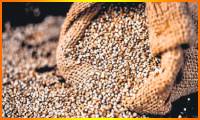
State/UTs procured 6.07 Lakh Tonnes of millets during Kharif Marketing Season 2021-22 for distribution.
The Union Minister of State for Ministry of Consumer Affairs, Food and Public Distribution, Ms. Sadhvi Niranjan Jyoti in a written reply in Rajya Sabha today informed that as per the 2nd Advance Estimates of Production of foodgrains for 2022-23 of Department of Agriculture and Farmers Welfare, the production of total foodgrains is estimated to be 3235.54 Lakh Tonnes out of which the production of Millets is 159.09 Lakh Tonnes (4.92 per cent of total foodgrains production). State Governments have procured 6.07 Lakh Tonnes of millets during Kharif Marketing Season 2021-22 for distribution under the Targeted Public Distribution System (TPDS)/Integrated Child Development Services(ICDS)/ Pradhan Mantri Poshan Shakti Nirman (PM POSHAN/Mid-Day Meal Scheme) etc. The data of production of millets during last five years, is attached below.
Under the National Food Security Act, 2013, the term 'foodgrains' is defined as rice, wheat or coarse grains or any combination thereof conforming to such quality norms as may be determined, by order, by the Central Government from time to time. There is no specific provision for Millets under the Act. However, to improve the level of nutrition among the beneficiaries covered under the NFSA, all the States/UTs have been requested to procure millets and distribute for NFSA beneficiaries as per local consumption preferences and as per the guidelines issued by Government from time to time.
Recognizing the nutritional value of millets and the fact that consumption of millets can significantly improve key nutrition parameters among children and women in rural and urban areas the Government of India has created a sub-mission under the National Food Security Mission to encourage millet cultivation and its inclusion in Targeted Public Distribution System (TPDS). Now, Millets are already a part of the TPDS. The procurement, storage, and distribution of coarse grains by States/UTs is done under Decentralized Procurement (DCP) system.
Production of Millets during last five years
|
S. No. | Year | Production |
|
1 | 2017-18 | 164.36 |
|
2 | 2018-19 | 137.11 |
|
3 | 2019-20 | 172.6 |
|
4 | 2020-21 | 180.2 |
|
5 | 2021-22 | 159.9 |
Source: pib.gov.in

Honey production up 6.56 per cent, export by 24 per cent in 2021-22: Tomar.
Production of honey has seen 6.56 per cent growth and the export 24.02 per cent growth during 2021-22, the Centre informed Rajya Sabha on Friday.
In a reply to a query on National Beekeeping and Honey Mission (NBHM), Narendra Singh Tomar, Union Minister for Agriculture and Farmers’ Welfare, said the production of honey in the country went up from 1,25,000 tonnes in 2020-21 to 1,33,200 tonnes in 2021-22, registering a growth of 6.56 per cent.
India’s honey export has gone up from 59,999 tonnes in 2020-21 to 74,413 tonnes in 2021-22, registering a growth of 24.02 per cent. The Minister said the increase in production has directly enhanced the income of farmers/beekeepers.
Stating that various efforts were taken to achieve the target of 1,60,000 tonnes of honey production, he said some of the measures include awareness programmes, trainings, seminars, workshops, development of nucleus stock centres, development of bee-breeders and custom hiring centres, and plantation of bee friendly flora.
Out of the total 100 honey FPOs (farmer producer organisations) allotted, 80 honey FPOs have been registered till date by different agencies under ‘formation of 10,000 FPOs’ scheme of the Government. This also helps in increasing the income of farmers, he said.
As on date, 20.64 lakh of bee colonies have been registered on ‘Madhukranti Portal’ by beekeepers, societies, firms, and companies, etc., he said.
To ensure the quality of honey, four regional honey testing labs and 31 mini-honey testing labs have been sanctioned under NBHM.
PMFBY
To a separate query on the States with maximum number of beneficiaries of Pradhan Mantri Fasal Bima Yojana (PMFBY), Tomar said 344.6 lakh of farmer applications were enrolled in Rajasthan during 2021-22. This was followed by Maharashtra at 99 lakh, Madhya Pradesh at 92.7 lakh, and Odisha at 81.6 lakh. The total number of farmer applications enrolled across the country stood at 831.8 lakh during 2021-22.
Agri start-ups
To another separate query on agri start-ups, Tomar said the number of start-ups in agri and allied sectors has gone up to more than 7,000 in 2022-23 from less than 50 before 2014-15. He attributed this to the support given by the Government in this regard.
The Department of Agriculture and Farmers’ Welfare (DA&FW) is implementing ‘Innovation and Agri-Entrepreneurship Development’ programme under Rashtriya Krishi Vikas Yojana (RKVY) from 2018-19 with an objective to promote innovation and agri-entrepreneurship by providing financial support and nurturing an incubation ecosystem.
Five knowledge partners (KPs) and 24 RKVY Agribusiness Incubators (R-ABIs) have been appointed for incubation of start-ups and implementation of this programme across the country.
Source: thehindubusinessline.com
Positive impact. Declaration of International Year of Millets helps push up sales by 30%, says APEDA based on exporters feedback.
Sales of millets, both domestic and international, have increased by nearly 30 per cent after the declaration of International Year of Millets 2023, said the Agricultural and Processed Exports Development Authority (APEDA), based on the feedback from exporters.
'Further, the awareness about the millets and its products, and visibility of millet products in the supermarkets have also increased. They have also informed that due to the consistent efforts by the government, the customers have also started demanding millet products, which was hitherto a hard sell to them,' APEDA said.
The exports of millet and millet-based products have been on the rise over the past couple of years. From around 1.29 lakh tonnes, valued at Rs.434 crore in 2019-20, the shipments of millets and millet-based products have increased to over 1.59 lakh tonnes, valued at Rs.480 crore in 2021-22.
The eight per cent increase in exports from Rs.443 crore in 2020-21 to Rs.480 crore in 2021-22 can be attributed to the announcement by the United Nations General Assembly at its 75th session in March 2021, declaring 2023 as the International Year of Millets. India’s millet exports are seen rising further in the current financial year.
'The announcement of the International Year of Millets 2023 is widely regarded as a great booster to popularise Shree Anna products globally. Our exports are seen increasing close to $100 million this financial year and we will double our exports by 2024-25,' said APEDA Chairman M Angamuthu.
APEDA has identified 30 plus potential markets, a range of products, and possible sourcing points to boost the shipments. 'We do have a list of exporters, buyers, FPOs, and start-ups to support this cause,' Angamuthu added.
Rise in production
India’s millet production has also increased in the past few years, supporting the growing demand. From around 10.25 million tonnes during 2019-20, millet production has increased to 13.21 million tonnes during 2020-21, APEDA said citing the FAO statistics.
'We have a wide range of production base from deep South to the Himalayan region. The product base is also wide and we have rich opportunities to factor in the days to come. We will integrate Indian millets as a part of global cuisine involving all stakeholders,' Angamuthu said.
Further, APEDA said players in the millet value chain such as Bhoosiri Millets Farmer Producer Company, Haveri, Gaurishankar Food Industries, Shiggaon, Rajamudi Organics Pvt Ltd, Urban Monk Pvt Ltd, Samruddhi Agro Group, Barvi Agro Farmer Producer Company among others are witnessing an increase in demand for their products from both domestic and overseas markets.
Source: thehindubusinessline.com

PLI scheme incentivises use of millets in Ready to Cook/Ready to Eat (RTC/RTE) products.
Ministry of Statistics and Programme Implementation releases data on various parameters of manufacturing sector including number of registered units engaged in food processing through the Annual Survey of Industries (ASI). As per the latest available ASI estimates, the number of units engaged in food processing sector increased from 40,579 in 2018-19 to 41,484 in 2019-20.
Food Safety and Standards Authority of India (FSSAI) has been mandated for laying down science-based standards for articles of food and to regulate their manufacture, storage, distribution, sale and import and to ensure availability of safe and wholesome food for human consumption. FSSAI has specified the hygiene and quality standards for various food products including packaged food and non-perishable packaged food products produced by all food processing units in the country in their Regulations namely Food Safety and Standards (Food Products Standards and Food Additives) Regulations, 2011; Food Safety and Standards (Licensing and Registration of Food Businesses) Regulations, 2011; Food Safety and Standards (Health Supplements, Nutraceuticals, Food for Special Dietary Use, Food for Special Medical Purpose, Functional Food and Novel Food) Regulations, 2016; Food Safety and Standards (Organic Food) Regulations 2017; Food Safety and Standards (Packaging) Regulations, 2018, etc. The quality and hygiene standards prescribed in these Regulations are enforced by the Regional Directors of FSSAI along with Food Safety Commissioners of States/UTs. In cases, where the samples are found to be non-conforming to the laid down provisions of FSS Act 2006, Rules and Regulations made thereunder, penal action is initiated against the defaulting Food Business Operators (FBOs) as per the provisions of FSS Act 2006, Rules and Regulations made thereunder.
Under the Production Linked Incentive (PLI) scheme for food products being implemented by Ministry of Food Processing Industries (MoFPI) since 2021-22, a component, with an outlay of Rs.800 Crore, for Millet Based Products was carved out in the current financial year to encourage the use of Millets in Ready to Cook/Ready to Eat (RTC/RTE) products and to incentivise these products for promoting their value addition and sales. A total of 30 applications (8 large entities and 22 SMEs) were approved under this segment. Under the PLI Scheme component for Millet Based Products, the packaged and branded RTC/RTE food products with more than 15% of millets by weight/volume in product composition, are eligible for claiming the incentives.
This information was given by Minister of State for Food Processing Industries, Shri Prahlad Singh Patel in a written reply in the Rajya Sabha.
Source: pib.gov.in

Exports in essential oils, sugar & confectionary, cereals rose most after India-UAE CEPA.
The India-UAE Comprehensive Economic Partnership Agreement (CEPA) has led to a 70 percent year-on-year growth in exports of essential oils, resinoids, perfumery, and cosmetic preparations from India to UAE, from $161.23 million in the period of June 2021 to February 2022 to $273.54 million in June 2022 to February 2023 period.
Exports of other commodities which grew during the same period were sugar & confectionary (44 percent); cereals (38 percent); coffee, tea & spices (37 percent); automobiles (33 percent), and miscellaneous chemical products (30 percent).
The union commerce ministry has projected that India's total exports to the UAE will touch a record $32 billion this year on the back of a 4.9 percent year-on-year rise in exports to the West Asian nation in February 2023 despite a 10 percent year-on-year fall in overall exports.
India's non-oil exports to the UAE rose 18.9 percent year-on-year in February 2023 to $2.14 billion, in comparison to a 4.2 percent drop in non-oil exports to the rest of the world to $28.84 billion in February 2023. India's exports to the UAE from June 2022 to February 2023 rose 10.4 percent year-on-year, amidst a 0.9 percent rise in exports to the rest of the world.
Sources privy to the developments indicated that there's no misuse of the India-UAE CEPA for the import of cheap scotch whisky, and the import duty on scotch whisky will continue to remain at its current level, irrespective of where it is routed from.
Further, sources in the know reiterated that the tariff exemptions in the CEPA with UAE were meant only for products majorly manufactured there. Also, sources added that many two-wheeler exports from India to Africa are also routed via UAE for a better after-sales service to consuming countries, stating that the bigger trade volumes in UAE ensure no losses for the export of two-wheelers manufactured in India.
Source: cnbctv18.com
FSSAI holds technical sessions on sidelines of Global Millets Conference.
'Innovation, outreach, and marketing that is targeted at the youth hold the key to making millets the super food of the future', experts from across the world and members of the industry said at the two-day Global Millets (Shree Anna) Conference of the Union Ministry of Health and Family Welfare at the A.P. Shinde Symposium Hall, NASC Complex here recently.
The Food Safety and Standards Authority of India (FSSAI) held a symposium with technical sessions on promotion and awareness of millets on the sidelines of Global Millets (Shree Anna) Conference inaugurated by Prime Minister Narendra Modi.
The plenary session of the concluding day of the two-day conference began with a special address by Dr D Ian Givens, director, Institute of Food, Nutrition and Health (IFHN), University of Reading, UK. Dr Givens emphasised on millets as sustainable solution to curtail micronutrient deficiency.
Continuing deliberations on the importance of reviving the cultivation and consumption of millets, the first session of Day-2 and the fourth session of the Conference was focused on 'Research, Innovations and Sustainability'. The session was moderated by Lav Agarwal, Additional Secretary, Ministry of Health and Family Welfare, Government of India. Setting the context for the session, Agarwal said that awareness, innovations, robust market integration and supply chain should be the area of focus to promote the consumption of millets. He said that 'shift in food habits and increase in a sedentary lifestyle had added a dual burden of diseases.'
There was an active participation from the delegates attending the sessions and some very interesting questions were taken up by the panelists. G. Kamala Vardhana Rao, CEO, Food Safety and Standards Authority of India, gave an overview of the conference and ideas for way ahead. In his concluding remarks, he quoted the Say’s Law of Market which tells – 'Supply automatically produces demand'. He added that millets should now be included in daily food items like bread, biscuits, noodles and chocolates. Rao said that year 2023 is being celebrated as International Year of Millets, but the campaign should not stop here, it should continue from year to year.
Stakeholders in the technical sessions noted that wild varieties of millets are very resistant but need to be studied well. They shared that millets are in high demand and different packaging solutions are being researched upon to increase the shelf life of millets. Other experts added that greater awareness on health at different levels need to be created. They stressed on the need of more research on yield management and increment. For enriching soil fertility, intercropping with millets was suggested. It was also pointed out that marketing is crucial for the promotion of millets and millennial consumers need to be targeted.
During the thematic session on 'Innovations and New Product Development - Industry’s Perspective', experts from industry shared their views on the resurgence of millets through attractive products which are also accepted by consumers. It was highlighted that continuous work needs to be done in this domain to enhance the outreach of millet-based foods and their sustenance in the market of competitive packaged food products.
The second day of the conference came to a close with the final session on 'Millets: Prophylactic and Therapeutic Benefits'. This session was moderated by Justice D Seshadri Naidu, former judge, Bombay High Court, with focus on consumer behaviour, right method of consumption with innovation across the whole value chain. Dr M Srinivas, director, AIIMS, Delhi, mentioned that phytonutrients present in millets can be very helpful with therapeutic benefits. Other stakeholders emphasised that creativity combined with tradition may lead to healthier and tastier millet-based foods, it was noted that diet moderation is important to make the millets part of the food plate and that traditional recipes need to be revamped so that millets could be the choice of new generation. It was also pointed out that by-products of millets could be important for doubling the farmers’ income.
Experts and representatives from various academic institutions, governments, public health facilities, development partners, industry were present at the event.
Source: fnbnews.com
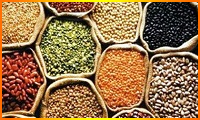
India s pulses exports may surge to new high this fiscal.
India’s pulses exports for the financial year will likely scale a new record on rising demand for chickpea and lentils from countries such as China, United Arab Emirates (UAE) and Bangladesh.
During the April-January period of the current financial year, pulses exports in terms of volume were up 80 per cent at 5.39 lakh tonnes(lt). In the same period a year ago, exports were 3 lt. In terms of dollar, pulses exports during April-January were up 73 per cent at $476 million ($275 million in the same period a year ago). In terms of rupee, exports were up 85 per cent at ?3,784 crore (?2,048 crore), as per the latest data from APEDA. In the financial year 2021-22, pulses exports were 4.1 lt, valued at $379 million.
Demand from expats
'There’s a lot of demand for Indian pulses, especially desi chickpea, kabuli chana and lentils among others from countries such as Bangladesh, Sri Lanka and Nepal,' said Bimal Kothari, Chairman, India Pulses and Grains Association (IPGA), the apex trade body. From countries such as the US, Canada and the UK, the demand for Indian pulses is largely driven by the expatriates, Kothari said.
'Exports of chana is up due to the demand from Bangladesh and Nepal, while the demand for tur dal is mainly from Gulf countries,' said Punit Bachhawat, a miller in Ahmedabad, who supplies to exporters. Also, there’s good demand for masoor (lentils) from Bangladesh, which used to import from Australia. With crop damage in Australia this year, Bangladesh is buying more lentils from India this year and also due to the Ramadan demand, Bachhawat said.
Rahul Chauhan of IGrain India said the growth in pulses exports is driven by the demand for chikpea ( kabuli chana), desi chikpea and lentils. Other variety of pulses such as pigeon pea (tur), black matpe (urad) and moong have witnessed a decline, he said.
'Lentil exports have more than doubled to around 43,784 tonnes during the April-November period this fiscal against 20,891 tonnes a year ago. Similarly, exports of kabuli chana have increased to 85,661 tonnes during April-Dec compared with 45,691 tonnes in 2021-22. Exports of desi chickpea have increased to 68,808 tonnes during April-December compared with 50,773 tonnes a year ago,' Chauhan said.
Vegan preference rising
APEDA chairman, M Angamuthu said 'with the rising preferences for vegetarian and vegan foods globally and India being the largest producer of varieties of pulses, we can cater to meet the increasing global demand for pulses.'
India is the largest producer and consumer of pulses. As per the second advance estimates for 2022-23, India’s pulses production is estimated at a record 278.10 lt against 273.02 lt a year ago. The record pulses output is largely driven by chana and moong crops, while the production of tur and urad was impacted by bad weather across various parts of the country. To keep prices of tur and urad under check, the government has kept the imports open of these pulses varieties till March 2024.
As per the second advance estimates, chana production is projected at record 136.32 lt (135.44 lt last year), while moong output is expected to be at a new high of 35.45 lt (31.66 lt).
Source: thehindubusinessline.com