
India s FY23 coffee exports at a new record on higher prices.
India’s coffee exports for financial year ending March, 2023 scaled a new high at $1.126 billion on increase in global prices. The exports for the year are higher by about a tenth in dollar value terms over the previous year’s $1.027 billion and surpassed the target of $1.088 billion fixed by the Commerce Ministry.
In fact, the Indian coffee exports have clocked over a billion dollars for the second consecutive year during 2022-23. The export growth in rupee value terms is higher at around 18 per cent at Rs.9033.38 crore as compared to previous year’s Rs.7655.50 crore.
This growth in exports is despite a 3.6 per cent decline in volumes at 3.98 lakh tonnes over the previous year’s 4.13 lakh tonnes, as per the Coffee Board of India’s data based on the permits issued.
Higher realisations
'The increase in exports is due to higher realisations,' said Coffee Board CEO and Secretary K G Jagadeesha. The per unit realisation for Indian coffees was higher by 22 per cent at Rs.2.26 lakh per tonne during 2022-23 as compared to Rs.1.84 lakh per tonne during the previous year.
'The International Coffee Organisation’s composite index price last year was very high compared to the last 10 years,' Jagadeesha said. The ICO indicator price for ‘Other Milds’ a category under which the Indian coffees are classified, went up from around 185 US cents per pound last year to 226 US cents per pound.
Growth in value
'Our growth in value terms is much faster than in quantity. In terms of quantity, we are lagging behind when compared to last year as our production is limited. If the prices remain same during 2023-24, then we may exceed the billion dollar mark again,' Jagadeesha said. While India may not face problems in exports of value added instant coffees, as we import and re-export after value-addition, the green coffee shipments are all dependent on natural factors such as weather. 'If there is a favourable weather, we will have a good crop and good exports,' he added.
India exports about two thirds of the 3.6 lakh tonnes of green coffees produced in the country.
Decline in volumes
Ramesh Rajah, President, Coffee Exporters Association, said the higher value due to the gain in the international market has made up for the decline in volumes. 'We were expecting a 5 per cent decline in volumes,' Rajah said adding that it would be hard to sustain the exports during 2023-24. 'There could be a marginal decline in quantity terms and five per cent dip in value terms during 2023-24 as the order books are only 60 per cent of the normal, particularly for the Arabicas, which is a bit of concern,' Rajah said.
Factors such as higher Indian prices, compared to the terminal prices in New York and London, and in Europe, the largest destination for Indian coffees, where consumers hit by a recession are looking are cheaper coffees, have resulted in lower order-books, Rajah added.
Source: thehindubusinessline.com
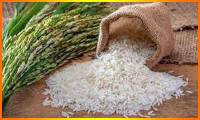
Indian basmati growers plan to expand area on realising high prices in 2022.
Indian basmati farmers plan to increase the area under the fragrant rice crop in coming kharif season as they hope to receive really good prices after realising record prices last year for their produce. Experts, however, said prices will depend on export demand and geopolitical developments .
'I have already bought sufficient seeds from recent Pusa Kisan Mela as I plan to increase the area under basmati to 15 acres from 10 acres done last year,' said Ashok Dahiya of Sonipat district in Haryana, the largest basmati-producing State. He expects a similar price for basmati next year too after selling his crops (different varieties) at Rs.3,800-4,000 per quintal last year.
'Though (expansion of acreage) not entirely on my own field, but definitely it is profitable even to take land on lease and go for basmati than any other crop,' he said, adding the costs of annual lease is more than Rs.35,000/acre depending on the location and conditions of land.
Echoing similar views
Whether its is Jind, Sirsa or Karnal, farmers in Haryana have echoed similar sentiments though the scale of expansion will vary depending on the land availability. India’s basmati rice production was estimated at 9 million tonnes (mt) from an area of 6.2 million hectares in 2022-23. Of this, Haryana produced 3.81 mt, Punjab 3.12 mt and Uttar Pradesh 1.79 mt. Due to Covid pandemic, no survey was undertaken in 2020 and 2021.
The current export price trend indicates an interesting insight into the demand-supply matrix. Kharif 2023 for basmati rice will be a crucial year in view of comprehensive and accelerated rice and agricultural demand outlook, said trade policy analyst S Chandrasekaran. 'The supplier-driven sentiments will redefine the realisation of prices,' he said.
Basmati rice shipments increased 41 per cent to $3.82 billion (Rs.30,514 crore) in the 10 months up to January in the current fiscal and the volume surged 18 per cent to 3.66 mt. The unit value realisation increased to $1,044 a tonne from $877/tonne a year ago.
Exporters term the increased demand in importing countries to high prices for basmati amid global uncertainties after the Ukraine-Russia conflict. Besides the partial restrictions on export of non-basmati rice — ban on broken variety and 20 per cent duty on non-parboiled rice — had some influence on basmati prices, exporters said.
Source: thehindubusinessline.com
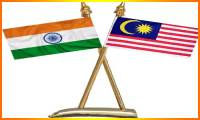
India, Malaysia can now trade in Indian rupee.
Trade between India and Malaysia can now be settled in Indian Rupee (INR) in addition to the current modes of settlement in other currencies. This follows the decision by the Reserve Bank of India in July 2022 to allow the settlement of international trade in Indian Rupee (INR). This initiative by RBI is aimed at facilitating the growth of global trade and supporting the interests of the global trading community in Indian Rupee (INR).
India International Bank of Malaysia (IIBM), based in Kuala Lumpur, has operationalised this mechanism by opening a Special Rupee Vostro Account through its Corresponding Bank in India i.e. Union Bank of India.
Economic and commercial relations are the mainstay of bilateral partnerships. With strengthening bilateral economic and commercial relations, Malaysia has emerged as 13th largest trading partner for India while India figures among the ten largest trading partners for Malaysia which is also our 3rd largest trading partner in ASEAN. A bilateral Comprehensive Economic Cooperation Agreement(CECA) covering goods, services and investment has come into effect from 1 July 2011.
India's major export items to Malaysia are mineral fuels, mineral oils; aluminum and articles thereof, meat and edible meat offal, iron and steel, copper and articles thereof, organic chemicals, nuclear reactors, boilers, machinery and mechanical appliances; electrical machinery and equipment; etc. India's major import items from Malaysia are palm oil, mineral fuels, mineral oils, electrical machinery and equipment; animal or vegetable fats and oils and their cleavage products; nuclear reactors, boilers, machinery and mechanical appliances; copper and articles thereof, wood; wood charcoal, aluminum, organic chemicals, iron and steel and miscellaneous chemical products
The first Indian joint venture, Godrej commenced operations in 1968, and in the seventies and early eighties, Malaysia hosted the largest number of Indian joint ventures in any country. Indian companies' present involvement in Malaysia is in palm oil refining, power, railways, information technology, biotechnology, manufacturing industrial goods, higher education, civil construction, and training.
As per official figures (DPIIT), Malaysia ranks as the 26th largest investor in India with FDI inflow of US$ 1.12 billion during the period April 2000 to September 2021.
Presently, there are more than 150 Indian companies, including 61 Indians are expected to be of the tune of US$7 billion. The highest joint ventures and 3 Indian Public Sector Undertakings operating in investment proposals have been in the telecommunications, Malaysia. Their areas of operation are manufacture of textiles and yarn, followed by fuels (power and oil refinery), roads and highways.
Source: economictimes.com

Foreign Trade Policy 2023 announced.
Union Minister of Commerce and Industry, Consumer Affairs, Food and Public Distribution and Textiles, Shri Piyush Goyal today launched the Foreign Trade Policy 2023 saying that it is dynamic and has been kept open ended to accommodate the emerging needs of the time. He stated that the policy had been under discussion for a long time and has been formulated after multiple stakeholder consultations. India's overall exports, including services and merchandise exports, has already crossed US$ 750 Billion and is expected to cross US$ 760 Billion this year, he said.
The Minister referred to the interaction that Prime Minister, Shri Narendra Modi with the exporters on 06th August, 2021 and encouraged them to increase exports and get more deeply involved in the global value chain. He lauded the vision and guidance of the Prime Minister who believed that given the size of the Indian economy and manufacturing & service sector base, the potential for the country to grow is manifold. He said that this vision is at the core of the policy.
The Minister noted that the remarkable achievement in the overall export figure of crossing US$ 760 Billion in these challenging times across the world has been the result of enthusiasm and encouragement pumped in by the Prime Minister. He said that this achievement is in sync with the target set in the roadmap in 2021 after the interaction with the Prime Minister.
He stressed that every opportunity for export must be captured and utilised effectively. He also mentioned that in the next 5 months during India’s G20 presidency there should be a massive concentrated outreach with the world both sector-wise and country-wise.
The release of the policy was also attended by Union Minister of State for Commerce & Industry, Smt. Anupriya Patel, Commerce Secretary, Shri Sunil Barthwal and Member Customs, Central Board of Indirect Taxes and Customs, Shri Rajiv Talwar. Director General of Foreign Trade, Shri Santosh Kumar Sarangi gave a detailed presentation on the policy.
The Key Approach to the policy is based on these 4 pillars: (i) Incentive to Remission, (ii) Export promotion through collaboration - Exporters, States, Districts, Indian Missions, (iii) Ease of doing business, reduction in transaction cost and e-initiatives and (iv) Emerging Areas – E-Commerce Developing Districts as Export Hubs and streamlining SCOMET policy.
Foreign Trade Policy (2023) is a policy document which is based on continuity of time-tested schemes facilitating exports as well as a document which is nimble and responsive to the requirements of trade. It is based on principles of ‘trust’ and ‘partnership’ with exporters. In the FTP 2015-20, changes were done subsequent to the initial release even without announcement of a new FTP responding dynamically to the emerging situations.Hereafter, the revisions of the FTP shall be done as and when required.Incorporating feedback from Trade and Industry would also be continuous to streamline processes and update FTP, from time to time.
The FTP 2023 aims at process re-engineering and automation to facilitate ease of doing business for exporters. It also focuses on emerging areas like dual use high end technology items under SCOMET, facilitating e-commerce export, collaborating with States and Districts for export promotion.
The new FTP is introducing a one-time Amnesty Scheme for exporters to close the old pending authorizations and start afresh.
The FTP 2023 encourages recognition of new towns through 'Towns of Export Excellence Scheme' and exporters through 'Status Holder Scheme'. The FTP 2023 is facilitating exports by streamlining the popular Advance Authorization and EPCG schemes, and enabling merchanting trade from India.
Process Re-Engineering and Automation
Greater faith is being reposed on exporters through automated IT systems with risk management system for various approvals in the new FTP. The policy emphasizes export promotion and development, moving away from an incentive regime to a regime which is facilitating, based on technology interface and principles of collaboration.Considering the effectiveness of some of the ongoing schemes like Advance Authorisation, EPCG etc. under FTP 2015-20, they will be continued along with substantial process re-engineering and technology enablement for facilitating the exporters. FTP 2023 codifies implementation mechanisms in a paperless, online environment, building on earlier 'ease of doing business' initiatives. Reduction in fee structures and IT-based schemes will make it easier for MSMEs and others to access export benefits.
Duty exemption schemes for export production will now be implemented through Regional Offices in a rule-based IT system environment, eliminating the need for manual interface. During the FY23-24, all processes under the Advance and EPCG Schemes, including issue, re-validation, and EO extension, will be covered in a phased manner. Cases identified under risk management framework will be scrutinized manually, while majority of the applicants are expected to be covered under the 'automatic' route initially.
Towns of Export Excellence
Four new towns, namely Faridabad, Mirzapur, Moradabad, and Varanasi, have been designated as Towns of Export Excellence (TEE) in addition to the existing 39 towns. The TEEs will have priority access to export promotion funds under the MAI scheme and will be able to avail Common Service Provider (CSP) benefits for export fulfillment under the EPCG Scheme. This addition is expected to boost the exports of handlooms, handicrafts, and carpets.
Recognition of Exporters
Exporter firms recognized with 'status' based on export performance will now be partners in capacity-building initiatives on a best-endeavor basis. Similar to the 'each one teach one' initiative, 2-star and above status holders would be encouraged to provide trade-related training based on a model curriculum to interested individuals. This will help India build a skilled manpower pool capable of servicing a $5 Trillion economy before 2030. Status recognition norms have been re-calibrated to enable more exporting firms to achieve 4 and 5-star ratings, leading to better branding opportunities in export markets.
Promoting export from the districts
The FTP aims at building partnerships with State governments and taking forward the Districts as Export Hubs (DEH) initiative to promote exports at the district level and accelerate the development of grassroots trade ecosystem. Efforts to identify export worthy products & services and resolve concerns at the district level will be madethrough an institutional mechanism – State Export Promotion Committee and District Export Promotion Committee at the State and District level, respectively.District specific export action plans to be prepared for each district outlining the district specific strategy to promote export of identified products and services.
Streamlining SCOMET Policy
India is placing more emphasis on the 'export control' regime as its integration with export control regime countries strengthens. There is a wider outreach and understanding of SCOMET (Special Chemicals, Organisms, Materials, Equipment and Technologies) among stakeholders, and the policy regime is being made more robust to implement international treaties and agreements entered into by India.A robust export control system in India would provide access of dual-use High end goods and technologies to Indian exporters while facilitating exports of controlled items/technologies under SCOMET from India.
Facilitating E-Commerce Exports
E-commerce exports are a promising category that requires distinct policy interventions from traditional offline trade. Various estimates suggest e-commerce export potential in the range of $200 to $300 billion by 2030. FTP 2023 outlines the intent and roadmap for establishing e-commerce hubs and related elements such as payment reconciliation, book-keeping, returns policy, and export entitlements. As a starting point, the consignment wise cap on E-Commerce exports through courier has been raised from Rs.5Lakh to Rs.10 Lakh in the FTP 2023. Depending on the feedback of exporters, this cap will be further revised or eventually removed.Integration of Courier and Postal exports with ICEGATE will enable exporters to claim benefits under FTP. The comprehensive e-commerce policy addressing the export/import ecosystem would be elaborated soon, based on the recommendations of the working committee on e-commerce exports and inter-ministerial deliberations.Extensive outreach and training activities will be taken up to build capacity of artisans, weavers, garment manufacturers, gems and jewellery designers to onboard them on E-Commerce platforms and facilitate higher exports.
Facilitation under Export Promotion of Capital Goods (EPCG) Scheme
The EPCG Scheme, which allows import of capital goods at zero Customs duty for export production, is being further rationalized. Some key changes being added are:
Prime Minister Mega Integrated Textile Region and Apparel Parks (PM MITRA) scheme has been added as an additional scheme eligible to claim benefits under CSP(Common Service Provider) Scheme of Export Promotion capital Goods Scheme(EPCG).
Dairy sector to be exempted from maintaining Average Export Obligation – to support dairy sector to upgrade the technology.
Battery Electric Vehicles (BEV) of all types, Vertical Farming equipment, Wastewater Treatment and Recycling, Rainwater harvesting system and Rainwater Filters, and Green Hydrogen are added to Green Technology products – will now be eligible for reduced Export Obligation requirement under EPCG Scheme
Facilitation under Advance authorization Scheme
Advance authorisation Scheme accessed by DTA units provides duty-free import of raw materials for manufacturing export items and is placed at a similar footing to EOU and SEZ Scheme. However, the DTA unit has the flexibility to work both for domestic as well as export production. Based on interactions with industry and Export Promotion councils, certain facilitation provisions have been added in the present FTP such as
Special Advance Authorisation Scheme extended to export of Apparel and Clothing sector under para 4.07 of HBP on self-declaration basis to facilitate prompt execution of export orders – Norms would be fixed within fixed timeframe.
Benefits of Self-Ratification Scheme for fixation of Input-Output Norms extended to 2 star and above status holders in addition to Authorised Economic Operators at present.
Merchanting trade
To develop India into a merchanting trade hub, the FTP 2023 has introduced provisions for merchanting trade. Merchanting trade of restricted and prohibited items under export policy would now be possible. Merchanting trade involves shipment of goods from one foreign country to another foreign country without touching Indian ports, involving an Indian intermediary. This will be subject to compliance with RBI guidelines, andwon’t be applicable for goods/items classified in the CITES and SCOMET list. In course of time, this will allow Indian entrepreneurs to convert certain places like GIFT city etc. into major merchanting hubs as seen in places like Dubai, Singapore and Hong Kong.
Amnesty Scheme
Finally, the government is strongly committed to reducing litigation and fostering trust-based relationships to help alleviate the issues faced by exporters. In line with 'Vivaad se Vishwaas' initiative, which sought to settle tax disputes amicably, the governmentis introducing a special one-time Amnesty Scheme under the FTP 2023to address default on Export Obligations. This scheme is intended to provide relief to exporters who have been unable to meet their obligations under EPCG and Advance Authorizations, and who are burdened by high duty and interest costs associated with pending cases.All pending cases of the default in meeting Export Obligation (EO) of authorizations mentioned can be regularized on payment of all customs duties that were exempted in proportion to unfulfilled Export Obligation.The interest payable is capped at 100% of these exempted duties under this scheme. However, no interest is payable on the portion of Additional Customs Duty and Special Additional Customs Duty and this is likely to provide relief to exporters as interest burden will come down substantially.It is hoped that this amnesty will give these exporters a fresh start and an opportunity to come into compliance.
Source: pib.gov.in
India on track to achieve $2 trillion exports by 2030: Piyush Goyal.
Commerce and Industry Piyush Goyal on Friday exuded confidence that India's merchandise and services exports will cross USD 2 trillion by 2030 from the current level of USD 765 billion, as he unveiled a 'dynamic and responsive' foreign trade policy. He said that goods exports have witnessed good growth considering the current global scenario while services exports may see a quantum jump in the current fiscal.
'We have to meet our exports targets going forward,' said the minister, adding that 'we will need to work a bit harder' on goods exports.
'It shouldn't be that by 2030, services exports cross USD 1 trillion while you (merchandise exports) lag behind. I am confident that we will cross USD 2 trillion by 2030,' Goyal said.
The minister said he has asked the Department of Commerce to undertake a 'massive focused concentrated' outreach globally in the next 4-5 months sectorally as well as country-wise through Indian missions abroad with special focus on trade, technology, tourism and investment.
India's total exports growth decelerated to 13.4 per cent in 2022-23 annually from 36 per cent expansion in the previous financial year as global demand was affected following outbreak of Russia-Ukraine war in February 2022 and other geopolitical reasons.
'We will achieve exports of USD 1 trillion each in goods and services by 2030,' Goyal said.
The Foreign Trade Policy 2023 outlines a host of measures and incentives to boost exports from India.
'We always had the capacity to do more, but I feel it needed Prime Minister Narendra Modi to pump up our energies and enthusiasm and see the change witnessed thereafter,' Goyal said.
The WTO's global trade has forecast growth in world trade to slow down to 1 per cent in 2023 due to global uncertainties.
Source: economictimes.com

Commerce Ministry unveils Foreign Trade Policy 2023; exports grew over 70% since 2015 under current policy.
Union Commerce, Industry and Textiles Minister Piyush Goyal unveiled the Foreign Trade Policy 2023-28, in New Delhi, on March 31, 2023.
Speaking after the unveiling of Foreign Trade Policy 2023, Mr. Goyal said 'It is said that ordinary people can manage extraordinary results. We have no dearth of skills and ability. We always had the capacity to do more, but it needed the Prime Minister Narendra Modi to catalyse the performance that has led to a jump in exports. We have to meet our exports targets going forward. We will achieve $2 trillion in exports by 2030, but it shouldn’t be that merchandise exports are outperformed by services exports.'
Mr. Goyal said 'Goods exporters need to work a bit harder. The Commerce department is going to make a massive focused outreach to the world, either sectorally or country-wise, over the next four five months. The External Affairs Ministry and Indian missions abroad will work with us on this.'
The Commerce Minister said 'I have never ridden a motorcycle or scooter. But I know our youth prefer faster motorcycles likes Harley Davidsons and Norton. Earlier, from India only Bajaj scooters are exported all over the world, now each sector of ours has opportunities. If we all work together with this confidence, I believe we should together resolve that India is now ready to cross even Harley Davidson.'
Mr. Goyal reiterated 'This is India’s moment. let’s not lose it. It shouldn’t be that a year later we meet again and you wish you had started today and been more ahead by then.'
While speaking at the unveiling of the Foreign Trade Policy, Director General of Foreign Trade Santosh Kumar Sarangi said that 'India’s exports were $435 billion in 2015-16 which have grown over 70% to nearly $760 billion in 2022-23.'
Mr. Sarangi said 'The 2015-20 policy was extended due to the COVID-19 pandemic and the conflict in Europe last year. That policy which expires today had rationalised a lot of export promotion schemes.' He further added 'This year, exports are expected to cross $760 to $770 billion.'
Mr. Sarangi said 'Importer Exporter Codes, issued to individual traders, have been deduplicated after validation with other departments, bringing the total IECs in the country from 18 lakh to around 6 lakh.
Union Commerce, Industry and Textiles Minister Piyush Goyal unveiled the Foreign Trade Policy 2023-28, in New Delhi, on March 31, 2023.
Speaking after the unveiling of Foreign Trade Policy 2023, Mr. Goyal said 'It is said that ordinary people can manage extraordinary results. We have no dearth of skills and ability. We always had the capacity to do more, but it needed the Prime Minister Narendra Modi to catalyse the performance that has led to a jump in exports. We have to meet our exports targets going forward. We will achieve $2 trillion in exports by 2030, but it shouldn’t be that merchandise exports are outperformed by services exports.'
Union Minister Piyush Goyal during the unveiling of Foreign Trade Policy 2023. | Video Credit: ANI
Mr. Goyal said 'Goods exporters need to work a bit harder. The Commerce department is going to make a massive focused outreach to the world, either sectorally or country-wise, over the next four five months. The External Affairs Ministry and Indian missions abroad will work with us on this.'
The Commerce Minister said 'I have never ridden a motorcycle or scooter. But I know our youth prefer faster motorcycles likes Harley Davidsons and Norton. Earlier, from India only Bajaj scooters are exported all over the world, now each sector of ours has opportunities. If we all work together with this confidence, I believe we should together resolve that India is now ready to cross even Harley Davidson.'
Mr. Goyal reiterated 'This is India’s moment. let’s not lose it. It shouldn’t be that a year later we meet again and you wish you had started today and been more ahead by then.'
While speaking at the unveiling of the Foreign Trade Policy, Director General of Foreign Trade Santosh Kumar Sarangi said that 'India’s exports were $435 billion in 2015-16 which have grown over 70% to nearly $760 billion in 2022-23.'
Mr. Sarangi said 'The 2015-20 policy was extended due to the COVID-19 pandemic and the conflict in Europe last year. That policy which expires today had rationalised a lot of export promotion schemes.' He further added 'This year, exports are expected to cross $760 to $770 billion.'
Mr. Sarangi said 'Importer Exporter Codes, issued to individual traders, have been deduplicated after validation with other departments, bringing the total IECs in the country from 18 lakh to around 6 lakh.
'We have ensured there is no end-date to this policy to be able to update it as an when required. The approach of the new policy is to move from an incentive based regime to a remission of taxes regime,' he said.
The Director General of Foreign Trade further stated that 'We are also looking at improving the ease of doing business to reduce transaction costs for exporters and there’s a renewed thrust for new growth areas.'
'Some of the schemes that have been successful like advance authorisation of imports and export promotion for capital goods, with process tweaks,' he said.
Mr. Sarangi said 'The Application fee is being reduced for Advance Authorization and EPCG Schemes for MSMEs, which will benefit 55% to 60% of these schemes’ beneficiaries.'
He said 'We are putting a first time ever provision for merchanting trade in the policy, under which exporters in India can source goods from another country and send them to a third country without touching Indian shores. This will also enable exports of restricted goods.'
He said 'Under FTP 2023, all the PM Mitra parks will be eligible to get benefits as Common services providers. To promote green energy, we have ensured that some items are able to have reduced export obligations. A Special advance authorisation scheme is being launched for the clothing and apparel sector so that they can react to market demands and fashion trends faster.'
Mr. Sarangi said 'FTP benefits are being extended to e-commerce exports which are expected to grow to $200-300 billion by 2030. A policy will be formulated to set up e-commerce export hubs which will include designated zones for warehousing facilities.'
Mr. Sarangi said 'The District Export Promotion Councils headed by the Collector to be energised with the help of regional DGFT offices to help exporters at the district level. We are also coming up with an attractive amnesty scheme for exporters that have not been able to fulfil their obligations under the EPCG and advance authorisation scheme. This is the first amnesty scheme since 2011-12, and can help exporters close their unfulfilled obligations and raise exports going forward. We have not given an end date to this policy so as to ensure that we will keep updating it as per feedback from industry. So sectors that feel that they haven’t got anything, need not be disappointed.
'There is a focus on simplifying policies to facilitate export of dual use high end goods/technology such as UAV/ Drones, Cryogenic Tanks, certain chemicals, etc.,' he said.
He concluded by saying 'A consultative mechanism is being created to resolve issues of trade and Industry. We are working towards making Indian Rupee a global currency and allowing International Trade settlement in INR. The policy also envisages wider engagement with States and Districts to promote exports from the grassroots.'
Commerce Secretary Sunil Barthwal said 'We have done away with the sunset clause for this policy and it will have no end date as it will be continuously amended. So the Sun will not set on India’s exports.
'We are talking of $2 trillion by 2030, if not earlier and there is a clear direction in this policy that we have to grow. our global share in merchandise exports and services exports is very low and we have to grow to 7% to 10%. Even if there are gloomy forecasts about world trade, we should not feel down. Our exports should be relying on competitiveness rather than subsidies and we are getting into that mode now,' Mr. Barthwal said.
Source: thehindu.com

Agri exports. Chilli export up 25% in five years to 2021-22 FY, output 7.33% higher.
c
In a written reply in the Lok Sabha on Wednesday, Anupriya Patel, Union Minister of State for Commerce and Industry, said the export of chilli from India increased from 4.43 lakh tonnes (lt) in 2017-18 to 5.57 lt in 2021-22.
Meanwhile, the production of red chillies in India went up by 7.33 per cent during the period between 2017-18 and 2021-22. According to data provided in the answer, India produced 17.10 lt of red chillies in 2017-18 against 18.36 lt in 2021-22.
The Minister said Khammam district in Telangana is one of the major producers of Teja variety of red chilli. This variety is being exported from India to destinations like Bangladesh. The major port of shipment for chilli from India is Chennai port.
Natural rubber production costs
To a separate query on the cost of production of natural rubber, Anupriya Patel said the cost of production of natural rubber for 2021-22 was at Rs.91.30 a kg in Karnataka. This was followed by Kerala at Rs.90.64 a kg, Tripura at Rs.70.61 a kg, and Assam at Rs.66.01 a kg.
The cost of production included all paid-out costs of labour and material inputs, interest on working capital and depreciation. The tapping system, followed for this calculation, was once in three days.
On the quantum of natural rubber imported and import duty collected, she said India imported 37,69,06,691.6 kgs with an assessable value of Rs.5,383.21 crore till March 23 of the current financial year. The import duty collected was at Rs.729.17 crore.
Tobacco area down
To a separate query on the area under tobacco cultivation, the Minister said the area has come down to 3.57 lakh hectares (lh) during 2020-21 from 4.04 lh in 2019-20.
Asked if the Government proposes to discourage tobacco farming in the country and provide alternative livelihood to tobacco farmers, she said the Department of Agriculture and Farmers Welfare has extended the crop diversification programme (CDP), an ongoing sub scheme of Rashtriya Krishi Vikas Yojana (RKVY), to encourage tobacco farmers to shift to alternative crops/cropping system in tobacco growing states such as Andhra Pradesh, Bihar, Gujarat, Karnataka, Maharashtra, Odisha, Tamil Nadu, Telangana, Uttar Pradesh, and West Bengal, with effect from 2015-16.
An amount of Rs.10 crore for CDP for replacing tobacco farming with alternate crops/cropping system has been earmarked for implementation of the programme during 2022-23.
Agri exports rise
Answering to another query on agri exports, Anupriya Patel said the Government has been monitoring export performance including that of agricultural and processed food products in the current financial year 2022-23 vis a vis 2021-22.
During the current financial year (Apr-January 2022-23), agricultural exports have amounted to $43.37 billion, registering an increase of 6.04 per cent over the exports of $40.90 billion during the corresponding period of the previous financial year.
She said the India’s agricultural export touched the highest ever level of $50.21 billion in 2021-22.
Gulfood
To a separate query on India’s participation Gulfood 2023, the Minister said the Agricultural and Processed Food Products Export Development Authority (APEDA) participated in Gulfood 2023 held from February 20-24 in Dubai, UAE.
Around 150 Indian exporters participated and showcased various agricultural and processed food products, including dairy, pulses and meat-based produce, with focus on millets and their value-added products.
An exclusive millet gallery was set up during Gulfood 2023, where participating Indian exporters exhibited their millet-based products, gaining wide publicity by showcasing their products before potential importers from all over the world, she said.
Source: thehindubusinessline.com
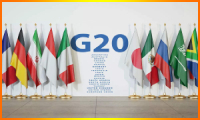
Union Commerce and Industry Minister Piyush Goyal seconds G-20 member countries in finding common solutions to address the gaps in Multilateral Trading System.
The 1st G20 Trade and Investment Working Group (TIWG) meeting concluded today in Mumbai in the presence of Commerce and Industry Minister, Shri Piyush Goyal. During this three-day working group meeting, over 100 delegates from G20 member countries, invitee countries, regional groupings and international organizations were present in Mumbai, the financial capital of India. The deliberations specifically revolved around accelerating global trade and investment, while simultaneously progressing towards achieving Sustainable Development Goals.
The priorities related to global trade and investment, which the Indian Presidency is pursuing, were discussed on March 29th and 30th across four technical closed-door sessions. On March 29th, the deliberations focused on making trade work for growth and prosperity, and way forward for building resilient Global Value Chains (GVCs). On March 30th, the TIWG priorities on integrating Micro, Small and Medium Enterprises (MSMEs) in global trade, and building efficient logistics for trade were discussed in the two working sessions. Theme-based experience zones on spices, millet, tea and coffee were set up at the venue, and an exhibition on textiles was also on display for the delegates to get a glimpse of India’s textile heritage. A cultural program was organized for the G20 delegates at Taj Palace, also the venue for Gala dinner hosted by India.
In his press interaction Shri Goyal highlighted the theme of India's G20 Presidency that aims to promote universal values and adoption of human-centric approach. While reminiscing Prime Minister Shri Narendra Modi’s vision for India’s G20 agenda of inclusive, ambitious, decisive and action-oriented economic growth, he further stated that India chose to take up G20 Presidency during a tough geopolitical and globally critical economic environment ,since 2023 marks the 75th year of India’s independence, this is an opportune time for the country to share its ancient wisdom with the world to find a middle path. This ancient wisdom can be integrated with advanced technology for building 'One Earth, One Family and One Future'. Shri Goyal added that throughout India’s illustrious past, the country has been the torchbearer of democracy, diversity and inclusion.
The Union Minister restated that TIWG has an important role in formulating concrete outcomes for inclusive growth that drive trade and investment across Global South, and not among G20 member countries only. He strongly advocated for equitable distribution of the benefits of global trade by and among all countries, including developing and least developed countries (LDCs) in order to progress towards a new world that is driven by collaboration, sustainable growth and solutions-oriented mindset.
Shri Goyal urged TIWG delegates to take inspiration from lotus, this year’s G20 symbol and said that lotus is revered world over for its ability to bloom unblemished in the murkiest of waters, and together we can find solutions for inclusive economic growth during these volatile economic times.
On the second and third day of the TIWG meeting, while discussing priority issues, G20 member countries realized the need for collective action to integrate transparency in the administration of non-tariff measures, and cooperation among standardization bodies world over. The G20 member countries also noted that there is a need for mapping GVCs for building predictability and for enhancing their resilience.
In the sessions, several member countries affirmed the need for diversification of existing value chains and accelerating the participation of firms from developing countries and LDCs for a holistic economic growth. The need for making information and finances easily accessible for MSMEs was discussed in detail during the working sessions. In addition, several countries expressed that the digital entry barriers for MSMEs should be seriously reviewed for their efficient integration with the digital trade platforms.
The Secretary, Department of Commerce, Shri Sunil Barthwal remarked that the discussions in all the four sessions were enriching, and were mostly directed towards action and outcomes. Trade and investment being vital tools for enhancing local supply of goods and services, Shri Barthwal added that the aim under India’s G20 Presidency is to strengthen the shared understanding of challenges that are hindering the acceleration of global trade and investment, and collectively explore existing opportunities that can be harnessed to find common solutions — guided by this year’s motto — Vasudhaiva Kutumbakam.
Source: pib.gov.in
Revision of order. FSSAI revises order on curd labelling, allows use of regional names.
The Food Safety and Standards Authority of India (FSSAI), on Thursday, revised its order allowing the use of regional common names on labels of curd packets amidst a row in Tamil Nadu over the Hindi term 'Dahi'.
In a statement on Thursday, FSSAI said that food business operators food can use the term 'curd' along with the prevalent regional common name in brackets on the label.
This statement comes after Tamil Nadu government raised objections to the food safety authority’s direction to use of term ' dahi' on curd packets. Aavin said it will not use the Hindi term 'dahi' for labelling. Karnataka Milk Federation and Kerala Milk Federation reportedly had also raised similar objections.
Tamil Nadu Chief Minister M K Stalin, in a tweet on Wednesday, said, 'The unabashed insistence of Hindi Imposition has come to the extent of directing us to label even a curd packet in Hindi, relegating Tamil & Kannada in our own states. Such brazen disregard to our mother tongues will make sure those responsible are banished from the South forever (sic).'
The food safety authority, on Thursday, said, 'As many representations were received recently on the omission of the term 'curd, from the Standards of Fermented Milk Products, it has been decided that FBOs may use the term 'Curd' along with any other designation (prevalent regional common name) in brackets on the label.'
'Accordingly, Curd can also be labelled as per the following examples- 'Curd (Dahi)' ,Curd (Mosaru)', Curd (Zaamut daud)', 'Curd (Thayir)' or 'Curd (Perugu)',' it added.
The food safety regulator had notified provisions for the omission of the term 'curd' from the Standards of Fermented Milk products in January and only the term 'dahi' was mentioned.
'General Standard for Milk and Milk Products’ under the ‘Food Safety and Standards (Food Products Standards and Food Additives) Regulations, 2011 clearly lay down guidelines for use of dairy term(s)in the nomenclature of dairy products (milk, milk product or a composite milk product) and related prohibitions for such use in non-dairy products. Accordingly, when term 'curd' was written along with 'Dahi' in the said regulation, it was restricting its used for non dairy products,' the FSSAI added in its statement.
Source: thehindubusinessline.com

Free trade pact talks with UK continuing; trade stands on its own legs: Piyush Goyal
Amid a diplomatic row following protests by secessionist groups near the Indian mission in London, Union commerce minister Piyush Goyal on Thursday said talks on a Free Trade Agreement with the UK are continuing. Talks are 'going on very well' with the UK, Goyal said, adding, 'trade stands on its own legs'.
The Union minister, however, made it clear that India will take into consideration a respect for her sovereignty and territorial integrity, and will not tolerate any interference in her Indian affairs.
India's Ministry of External Affairs summoned the senior-most British diplomat in New Delhi on a Sunday evening recently, over reports of some Khalistani elements pulling down the Indian flag at the Indian high commission in London during a protest. India has also responded by proposing or undertaking several actions, like reducing security at the British mission and constructing a public toilet there.
When asked about the impact of the ongoing events on the trade agreement, Goyal seemed to suggest that negotiations continue.
'I can assure you that talks are going on very well with the UK, Canada, with the EU countries, we are also in dialogue with Israel,' he told reporters here.
Goyal said there was no deadline to have an FTA with the UK, but a former PM of the country has announced an aspiration to conclude before Diwali of 2022.
'...we are back at the negotiating table, both sides are discussing at the official level,' he said.
Goyal said there is a high interest for FTAs with India shown by many countries, and discussions are on at a 'frenzied pace' with many countries, and quipped that he is not left with bandwidth to discuss such agreements.
Meanwhile, Goyal also said that talks are also on with the European Free Trade Association (EFTA), following a request from four ministers of the grouping to meet the Indian commerce and industries minister.
'They have assured me that they will be coming with very attractive proposals in terms of opening up services and a deeper understanding of India's own concerns around our patent laws and the need to protect our domestic industry,' Goyal said.
On a query on rupee trade with partners, and if the same is being pushed with G-20 countries during the ongoing meetings of the grouping's trade and investment group in the financial capital, Goyal said this subject is more of a bilateral subject which is anchored by the RBI and the Ministry of Finance.
He added that many countries have evinced interest in having such an arrangement with India.
Goyal attended a dinner meeting with the 100 delegates attending the G-20 meeting in the financial capital on Wednesday evening, and is also addressing the delegates at the closing event later on Thursday.
Meanwhile, when asked about Parliament passing important bills sans any discussions and the treasury benches taking to protests at a time when the government is responsible for running the Houses, Goyal shot back saying the Opposition is using the platform to cast baseless and wild allegations against those in the government under the influence of forces inimical to India's interests.
'Sometimes in life, propriety, self respect and the nation's interest overrides everything else. And this is one such occasion when we cannot allow the nation's independence, our sovereignty, our respect to be tarnished by any individual especially on foreign soil,' he said.
The commerce minister also said that the Ram temple in Ayodhya will be ready by the end of the year and work is on at a scorching pace.
Source: economictimes.indiatimes.com