
Indonesia's food agency to import 2 mln tonnes of rice this year.
Indonesia's food procurement agency (Bulog) will import 2 million tonnes of rice until December this year, a Bulog official said.
Awaluddin Iqbal, Bulog's corporate secretary said the first phase will see the import of 500,000 tonnes.
The policy is aimed at stabilising rice supplies.
Source: nasdaq.com
FSSAI directs ports to facilitate clearance of pulses, oil consignments.
The FSSAI has issued an order regarding clearance of imported consignments of food grains including pulses and edible oil wherein the port authorities were asked to facilitate the clearance of such consignments.
'All authorised officers are directed to facilitate and carry out food import clearance process of all such imported consignments without delay,' reads the order issued by the FSSAI.
The order added that importers shall declare and submit the undertaking /declaration in the form as prescribed to concerned Authorised Officer- AOs wherein the FBOs need to mention their details including bills, addresses of the importers and store/warehouse and so on.
AOs were also directed to carry out visual inspection of imported consignments and upon satisfactory visual inspection, they were asked to draw samples and issue Provisional No Objection Certificate (P-NOC) without waiting for the analysis report from the laboratory.
'On receipt of the analysis report from the laboratory, the Authorised Officer shall issue the final No Objection Certificate, if product conforms to the FSSAI standards,' reads the order.
The declaration prescribed by the FSSAI also lays down that no part of the consignment shall be released into the market prior to issuance of no objection certificate.
According to the FSSAI, in view of references received from Department of Consumer Affairs and Ministry of Agriculture regarding Indian pulses production, consumption scenario and import requirements, it was decided that the imported consignment of food grains including pulses and crude oil (edible grade) are to be facilitated to ensure timely processing and clearance.
Source: fnbnews.com

BIMSTEC nears completion of Free Trade Agreement, says secretary general.
Free Trade Agreement (FTA) among the BIMSTEC countries is at the final stage of formulation with trade being the core agenda when BIMSTEC was established, Bay of Bengal Initiative for Multi-sectoral Technical and Economic Cooperation (BIMSTEC) secretary general Tenzin Lekphell said in Kolkata. BIMSTEC is also creating an energy centre in Bangalore with focus on the potential of clean energy as well.
'Trade has been the core agenda since the time of establishment of BIMSTEC. Somehow it did not really give us the fruit which was expected during this course of time. Many experts have come together in the recent past, a lot of meetings took place, negotiations have been done and multilateral discussions took place among the seven member countries. Seven countries coming to consensus and doing negotiations takes time and it is a complex process. Everyone wants the FTA to happen in the region,' Tenzin told ET.
'FTA is at the final stages of completion. We are left with a few more details which need to be negotiated. During the 19th minstrel meeting recently, I have requested the trade ministers, trade & commerce secretaries to come together and then advise the working groups. A lot of work on different constituents of FTA has been done and it is actually entering in the final stages,' Tenzin told ET in an exclusive interaction.
Talking about the BIMSTEC Energy Centre coming up in Bangalore, Lekhphell said, 'This region has potential for clean energy, especially Bhutan and Nepal with huge potential of hydro-power. We have discussed the energy issue with renewed focus. A BIMSTEC Energy Centre is coming up in Bangalore and details about trading energy will come up with India as the lead country.'
Meanwhile, the BIMSTEC has also drafted the Maritime Transport Agreement which is likely to get approval in coming November from the member countries. 'We know the region has a huge potential in terms of waterways as there are so many rivers in the Bay of Bengal region,'Tenzin said, adding that the Maritime Agreement cooperation has been completed. 'In November this year, during the sixth BIMSTEC summit in Bankok, the Maritime Transport Agreement is likely to get the final approval from the seven member countries, after which it can be implemented,' Tenzin said.
'Covid made us realize that pandemic is an important agenda and before the pandemic we were focussing more on trade connectivity, energy but there was not much discussion on health. Now the region has realized that health is an important agenda and in future if a situation arises, the region can come together on the issue,' Lekhphell said.
The BIMSTEC conference in Kolkata on Saturday was held following the 19th BIMSTEC Ministerial Meeting, which was held earlier this month in New Delhi, a year after the Fifth BIMSTEC Summit held in Colombo. On Saturday, Minister of State (MOS)-Ministry of External Affairs Rajkumar Ranajan Singh inaugurated the two-day BIMSTEC conference marking its 25th Anniversary.
Source: economictimes.indiatimes.com

1st G20 Trade and Investment Working Group (TIWG) Meeting in Mumbai,March 28th 30th, 2023.
The 1st TIWG meeting under India’s G20 Presidency is scheduled in Mumbai, from March 28th − 30th, 2023. During this three-day Meeting, over 100 delegates from G20 member countries, invitee countries, regional groupings and international organizations will engage in deliberations to accelerate global trade and investments. Over 50 delegates have already arrived in Mumbai to attend the meeting.
On the first day, on March 28th, an International Conference on on ‘Trade Finance’ will be held. The role of banks, financial institutions, development finance institutions and export credit agencies in closing the trade finance gap, and how digitalisation and fintech solutions can improve access to trade finance will be discussed through two panel discussions. Eminent speakers from India and abroad have been invited to deliberate and provide concrete solutions for mitigating the growing trade finance gap. It will be followed by a guided tour of Bharat Diamond Bourse for the G20 delegates.
Various experience zones on spices, millet, tea and coffee will be set up, and an exhibition on textiles will be on display during the TIWG meeting at the conference venue.
On March 29th, the TIWG Meeting will be inaugurated by Hon’ble Commerce & Industry Minister of India, Shri Piyush Goyal, along with Hon’ble Minister of State for Finance, Dr. Bhagwat Kishanrao Karad. The priorities related to global trade and investment, which the Indian Presidency is pursuing, will be discussed on March 29th and 30th across four technical closed-door sessions.
On March 29th, the deliberations will focus on making trade work for growth and prosperity, and building resilient Global Value Chains (GVCs). The emphasis will be on achieving shared outcomes for making growth inclusive and resilient, increasing the participation of developing countries and the Global South in GVCs, and building resilient GVCs to withstand future shocks.
On March 30th, the TIWG priorities on integrating MSMEs in Global Trade, and building efficient logistics for trade will be discussed in the two working sessions. The Indian Presidency aims to carry forward the work done by past G20 Presidencies to better integrate MSMEs into global trade, considering their primacy in sustaining livelihoods in both the developed and developing countries. The G20 delegates will also discuss the ways of developing robust logistics infrastructure that could reduce transaction costs both across borders and in the hinterlands.
The aim under India’s G20 Presidency is to build a shared understanding of the challenges being faced in accelerating global trade and investment, and how existing opportunities can be harnessed to formulate human-centric concrete outcomes and deliverables.
Source: pib.gov.in
India s exports to peak at US$750 billion by 2022-23: Ms. Patel.
Union Minister of State for Commerce & Industry, Ms. Anupriya Patel inaugurated the 23rd edition of INDIASOFT at Pragati Maidan, New Delhi today. She said that by 2047 India would become a developed country with a GDP of USD 32 trillion, which would be a defining moment for India and the global community alike. This scale of growth would be greatly influenced by the strides India is making in the ICT sector, she added.
'From now to 2047, we fondly refer to Amrit Kal, a stretch of time India is going to make big in every discipline... that is our shared vision, collective goal, and a transformative turning point in our glorious history', the Minister said, adding that India would be willing to share the technologies and devices developed, with countries desirous of acquiring them.
The Minister emphasized that all countries would have a stake in India’s growth story since the technologies and solutions developed would have universal relevance. In this regard, she appreciated that over 70 new products are going to be launched during the next three days at the INDIASOFT, which have been developed and perfected through the efforts of India’s highly talented pool of R&D professionals. 'This reflects the type of breakthroughs that India has achieved in the digital space and amplifies its resolution to become a developed country by 2047,' she added.
The Minister stressed that India’s exports, both merchandise and services, would peak at US$750 billion by 2022-23 as against over US$650 billion in 2021-22. Services exports’ contribution, particularly that of IT and ITeS, would be substantial in reaching India’s export targets.
The Minister also said that by 2027 India would become a US$ 5 trillion economy, becoming the third largest in the world. 'On the 100th year of our independence, we will become a developed country', she pointed out.
Over 650 delegates from 80 countries are participating in the three-day event which kicked off today. More than 1500 Indian exhibitors are showcasing their products and solutions at the event, together with other collocated events. Ms. Grisel Eulalia Reyes León, Deputy Minister of Communications, Cuba and Mr. Rivas Stepke Luciano Alejandro, Regional Governor, Araucania, Chile also attended the inaugural along with their delegations.
Earlier welcoming the delegates Chairman ESC Sandeep Narula said that by 2030 India’s ICT sector would peak at US$ 1 trillion triggered by the focus the country is giving to R&D, innovation and disruption. He mentioned that India has been making solid forays into exports. 'When we started exporting IT & ITeS in the late ’80s, it was only US$ 50 million, which has now peaked to US$ 200 billion. He also said that India has digitized public services by introducing various schemes which enable citizens to access services from the government delivery systems with ease. 'Many countries can emulate India’s successful schemes and we are willing to share our expertise to scale up their digital programs,' he stressed. Mr. Narula said that through the INDIASOFT and the other international exhibitions in which ESC participates regularly, a lot of business opportunities for the Indian ICT sector have been generated. Those efforts, he said, would continue.
Source: pib.gov.in

1138 agri startups supported by Ministry of Agriculture, Govt tells Parliament.
The Government, in a statement in Parliament, has said that a total of 1,138 agri startups are being supported by the Ministry of Agriculture, with financial assistance of Rs 70.30 crore wherein financial support of Rs 5.00 lakh is provided at the idea/pre seed stage and Rs 25 lakh at the seed stage.
'The technical and financial assistance are provided to startups to launch their products, services, business platforms, etc. into the market and facilitate them to scale up their products and operations to attain business viability,' reads the statement.
The statement added that agri-start-ups are at various stages of implementation from idea to scaling and growth stage. These agri-startups are working in different areas of agriculture & allied sectors for improving the farming practices such as precision agriculture, farm mechanisation, agri logistics & supply chain, waste to wealth, organic farming, animal husbandry and dairy & fisheries.
These startups are also being helped for their product & technology validation, market linkages, supply chain management, streamlining the distribution and scaling up of the product and operations, etc. with the help of five Knowledge Partners (KPs) and 24 Agribusiness Incubators (R-ABIs) across the country.
Source: fnbnews.com
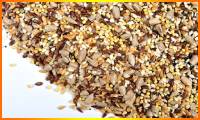
Exports of multigrain atta allowed under advance authorisation.
The government has allowed export of multi-grain or fortified wheat flour ( atta) shipments under advance authorisation.
Subject to conditions
The Director General of Foreign Trade (DGFT) in a latest notice amending the standard input output norms, said that exports of multigrain atta or fortified whole wheat atta are allowed subject to some conditions. It said the exported item shall contain at least 80 per cent of whole wheat flour and other ingredients being added such as soya flour, oat meal, fenugreek powder, vitamins will be domestically sourced.
The export of wheat and wheat products such as atta are currently prohibited to keep domestic prices under check, while the flour millers can import wheat for re-exports under the advance authorisation. The notice also said that the import entitlement under the advance authorisation for exports of multi grain atta or fortified whole wheat atta will be calculated in proportion to the percentage of whole wheat flour in the export item, that is for every 1 kg of whole wheat flour, import of 1.07 kg of wheat will be allowed.
The export description in the shipping bill will clearly indicate the percentage content of whole wheat flour and other ingredients being added, the notification said.
Trade sources said the DGFT’s latest move may benefit large exporters of wheat-based products.
Pramod Kumar S, President, Roller Flour Millers Federation of India, said the government should allow the export of chakki atta in consumer packs of 5 kg for the Indian diaspora globally as they are unable to get good atta in the world market. The export market for chakki atta is about 3-4 lakh tonnes.
The opening up of fortified atta exports could benefit the soya flour makers, said Rahul Chauhan of IGrain India.
Source: thehindubusinessline.com
UK-India trade has potential to double by 2030, says British Deputy High Commissioner.
Notwithstanding the impact of Russia's war with Ukraine, the UK and India are heading towards an era of positive engagement in trade and business relations, with steps underway to promote mutual investments in both the nations, British Deputy High Commissioner in charge of Kerala and Karnataka Chandru Iyer said. Iyer who is also UK's Deputy Trade Commissioner for South Asia spoke in detail to PTI on Friday about the trade and investments between the UK and India and said there was potential to double the business by 2030.
He was in the state to take part in various official engagements, including a meeting with Kerala Chief Minister Pinarayi Vijayan, and also in connection with the port of call made by the British Royal Navy's frigate ship, HMS Lancaster, at Kochi.
Calling war a global phenomenon that affects all countries in more ways than one, the British Deputy High Commissioner hailed entrepreneurs for being enterprising and resilient in the face of adversity.
'If you look at the flow of business or the trade numbers between the UK and India for the period ending Q4 of last year, the number stood at 34 billion British pounds. For the same period ending the year before last, it was around 19 billion pounds. So it's been a big jump in trade and business,' Iyer said.
After meeting the Chief Minister two days ago and expressing interest in collaboration with the Kerala government in the education sector, Iyer met tech entrepreneurs from Thiruvananthapuram and its neighbouring regions. He also held business discussions in Kochi.
'The interest in UK is so high that people want to come there and set up their business and use that as their global headquarters... This means that countries are doing more business together. The aspirations have the potential to double the trade and investment numbers by 2030,' Iyer said.
Detailing plans to attract Indian investment in the UK, Iyer said his team was working across India to identify companies with potential and was holding discussions, understanding their aspirations and connecting them with the right people in the UK.
'We as a team are catalysts, we are enablers. All our services are free, comprehensive, confidential and bespoke,' he said.
Iyer, who has roots in Tamil Nadu's Tirunelveli, spent most of his life in Nagpur working in the private sector before shifting to the UK and landing the diplomatic job.
'I spent most of my life in Nagpur, which is a tier-two city. I am a believer in the potential of tier 2 and tier 3 cities. So one of my objectives is to do a lot of outreach visits to tier two and tier three cities as well. We have a lot of inquiries from Thrissur, Calicut and Kottayam. So the potential is there,' he said.
Talking about Indian students who opted for the UK for higher studies and were finding it difficult to land a part-time job, Iyer said employment was at an all time low in the UK but opportunities were coming up.
'We live in very uncertain times. Who would have expected the war or who would have expected the inflation or a Silicon Valley Bank going down? Eventualities do happen. When students go there, they need to be a bit more circumspect and also look out for how things pan out for them,' he said.
He said there was a huge demand for STEM professionals in the UK, and Indian students had a lot of opportunities in technical businesses and the banking sector as well.
When asked about the collaboration with the state government in the education sector, the British diplomat said he was keen to work with Kerala on student exchange and co-branded courses.
'British universities can come here and tie up with the digital university or Kerala university or CUSAT,' he said, adding that they were looking at engaging in collaborative activities in certain areas.
'We had a very good meeting with the officials about certain key areas like biomarine, AI and architecture. We will identify concerned British universities to connect them with the state government,' Iyer said.
He said his team was committed to the State and was planning to do a major event in Kerala before the year-end as part of the birthday celebrations of King Charles III.
Source: economictimes.indiatimes.com
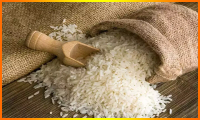
Relaxation on ban. India allows exports of 3.5 lakh tonnes broken rice to Gambia, Senegal.
The Government has approved the export of 3.5 lakh tonnes (lt) of broken rice to Gambia and Senegal as a special consideration as shipments of this variety were banned on September 8, 2022.
According to a communication sent by the Finance Ministry (seen by businessline) to Chief Commissioners of Customs in Ahmedabad, Chennai, Vizag, Nagpur, and Mumbai, the Commerce Ministry has allowed export of 1 lakh tonnes of broken rice to Gambia and 2.5 lakh tonnes to Senegal.
In addition, the Ministry has allowed shipments of 9,990 tonnes of broken rice to Djibouti, Ethiopia. The shipment will be done by Chennai-based Ruby Overseas.
In the case of Gambia, of the total quantity approved for exports, the Centre has cleared requests to export broken rice from Royal Mirage Consultant (5,000 tonnes), Sarala Food Pvt Ltd (12,500 tonnes), and Laxmi Group of Industries Pvt Ltd (2,000 tonnes).
Trade irked
For Senegal, the Ministry has cleared 1,12,500 tonnes of the total 2.5 lakh tonnes with Sarala Foods, Sri Chitra Exports, Manasa Quality Enterprises Ltd, Pattabhi Agro Foods Pvt Ltd, and CLRK Industries Pvt Ltd getting to ship out 22,500 tonnes each.
A section of the trade is irked over the permission for exports of broken rice, wondering why the Centre was permitting the shipments to these countries when it is not allowed to other destinations.
'What is the obligation the Government has towards the countries? Why relax a blanket ban imposed on food security grounds?' a Delhi-based trader asked.
However, a trade analyst said exports to Gambia, Senegal, and Djibouti have been approved by the Commerce Ministry following a request from the Ministry of External Affairs.
Permits for strategic reasons
'The exports are being allowed for strategic reasons and since the External Affairs Ministry is involved,' the analyst, who did not wish to be identified, said.
Pointing out to the Centre’s notifications while banning wheat exports and curbing rice shipments, the analyst said India is clear that it will meet the food needs of 'vulnerable countries'.
'The External Affairs Ministry would have taken various reasons into consideration before approaching the Commerce Ministry,' he said.
The Centre banned exports of broken rice and imposed 20 per cent duty on shipments of white and brown rice after the kharif paddy production was affected by deficient monsoon in key rice-growing regions in the eastern parts.
In the kharif season, rice production was estimated lower at 108.07 million tonnes (mt) in 2022 compared with 111 mt in 2021. But rabi output has made up for the loss with the Ministry of Agriculture estimating it at 22.76 mt against 18.47 mt a year ago.
For the current crop year to June, the Ministry of Agriculture has estimated rice production at a record 130.84 million tonnes against 129.47 million tonnes in the last crop year.
Source: thehindubusinessline.com

Alternative. Egypt looking to buy Indian rice through rupee route.
Egypt is looking to import at least 1.5 lakh tonnes (lt) of rice from India through the rupee trade route in view of the difficulties it is facing to make payments in dollars, trade sources said.
'Egypt recently bought two ship loads of rice by paying in dollars. However, it faced tremendous difficulties in paying the money,' a source, who did not wish to be quoted, said.
Cairo now requires another six ship loads of rice that could total over 1.5 lt and has sought to make the payment in Indian rupee, the source said.
The development comes at a time when at least 19 countries, including the United Arab Emirates, Russia, Singapore, Germany, New Zealand and the UK, have agreed to trade in the rupee and give up the dollar as the cross-border transaction mode.
Climate change may reduce wheat, rice yield sharply by 2050
However, Centre has formulated schemes to make agriculture more resilient, says NS Tomar
When contacted, BV Krishna Rao, President, The Rice Exporters Association (TREA), said exporters would be willing to take orders in the rupee route provided the Centre offers some concessions.
Forward premium
This is because exporters get a forward premium of 0.5 per cent to 1 per cent while trading in the dollar. 'There are quite a few ways in which the government can compensate the traders for this,' he said.
Rao, however, said the Centre should facilitate export transactions in the rupee in the long-term interest.
Traditional relations
'The Centre should allow rice trade in Indian rupee to encourage Egypt which has had traditional commercial relations with India,' said a trade analyst from New Delhi.
Not just Egypt but the entire North African countries are facing currency problems, particularly with regard to the dollar. Trade sources said Egypt had been taking several measures to tackle dollar shortage.
Cairo has begun trade dealings with Russia in local currencies and plans to rope in India and China in this. It expects to save at least $1.5 billion through such trading with India, China and Russia.
On the other hand, Egypt cannot get a more competitive rice exporter than India. According to the Thai Rice Exporters Association, Indian 5 per cent broken white rice is quoted at $432-36 a tonne compared against $448-52 and $477 quoted by Vietnam and Thailand, respectively. Pakistan is offering the rice at $453-57.
SEA estimates mustard production at record high 115.25 lakh tonnes
Remunerative prices in 2022 encouraged record plantings, while weather has been conducive
Barter with rock phosphate
In the case of 25 per cent broken white rice, India offers it at $417-21, while Vietnam and Pakistan quote at $428-32. Thailand sells it at $468.
According to New Delhi-based trader Rajesh Paharia Jain, India can look at barter trade with Egypt by exporting rice and importing rock phosphate. 'We are a net importer of rock phosphate and Egypt has ample quantities of the commodity. It can help meet our fertilizer requirements,' he said.
The trade analyst said exporters must think of cutting costs and look at process innovation in the short-term in the event of losing the forward premium they get while trading in dollars.
Data from the Agricultural and Processed Food Products Export Development Authority show that Egypt has imported 76,858 tonnes of rice between April and January this fiscal. It is the highest since it imported 1.3 lt of rice in the 2018-19 fiscal.
Export curbs
The demand from Egypt, which is not among the top buyers from India, comes at a time when India’s rice exports are picking up on demand from South-East Asia and Gulf countries.
During the April-January period of the current fiscal, non-basmati exports have increased to 14.56 mt valued at $5.16 billion compared with 14.01 mt valued at $5 billion in the year-ago period.
Rice exports have fared well despite the government imposing a 20 per cent duty on shipments of white and brown rice shipments besides banning fully broken rice consignments.
India curbed rice exports since September 8, 2022, as its rice production in the kharif season was feared to have been hit by deficient rains in key growing regions in the country’s eastern parts.
For the current crop year to June, the Ministry of Agriculture has estimated rice production at a record 130.84 million tonnes against 129.47 million tonnes in the last crop year.
Source: thehindubusinessline.com