31 Mar, 2023
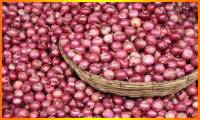
Government to buy 3 lakh tonnes of onion in Rabi season: Union Minister Piyush Goyal.
Union Minister Piyush Goyal on Thursday announced that the government agencies will buy 3 lakh tonnes of onion once the winter harvest starts coming in. Goyal, who handles the Consumer Affairs, Food and Public distribution portfolio, said that last year, the overall buying of the rabi harvest stood at 2.5 lakh tonnes. 'I have already ordered an increased onion purchase from Rabi harvest from 2.5 lakh tonnes last year to 3 lakh tonnes this year to ensure that farmers get a fair price,' Goyal told reporters here. He added that the National Cooperative Consumers Federation and National Agricultural Cooperative Marketing Federation of India (Nafed) have also been instructed to pick up 'late kharif' harvest stocks, but are not finding the produce in the markets now. Growers in Maharashtra have been protesting after a steep fall in onion prices over the last month. Marketplaces, including the largest one in Nashik district's Lasalgaon, have been shut down and onions have also been dumped by farmers. Farmers claim they are getting very low rates for the harvest, which is a fraction of the input costs and have been demanding the state agencies to step in, given the wide-ranging stress. They blame the monsoon season for lasting longer, higher prices commanded by 'late kharif' in the last two seasons, which led many to plant the particular variety with lower shelf life and impact on exports as major producers like Bangladesh have started growing their own onion. Earlier this month, the Maharashtra government agreed to give a compensation of Rs 300 per quintal to onion farmers amid the crash of prices. Rabi onion crops harvested during April-June accounts for 65 per cent of India's onion production and meet the consumers' demand till the kharif crop is harvested in October-November. The overall onion production is estimated to have risen to 31.70 million tonnes in 2021-22 from 26.64 million tonnes in the previous year, and the Centre procured 2.50 lakh tonnes of it.
Source:
economictimes.indiatimes.com
|
31 Mar, 2023

Agri exports show 6.04% rise during Apr 22 Jan 23 over the corresponding period of the previous FY.
The Government has been monitoring export performance including that of agricultural and processed food products in the current financial year i.e. 2022-23 vis a vis 2021-22. No targets have been fixed yet for export for the year 2023-24. During the current financial year (Apr. 2022 – January 2023), the agricultural exports have amounted to USD 43.37 billion, registering an increase of 6.04% over the exports of USD 40.90 billion during the corresponding period of the previous financial year i.e. April 2021 to January 2022. During the financial year 2021-22, India’s agricultural export touched the highest ever level of USD 50.21 billion. Rise in agricultural exports improves realisations for farmers and has a positive impact on their income. In order to ensure that the farmers benefit from exports, the Government has launched a Farmer Connect Portal for providing a platform for Farmer Producer Organisations/Companies (FPOs/FPCs) and cooperatives to directly interact with exporters. The Government has taken several steps at State and District level to promote agriculture exports. State specific Action Plans have been prepared and State Level Monitoring Committees (SLMCs), Nodal Agencies for agricultural exports and Cluster Level Committees have been formed in a number of States. The Government is utilising the District as Export Hub (DEH) initiative to achieve the objectives of Agriculture Export Policy (AEP). Under the DEH initiative, products including agricultural and processed food products with export potential have been identified in all 733 districts across the country. State Export Strategy has been prepared in 28 States/UTs. The Agricultural & Processed Food Products Export Development Authority (APEDA) is constantly engaged in export promotion activities for agricultural & processed food products and has played an important role. APEDA implements the ‘Agriculture & Processed Food Products Export Promotion Scheme’. Various developmental activities are undertaken and assistance to exporters is provided under different components of the scheme viz. Infrastructure Development, Market Development and Quality Development. APEDA has also been collaborating with the Indian Missions abroad for participating in various international trade fairs and exhibitions, organising virtual trade fairs, buyer-seller meets and export promotion of GI products. APEDA has also facilitated trial shipments for new products with export potential and for new destinations. To address the issue of stakeholders’ participation in the decision-making process for export promotion activities, the Department of Commerce has established Export Promotion Forums (EPFs) for individual products under the aegis of the APEDA. The EPFs have representation from trade/industry, line ministries/departments, regulatory agencies, research institutes, state governments etc. In all 9 EPFs have been formed for rice, banana, grapes, mango, onion, dairy products, nutri-cereals, pomegranate and floriculture respectively. APEDA has also played an important role in opening up of new markets for agricultural products in the recent past such as Canada, China, South Korea, Taiwan, Portugal, Indonesia, Iran etc. APEDA has been organising capacity building/training programs in the Agri-export clusters and States in association with the State Departments, State Agriculture Universities, and Krishi Vikas Kendras for farmers, farmer-producer organizations (FPOs) and exporters in order to provide export-market linkage to the farmer groups and to facilitate entrepreneurs in becoming prospective exporters. APEDA has also made efforts to establish synergy with the Ministry of Agriculture & Farmers Welfare, Ministry of Food Processing Industries, Department of Animal Husbandry & Dairying and Directorate General of Foreign Trade (DGFT) to ensure optimum utilization of resources for development of agriculture exports. This information has been given by the Union Minister of State for Commerce and Industry, Smt. Anupriya Patel in written reply to a question in Lok Sabha today.
Source:
pib.gov.in
|
31 Mar, 2023
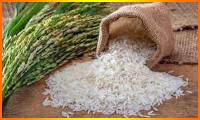
Controversy. UK s new code of practice for basmati rice triggers row.
An amendment made by the UK to the code of practice (CoP) for basmati rice, which assures its quality for consumers there, has triggered a controversy. The All India Rice Exporters Association (AIREA) says the change could benefit India, but experts have questioned it charging the UK with diluting the area of cultivation and questioning the credibility of the Seed Act, 1966. Why the CoP The CoP was introduced in 2005 by the UK Rice Association (UKRA) along with British Rice Millers Association and British Retail Consortium to 'safeguard the reputation of basmati rice marketed in the UK'. The code was evolved as imported basmati was alleged to be 50 per cent impure several decades ago. The UKRA came up with the COP, which was followed across the European Union specifying that basmati 'could be no more than 7 per cent impure'. It also listed 15 permitted varieties — nine of them traditional and six that were modern cultivars. The CoP was implemented through DNA fingerprinting developed by Bangor University, Wales. 'The system worked well until 2017, when the code was updated to add 25 new modern cultivars. This followed an explosion in new breeding in the 2000s and 2010s,' said Katherine Steele, senior lecturer in sustainable crop protection at Bangor University, in an internal newsletter. Alternative DNA markers Steele said the university had developed alternative DNA markers for fingerprinting that showed six of the new varieties — five from India and one from Pakistan — were not properly bred for fragrance. As a result, these six have now been de-notified or taken off the list of basmati varieties. But experts such as S Chandrasekaran, author of 'Basmati Rice: The Natural History Geographical Indication', contend that the DNA marking is a new invention by the British and its efficiency is yet to be proved. 'What samples were drawn? How? What were the parameters? Who authenticated the findings?’ wondered Chandrasekaran. Striking feature A striking feature of the amended code is that the British Rice Millers Association is no more part of the code. 'The amended code says it will ‘strive to uphold the reputation’ from ‘concerned to safeguard the reputation. The change in the word from ‘concern’ to ‘strive’ indicates more action might follow,' he said. The code says the All-India Rice Exporters Association (AIREA) was consulted. 'The amended code has a list of 35 varieties of basmati. The six varieties deleted are no longer being used. The new code will strengthen our hold in the basmati market. We had been taking this up with them,' said AIREA executive director Vinod Kaul. Chandrasekaran said there are a few issues that pertain to India’s credibility in the new code. 'How can the UK arbitrarily delist seed varieties that figure in the Seed Act, 1966? This means the credibility of the Indian authority is being questioned,' he said. Basmati boundary Second, the code has diluted the boundary of basmati which was referred to as Indo-Gangetic plains. 'The code issued in 2017 mentions basmati-rice growing States in the region. It has now been amended as ‘on both sides of the Indian and Pakistani borders’,' he said. In particular it has dropped 'which currently includes Punjab (on both sides of the Indian and Pakistani border), Jammu, Haryana, Uttaranchal and western Uttar Pradesh in India', the expert said. Kaul said there was no change in the Indo-Gangetic plain. 'The area remains the same,' he said. Chandrasekaran said there were two other issues with the amended code. 'One, APEDA is India’s nodal agency for geographical indication (GI) tag. Why was it not consulted on this issue? Bias towards Pakistan? 'Two, the amended code is in contravention and a dilution to the notification the Agriculture Ministry issued on September 18, 2017, on basmati rice-growing areas and refers to the GI certificate issued on February 15, 2016,' he said. No comment was received from official sources who businessline approached for comment until this report was published. An analyst said the UK and European Union seem to have 'a bias in favour of Pakistan'. Pakistan has not notified any standard or anything related to basmati. 'Eurofin labs is conducting tests in Pakistan on the quality of basmati in the absence of Islamabad not specifying standards for the fragrant rice. Is the amended code serving the interests of Pakistan?' the analyst, who spoke on condition of anonymity, asked. Factual errors Chandrasekaran said the new code had factual errors. While specifying the removal of five Indian varieties, mentions Punjab basmati. 'India has notified five Punjab basmati varieties and there is no ‘Punjab basmati’ notified by India. The 2017 code twice mentions Punjab basmati 2. Maybe, it is a clerical error,' he said. The analyst objected to UK Department and Environment, Food and Rural Affairs funding the research team of Bangor University along with the Rice Association as it meant 'indirect support'. On other hand, Steele said she has been arguing for allowing not more than one per cent of impurity in basmati rice, the rule that applies for many products including non-genetically modified foods. 'There’s no real reason for the basmati exception, and it is also arguably easier to enforce a 1 per cent rule because of the way that DNA testing works,' she said.
Source:
thehindubusinessline.com
|
31 Mar, 2023
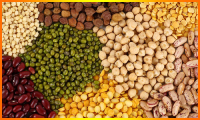
Centre steps up its efforts to monitor stock disclosures of pulses.
Secretary, Department of Consumer Affairs, Shri Rohit Kumar Singh directed major pulses importers to ensure that all stocks available with them are declared in a transparent manner regularly. They were advised not to hold back any stock which may disrupt availability of pulses in the domestic market. Meanwhile, the Committee under the Chairmanship of Additional Secretary Smt. Nidhi Khare took a meeting with all the States/UTs today wherein they were requested to explore all the sources to increase the number of registered entities in Stock Declaration Portal including FSSAI licensees, APMC registered traders, GST Registered traders of pulses etc. To cross validate the stocks declared, States were also requested to get information from warehouse service providers, both public and private. The need to monitor stocks of imported pulses at custom bonded warehouses was also emphasized, to ensure their timely release from Ports. The Government has stepped up its efforts to monitor stock disclosures of pulses by millers, stockists, traders, importers, etc. to ensure that prices of Tur are normalised and the availability and affordability of Tur is ensured in the domestic market. The Department is also planning to hold interaction with all stakeholders across value chain to ensure availability and affordability of pulses for consumers. The Pulses Associations and Importers have assured wholehearted cooperation in disclosing the stocks in a transparent manner.
Source:
pib.gov.in
|
31 Mar, 2023
Govt implementing special programme on seeds under NFSM-OS, Parliament told.
The Union Ministry of Agriculture has told Parliament that under the National Food Security Mission- Oilseeds (NFSM-OS), Government of India has been implementing some special programme on Rapeseed & Mustard for distribution of latest high yielding varieties seeds, distribution of Seed Mini kits of hybrid Mustard seeds, Rapid Soybean Seed Multiplication Plan (3S1Y) and a Special Project to increase area and production of Sunflower cultivation in the country through hybrid seed production and demonstration for three years from 2022-23 to 2024-25. 'In addition, Government has also approved an Annual Action Plan for area expansion of Sunflower in Paddy Fallows during 2022-23,' reads the statement put before the Parliament by the Agriculture Ministry. The Ministry added that the scheme was aimed at reducing the import burden by increasing the production and productivity of oilseeds including Groundnut, Soybean, Rapeseed & Mustard, Sunflower, Safflower, Sesame, Niger, Linseed, Castor along with area expansion of Oil Palm & Tree Borne Oilseeds including Olive, Mahua, Kokum, Wild Apricot, Neem, Jojoba, Karanja, Simaroba, Tung, Cheura and Jatropha in the country. The National Food Security Mission (NFSM)-Oilseeds is being implemented from the year 2017-18 in 28 States/UTs, and the scheme comprises of three sub-missions namely, NFSM-Oilseeds, NFSM-Oil Palm and NFSM-Tree Borne Oilseeds. However, the government did not present any data on the production of the oilseeds and its impact on reducing the burden of import of oilseeds into India. Meanwhile, when contacted, Shankar Thakkar, president of the All India Edible Oil Traders’ Confederation, has said that the Government’s scheme isn’t working on ground and a detailed plan focusing on accurate implementation was needed, if the government really wants to reduce the import burden of oilseeds. 'There are challenges for implementation of this plan. The agri land that is being used for the scheme has been traditionally used for a different crop. E.g., in Tamil Nadu or Telangana, farm lands where rice is produced traditionally, are being used for production of palm plants and it will impact rice production. Similarly, for other oilseeds, the government hasn’t given any data about how much production has happened over last few years,' he said. Thakkar suggested that the government should make a balance in planning the scheme so that there will be no impact on production of other crop.
Source:
fnbnews.com
|
29 Mar, 2023

G20 Meeting in Mumbai deliberates on Trade Finance Cooperation among G20 Member Countries.
An international conference on cooperation on trade finance among the G20 member countries was organised by the Ministry of Commerce & Industry on March 28, 2023 at Taj Lands’ End, Bandra (West), Mumbai. The event was hosted by the Department of Commerce and organised by ECGC Limited and India EXIM Bank on the side lines of the 1st G20 Trade and Investment Working Group (TIWG) Meeting in Mumbai. Delegates from the member countries, industry and academic experts from across the world were present at the conference to engage in constructive dialogue and exchange of ideas in the domain of trade finance. Commerce Secretary, Shri Sunil Barthwal, in his key note address, set the agenda for the meeting. He highlighted that it is the right time to discuss the issues facing trade finance and possible solutions. Two panel discussions were organised as part of the event comprising of international experts. The first panel discussed the role of banks, financial institutions, development finance institutions, and Export Credit Agencies to identify the gaps and address the challenges in the trade finance arena amidst the uncertain global trade landscape. The second panel discussion focused on accelerating digitalisation and fintech solutions for improving access to trade finance. The session also delved on the current and emerging fintech solutions for making more customized lending decisions and enhancing trade finance supply for MSMEs. The universal message from all the speakers in the conference highlighted the necessity of trade for ensuring prosperity for all and that inclusive trade finance is key to achieve this target. Digitalisation of international trade is possibly an effective solution towards achieving cost reduction in trade and trade finance. The challenges to be addressed in digitalising trade were identified as international cooperation in harmonising definitions, standards and data sharing across the borders digitally. While estimates suggest that traditional trade finance gap is currently around USD 2 trillion, bridging the gap needs more players, including multilateral development banks, Export Credit Agencies (ECAs), etc to increase their participation. Evolution of fintechs and account aggregators in the ecosystem enables transaction risk evaluation based on real time data. This will enable cost effective appraisal by trade finance providers. The panellists recommended that all nations should endeavour to adopt enabling legislation in the next few years to achieve paperless international trade.
Source:
pib.gov.in
|
29 Mar, 2023
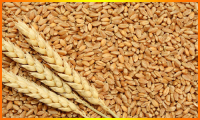
Exercise caution . Govt confident of achieving 34.15 mt wheat procurement target.
Food Corporation of India (FCI) on Tuesday announced that wheat procurement has commenced in all the States and it is confident of procuring 34.15 million tonnes (mt) as estimated for the 2023-24 season (April-March). Experts suggested that the government should exercise caution in its procurement strategies, considering that only 10,727 tonnes were procured on the first day out of the reported arrival of 0.56 million tonnes in Madhya Pradesh. Briefing media, FCI’s Chairman and Managing Director Ashok K Meena said the export ban on wheat would not be lifted as long as the government does not feel comfortable in domestic supplies. He also said that wheat production would not be affected due to recent rains and the country could see a record output of 1121.8 lt as estimated by the Agriculture Ministry. Wheat procurement is crucial for the government as due to a drop in production last year, the procurement hit a 15-year low of 18.79 mt in 2022-23. This resulted in an indefinite ban on export and prices of the cereal reaching an all-time high of Rs.32/kg. Meena said due to the government’s intervention in offering 5 mt under open market sale scheme (OMSS), wheat prices in mandis have declined to Rs.22-23/kg now from Rs.30 in last week of January. Of the 3.38 mt sold in open market through auction, as much as 3.21 mt have already been lifted, he said. Procurement target The government has set a target to purchase 13.2 mt in Punjab, 8 mt in Madhya Pradesh, 7.5 mt in Haryana, 3.5 mt in Uttar Pradesh and 1 mt in Bihar. When asked about the reason for the lower procurement estimate in Madhya Pradesh, which was the top contributor (12.94 mt) to the central pool stock in 2020-21, he stated that there was no drop in production and the estimate was reached after consultation with the State government. 'The situation is not the same as last year since there is no possibility of opening the export. Even after this, the private sector buys above the minimum support price (MSP), the government will find difficulties in achieving procurement target. But, even if it is able to buy 17 mt that will be enough to meet buffer and PDS requirement of 25.5 mt as already the stocks are 1 mt above buffer norms,' said a former executive director of FCI. If the government is to consider relaunching PMGKAY and also to keep stock for OMSS, additional wheat will be needed, he said adding some prudent policy would help achieve the targeted procurement. Meena said the opening stock of wheat as on April 1 is likely to be 8.4 mt (excluding current procurement that started earlier than normal April 1), against buffer norm of 7.5 mt. He also said the Centre will send team as and when required if demand for quality relaxation comes from States.
Source:
thehindubusinessline.com
|
29 Mar, 2023

Slack domestic demand. Export demand holds turmeric prices from plunging.
Turmeric prices are ruling lower by over Rs.1,000 a quintal compared with last year on slack domestic offtake but export demand is preventing further fall in the rates. Currently, the modal price (rates at which most trades take place) for the finger variety turmeric at Erode in Tamil Nadu is ruling at Rs.6,183 a quintal against Rs.7,790 in the year-ago period. In the case of the bulb variety, the modal price is 5,413 against Rs.6,594 a year ago. At the Nanded agricultural produce marketing committee (APMC) yard in Maharashtra, the modal price is Rs.6,000 compared with Rs.7,200 a year ago. On NCDEX, spot prices for unpolished turmeric were quoted at Rs.6,452.35 a quintal. In Nizamabad APMC yard, the modal rate is Rs.5,751 against Rs.6,520. Shipments up 10% 'Demand in the domestic market is slack, resulting in prices trading in a Rs.100-200 range either way. But demand for export is good and it has actually prevented the spice’s price from dipping further,' said Poonam Chand Gupta, a trader from Nizamabad, Telangana. 'Export demand is good amidst lukewarm domestic demand. You can say prices are at the bottom now. Export demand has ensured prices don’t decline further,' said Amrutlal Kataria, another trader from Nizamabad. According to Spices Board India data, turmeric exports were up 10 per cent during April-November period of the current fiscal at 1.12 lakh tonnes valued at $140.94 million. During the same period last fiscal, shipments were nearly one lakh tonnes valued at $134.81 million. 'Turmeric exports are subdued a bit due to the recent rains in parts of Maharashtra. But they have been steady this fiscal,' said Sunil Patil, Proprietor, Varadlaxmi Trading Company in Sangli, Maharashtra. Lower output seen One of the reasons for turmeric to rule low this year is a huge ending stock from last year. In addition, this year’s production is unclear with the market still assessing damages due to rains. Turmeric production in the 2021-22 crop year (June to July) was estimated at 13.30 lakh tonnes (lt) compared with 11.23 lt in 2020-21. A study made by Olam Spices and presented at the International Spices ConLgress in January projected turmeric output this year at 13.14 lt. Though the production has been estimated lower, the ending stock of 1.7 lt could be a dampener. 'We are waiting for arrivals to pick up, especially from Nanded and Vidarbha regions,' Patil said. While the crop in Maharashtra is reported to have been affected by water-logging, production in Tamil Nadu and diversion of 5 lakh bags (50 kg each) of turmeric in Karnataka from extraction units could make up the shortage, he said. Short-term pressure likely 'We expect turmeric production to be at least 90 per cent of last year’s output,' said Kataria. 'Production could be 20 per cent lower than last year. But we will get a clear picture over the next few weeks,' said Gupta. In the short-term, turmeric prices could come under pressure from arrivals in Maharashtra, Patil said, adding that he would not be surprised if prices drop to levels of Rs.5,500 since supplies are expected to continue till June. Kataria said exports could swing prices either way depending on the demand emerging around April. Gupta said the market could be stable as there is nothing special for it to react. However, if the El Nino, a weather phenomenon that has an impact on the Indian monsoon, emerges then turmeric prices could tend to move northward, said Patil. 'The quality of carryover stocks is not up to mark. Therefore, the market will tend to rise in case of the El Nino emerging,' he said, adding that prices would tend to rise after July.
Source:
thehindubusinessline.com
|
29 Mar, 2023
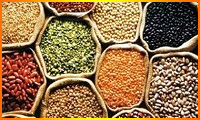
Modernization of Pulses Processing Plants.
The Ministry estimates post-harvest losses from time to time for various agri-produces in the country through commissioning of studies based on primary surveys. Two studies were commissioned by the Ministry through (i) Indian Council of Agriculture Research-Central Institute of Post-Harvest Engineering & Technology (ICAR-CIPHET), 2015; and (ii) NABARD Consultancy Services Pvt. Ltd (NABCONS), 2022. As per these two studies, the estimates of post-harvest loss in pulses ranged from: 6.36% – 8.41% (ICAR-CIPHET, 2015) 5.65% - 6.74% (NABCONS, 2022) The Ministry of Food Processing Industries through implementation of various schemes under the Pradhan Mantri Kisan Sampada Yojana (PMKSY) create post-harvest infrastructure and processing facilities, to boost the overall development of the food processing sector including reduction in post-harvest losses, enhancing value addition etc. So far, the Ministry has approved 5 units for pulses processing under the Creation/Expansion of Food Processing /Preservation Capacities(CEFPPC) scheme of PMKSY out of which 3 projects have been completed. The details are at Annex. Annexure ANNEXURE REGARDING 'MODERNIZATION OF PULSES PROCESSING PLANTS' | Sr. No. | Name of the applicant | District | State | Sector | Products | Date of Approval | Project Cost (Rs. in Cr.) | Approved Grant (Rs. in Cr.) | Released Amount (Rs. in Cr.) | Status | | 1 | M/s Singhal Agro India LLP | Sonepat | Haryana | Grain Milling | Pulse Processing & Packing | 26.09.2018 | 22.23 | 5 | 2.75 | Completed | | 2 | Sri Balaji Industries | Mysuru | Karnataka | Grain Milling | Fried dal and pulse flour | 09.07.2019 | 6.86 | 2.25 | 2.25 | Completed | | 3 | M/s Baba Ramdev Agro Industries | Bikaner | Rajasthan | Grain Milling | Processing of Pulses | 05.12.2022 | 12.49 | 5 | 0 | Under Implementation | | 4 | M/s P Duraisamy Maharajha Rice Mills Pvt Ltd |
pib.gov.in
|
29 Mar, 2023
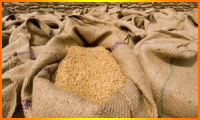
Wheat export ban to continue as long as India does not feel comfortable in domestic supplies: FCI chief.
The government on Tuesday said the export ban on wheat will continue as long as the country does not feel comfortable with the domestic supplies to meet the food security needs. Addressing a press conference, state-owned Food Corporation of India (FCI) Chairman and Managing Director Ashok K Meena said wheat production has not been impacted due to unseasonal rains. Even after rains, the total wheat output will be at a record 112 million tonne this year. He also mentioned that the government procurement of fresh wheat crop has kick-started, and about 10,727 tonne was purchased at minimum support price (MSP) in Madhya Pradesh on Monday. India, the world's second-largest wheat producer, banned wheat exports in May 2022, with immediate effect as part of measures to control rising domestic prices. 'As far as the government is concerned for ensuring the food security of the common man, no export of wheat will be allowed. So, the export ban on wheat will continue as long as the country does not feel comfortable with supplies,' Meena told reporters. Estimated higher wheat production this year will ensure sufficient supplies for both government procurement and general consumption in the Indian market, he said. The government has projected a record wheat production of 112.18 million tonne in the 2023-24 crop year (July-June), as per the second estimate of the agriculture ministry. Meena said the agriculture ministry has estimated a record wheat output, taking into account weather fluctuations. 'Rains are a cause of concern as it affects the quality of the grain. The accompanying factor of rain is that the temperature comes down. Low temperature is good for wheat crops for full maturity. Therefore, the estimated quantity of wheat production is likely to be achieved,' he said. As a result, the government's wheat procurement target of 34.15 million tonne will also be achieved, he added. Stating that the FCI has started the wheat procurement operation, Meena said about 10,727 tonne of wheat was procured in Madhya Pradesh on March 27. 'The first arrival has started in MP. About 10,727 tonne was procured, though there was huge arrival of 5.56 lakh tonne on Monday,' he said. Procurement on the same date in the year-ago period was nil. The arrivals were huge due to the harvesting of short-duration crops this year. Procurement centres across the country will remain open. Procurement in Punjab and Haryana will begin from April 1 onwards. FCI aims to procure 13.2 million tonne of wheat from Punjab, 7.5 million tonne from Haryana and 8 million tonne from Madhya Pradesh in the 2023-24 marketing year (April-March), he added. Asked if quality norms will be relaxed for the rain-hit wheat crop, Meena said, 'A team will be sent to assess the condition if required. We will take a call based on the report submitted by the team'. The government is confident that the estimated record production will be achieved and the target of procurement will be achieved this year, he asserted. Sharing about the sale of wheat from the buffer stock under the open market sale scheme (OMSS) to check rising wheat and wheat flour prices, Meena said this has been stopped for now as the prices have stabilised. The quantity of wheat sold in the market has led to (mandi) prices coming down from Rs 30 per kg in the last week of January to Rs 22-23 per kg now. The prices will further come down on improved supplies from the harvesting of new crops, he said. About 33.78 lakh tonne of wheat was sold under the OMSS to bulk consumers like wheat flour millers at a discounted rate. About 10,000 tonne were sold to Tamil Nadu, while 60,000 tonne to cooperative Nafed, NCCF and Kendriya Bhandar. Meena said 32.10 lakh tonne of wheat has already been lifted so far, the balance quantity will be lifted before this month-end. On April 1, FCI godowns would have a wheat stock of 84 lakh tonne. Last year, wheat procurement for the central pool declined to 187.92 lakh tonne from 433.44 lakh tonne in the 2021-22 marketing year due to a fall in production in view of heatwaves in some states. FCI is the government's nodal agency that undertakes the procurement and distribution of food grains for the PDS and welfare schemes.
Source:
tribuneindia.com
|
|