
India-UK FTA: Next meet looks to build consensus on rules of origin, IPR.
With the 12th round of negotiation a few days away, India and the United Kingdom (UK) hope to build consensus on three key issues –- rules of origin (ROO), intellectual property rights (IPR), and investment treaty -– in the proposed free trade agreement (FTA) between both nations.
The negotiations are currently at a crucial stage, with the next round of negotiation expected in the second week of August.
In the case of rules of origin chapter, the principles have been agreed upon. However, the modalities are still being worked out, a person aware of the matter said on Friday.
'In rules of origin, we are doing things at the international level for the first time. We are going for product specific rules… Every product will have a specific rule, whether it is value addition or change in tariff heading,' the person said.
In any FTA, rules of origin determine the criteria for which goods are eligible for free imports, with the larger idea to avoid routing of products manufactured in third countries to India.
There has also been a ‘broad consensus’ on the sticky issues in the goods chapter–automobiles and whiskey. Significant cuts in tariffs on whiskey and automobiles have been some of the key demands from the UK. The person, however, said that despite the broad consensus on these goods, 'nothing is agreed till everything is agreed'.
Of the 26 policy areas or chapters, 19 have been substantially closed for negotiations. Both sides are ‘very close’ to concluding the trade deal and both sides hope to sign much before the year ends. 'We are very close and are trying to conclude the talks as early as possible,' the person said.
The uptick in the momentum of negotiation comes in the backdrop of Commerce and Industry Minister Piyush Goyal and commerce secretary’s visit to London amid hectic negotiations earlier this month to discuss the progress of the proposed pact.
Both countries are also looking to sign an investment treaty as a separate agreement (Bilateral Investment Treaty) and conclude it simultaneously with the trade agreement. One of the contentious issues that the UK is uncomfortable with is the exhaustion of ‘local remedies’ clause under India’s model bilateral investment treaty (BIT) that India adopted seven years ago. Another issue that bothers foreign investors is the narrowed down the definition of ‘investment’ needed to qualify for BIT protection from an ‘asset’ based to an ‘enterprise’ based one.
Both the nations had kick-started formal negotiations in January 2022 and had set an ambitious Diwali/October-end deadline for the trade pact. The deadline was missed as both sides were not able to iron out the differences in providing greater market access for certain goods and services.
The UK is India’s 15th largest trade partner, with total trade at $20.36 billion in FY23.
Source: business-standard.com
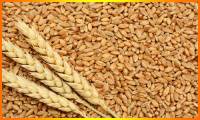
Govt invites applications from exporters for allocation of wheat quota for Bhutan.
The government has invited applications from exporters to allocate quota for exports of wheat to Bhutan during 2023-24 on humanitarian and food security grounds.
In a trade notice, the DGFT (Directorate General of Foreign Trade) has laid out a detailed procedure for allocation of quota for export of wheat, ‘atta’ and ‘maida’ on humanitarian and food security grounds, based on requests received from Bhutan.
It said the government has approved export of 14,184 tonne of wheat grain; 5,326 tonne of wheat flour (atta); 15,226 tonne of maida to Bhutan in 2023-24.
'Accordingly, applications are invited from exporters for allocation of quota,' it said.
As per the procedure, the minimum threshold for these products will be 100 tonne by land transport to the neighbouring country.
'Application would be allowed only if the exporter applies for quantity more than the minimum threshold,' it said.
In a separate notification, DGFT said it has banned exports of de-oiled rice bran till November 30 this year.
India is a major exporter of de-oiled rice bran, used in the cattle feed industry.
'Export policy of de-oiled rice bran is amended from free to prohibited with immediate effect up to November 30, 2023,' DGFT, under the commerce ministry, said.Govt invites applications from exporters for allocation of wheat quota for Bhutan
Source: indianexpress.com
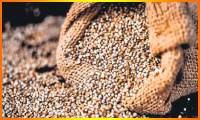
Millet momentum. Technology to be a game-changer for India s millet revolution.
In 2023, the United Nations recognised the 'International Year of Millets', marking a significant milestone that positively impacted the global millet value chain. This declaration ignited a renewed focus on cultivating and consuming millets, generating a powerful momentum. Acknowledging the importance of this grain, the Indian government renamed millets 'Shree Anna,' symbolising its deep connection to Carnatic culture, and is actively implementing initiatives to promote millet cultivation and consumption throughout the country.
However, despite these promising advancements, many marginalised farmers who operate small independent farms, especially in the southern region of India have been unable to reap the benefits. Their lack of awareness, skills, market connections, and restricted access to modern agricultural technology have impeded their productivity and profitability.
Technology will play a crucial role in addressing these challenges and transforming the millet food system into a sustainable model that supports rural livelihoods. Enhancing accessibility, raising awareness about the advantages of millet farming, and establishing market linkages are all vital components of this transformation. Ensuring digital inclusion for local farmers and actively involving the younger generation, particularly students, as essential stakeholders are pivotal steps in this direction.
New agricultural methods
The existing differences in millet farming practices across regions provide interesting opportunities for technological intervention and knowledge sharing. For example, in Andhra Pradesh, crops are grown with closer spacing, whereas wider spacing is recommended in Kerala. By creating awareness about these new techniques, farmers can optimise their own agricultural methods to maximise productivity.
Integrating technology into farming processes can help automate labor-intensive tasks like processing, relieving farmers of some of their workload and allowing them to allocate time to other vital activities. In addition, technology intervention provides farmers and the local community with a broader market reach, establishing connections with potential buyers, guaranteeing fair prices, and promoting sustainable growth while alleviating the issue of the 'digital divide.'
Investing in technological advancements
In rural areas, public-private partnerships (PPPs) and various corporate initiatives are driving progress by providing essential training to farmers and enabling them to utilise technology effectively. Recognising the potential for significant advancements in the agricultural sector, there is a growing emphasis on investing in technology within agricultural colleges. These colleges benefit farmers directly but also serve as incubators for small-scale agri-businesses led by enthusiastic young volunteers and students. Their collaboration with partners involves conducting in-depth analyses of the local millet food system and developing prototypes that promote sustainable farming practices for millet cultivation.
Encouraging student involvement through technology
A remarkable shift is taking place as stakeholders embrace the renewed interest in millet cultivation, marking a commitment to a second agricultural revolution. Let’s consider the College of Applied Science IHRD, in Kerala. A significant number of students at this college hail from farming backgrounds and are often the first in their families to pursue higher education. Driven by their deep-rooted passion for agriculture and a desire to make a meaningful impact in their communities, these students are working with corporates like Lenovo on projects like Work for Humankind and helping promote millet cultivation using technology. Such an environment fosters innovation, creativity, and an entrepreneurial mindset among students. This ensures that the knowledge gained from their endeavours is theoretical and practically applied, yielding enduring positive changes.
The revival of millets and the sustainable development of agriculture hinge upon embracing technology-driven initiatives as a powerful force for change. To achieve this, we must disseminate knowledge of innovative farming practices, invest in technology for farmers and agricultural colleges, and inspire and support students. However, it is essential for corporations and government policies to play their part in creating an enabling ecosystem that nurtures and encourages young students to pursue careers in agriculture. By fostering collaboration among local stakeholders, academia, and policymakers, we can pave the way for a prosperous future where the fusion of technology and agriculture drives the revival of millets, ensuring a resilient and thriving society for the betterment of humankind.
Source: thehindubusinessline.com

Hopeful of finalising certain FTAs in next few months, says Piyush Goyal.
Commerce and Industry Minister Piyush Goyal on Saturday said he is hopeful of India finalising certain free trade agreements (FTAs) in the next few months, which would help promote exports. India is in the final stages of concluding FTA negotiations with the UK. The country is also negotiating similar pacts with Canada and European Union (EU).
'We can leverage the free trade agreements with the UAE and Australia and we are hopeful that in the next few months, we will finalise many more free trade agreements to help you grow your business with zero duty on finished leather products and footwear available for you to exploit bigger and better markets,' Goyal said while addressing footwear industry representatives here.
The minister also asked the industry to focus on quality and sustainable manufacturing processes to tap business opportunities in the developed world.
The Indian footwear and leather industry is not only a major foreign exchange earner but being a labour-intensive sector, it also provides employment to approximately 4.5 million people, 40 per cent of whom are women.
He said that India has the capacity to become the world's largest and best-quality footwear manufacturer.
India is the second largest exporter of leather garments, third-largest exporter of saddlery and harnesses and fourth-largest exporter of leather goods in the world.
More than 95 per cent of the production units in this sector are micro, small & medium enterprises (MSME) units.
Further Goyal said that Indian size of footwear will be launched soon to help distinguish Indian footwear around the globe and reduce dependence on foreign sizing trends.
He suggested industrialists explore FTAs for technological collaborations, joint ventures of non-leather footwear, thus increasing the export of the country and enhancing the domestic market with Indian products.
Goyal highlighted the beauty of Kolhapuri footwear of Maharashtra and Mojari footwear of Rajasthan, stating that it should be an area of attraction for international buyers as well.
Talking about quality, he said the government has issued quality control norms for the sector and the government is ready to set up testing facilities for certifications.
Goyal urged the stakeholders to expand the business while keeping the focus on quality and sustainability, eco-friendly process, waste management, and exploring renewable sources for electricity.
Not only do we need to enhance our design capabilities to move up the value chain, but also bring in more investments and technology to scale up the production and produce innovative products, he added.
Source: economictimes.indiatimes.com
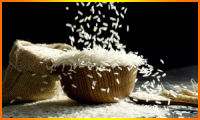
Singapore in close contact with Indian authorities to seek exemption from non-basmati rice export ban.
Singapore is in close contact with Indian authorities to seek exemption from the country's ban on export of non-basmati rice, the city state's food agency said on Friday. 'Singapore Food Agency (SFA) is working closely with importers to increase the import of different varieties of rice from various sources. Singapore is also in close contact with the Indian authorities to seek exemption from the ban,' said a statement from SFA.
On July 20, the Indian government banned exports of non-basmati white rice to boost domestic supply and keep retail prices under check during the upcoming festive season. Non-basmati white rice constitutes about 25 per cent of total rice exported from the country.
In 2022, India accounted for about 40 per cent of Singapore's imported rice, said the agency. Singapore imports rice from more than 30 countries.
Under Singapore's Rice Stockpile Scheme, rice importers must hold a buffer inventory equivalent to twice of their monthly imports. This helps ensure an adequate supply of rice in the market, SFA said in a statement.
Countries expected to be hit by the ban include African nations, Turkey, Syria, Pakistan, among others.
In the first quarter of the current fiscal, about 15.54 lakh tonnes of white rice was exported from India against only 11.55 lakh tonne in the year-ago period, which means an increase by 35 per cent.
Source: economictimes.indiatimes.com

Meghalaya exporting over 1.3 tonnes of Pineapples to the Middle East.
Meghalaya exporting over 1.3 tonnes of Pineapples to the Middle East.
To further promote and build the market for Meghalaya’s pineapples, the government is organising a Pineapple festival in Delhi. The festival will be held post the celebrations of Independence Day.
Following on the successful export of Khasi mandarin last year, the Department of Agriculture and Farmer’s Welfare, Government of Meghalaya and Meghalaya Basin Management Agency (MBMA) has recently facilitated market linkages of over 1.3 tonnes of Pineapples to the Middle East.
This is part of the continued efforts to reduce the gulf between the farmers of the state and lucrative international markets. The pineapples from Meghalaya are being sold across malls in Dubai, Kuwait and Sharjah, but more importantly the farmers are enjoying the fruit of their labour with up to two times increase in price realisation from these trades.
The efforts closer home has resulted in sustained market linkages with domestic processors and retailers. Last year, over 40 tonnes of pineapples were shipped to a Karnataka based processor to be further exported to European and North American markets. This year, the same processor has established a mobile processing unit at Umdihar IVCS, in Umdihar Village (Ri Bhoi) for taking in larger quantities and over 23 tonnes of Pineapples have been processed by the unit in the first week of its operation.
The processing units require pineapples weighing a kilogram and above and don’t accept fruits of smaller sizes. During harvest season, entire fields are harvested for sale, but only the large pineapples (Grade A) get sold to the processing units. This leaves the farmers with a large quantity of smaller sized pineapples (Grade B aka table variety). Since the ripening accelerates post-harvest, these table-variety pineapples are often sold at throw away prices.
To mitigate distress sale of these table-variety pineapples, the department is actively exploring market linkages with local retailers and have recently established linkages with Reliance Retail stores across Guwahati for sale of table-variety pineapples from Meghalaya. As a result of this intervention the farmers are now able to get over 2 times the price for the table-variety pineapples.
The Meghalaya pineapples are famous for their high-sugar content (brix value of 16-18) and low sourness. The pineapples in the State are mostly being cultivated without any use of chemical fertilizers and pesticides, resulting in significantly lower heavy metal and pesticide residue in the fruit. These traits make them highly suitable for lucrative international and national markets.
However, for long the trade has been dominated by middlemen and traders who often ‘book bagaans’ (farm fields) months before harvest season by paying the farmers a lumpsum amount. The farmers, having poor access to market information and needing money before the festive season and onset of school semester, unwillingly ‘book’ their farms at a fraction of the cost of the fruits on their farm.
The government has been actively working towards building community-centric, grassroots level solutions. These efforts are slowly coming to fruition now. The government has been working towards mobilising the farmers to form farmer cooperatives and farmer producer organisations (FPOs) across the state and over 350 such collectives have been formed in the last 3 years.
The Department and MBMA have been hand-holding these collectives so that they are able to replace the middlemen and transition to better production and marketing. For instance, the recent consignment of over 1.3 tonnes of Pineapples shipped to Middle East was undertaken by the ‘Silchang Dimrimbri Palwa Adling IVCS’ of East Garo Hills District. This was the first time that the farmer collective had undertaken an international trade and this was only made possible by the active support of the Department and MBMA.
Dr. Vijay Kumar D, Commissioner and Secretary, Government of Meghalaya, stated, 'We are delighted to witness the remarkable success of our pineapple growers in Meghalaya, who have embraced prosperity through their hard work and dedication. The recent market linkages to the Middle East and domestic processors are a testament to the immense potential of our state's pineapples in the international and national markets. The surge in price realization and the establishment of market connections have not only elevated our farmers' livelihoods but have also showcased the superior quality of Meghalaya's pineapples with their exceptional sweetness and low sourness. Government of Meghalaya recognized the challenges faced by our farmers in the past, and it has been our earnest endeavor to empower them with community-centric solutions. The formation of farmer cooperatives and producer organizations has proven instrumental in reducing reliance on middlemen and traders, enabling our farmers to receive fair value for their produce. The forthcoming Pineapple festival in Delhi is yet another significant step towards promoting our exquisite 'fineapples' and strengthening their presence in the national market. We extend our gratitude to the Department of Agriculture and Farmer’s Welfare, as well as the Meghalaya Basin Management Agency, for their unwavering support in realizing these achievements. As we continue to foster sustainable growth in the agricultural sector, we envision a brighter and more prosperous future for our farmers and the state of Meghalaya as a whole. Together, we shall cultivate success and sweetness in every step of this journey.'
Source: economictimes.indiatimes.com

From Pune to USA: Pomegranate Export Takes Off on Test Run.
In a collaborative effort, the Agricultural Products Export Development Authority (APEDA), National Crop Protection Organization (NPPO), Maharashtra State Board of Agricultural Marketing, Pomegranate Research Centre, Solapur, and INI Farms Pvt. Ltd. initiated the export of pomegranates to the United States on a pilot basis.
The inaugural shipment was flagged off by APEDA’s General Manager, Vinita Sudhanshu, at the Irradiation Facility Center in Vashi, Navi Mumbai. This strategic move is aimed at exploring the American market’s potential and creating new opportunities for pomegranate exporters.
Present during the launch were APEDA President Abhishek Dev, Director Tarun Bajaj, Executive Director of Maharashtra State Agriculture Marketing Board Sanjay Kadam, Dr R. A. Marathe from the National Pomegranate Research Center Solapur, APEDA General Manager UK Vats, Plant Protection Advisor J. P. Singh, and Satish Waghmode, Head of Irradiation Facility Center, among other officials and exporters.
The United States imposed a ban on pomegranate imports from India in 2017-18 due to concerns over fruit fly infestation in pomegranate seeds. After extensive discussions between the Indian government, APEDA, and NPPO, in collaboration with the US Department of Agriculture, the export ban was finally lifted in 2022, following the fulfillment of quality standards.
As part of the pilot export, 150 boxes (450 kg) of pomegranates were air-shipped to New York, USA, from the facility at Vashi, Navi Mumbai, adhering strictly to the prescribed pomegranate fruit standards set by the Maharashtra State Agricultural Marketing Board’s vegetable processing center.
This experimental venture holds promising prospects for Pune’s pomegranate industry as it aims to tap into the vast American market, presenting new avenues for growth and trade opportunities. APEDA and its partners are optimistic about the success of this initial export, which could pave the way for increased pomegranate exports to the USA in the near future.
Source: punekarnews.in
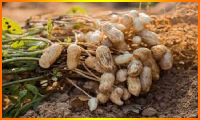
ICRISAT, BARI launch improved groundnut variety.
The Hyderabad-based International Crops Research Institute for the Semi-Arid Tropics (ICRISAT) and Bangladesh Agricultural Research Institute (BARI) have released BARI Chinabadam-12 (ICGV 07219), an improved groundnut variety in Bangladesh. The variety is available for cultivation for the upcoming season post rains.
It demonstrates greater resistance to foliar fungal diseases and matures four days earlier than its counterpart. Additionally, the variety features desirable seed size, with kernels weighing 44-48 grams per 100 kernels, showing a sizeable increase of 4-8 grams compared to the check variety.
'This improved variety is more resistant to diseases and has been designed to meet the needs of food processing industries,' an ICRISAT executive said.
The variety clocks an average on-farm yield of about 2.0 to 2.2 tonnes per hectare. It has been approved for commercial release after successful testing in the country.
'This new variety presents a valuable opportunity for expanding groundnut cultivation in areas typically submerged during the rainy season, such as the ‘Char regions’ (newly-formed landmasses in a river or estuary) or locations adjacent to rivers with sandy-loam soil,' Manjurul Khadir, Principal Scientific Officer at BARI’s Regional Agricultural Research Station, said.
'I look forward to further releases, and it is great that BARI is currently testing high oleic acid groundnut varieties to meet the industry’s demands,' Sean Mayes, Research Programme Director (Accelerated Crop Improvement) at ICRISAT, said.
Source: thehindubusinessline.com
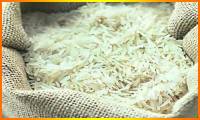
Rice planting gathers pace as monsoon rains revive.
Indian farmers have planted 23.7 million hectares with summer-sown rice so far, according to the farm ministry's latest data, up 1.71% year-on-year, as crucial monsoon rains revived in July and helped farmers accelerate sowing.
Higher rice planting in India, the world's second biggest producer of the grain, will ease concerns about the lower output of the staple.
Earlier this month, India ordered a halt to its largest rice export category - a move that will roughly halve shipments by the world's largest exporter of the grain.
Farmers typically start planting rice, corn, cotton, soybeans, sugarcane and peanuts, among other crops, from June 1, when monsoon rains are expected to begin drenching India. Sowing usually lasts until July and early August.
Summer rains are crucial as nearly half of India's farmland lacks irrigation.
India received 10% below normal rains in June, but in some states, the rainfall deficit was as much as 60% below average.
The India Meteorological Department defines average, or normal, rainfall as ranging between 96% and 104% of a 50-year average of 87 cm (35 inches) for the four-month season.
India's weather office has forecast an average amount of rain in July despite the likely emergence of the El Nino weather pattern.
July rainfall is crucial as it accounts for most of the precipitation for the four-month-long monsoon season.
This year, the delayed arrival of monsoon rains and lower rainfall in some southern, eastern and central states held back the planting of summer crops even as the monsoon covered the entire country nearly a week in advance.
Some regions in India, including breadbasket states such as Punjab and Haryana, have received torrential rains in July, triggering floods. Still, dry weather conditions prevail in some parts of the country.
Farmers planted 17.1 million hectares with oilseeds, including soybeans, 2.3% more than a year earlier. Corn was planted on 6.9 million hectares, almost unchanged from last year. The cotton area was marginally lower at 11.8 million hectares.
Source: economictimes.indiatimes.com
Govt launches Central Sector Scheme for formation & promotion of 10,000 FPOs.
Government of India has launched Central Sector Scheme for formation and promotion of 10,000 Farmer Producer Organisations (FPOs), in the year 2020 with a total budgetary outlay of Rs 6,865 crore which will enable farmers to enhance their bargaining power, leverage economies of scale, reduction in cost of production and enhancing farmers’ incomes through aggregation of their agricultural produce, thus playing a major role towards sustainable incomes.
Under the said scheme, FPOs being provided financial assistance upto Rs 18.00 lakh per FPO for a period of three years. In addition to this, provision has been made for matching equity grant upto Rs 2,000 per farmer member of FPO with a limit of Rs 15.00 lakh per FPO and a credit guarantee facility upto Rs 2 crore of project loan per FPO from eligible lending institution to ensure institutional credit accessibility to FPOs. Further, Rs 25 lakhs are given to CBBOs for hand holding each FPO over a period of five years.
Considering the significance and strategic role of State Government and its machinery down the line in synergising the efforts in mobilising the farmers, offering various services relating to production and post-production and also periodically reviewing the development and functioning of FPOs, Government has made provisions in operational guidelines of 10,000 Farmer Producer Organisations, scheme wherein a State level consultative committee called SLCC is constituted with additional chief secretary, secretary, In-charge of agriculture, agriculture marketing as its chairperson.
In addition to above, under 10,000 FPOs scheme, at district level, a District Level Monitoring Committee (D-MC) is constituted under the chairmanship of district collector, CEO, Zilla Parishad with representatives of different line departments and experts which provides approval for potential produce clusters in the block and also responsible for overall coordination, monitoring and implementation of the scheme at the district level. Provisions have also been made in Government of India schemes for availing benefits by FPOs.
Source: fnbnews.com