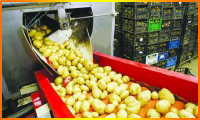
Production linked incentive scheme for Food Processing Industry.
On March 31, 2021, the Union Cabinet approved Central Sector Scheme - Production Linked Incentive Scheme for Food Processing Industry (PLISFPI), with an outlay of Rs 10,900 crore, to be implemented from 2021-22 to 2026-27.
The scheme consists of three components: incentivising manufacturing in four major food product segments (Ready to Cook/ Ready to Eat foods, Processed Fruits & Vegetables, Marine Products and Mozzarella Cheese), promoting Innovative/Organic products of SMEs, and supporting branding and marketing abroad for Indian brands. Additionally, the PLI Scheme for Millet-based Products (PLISMBP) was launched in the FY 2022-23 with an outlay of Rs 800 crore, utilising the savings under PLISFPI.
Under the scheme, 158 applications have been approved for availing incentives. As per the information received, the beneficiaries have invested Rs 7,427.22 crore under the scheme. So far, incentive of Rs 517.604 crore has been disbursed for the Financial Year 2021-22.
Government is fully aware of the potential issues that could arise from the PLISFPI scheme. To ensure its effectiveness and fairness, proactive measures were taken during the scheme formulation stage. Various stakeholders were actively engaged, and an extensive consultative process was followed, involving large-scale manufacturers, SMEs. As a result, the scheme guidelines ensure the scheme benefits all stakeholders, including farmers.
Category-II of the PLI scheme, with a specific focus on Innovative and Organic products, is exclusively for eligible MSMEs. A total of 16 applications have been selected under this particular category. Additionally, 22 applicants (out of 30 selected applicants) selected to participate under PLI Scheme for Millet-based products are MSMEs. Apart from the PLI Scheme, Government has introduced several other schemes to offer support across entire food value chain, which also helps SMEs in meeting international quality and safety standards for their food products.
The scheme guidelines specify that the entire manufacturing process, including primary processing, of the food products eligible for coverage under the scheme must occur in India, with the exception of additives, flavours, and edible oils. This approach aims to foster a strong value chain that benefits farmers and supports domestic production. These guidelines ensure farmer inclusivity, particularly for small-scale farmers, by guaranteeing remunerative prices for farm produce and higher income.
Source: fnbnews.com
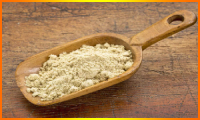
Govt prohibits export of deoiled rice bran until November.
The Indian government has prohibited the export of deoiled rice bran until November, a Directorate General of Foreign Trade notification said on Friday.
'Export of de-oiled rice bran under ITC HS code 2306 and under any other HS code is prohibited until November 30, 2013,' the DGFT said in a notification.
The development came after more than a week, when the Centre prohibited the export of non-basmati white rice.
Source: economictimes.indiatimes.com
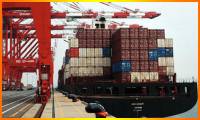
Capacity of Major Ports.
Infrastructure development in the Port Sector is a continuous process. The process inter-alia involves the construction of new berths and terminals, mechanization of existing berths and terminals, capital dredging for deepening drafts for attracting large vessels in port channels, development of road and rail connectivity etc., help in increasing the capacity of Major Ports. As a result, the cargo handling capacity of the Major Ports has been steadily going up. The cargo handling capacity of Major Ports as on 31.03.2023 is 1617 MTPA, which is sufficient to handle the existing cargo traffic at the Major ports.
Under PM Gati Shakti, DPIIT prepared a Comprehensive Port Connectivity Plan (CPCP) in consultation with Ministry of Ports, Shipping and Waterways, Ministry of Railways, Ministry of Road Transport & Highways and State Maritime Boards in September, 2022. CPCP incorporates 298 connectivity projects of which 191 projects (101 road and 90 rail). These projects are aimed at enhancing last mile and hinterland connectivity of ports, which in turn will enhance the port efficiency, enabling the ports to handle more cargo.
These road and rail infrastructure gap projects are primarily undertaken by the Ministry of Railways and Ministry of Road Transport & Highways on a priority.
This information was given by the Union Minister for Ports, Shipping and Waterways, Shri Sarbananda Sonowal in a written reply to the Lok Sabha.
Source: pib.gov.in
PM Kisan: Prime Minister Modi Released 14th Installment of About Rs 17,000 crores.
During his visit to Rajasthan on July 27, 2023, Prime Minister Narendra Modi disbursed the 14th installment of the Pradhan Mantri Kisan Samman Nidhi (PM-Kisan) scheme, amounting to over Rs 17,000 crore, benefiting more than 8.5 crore farmers. Each eligible farmer will receive Rs 2,000 as part of this 14th installment.
These PMKSKs are designed to be one-stop solutions for farmers' needs, offering vital information on agri-inputs, soil and seed testing facilities, and guidance on various government schemes. The initiative is expected to significantly bolster the agricultural sector and benefit farmers at the grassroots level. Along with this, Prime Minister Narendra Modi also laid the foundation stone and dedicated a series of crucial development projects in Sikar, Rajasthan. The projects encompass diverse sectors and are set to positively impact the lives of millions of people across the country.
Another significant milestone was the launch of Urea Gold, a revolutionary variety of Urea coated with Sulphur. This innovation addresses sulfur deficiencies in the soil, improving nitrogen use efficiency in plants and ultimately enhancing crop quality. The introduction of Urea Gold promises to be more economical and efficient than traditional neem-coated urea, thus reducing the consumption of fertilizers and benefiting farmers economically.
Additionally, the Prime Minister inaugurated five new medical colleges at Chittorgarh, Dholpur, Sirohi, Sikar, and Ganganagar, while also laying the foundation stone for seven more medical colleges at Baran, Bundi, Karauli, Jhunjhunu, Sawai Madhopur, Jaisalmer, and Tonk. These medical colleges are being established under the Centrally Sponsored Scheme for the "Establishment of new medical colleges attached with existing district/referral hospitals." This substantial expansion of health infrastructure in Rajasthan will bring quality healthcare closer to the people and create more opportunities for medical education.
Furthermore, Prime Minister Modi inaugurated six Eklavya Model Residential Schools in Udaipur, Banswara, Partapgarh, and Dungarpur districts, along with Kendriya Vidyalaya Tivri, Jodhpur. These educational institutions are aimed at providing quality education to the tribal population residing in these regions, ensuring that children from backward and tribal societies have access to better opportunities and a brighter future.
Addressing the gathering, Prime Minister Narendra Modi expressed his gratitude for the opportunity to initiate these crucial development programs from the heroic land of Shekhawati. He emphasized that the government is committed to the welfare of farmers and highlighted various schemes and initiatives that have been undertaken to support them.
The Prime Minister praised the efforts of farmers and reiterated that India's development is intrinsically linked to the development of its villages. He emphasized that the government is working tirelessly to ensure that all necessary facilities are available in rural areas, democratizing education and medical opportunities, and reducing the burden of expenses for farmers. He highlighted the direct transfer of funds under the Pradhan Mantri Kisan Samman Nidhi (PM-KISAN) to over 8.5 crore beneficiaries, making it the largest scheme in the world where funds are directly transferred to the bank accounts of farmers. This has provided significant financial support to farmers across the nation.
The Prime Minister's focus on infrastructure development was also evident as he mentioned the inauguration of two hi-tech expressways and investment in tourism facilities. These initiatives are expected to create new opportunities and boost tourism in Rajasthan, further contributing to the state's development.
The event was attended by several dignitaries, including Governor of Rajasthan Kalraj Mishra, Union Ministers for Agriculture and Farmers' Welfare, Jal Shakti, Health and Family Welfare, Law and Justice, and State for Agriculture and Farmers' Welfare, among others.
Source: krishijagran.com

India, Bangladesh ties reach 'new dimensions' with trade transactions in Rupees and Taka: Bangladeshi Minister .
Bangladesh’s Minister for Information and Broadcasting, Hasan Mahmud on Thursday said that India and Bangladesh relations have reached 'new dimensions' as the two countries have begun trade transactions in 'Rupee and Taka'.
In an exclusive ANI interview, when asked about the current political, economic and cultural ties between the two countries, Mahmud said that in recent months, India-Bangladesh ties have 'got new dimensions because we have started business by exchanging Rupees and Taka. So day by day, our relationship is strengthening under their leadership.'
In April, earlier this year, Bangladesh and India agreed to settle a part of the bilateral trade transactions in their own currencies -- Rupee and Taka -- to ease pressure on dollar holdings, Bangladesh-based news website The Business Standard (TBS News) reported.
As per the news report, settling transactions in Taka and Rupee was in discussions for months amid the crisis of the dollar. However, all the bilateral trade between the two nations will not be made in local currencies.
On improving India-Bangladesh border connectivity, Minister Mahmud said that India and Bangladesh share a long border, so issue are likely to crop up, which will be resolved with dialogues.
'Since we have long border, we would have always border issues,' he said.
India and Bangladesh share 4096.7 km. of border, which is the longest land boundary that India shares with any of its neighbours, as per Ministry of External Affairs.
'And we have resolved many border issues. So little issues always will arise and we shall resolve it and we are time to time two parties are sitting and we resolve the problems,' he added.
Speaking about the need to keep emphasising on more cultural exchange, Minister Mahmud said that a better cultural relationship that 'will strengthen the ties between the people of Bangladesh and of India.'
'We have a strong relationship and we are working to strengthen the ties between the people. And day by day, that is strengthening,' he added.
Significant boosts in bilateral ties between India and Bangladesh were seen in the recent period. Starting from settling the protracted land boundary dispute in an amicable way in 2015, India and Bangladesh have partnered in numerous developmental projects.
India, for example, is financing several infrastructure and connectivity missions in Bangladesh through its Line of Credit, totalling over eight billion dollars now, at a concessional rate.
Connectivity projects such as a multimodal road-rail link between Agartala in India's Tripura to Akhaura in Bangladesh is a prime model. The reopening of an old rail link between Chilahati and Haldibari, apart from regular train services between Kolkata and Dhaka, and bus connectivity from Dhaka to Shillong, Agartala and Kolkata is increasing the physical connectivity between the two countries.
India has also provided a grant for the building of the Padma bridge which will provide crucial rail-road connectivity between India and the north and south regions of Bangladesh. In waterways connectivity as well several new routes have been activated including a new bridge across the Feni river to facilitate the movement of goods and passengers from Tripura to Bangladesh.
Source: aninews.in

India-ASEAN free trade agreement most ill-conceived: Piyush Goyal.
India has sought a review of its free trade agreements with the Asean, Japan and Korea to make them fair and equitable, a top government official said.
Commerce and industry minister Piyush Goyal on Thursday said India’s free trade pact with the Asean was the 'most ill-conceived'. 'The Asean agreement...(is the) most ill-conceived agreement. If anyone would have read that, it is so unfair to Indian industry,' Goyal said at an event organised by the Federation of Indian Chambers of Commerce and Industry (FICCI).
Noting that India had opened its markets for Japan and Korea, Goyal pointed out that its exports to Japan had not grown 'at all' but imports from that country had jumped 200%.
'What it (India’s exports to Japan) was 10 years ago, it is the same today with Japan… we are asking them to renegotiate with us the FTA to make it more balanced, fair and equitable,' he said. 'It’s a difficult task for us in government also…we fight for the textile sector, our farmers, our auto sector, fisheries, electronics,' Goyal said. Emphasising the importance of stakeholder consultations, Goyal said that with the UAE, India imposed tariff quotas on some products after industry raised concerns on some products though the two sides had initially agreed, which was an 'embarrassing situation' but it was beneficial for the domestic industry.
Source: economictimes.indiatimes.com
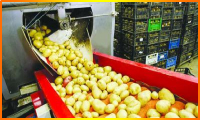
Food Processing Industry schemes in rural areas.
In order to ensure overall development of Food Processing Industries including processing of agro- products, Ministry of Food Processing Industries (MoFPI), has been incentivising setting up/expansion of related infrastructure through its Central Sector Umbrella Scheme Pradhan Mantri Kisan SAMPADA Yojana (PMKSY), Production Linked Incentive Scheme for Food Processing Industry (PLISFPI), and Centrally sponsored PM Formalisation of Micro Food Processing Enterprises (PMFME), scheme across the country including rural areas of Karnataka and thus benefitting and increasing the income of the farmers in the country.
Under component schemes of PMKSY, MoFPI provides mostly credit linked financial assistance (capital subsidy) in the form of grants-in-aid to entrepreneurs. PMKSY is not any region or state specific but demand driven and is implemented across the country including the rural areas of Karnataka. So far, Ministry has approved 41 Mega food Parks, 382 Cold Chain projects, 72 Agro Processing Clusters, 469 Food Processing Units, 61 Creation of Backward & Forward Linkages Projects & 46 Operation Green projects across the country under corresponding component schemes of PMKSY.
Out of this, 2 Mega Food Parks, 17 Cold Chain projects, 4 Agro Processing Clusters, 19 Food Processing Units and 3 Creation of Backward & Forward Linkages Projects are located in Karnataka. The completed projects of PMKSY are estimated to benefit more than 32 lakh farmers across the country and more than 1.8 lakh farmers in Karnataka.
Ministry also provides financial, technical and business support for setting up/ upgradation of 2 lakh micro food processing enterprises under PMFME scheme. The scheme is operational for a period of five years from 2020-21 to 2024-25 with an outlay of Rs 10,000 crore. So far, a total of 38466 micro food processing enterprises have been approved for assistance in the country, out of which 2444 micro food processing units located in Karnataka.
PLISFPI is, inter alia, intended to support creation of global food manufacturing champions and support Indian brands of food products in international market. The Scheme is being implemented over a six-year period from 2021-22 to 2026-27 with an outlay of Rs. 10,900 crore. So far, a total investment of Rs 318.97 crore has been committed in projects located in Karnataka under the scheme.
At times, the projects approved under PMKSY face delays in obtaining statutory clearances/ certificates from the State Government regarding Consent to Establish, Consent to Operate, building plan approval, electricity connection etc. Also, release of matching state funds gets delayed sometimes in centrally sponsored PMFME scheme. Ministry coordinates with stakeholders for removal of these bottlenecks.
Source: fnbnews.com
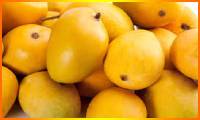
New Zealand: Mango imports from India surge.
The volume of mango imports from India has risen threefold to date this year, according to latest figures from the Ministry of Primary Industries.
New Zealand imported just under 30000 kilogrammes of mango from India in 2022, but this year's figure has already exceeded 100000 kilogrammes, with further imports possible through the end of the month.
Mango season in India usually starts in April and ends around the middle of July after monsoon rains begin.
The Ministry of Primary Industries said the increase in volume could be traced to the resumption of services at a facility treating mangoes headed for New Zealand.
The Maharashtra Agricultural Marketing Board vapour heat treatment facility in Mumbai is one of two entities that have been licensed to treat mangoes for export to New Zealand. The other is Andhra Pradesh Agro Food facility in Tirupati near Chennai.
The ministry said exports from the facility in Mumbai to New Zealand were suspended in July 2020 following the interception of live fruit flies at the border. The suspension was lifted in May this year following a virtual audit in February and then a subsequent in-country audit in April.
'Mangoes imported into New Zealand must meet the requirements in the Import Health Standard and as specified in the bilateral agreement between the two countries,' a spokesperson from the ministry said. 'These are then inspected on arrival here to check for compliance requirements.'
Over the past three months, the facility in Mumbai has treated 87407 kilogrammes of mangoes, which represents about 80 percent of total imports from India to New Zealand.
Despite the overall improvement in trade figures, mango exports from India to New Zealand are still far below those from Latin America.
Peru leads the pack, making up 65.7 percent of overall mango imports to New Zealand to date this year. Mexico comes second with 15.3 percent, followed by Australia at just under 10 percent. India makes up 6.9 percent of total imports.
The South and Central American nations appear to have overtaken Australia as the country's largest sources of mango, with Australia taking the top spot from 2019 to 2022.
Source: rnz.co.nz
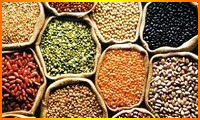
Production of pulses & vegetable oils.
The Indian Council of Agricultural Research (ICAR), has assessed the impact for pulses cultivation in different agro-ecologies with respect to soil health, soil microbial biomass, resilience to climate change.
Government of India is supplementing the efforts of state governments to encourage diversified production of crops including pulses, coarse cereals, nutri cereals, cotton & oilseeds under National Food Security Mission (NFSM), and horticultural crops under Mission for Integrated Development of Horticulture (MIDH). The Government of India also provides flexibility to the states for state specific needs/priorities under Rashtriya Krishi Vikas Yojana (RKVY).
Further, to encourage farmers to adopt alternative crops to paddy, Department of Agriculture & Farmers Welfare (DA&FW), is implementing the Crop Diversification Programme (CDP), under RKVY in the Original Green Revolution States viz; Haryana, Punjab and Western Uttar Pradesh since 2013-14 towards alternative crops like pulses, oilseeds, coarse cereals, nutri cereals, cotton.
CDP aims at demonstrating alternative crops at farmers' fields. A pilot project for 'Diversification of 4.85 million hectares' in five years (2023-24 to 2027-28) in identified 75 districts of 17 States / Union Territory namely Andhra Pradesh, Arunachal Pradesh, Assam, Bihar, Gujarat, Himachal Pradesh, Jammu & Kashmir, Jharakhand, Karnataka, Maharashtra, Madhya Pradesh, Rajasthan, Odisha, Tamil Nadu, Telangana, Uttarakhand and West Bengal representing 14 Agro Ecological Regions of the country has been approved to ICAR-Indian Institute of Farming Systems Research (IIFSR), Modipuram.
While the production of oilseeds is not sufficient to meet the domestic demand of vegetable oils, however, the increased production of pulses has narrowed down the import of pulses to around 9 per cent of the domestic production. In order to enhance the production of oilseeds and pulses, the Government is implementing the National Food Security Mission (NFSM), in the country.
Under NFSM, assistance is given through State Governments to farmers for interventions like cluster demonstrations on improved package of practices, demonstrations on cropping system, seed production and distribution of High Yielding Varieties/Hybrids, improved farm machineries/resource conservation machineries/tools, efficient water application tools, plant protection measures, nutrient management/soil ameliorants, cropping system based trainings to the farmers. The production of pulses has increased from 163.20 lakh tonne in 2015-16 to 275.04 lakh tonne in 2022-23 (as per 3rd Advance Estimates) and oilseeds from 252.50 lakh tonne to 409.97 lakh tonne during the same period. Further, import of pulses has declined from 58 lakh tonne in 2015-16 to 24.96 lakh tonne in 2022-23.
In addition, the mission also provides support to Indian Council of Agricultural Research (ICAR), & State Agricultural Universities (SAUs)/Krishi Vigyan Kendras (KVKs), for technology back stopping and transfer of technology to the farmer under supervision of Subject Matter Specialists/Scientists.
Government has also launched a separate Mission for Oil Palm namely, National Mission on Edible Oils (Oil Palm), in 2021-22. Both, NFSM- Oilseeds and NMEO (OP), mission components are being implemented in the country with an objective to augment the availability of vegetable oils by increasing the production and productivity of oilseeds & oil palm. Further, Targeting Rice Fallow Area (TRFA), under NFSM is implemented for cultivation of pulses & oilseeds in rice fallow of 12 states. RKVY also supports pulses and oilseeds production in the states.
The prices of pulses and oilseeds being sold to the farmers in various states comprise of incentives provided by Government of India under NFSM programme on certified seed distribution of High Yielding Varieties (HYVs) of pulses and oilseeds (except sesame) upto Rs. 5000 per quintal and Rs. 4000 per quintal, respectively and for Hybrids in oilseeds and varieties of sesame upto Rs. 8000 per quintal. Further, the Government is also supplying seed minikits of HYVs of pulses and oilseeds free of cost to the farmers.
Source: fnbnews.com

On the table: A SWIFT system tailored to push rupee trade.
India is looking to set up its own international financing messaging system along the lines of SWIFT (Society for Worldwide Interbank Financial Telecommunications), the channel used worldwide to transfer funds and securities across borders.
The proposal is a part of the government's bigger plan to internationalise the Indian currency, people aware of details told ET. The system will help settle bilateral trade in rupees.
An expert committee of bankers is exploring options and is expected to submit findings to the government by August, according to officials aware of the matter. The committee members are drawn from the State Bank of India, Bank of Baroda, Bank of India and Central Bank of India among others.
'One of the suggestions was to have an independent financing messaging system that can be used with countries where we have bilateral trade agreements,' said a bank official who did not wish to be identified. 'This committee will now suggest measures on how to make this operational and what are the challenges. Accordingly, the issue will be taken up with other stakeholders, including the Reserve Bank of India (RBI).'
Another official said the committee will look at the RBI's existing platform, the Structured Financial Messaging System, or SFMS.
Indian financial network
'We have to explore how we can scale this up,' he said.
Built on the lines of SWIFT, the SFMS can be used for secure communications within and between banks. In its 2022 Vision Document, the RBI also made a case for expanding the ambit of the SFMS.
'The feasibility of providing membership/technology of Infinet to other jurisdictions shall be explored,' it noted. 'Further, it shall be explored to expand the framework of SFMS to provide a domestic payment system platform to other jurisdictions. This could be expected to provide faster, convenient, and cost-effective direct payment channels with other jurisdictions.'
The Indian Financial Network (Infinet) is a membership-only Closed User Group network that comprises the RBI, CPS (Centralised Payment System) member banks and financial institutions. It provides financial messaging services through its member interface application to all RTGS (Real Time Gross Settlement) participants.
The government has been pushing banks to conduct outreach programmes with the international trading community to promote trade using special rupee vostro accounts (SRVAs).
So far, 20 banks from 22 countries have opened 92 such accounts, including Bangladesh, Germany and Russia.
The RBI and the Central Bank of UAE earlier this month signed an agreement that will enable exporters and importers to invoice and pay in their respective domestic currencies, enabling the development of a bilateral foreign exchange market.
Source: economictimes.indiatimes.com