India, US decide to end six trade disputes at WTO; Delhi to lift retaliatory tariffs.
India and the United States have agreed to end six trade disputes at the World Trade Organisation and New Delhi will also lift retaliatory customs duties on 28 American products.
This is likely to shore up trade between the nations and also help Indian exporters get key tax advantages.
The decisions come amid Indian Prime Minister Narendra Modi's State Visit to the US at the invitation of President Joe Biden and First Lady Jill Biden.
The US, in 2018, had imposed 25 per cent and 10 per cent import taxes on certain steel and aluminium products, respectively, on grounds of national security. In retaliation, India in June 2019 imposed customs duties on 28 American products, including chickpeas, lentils, almonds, walnuts, apples, boric acid, and diagnostic reagents.
United States Trade Representative Katherine Tai today announced that the United States and the Republic of India have agreed to terminate six outstanding disputes at the World Trade Organization. 'India also agreed to remove retaliatory tariffs which it had imposed in response to the Section 232 national security measures on steel and aluminium,' Tai said on Thursday.
It added that these tariff cuts will restore and expand market opportunities for US agricultural producers and manufacturers.
'Today's agreement represents the culmination of intensified bilateral engagement over the last two years, including through the US-India Trade Policy Forum, to deepen our economic and trade ties,' Tai said.
'As a result of our work, US agricultural producers and manufacturers will now enjoy renewed access to a critical global market and we will strengthen our trade relationship with one of our closest partners. I look forward to continuing to work with my counterpart, (India's Commerce and Industry) Minister (Piyush) Goyal, as we identify additional ways to bring our people and our economies together,' she added.
The six disputes include three initiated by India and as many by the US.
These include countervailing measures on certain hot-rolled carbon steel flat products from India, certain measures relating to solar cells and modules, measures relating to the renewable energy sector, export-related measures, certain measures on steel and aluminium products, and additional duties on some products from the US.
According to trade experts, both countries can resolve the disputes on mutually agreed terms and later inform the Geneva-based WTO about the same.
The US had filed a complaint in the WTO about India's support measures to its export sector under different schemes. In 2019, a WTO dispute panel ruled that India's export measures are inconsistent with global trade norms.
The US is the largest trading partner of India. In 2022-23, the bilateral goods trade increased to USD 128.8 billion as against USD 119.5 billion in 2021-22.
According to WTO rules, a member country can file a case in the Geneva-based multilateral body if they feel that a particular trade measure is against the norms of the world body. Bilateral consultation is the first step to resolving a dispute. If both sides are not able to resolve the matter through consultation, either of them can approach the establishment of a dispute settlement panel.
The panel's ruling or report can be challenged by WTO's appellate body.
Interestingly, the appellate body is not functioning because of differences among member countries to appoint its members. Several disputes are already pending with this body. The US has been blocking the appointment of the members.
Source: economictimes.indiatimes.com
Shri Narendra Singh Tomar launches PM Kisan Mobile App with Face Authentication Feature.
The PM-Kisan Mobile App with Face Authentication Feature was launched by Union Agriculture and Farmers’ Welfare Minister Shri Narendra Singh Tomar under the central government's ambitious and popular scheme for income support to farmers 'Pradhan Mantri Kisan Samman Nidhi'. Best example of modern technology using Face Authentication Feature from this app farmer can complete e-KYC remotely, sitting at home easily by scanning face without OTP or fingerprint and helped 100 other farmers to do e-KYC at their home. Recognizing the need to make e-KYC mandatory, the Government of India has extended the ability of farmers to perform e-KYC to officers of state governments, so that each officer can complete the e-KYC process for 500 farmers.
Thousands of farmers present in Krishi Vigyan Kendras across the country, as well as officers of the Central and State Governments and representatives of various government agencies and agricultural organizations were virtually connected to the event held at Krishi Bhavan, New Delhi. On this occasion, Union Minister Shri Tomar said that Prime Minister Kisan Samman Nidhi is a very comprehensive and ambitious scheme of the Government of India, in the implementation of which the state governments have performed their role very diligently, as a result of which we are in a position to pay the installment of the scheme about 8.5 crore farmers after KYC. The more refined this platform the more it will be useful for PM-Kisan and whenever any benefit has to be given to the farmers, complete data will be available with the Central and State Governments, so that no problem can arise in data verification.
Shri Tomar stated that PM-Kisan is an innovative scheme whose benefits are being given by the central government to the farmers without any middlemen. Today, it has become possible to give benefits to such a large number of farmers only with the help of technology. No one can question the implementation of this entire scheme which is a very important achievement. The work has become much easier by using technology the GoI developed this App. The Government of India has made all the necessary facilities available to the states, now if the states work more quickly, then we will reach to all the beneficiaries and achieve the set target.
Union Minister Shri Tomar said that Prime Minister Shri Narendra Modi has been continuously insisting that if sufficient funds are available for the scheme, then we have reached saturation. Work is going on in this direction in other states including Uttar Pradesh and on completion of which, maximum number of eligible farmers will be able to get the 14th installment of the scheme. Shri Tomar requested that all the state governments should act in this regard.
In the program, Union Minister of State for Agriculture and Farmers’ Welfare Shri Kailash Choudhary said that the agriculture sector is benefiting from technology and the new facility of this app will also provide a lot of convenience to the farmers. Union Agriculture Secretary Shri Manoj Ahuja also kept his views. Additional Secretary Shri Pramod Kumar Mehrada explained the features of the app. The program was coordinated by the departmental advisor Shri Manoj Kumar Gupta. On this occasion, officials of state governments also shared their experiences related to the benefits of scheme and app. Efforts will also be made to connect more and more farmers with the app through the youth and on the basis of the prescribed criteria, certificates will be given by the Ministry of Agriculture and Farmers’ Welfare to the youth who help in this.
PM Kisan is one of the world's largest DBT schemes in which farmers get Rs 6,000 directly transferred through Aadhaar linked bank accounts in three installments in a year. 2.42 lakh crore has been transferred to the accounts of more than 11 crore farmers, of whom more than 3 crore were women. PM Kisan Yojana proved to be a strong partner for the farmers even during the lockdown at the time of covid. The scheme has ensured necessary facilities by providing direct financial assistance to the farmers and has given them confidence in difficult times. Now the difficulties related to Aadhaar verification and bank account details updation on PM Kisan Portal have been resolved by effective use of digital public goods.
For the first time, it is seen that more than 8.1 crore farmers were successfully paid the 13th installment of PM Kisan directly into their Aadhaar linked bank accounts through Aadhaar Enabled Payment only, which is a record in itself. The new app is very easy to use and easily available for download on the Google Play Store. The app will also provide very important information related to the scheme and PM Kisan accounts to the farmers. In this, farmers can know the status of landseeding, linking of Aadhaar with bank accounts and e-KYC using the No User Status Module. The department has also roped in India Post Payment Bank (IPPB) to open Aadhaar linked bank accounts for beneficiaries at their doorstep and asked CSCs to organize village-level e-KYC camps with the help of States/UTs.
Source: pib.gov.in
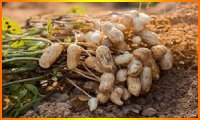
Oil producers body to establish model groundnut farms in MP, Rajasthan.
The Solvent Extractors’ Association (SEA) of India, which has been supporting the establishment of model farms for rape-mustard and castor, now has similar plans for groundnut also.
The managing committee of SEA, which met on June 16, has decided to establish 100-150 model groundnut farms in Madhya Pradesh and Rajasthan during the current season.
In his monthly letter to members, Ajay Jhunjhunwala, President of SEA of India, said groundnut is a major crop and needs more attention for productivity.
'Considering our experience for castor and mustard model farm projects, the Managing Committee at the meeting held on June 16, 2023, decided to extend the model farm project for groundnut,' he said.
Urging stakeholders to support the project financially, he said the contribution qualifies as CSR (corporate social responsibility) activity under Section 135 of the Companies Act 2013.
Stating that SEA and Solidaridad were working on rape-mustard model farms for the last four years, he said the results were quite encouraging with increases in productivity.
Referring to the SEA team’s meeting with Manoj Ahuja, Secretary, Ministry of Agriculture and Farmer’s Welfare, in New Delhi in June, Jhunjhunwala said he had appreciated SEA’s role in promoting mustard model farms.
Ahuja also desired to know the names of companies interested in setting up oil palm plantation in the North-East, and asked the association to prepare a note on the challenges and opportunity in oil palm plantation from industry’s point of view. Ahuja also agreed to support the visit of a delegation of interested companies to the North-East to explore the opportunity, he said.
MSP
Welcoming the government’s decision to increase the MSP (minimum support price) for kharif crops, he said the government must buy at MSP. Currently, rapeseed is quoted at Rs.5,100 a quintal against the MSP of Rs.5,450 a quintal. Stating that mustard farmers were totally discouraged, he said it was quoted at Rs.7,000-7,500 a quintal at the time of sowing.
In Haryana, sunflower seed price has fallen much below the MSP of Rs.6,400 a quintal, leading to protests by farmers.
This may result in lower acreage under soya in kharif and mustard in rabi and overall production of oilseeds, he said.
Thai palm
Referring to the recent visit of BV Mehta, Executive Director of SEA, Suresh Motwani, General Manager (Oilseeds) of Solidaridad, and Kailash Singh, Managing Director of Tefla, to Thailand to understand its palm oil complex, Jhunjhunwala said Thai CPO (crude palm oil) producers and exporters are keen to develop direct rapport with Indian importers and refiners. SEA is expecting a delegation from Thailand to attend the annual general meeting of SEA and Globoil India during September 28-30.
At the invitation of the Thai government, SEA plans to depute a trade delegation during the last week of August to study Thai palm oil complex and develop direct rapport with producers and exporters, he said.
Source: thehindubusinessline.com

'During this timeframe Indian dates are in high demand'.
The timing of the date season in India is a large advantage in the global market, Kaushal Khakhar, CEO of Indian fresh produce exporter Kay Bee Exports, states: 'In India, the date season starts from mid-June and lasts until the end of July. During this particular timeframe, the other countries where dates are usually sourced from are not in season; making the Indian dates in high demand. The dominating variety grown in India is the Barhi date, which is a yellow date, but a red variety is also available, though it is less common. India being the only one to provide dates in June and July and growing one of the most sought for and appreciated varieties; the global demand is fairly high.'
India and other date producing countries basically grow the same varieties, but the dates from India do taste slightly different, Khakar explains. 'Although the varieties grown in the Middle East and India are the same, the growing environment, soil and agro-climatic conditions are different from the one of the Middle East. Consequently, a minor taste difference can be identified between the dates grown in India and those from the Middle East. The demand for dates of Indian origin for export as well as for the domestic market has increased. This can be explained by the fact that dates are an easy fruit to consume and ideal for snacking.'
Kay Bee Exports is ready to enter new markets with its dates, and hopes to enter the Dutch market this year as well, Khakhar says: 'Historically, our biggest markets remain the United Kingdom, Indonesia and Malaysia where Indian dates are well established. Our dates are pesticide residue free and follow all international standards of food safety and quality; to do so they are packed in a BRC certified packhouse. We follow two different packing size: either loose in a 4kg box or shelf-ready (pre-packed & labelled) in a 500gm punnet. Both formats are equally in demand in these markets. This year onwards we are seeing interest from new markets such as Canada and other parts of Europe, such as the Netherlands, with which we are hopeful to start shipping this season.'
Next to export, the domestic market in India for dates is huge according to Khakar. 'With a population of 1.4 billion inhabitants, the domestic consumption for dates in India is automatically high and reached 64.2 thousand tons in 2021. Nowadays, only a small percentage of the 200,000 tons of dates grown in India is exported. This year’s objectives are to strengthen our regular markets, while also targeting new markets where Indian dates can strategically bridge the gap between two other origins and diversify our range of customers.'
Since the air freight costs have returned to normal levels once again, Khakhar is confident they’ll have an advantage in the market this date season: 'India has a strong advantage this year since its air freight rates have normalised to almost pre-pandemic levels and the belly capacity and number of flights to most countries has drastically increased. Moreover, Kay Bee Exports being IATA certified and thus being its own freight-forwarder, we can obtain even more economical rates and can more easily secure cargo space with the airlines,' he concludes.
Source: freshplaza.com

India-UK partnership will be defining one for our times: PM Rishi Sunak.
British Prime Minister Rishi Sunak on Wednesday said he is confident that the India-UK partnership will be a 'defining one for our times', as he extended support to the upcoming UK-India Week. Sunak, then UK Chancellor of the Exchequer, was a special guest at the UK-India Awards during last year's summit when he first spoke about his own Indian heritage and commitment to British Indian values.
In a statement from Downing Street, the 43-year-old leader described the annual event as a catalyst for forging new trade ties and long-term collaborations.
'India Global Forum's annual UK-India Week is a highly anticipated fixture in the bilateral calendar of our two great nations,' said Sunak.
'It is a catalyst for forging new trade ties, lasting collaborations, and a better future for our peoples. I'm confident this partnership will be a defining one for our times,' he said.
UK-India Week 2023 kick-starts with a Young Leaders Forum at the Nehru Centre in London on Saturday and will cover a full spectrum of bilateral issues, from tech and innovation to infrastructure and sustainability at events in London and Windsor.
This year marks the fifth edition of the summit and UK-India Awards, which comes just days after the UK government issued a joint outcome statement at the conclusion of the tenth round of free trade agreement (FTA) negotiations with India.
'Technical discussions were held across 10 policy areas over 50 separate sessions. They included detailed draft treaty text discussions in these policy areas,' reads a statement from the Department for Business and Trade (DBT) issued earlier this week.
India and the UK have been negotiating an FTA since January last year, with a goal towards a comprehensive pact that is expected to significantly enhance the bilateral trading relationship, worth an estimated GBP 34 billion in 2022. The 11th round is now scheduled to take place next month, soon after UK-India Week next week.
'Given the geopolitical upheaval and economic turbulence around the world, I believe it is more important now than ever before that the UK and India forge closer and deeper ties. I am, therefore, grateful to Prime Minister Sunak for recognising the role that IGF is playing in bringing our two great democracies closer to unlocking the true potential of the partnership,' said IGF Founder Professor Manoj Ladwa.
The six-day series of events will open with an address by Opposition Labour Party Leader Keir Starmer and will also involve interventions by UK Education Secretary Gillian Keegan and India's Minister of Power, New & Renewable Energy R.K. Singh.
Source: economictimes.indiatimes.com
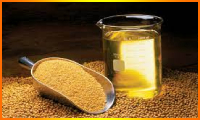
Indian oilmeals export up by 59% in Apr-May.
India exported 9.30 lakh tonnes (lt) of oilmeals during April-May of 2023-24 against 5.86 lt in the corresponding period of 2022-23, recording a growth of 58.6 per cent.
Data available with the Solvent Extractors’ Association (SEA) of India showed that India exported 4.36 lt of oilmeals during May 2023 against 2.54 lt in May 2022, recording a growth of 71.9 per cent.
BV Mehta, Executive Director of SEA of India, attributed this growth in the export of oilmeals to the sharp increase in the export of soyabean meal and rapeseed meal during the first two months of the fiscal.
Soyameal benefits
He said the fall in the price of soyabean to the level of Rs.4,900 a quintal in the local market from the highest level of Rs.7,640 a quintal in April 2022 made the export of soyabean meal attractive in last few months. This helped revive the export of soyabean meal from 43,601 tonnes during April-May of 2022-23 to 2.91 lt during the corresponding period of 2023-24.
Indian soyabean meal (ex-Kandla) was quoted at $595 a tonne as on June 19. The major consumers of Indian soyabean meal are South East Asian countries, where India has a logistic advantage and also can supply in small lots.
Being non-GMO, Indian soyabean meal is being preferred by certain European countries and the US. The rupee depreciation is also pushing the overall export, he said.
Rapeseed meal competitive
On the export of rapeseed meal, he said India exported 4.80 lt of rapeseed meal during April-May of 2023-24 against 3.98 lt in April-May of the previous financial year.
Currently India is the most competitive supplier of rapeseed meal to South Korea, Vietnam, Thailand and other Far East countries at $270 a tonne (FOB India). Rapeseed meal Hamburg (ex-mill) is being quoted at $316 a tonne.
Top importers
South Korea, Thailand, Vietnam and Bangladesh were the major importers of Indian oilmeals during April-May 2023-24.
During the period, South Korea imported 1.89 lt of oilmeals (compared to 2.16 lt in April-May of 2022-23) from India. This included 1.56 lt of rapeseed meal, 25,554 tonnes of castorseed meal, and 7,898 tonnes of soyabean meal.
India exported 1.42 lt of oilmeals (1.25 lt) to Vietnam during April-May 2023-24. This included 41,607 tonnes of ricebran extraction, 52,895 tonnes of rapeseed meal, 47,341 tonnes of soyabean meal, and 442 tonnes of groundnut meal.
Thailand imported 1.52 lt of oilmeals (61,539 tonnes) from India during the period. This included 1.43 lt of rapeseed meal, 4,714 tonnes of soyabean meal, 3,166 tonnes of ricebran extraction, and 701 tonnes of castorseed meal.
India exported 1.93 lt of oilmeals (70,574 tons) to Bangladesh. This included 20,235 tonnes of ricebran extraction, 53,553 tonnes of rapeseed meal, and 1.19 lt of soyabean meal.
Source: thehindubusinessline.com
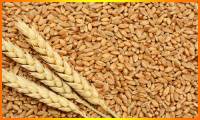
India notifies procedure for wheat export to Nepal.
The Directorate-General of Foreign Trade (DGFT) has asked experienced exporters to apply for permits for the allocation of wheat export quota to Nepal by June 30. However, it has not specified how much quantity will be permitted. Wheat export has been banned since May 13, 2022, except with permission from the government to friendly countries and on humanitarian grounds.
The DGFT, in a trade notice June 20, said the government has approved the request received from Nepal which wanted to import wheat from India during 2023-24. It said that applications filed between June 21 and June 30 will only be considered for the permit.
While it said applications would have to be submitted through the online portal to maintain objectivity and transparency in the allocation of the quota, the DGFT also clarified that only those exporters who have exported wheat to Nepal during three years from 2019-20 to 2021-22 would be eligible to submit applications.
Minimum threshold
It said the minimum threshold will be 100 tonnes and application will be allowed only if the quantity to be exported is above that. The wheat is to be shipped to Nepal by land transport, DGFT said.
Allocation of quota will be made on pro-rata basis on the average annual quantity shipped in the prescribed three years and the quantity sought to be exported, whichever is less, it said. Exporters who will be allocated the quota will have to submit the landing certificate within one month of completion of export quota, it said.
India had exported 4.7 million tonnes (mt) of wheat worth $ 1.52 billion during 2022-23 fiscal as the government had to allow shipments of those quantity for which contracts were signed before the ban was imposed. Out of this, 51,569 tonnes were shipped to Nepal. But in 2020-21, the export of wheat to the neighbouring country was 0.33 mt.
In April 2023, India had exported about 58,000 tonnes of wheat to all countries, including over 1,600 tonnes to Nepal.
Source: thehindubusinessline.com
Organic certification will play major role in insuring better access for Indian products in foreign markets and help gain better prices for farmers: Sumita Dawra, Special Secretary, DPIIT.
Department for the Promotion of Industry and Internal Trade and Invest India in collaboration with the Department of Industries and Commerce, Nagaland, and Press Information Bureau Kohima organized an ODOP Sampark event on the 21st of June 2023 at the Hotel Vivor, Kohima, Nagaland. The event was graced by the Smt. Sumita Dawra, Special Secretary, DPIIT, Govt. of India, Shri R. Ramakrishnan, IAS, Development Commissioner, Govt. of Nagaland and Shri Kekhrievor Kevichusa, Commissioner & Secretary, Industries & Commerce, Govt of Nagaland
The event was organized to create awareness regarding the efforts of DPIIT, Ministry of Commerce and Industry, Govt of India through its two flagship Initiative One District One Product (ODOP) and PM Gati Shakti (Logistics).
Smt. Sumita Dawra, Special Secretary, DPIIT, Govt. of India highlighted the efforts of DPIIT and Invest India in conducting a National Programme for Organic Production (NPOP) Drive in Kohima, Nagaland on 20th June 2023 for Chilli from Nagaland.
The workshop was attended by over 30 farmers of Chili from Kohima, Nagaland.
The documentation for the organic certification for over 15 chili farmers from Kohima was done during the workshop and the remaining will be completed soon after the verification of their documents.
This will play a major role in ensuring better access for Indian products in foreign markets like the EU, Switzerland, etc, and help gain better prices for the farmers.
She also highlighted that efforts will be undertaken to improve the logistics facilities for ODOP products from Nagaland like chili, turmeric, kiwi, pineapple, etc, through the Krishi UDAN scheme, expanding railway connectivity, etc.
She also noted that the Union Budget 2023-24 has allocated Rs 5000 crore for the construction of Unity Malls across the country. This will function as a one-stop marketplace for ODOP products across the country.
It was also highlighted that INR 145 Crores has been allocated for the proposed Unity Mall planned by the State government in Dimapur.
The One District One Product Awards have been instituted by DPIIT to acknowledge the extraordinary work done by States/ UTs, Districts, and Indian Missions Abroad, for the economic development of the State and contribute towards the realization of the Hon’ble Prime Minister’s vision of Atmanirbhar Bharat through the ODOP approach. The Awards will be launched on 25th June 2023 in the Rashtriya Puraskar Portal.
The local officials representing the Department of Industries, Agriculture, Horticulture and APEDA also highlighted the need for an integrated Customs Depo, a dedicated Krishi rail wagon up to Dimapur, and connectivity under the Krishi Udan Scheme for connectivity of organic products.
The Special Secretary also assured that these matters will be proactively taken up with all concerned Ministries/Departments under the PM Gati Shakti National Master Plan.
The official from DPIIT Invest also highlighted the efforts under the ODOP Initiative for the empowerment of Indian products through interventions like Design sensitization workshops, ODOP GeM Bazaar on Government e-Marketplace, ODOP exhibitions, etc.
The event also witnessed an ODOP Exhibition of ODOP products from Nagaland including Chili, fish, coffee, turmeric, etc. It also provided an opportunity for the media to interact with ODOP farmers from Nagaland. The farmers were also able to raise their concerns with the officials for the promotion and empowerment of producers from Nagaland.
A review meeting on PM GatiShakti National Master Plan (NMP) under the chairpersonship of Special Secretary (Logistics) with officials of Govt of Nagaland being organized at Kohima on 21st June 2023. The objective of the meeting is to promote wider adoption of PM GatiShakti for holistic planning, bring more vigor and build synergy with all the stakeholders of the PM GatiShakti NMP.
The meeting was addressed by Sh Jan e Alam, Chief Secretary, Govt of Nagaland and Ms Sumita Dawra, Special Secretary (Logistics), DPIIT
Over 30 officials of Govt of Nagaland comprising the members from Empowered Group of Secretaries (EGoS) and Network Planning Group (NPG) of State attended the meeting.
PM GatiShakti is a transformative approach which was launched on October 13th, 2021 by the Hon’ble Prime Minister for planning & building Next Generation Infrastructure in the country, thereby promoting multimodal logistics connectivity to improve both Ease of Living as well as Ease of Doing Business.
Special Secretary in her presentation addressed the adoption of PM GatiShakti with a holistic approach and demonstrations of best practices by Ministries and States. Deliberations on requirements for State Master Planning, with special attention on data quality management, area development approach for developing economic centres in the North East, strengthening the North East corridor through adequate multimodal connectivity, Area planning approach for upcoming infrastructure projects, use of technology for improving logistics efficiency were the main highlights of the meeting.
Since the launch of PM GatiShakti National Master Plan, the Nagaland State has created requisite framework in terms of Institutional Arrangements/Policy Formulation for alignment with PM GatiShakti framework. Empowered Group of Secretaries (EGoS), Network Planning Group (NPG), and Technical Support Unit (TSU) have been constituted in the State comprising various departments like Power, Roads, Urban Development, Tourism, Transport etc. As on 13th June, 2023 out of 30 mandatory data layers, twenty-two (total/partial) have been integrated in the State Master Plan (SMP) platform. Data layers such has Forest, Eco sensitive zones, Village habitations, Economic areas, Roads, etc have been integrated.
As part of Special Assistance Scheme for the States under Part-II for the FY 2022-23, an amount of Rs 28.43 crores was disbursed for the projects mentioned
Modern Aggregation Centre at Longnak, Mokokchung District
Modern Aggregation Centre at Changtongya, Mokokchung District
Integrated warehouse and distribution center at Meluri, Phek District
PM GatiShakti Data center at Kohima
Modern Aggregation Centre at Pfutsero, Phek District
Five projects submitted as part of State Annual Action Plan have been mapped on the SMP. Development of Customised tools important for economic and social infrastructure planning and for decision making is under discussion with BISAG-N
To complement the PM GatiShakti NMP, the National Logistics Policy (NLP) was launched to address the components of improving efficiency in logistics services and human resource through streamlining processes, regulatory framework, skill development, mainstreaming logistics in higher education and adoption of suitable technologies. To bring a holistic focus on Logistics at State level, Nagaland State Logistics Policy is under final draft stage with State.
The State participated in the Fourth Regional Workshop of PM GatiShakti for North East Regional Workshop which was conducted on 24-25th March 2023 in Guwahati, Assam.
State has been regularly participating in zonal review meetings and interacts with DPIIT officials for better coordination on the adoption of PM GatiShakti.
The training and capacity building of Govt officers from the State have been done at BISAG-N, Gandhinagar
The meeting concluded with the following remarks from Ms Sumita Dawra, Special Secretary, Logistics, DPIIT, Govt. of India requesting the State on the following:
Use NMP/SMP for planning all upcoming infrastructure projects.
Improve data mapping and authenticity of data on the data layers mapped on SMP.
Focus on development of economic centres in the North East through appropriate infrastructure and logistics development.
Usage of SMP for Area Development Approach on the identified area
Identify critical infrastructure gaps and ensure they are taken up for connectivity projects.
Onboarding of social sector departments of the State in PM Gatishakti for Planning of social infrastructure
Leverage local remote sensing agencies / space agencies for development of geo-tagged data, under guidance of BISAG-N, Ahmedabad
Sensitizing and penetration of PMGS adoption at district level for effective area development planning, to improve both Ease of Doing Business and Ease of Living of citizens.
Annexture
Background on ODOP
The ODOP initiative is a visionary program aligned with the Hon’ble Prime Minister's vision of fostering inclusive development across all districts of India. The objective is to identify and promote a distinct product from each district, thereby creating a niche identity for them. By focusing on these chosen products, ODOP aims to drive holistic socio-economic growth and improve market accessibility. Over 1000 products have been selected from all 761 districts of the country. The products are selected by the State Government in consultation with district administration.
The ODOP initiative covers a wide range of products spanning textiles, agricultural produce, processed goods, pharmaceuticals, and industrial items. The aim is to promote and harness the diverse expertise present in different sectors and communities across the country.
By identifying and addressing challenges throughout the supply chain, enhancing market reach, and providing dedicated support to producers, ODOP aims to transform districts into prominent market hubs for their chosen products. Through this comprehensive approach, ODOP is set to empower districts, promote entrepreneurship, and contribute to the overall economic growth and prosperity of the nation.
Source: pib.gov.in

India s land ports lead the way in transforming the border trade ecosystem.
India has 109 border check posts with its immediate neighbours that form an integral part of its ‘Neighbourhood First’ and ‘Act East’ policies. Of these check posts, 11 are upgraded from a Land Customs Station (LCS) to an Integrated Check Post (ICP), housing customs, immigration authorities, border security forces, quarantine and recently sanctioned land port health units, together as single-window facilitation facility, for smooth cross-border movement of passengers and goods. Development of logistics infrastructure complemented with enabling policy and regulatory ecosystem holds significant potential towards making MSMEs more competitive.
Although trade between the BBIN (Bangladesh, Bhutan, India and Nepal) countries grew six-fold between 2005 and 2019 (pre-COVID), the unexploited potential remains massive, estimated by the World Bank at 93 per cent for Bangladesh, nine per cent for Bhutan, 50 per cent for India and 76 per cent for Nepal.
Within the BBIN countries, Petrapole-Benapole (along the India-Bangladesh border), Jaigaon-Phuentsholing (along the India-Bhutan border) and Raxaul-Birgunj (along the India-Nepal border) are the busiest trading points and as a result, also the focus of government efforts towards improving logistics and infrastructure. This is reflected in the fast-tracked development of ICPs at different land border crossings, led by the Land Ports Authority of India (LPAI), a statutory body working under the Ministry of Home Affairs. ICP development is driven, on the one hand, by India’s National Trade Facilitation Action Plan (NTFAP) commitment to bring down the import clearance time to within 48 hours and export clearance time to within 24 hours at land borders, and on the other hand, by India’s popular policies of Neighbourhood First and Act East.
To provide more context, India’s Central Board of Indirect Taxes and Customs (CBIC), under the Ministry of Finance, conducts annual time release studies at 15 ports in India, which includes two land ports – ICP Raxaul and ICP Petrapole. As per the findings of the National Time Release Study (NTRS) 2023, released last week, the import clearance time at these ICPs combined is 31 hours 47 minutes and the export clearance time is 11 hours 7 minutes. With this performance, both the ICPs have bettered the NTFAP targets stated above.
Although the share of trade through land ports in India’s overall trade is relatively low, it has a significant impact on the ecosystem surrounding the port. At a bilateral level, trade through land ports acts as a major confidence-building measure, encouraging constructive cross-border trading partnerships with MSMEs on both sides and at the local level, border trade helps in job creation and ancillary economic benefits.
Moreover, landlocked countries such as Nepal and Bhutan are completely dependent on India for their third-country trade. Such constraints further develop a strong case for the development of land ports, in the context of seeking greater efficiencies in managing trade and travel flows, while maintaining balance with the compliance requirements.
As an example, along the open border of 1,751 km between India and Nepal, 3 of the border check posts, namely Rupaidiha (Uttar Pradesh), and Raxaul and Jogbani (Bihar) have been operationalised as ICPs. More than 40 per cent of the bilateral trade (of over $9 billion) occurs through the Raxaul-Birgunj land port. ICP Raxaul, after being operationalised in 2016, has helped realise mutually beneficial people-to-people and economic trade ties between India and Nepal. India’s exports to Nepal increased by 76 per cent in 2016 with the operationalisation of ICP Raxaul.
It has been frequently reiterated that one of the most important non-physical barriers affecting the region’s integration through land transport is the delays at border crossings. With the development of ICPs, there is a continuous focus on addressing the infrastructural and operational constraints, along with a notable commitment to making land ports gender-sensitive. This complements well with recent initiatives at the local level, such as the Suvidha Pass Facilitation System, an initiative of the State of West Bengal, which streamlines the pre-arrival parking process through an online slot booking portal enabling entry into a land port, with the most significant impact seen in the case of ICP Petrapole.
But more needs to be achieved towards coordination and cooperation across the border, often termed Coordinated Border Management (CBM) in trade parlance.
According to the World Customs Organization, CBM involves agencies within the same country as well as coherent regulatory bodies across borders, striving to attain streamlined and effective regulatory processes by establishing official measures, mechanisms and communication channels. This also aligns with the vision of the Government of India as part of the National Trade Facilitation Action Plan, Action Point 10 which refers to exploring the feasibility of alignment of working days and hours, mutual recognition of testing, harmonisation of standards etc.
Through field visits to all the above-mentioned ICPs, it was observed that many of the land ports along the India-Bangladesh border have aligned on observing Friday as the weekly off on both sides. Also, there is mutual recognition of testing facilities wherein food testing laboratories of Bhutan, that is, the National Food Testing Laboratory (NFTL) and Bhutan Agriculture and Food Regulatory Authority (BAFRA) have been accredited by the Food Safety and Standards Authority of India (FSSAI), thus facilitating cross-border trade of food products and resulting in time and cost savings.
In some cases, there are regulatory bottlenecks that need intervention from the CBIC in India and equivalent counterparts in the neighbouring countries, such as the National Board of Revenue (NBR) in Bangladesh. One of these is the existence of a positive list of only 42 items that are allowed to be traded from India to Bangladesh via ICP Agartala-Akhaura, which should be replaced by a negative list, wherein all items are allowed for trade except those in the negative list.
With Nepal, the passage of the Plastic Waste Management Act by India in 2022, impacts the imports of commodities such as Dabur products containing single-use plastic in straws, stirrers, etc., from Nepal into India. These new legislative changes need to be addressed in the bilateral trade treaty. Another example is frozen meat of swine (HS 020329) where Indian safety standards limit levels of melamine (2.5 mg/kg), aldrin, dieldrin etc. and this limit is not present in the Nepalese food standards, calling for standardisation of Sanitary and Phytosanitary (SPS) measures between India and Nepal.
While the momentum is high on the eastern front, LPAI proposes to offer 24 ICPs along India’s land borders by 2025. This along with concerted efforts to resolve regulatory bottlenecks, can significantly enhance regional integration within South Asia and with South East Asia.
Source: financialexpress.com
FSSAI working on benchmarks to set nutra stds to regulate market: Experts.
The Food Safety and Standards Authority of India (FSSAI) is working on benchmarks to set mandatory standards for nutraceuticals towards regulating the market and to also drive its growth and scalability, according to experts associated with the development.
This would further ensure that only quality and reliable products reach the consumers. They will also push the nutraceutical companies to prioritise the quality, safety and efficacy of products, whether it is at the source, manufacturing facility or storage site.
Currently, nutraceuticals are included under the dietary supplement category in one country and under food for special medical purposes in other countries. Hence, having a single, clearly defined global framework for the nutraceutical sector is required, as there is no harmonisation in nutraceutical classification and regulation across global regulatory markets.
'India is bracing up to be the leader in the global nutraceuticals market. The industry is projected to touch the $18 billion mark by 2025 and likely to exhibit 22% Y-o-Y growth. The government’s support will be crucial in driving the sector’s growth. It allowed 100% Foreign Direct Investment (FDI) in the food processing industry through the automatic route. This benefits the nutraceutical industry as the industry players can now market their products through retail, wholesale, or e-commerce platforms,' informed Ritika Jain, founder, NutraBooti.
Additionally, the FSSAI recently announced special enforcement drives to verify the compliance of nutraceuticals and health supplements. This way, the organisation aims to restrict the flow of non-compliant products, such as those exceeding the ‘Recommended Dietary Intake’ nutrient levels, containing ingredients that are not permitted and making misleading or false claims.
Talking about challenges and solutions, Jain said that as of today, nutraceuticals are charged 18% GST (with few classifications even charged at 28%), making them costlier than before when they were charged at 12%. Hence, a competitive taxation policy is required for nutraceuticals with GST rationalisation of 5% to 10% to bring them on par with pharmaceuticals. The government should further consider including nutraceuticals under the National Medicinal Plants Board (NMPB) scheme and make amendments to the Biodiversity Act as well. Steps like these will encourage backward integration in the nutraceutical industry.
Jain added that we need to strengthen our R&D systems solely dedicated to nutraceuticals to develop a progressive and innovative ecosystem. We also need to establish transparent analytical approaches with emerging technologies to ensure that quality and safety of nutraceuticals match the global standards.
With digitisation emerging at the forefront, the use of modern technologies such as Artificial Intelligence (AI), Robotic Process Automation (RPA), the Internet of Things (IoT), microfluidics, and 3D printing in the nutraceutical segment is highly recommended. For instance, AI can be utilised for demand forecasting, quick ingredient selection, and personalised nutrient formulation recommendations. Similarly, RPA can improve performance, increase product marketing, accelerate productivity, and reduce costs.
India certainly has the potential to become the global leader in the nutraceutical industry. Going by the current scenario, the country will hold a 3.5% share of the global market by the end of this year.
'Lack of regulations in the market leads to difficulty in availing subsidies. The absence of a regularised system for setting up nutraceutical manufacturing plants makes it challenging for new players to enter the market. Hence, it is high time that the industry receives government and regulatory support in the form of a legal framework. We also need to speed up the licensing process of multiple regulatory bodies, including the FSSAI, the Drugs Controller General of India (DCGI), and the Department of Ayurveda, Yoga and Naturopathy, Unani, Siddha and Homeopathy (AYUSH) in order to bring nutraceutical products to market,' Jain concluded.
Source: fnbnews.com