
India backs exceeding WTO farm sops limit.
India has said the existing global trade rules do not adequately address market failures such as food hoarding and market speculation that drive up food prices and inflation during crises.
At a meeting of the Committee on Agriculture last week, India agreed with the 44-member African Group, which proposed to provide flexibilities to developing countries facing food insecurity crises to subsidise farmers beyond the minimal amount of subsidies allowed at the World Trade Organization (WTO), called ‘de minimis’ in trade parlance.
'India agreed that providing some flexibility to developing countries to exceed de minimis limits could be useful during a food insecurity crisis,' said a Geneva-based official, who did not wish to be identified. The de minimis level for India and developing countries is 10% of value of food production and 5% for developed countries.
'India also reiterated its stance on reducing aggregate measurement support beyond de minimis – which, at present, only 32 members are entitled to – before addressing other types of support,' said the official.
India, China and South Africa, along with five others, emphasised the urgency of starting text-based negotiations on the need to find a permanent solution on public stockholding for food security as soon as possible due to the limited time remaining before MC13, which is to be held next year.
The proposal, now supported by two-thirds of WTO members, should serve as the basis for negotiation, they argued and asked those opposing the proposal to refrain from repeating old questions. As per the proposal, a permanent solution for public stockholding should account for inflation and also be based on a recent reference price instead of an old one, which is based on 1986-88 prices.
India’s representative cited the country’s successful efforts to eliminate hunger domestically and provide food assistance to other countries such as Sri Lanka during the food crisis, as per the official.
Source: economictimes.indiatimes.com
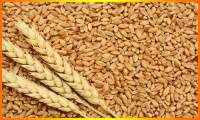
Government directs FCI to conduct e-auctions of wheat and rice to check inflationary trends in retail prices.
Chairman and Managing Director, Food Corporation of India, Shri Ashok K. K. Meena said that the Government has now directed the FCI to conduct the e-auctions of wheat and rice to check the inflationary trends in prevailing retail prices as a part of market intervention to control the price of wheat and rice. Shri Meena said this while addressing the media today in New Delhi.
The base price of wheat has been been kept at the same level at Rs. 2150/qtl for FAQ and Rs. 2125/qtl for URS wheat. In order to control the hoarding of wheat, the Government has decided that the declaration in the Wheat Stock Monitoring System portal is mandatory for participation in the auctions. In addition to this, in order to identify the genuine processors and traders, the valid FSSAI License has also been made mandatory for participation.
The maximum quantity that a buyer can bid for is limited to 100 MTs in this e-auction. To accommodate the small wheat processors and traders, the minimum quantity has been kept to 10 MTs. Further, to accommodate the small and marginal traders and processors of wheat, the EMD for participation in the e-auctions has also been reduced by 50% from the earlier levels.
The bidding is also limited to the local buyers by ensuring that the GST registration of the State is mapped and checked before stocks are released. These measures are taken to ensure a wider local reach for the stocks offered in a particular State.
4 LMT of wheat is being offered in the 1st e-auction from 457 depots across the country. 271 fresh empanelment of buyers were done after 01.04.2023. There are 2093 active empanelled bidders as on date.
The e-auction for rice under Open Market Sale Scheme (Domestic) would commence from 5th July, 2023. The base price of Rice is Rs 3100/qtl.
6 weekly e-auctions of wheat were conducted by FCI till 15.03.2023. Total quantity of 33.7 LMT wheat was offloaded and the prices of Wheat came down by 19% due to this massive intervention in a span of 45 days. Due to the Rabi Procurement period of Wheat, the market intervention was suspended.
Source: pib.gov.in
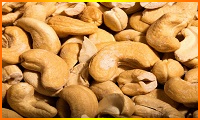
Seasonal sail. French shipping major resumes service for cashew export from Guinea-Bissau to India and Vietnam.
Every June, French shipping major CMA CGM resumes its fortnightly Bijagos Shuttle container service (for three to four months), connecting by sea the small West African tropical country of Guinea-Bissau with Spain’s Algeciras (about 3,500 km).
So what? One may ask in India. This dedicated sea container service exports huge quantities of cashew from Guinea-Bissau to India and Vietnam. In 2022, Guinea-Bissau exported 2,31,000 tonnes of raw cashew nuts.
CMA-CGM said the dedicated service to Asia will be run from Bissau port to Algeciras on a fortnightly frequency from mid-June 2023 to the end of the cashew season.
The Bijagos Shuttle service will be fully operated by CMA CGM by deploying two vessels of 1,700 TEU (twenty-foot equivalent unit). The first vessel will be LION to leave Bissau on June 24. A substantial stock of 40’ containers is available in Bissau, the line said.
This unique product (service) is during the seasonal export of cashews from Bissau to India and Vietnam. The line said it has dedicated hubs in Mundra, Port Klang and Singapore.
Once the smaller shuttle service reaches Algeciras, the containers with cashews will be transferred to mainline ships (large vessels offering direct service to various global destinations) in the westbound EPIC Europe Pakistan India Consortium (EPIC) service to reach the ports of Jebel Ali, Khalifa Port; Karachi; Nhava Sheva and Mundra.
Other major shipping lines like Maersk and MSC also provide various transportation modes, including multimodal, to export cashew from Guinea-Bissau to India.
A businessline report in November 2022 said cashew is by far the most important cash crop in Guinea-Bissau, representing 60 per cent of the country’s exports. It is the main source of income in rural areas. The estimated area under cashew cultivation is 223,000 hectares with an annual production of 230,000 tonnes, making Guinea-Bissau the fifth largest producer in the world. Most cashew nuts produced in Guinea-Bissau are exported to India for processing.
The report said Beta Group, the Kerala-based food company, which owns the Nut King brand, will set up an industrial unit in the West African country of Guinea-Bissau for the cashew business. It then announced $100 million in that country over five years.
Guinea Bissau exported 2,31,000 tonnes of raw cashew in 2022 and of this around 75 per cent to India and the balance to Vietnam, says Rajmohan Pillai, Chairman of the Thiruvanthapuram-based Beta Group, owners of Nut King brand.
According to India-Guinea Bissau Bilateral Relations document released by the Ministry of Economic Affairs in 2021, cashew crop accounts for more than 90 per cent of export earnings of Guinea-Bissau and almost the entire cashew crop (around 98 per cent) is exported to India for processing.
Source: thehindubusinessline.com

India, US looking forward to further enhancing trade ties: Joint Statement.
India and the US on Thursday said they will be looking forward to reconvening of the India-US Trade Policy Forum later this year to further enhance trade relationship and identify new areas for engagement.
The two countries have also taken steps towards deepening bilateral cooperation to strengthen economic relationship, including trade ties, according to a joint statement issued after a meeting between Prime Minister Narendra Modi and US President Joe Biden.
'The US-India trade and investment partnership is an engine for global growth, with bilateral trade exceeding USD 191 billion in 2022, nearly doubling from 2014,' it said.
Prime Minister Modi and President Biden also applauded the reconvening of the US-India Commercial Dialogue and CEO Forum in March in New Delhi, according to the statement.
They have encouraged respective industries to take action on the recommendations from CEOs for greater engagement and technical cooperation to build resilient supply chains for emerging technologies, clean energy technologies, and pharmaceuticals; promote an innovative digital economy; lower barriers to trade and investment; harmonise standards and regulations wherever feasible; and work towards skilling of workforces, it said.
'The leaders support continued for active engagement between the US Treasury Department and the Indian Ministry of Finance under the Economic and Financial Partnership dialogue,' the joint statement said.
They encouraged the US Federal Insurance Office and the Insurance Regulatory and Development Authority of India to advance in areas of mutual interest in the insurance sector under their existing MoU framework, it said.
Prime Minister Modi and President Biden have committed their administrations to promoting policies and adapting regulations that facilitate greater technology sharing, co-development, and co-production opportunities between the US and Indian industry, government, and academic institutions, the statement said.
They also welcomed the launch of the interagency-led Strategic Trade Dialogue in June and directed both sides to undertake regular efforts to address export controls, explore ways of enhancing high technology commerce, and facilitate technology transfer between the India and the US.
The statement said Modi and Biden welcomed Air India's historic agreement with Boeing to acquire more than 200 US-made aircraft. This purchase, it said, will support more than one million US jobs across 44 states and contribute to ongoing efforts to modernise the civil aviation sector in India.
Boeing has announced a USD 100 million investment on infrastructure and programmes to train pilots in India, supporting India's need for 31,000 new pilots over the next 20 years.
The leaders also welcomed Boeing's announcement of its completion of a C-17 aftermarket support facility for MRO and a new parts logistics centre in India to capture future synergies between defence and civil aviation.
'India highlighted its interest in the restoration of its status under the US Generalised System of Preferences programme, which could be considered in relation to eligibility criteria determined by the US Congress. The leaders supported intensifying the work to advance progress on issues related to the eligibility criteria,' the statement said.
Prime Minister Modi also expressed India's interest towards being recognised as a Trade Agreements Act-designated country by the US to further enhance the integration of both economies and to further promote trade and investment between the two countries.
In this regard, the leaders welcomed the initiation of discussions between both sides at an official level on issues related to bilateral government procurement, it said.
The leaders are committed to pursuing ambitious efforts to strengthen Multilateral Development Banks (MDBs) to address shared global challenges of the 21st century, according to the statement.
'By the G20 Leaders’ Summit in New Delhi, the United States and India will work together to secure G20 commitment to create a major new dedicated pool of funds at the World Bank to deploy concessional lending for global challenges, and to enhance support for crisis response in International Development Association recipient countries,' the statement said.
Noting the developments, Chief Executive at General Atomics Global Corporation Vivek Lall said, 'We are very happy to note that Prime Minister Modi and President Biden have significantly enhanced the defense relationship between the two countries by announcing the decision to acquire MQ9B for the Indian armed forces.' 'This is a breakthrough moment for India-US strategic and defence partnership and General Atomics is pleased to be a major contributor in taking it to the next level,' Lall said.
Prime Minister Modi is visiting the US from June 21-24 at the invitation of President Joe Biden and First Lady Jill Biden. PTI NKD MJH CS .
Source: ptinews.com
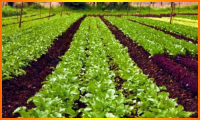
Govt initiatives focus on transition, but better markets needed to scale up organic farming: CSE report.
Help with transitioning to organic farming and better marketing as well as market access are the key issues that need to be tackled to scale up organic farming in the country, the latest report of the Centre for Science and Environment (CSE), 'Market Access for Organic and Natural Produce', says.
While transition is getting more traction of late, the report says, not much effort is afoot to create better markets. 'Most ongoing initiatives focus on the transition through capacity-building and incentives. But a lot needs to be done to provide better markets through a structured approach,' said Amit Khurana, director, sustainable food systems programme, CSE on June 21, in a webinar organised to release the report.
The report includes six selected case studies from three key stakeholder groups - farmer-producer organisations (FPO), retail corporations and state governments, he added.
Speaking on the occasion, Rajashekar Reddy Seelam, founder and managing director of Sresta Natural Bioproducts Private Ltd, Hyderabad, said building trust in organic produce by ensuring that only genuine items is marketed is essential for the success of the sector.
Explaining the strategy, Seelam said, 'Farmers are at the core of our business. Initially it was difficult to convince farmers to adopt organic farming as during the first three-to-four years yield reduces. Benefits are visible only later.
Keeping this in mind, we identify a location where farmers are pro-organic or use less chemicals. We have 100-plus trained field associates stationed in our project team to guide and support farmers and agronomists in the system.'
G V Ramanjaneyulu, executive director of Centre for Sustainable Agriculture, Hyderabad, who is also in the board of Sahaja Aharam Producer Company Limited, a federation of 19 FPOs, talked about the role of FPOs in scaling up organic farming.
'FPOs certainly help, more so if federated, as they have the potential to augment resources, help more farmers grow food organically, leverage technology, bring efficiency in systems and help farmers earn more through shorter supply chains by bringing producer and consumer together,' he said.
Sahaja, formed in 2014, helps over 9,000 farmers in 11 districts in Andhra Pradesh and Telangana to grow food organically at low cost. It is also part of the six case studies featured in the CSE report.
Meanwhile, Akash Badave, CEO of Bhoomgadi Organic Farmers Produce Company, Chhattisgarh, said his FPO managed to find its unique selling point in the products growing exclusively in the remote Dhantewade region of Chhattisgarh.
The CSE report elaborates on how Bhoomgadi helped over 2,700 organic farmers from 122 villages overcome market-access limitations due to their remoteness.
Addressing the webinar, Badave stressed that consumer education is crucial to take the organic movement forward. 'We need to intensely work with the consumers. Actually, that is going to be the key. A lot of work until now has been done with the farmers. Now, we need to work very closely with the consumers, aggregating consumers, changing the behaviour, changing the attitudes and expectations,' added Badave.
For Dinesh Balam, state coordinator of Odisha Millet Mission, which was among the case studies done for the CSE report, there is no point in trying to redesign a system without specifically addressing the existing problems.
'When it comes to millet, one of the criticisms is that millets are not cleaned properly. There's always mud on the surface of ragi, for instance. To address this, we looked at the institutions that are there at village-level that can help farmers to ensure proper cleaning post harvesting. Every village has women self-help group. So, what we do in our programme is that we empower these women to run post-harvesting centres. We supply them the needed equipment so farmers can process post harvesting at village level. The other question when it comes to millet is that how we increase household consumption. In Odisha, we engage women's groups again to create an awareness among end users.'
Manoj Gupta, principal extension specialist, state project implementing unit of Prakritik Kheti Khushhal Kisan Yojana (PK3Y), Himachal Pradesh, said one of the things that they realised during the implementation of their programme is that there is a need to simplify certifications, as too many confuse consumers.
The CSE report also highlights how PK3Y Himachal has come up with a simpler certification system specifically for natural farming. According to Gupta, Himachal tried to make a certification methodology that is also scalable with other certification systems operational at the national and international level. This self-assessed certification mechanism (Certified Evaluation Tool for Agriculture Resource Analysis-Natural) has been made accessible through a web portal since October 2022, he added.
'More than 11,000 farmers have submitted the information online and around 6,000 farmers have been certified by the online platform created for this innovative certification,' said Gupta.
The report also has a chapter on BigBasket, an online supermarket that sells products from 70 different organic brands, including its own BB Royal Organic and BB Fresho Organic.
The event was attended not only by farmers and FPOS, but also other stakeholders involved in organic farming. 'Consumer awareness and Direct-to-Consumer channels need to be developed to help farmers get a better price realisation,' farm-to-fork professional Bhisham Thakkar pointed out during the session.
Thangapandian, who runs the NGO Farm India in Trichy, which pushes for collective farming as well as teaches enterprise skills to farmers, said the biggest takeaway from the report is that if the farmers want to get a good price for their produce, be it in organic or even chemical farming, they have to band together as collectives.
'It is impossible for small farmers especially, to expect a fair price for the products if they are standing alone,' Thangapandian said.
Source: economictimes.indiatimes.com
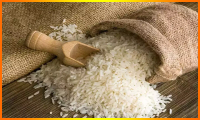
India Grants Approval for Exporting Broken Rice to Senegal, Gambia, and Indonesia.
India has authorized the export of broken rice to Senegal, Gambia, and Indonesia in response to requests made by the respective nations, announced the Directorate-General of Foreign Trade (DGFT). However, the specific quantity of broken rice permitted for export to these countries has not been disclosed.
According to a trade notice issued on Tuesday, the DGFT stated that only exporters who have shipped all types of rice to Senegal, Gambia, and Indonesia over the past three years will be granted a quota for exporting broken rice.
Previously, the Indian government had imposed a ban on broken rice exports on September 8, 2022. However, the ban was amended on May 24, 2023, allowing shipments to countries to address their food security needs, based on their respective government's requests.
Exporters have been instructed by the DGFT to file applications online between Thursday and June 30, seeking to ship a minimum threshold of 8,000 tonnes of broken rice via sea. The DGFT emphasized that applications would only be considered if the exporter applies for a quantity exceeding the minimum threshold.
The allocation of broken rice export quotas will be determined on a pro-rata basis, taking into account the average export of all rice varieties to the respective countries over the three preceding years before the financial year in which the shipments were initially restricted.
Exporters will be granted permits valid until December 31 and will be required to submit a 'landed certificate' upon completion of exporting their allocated quota of broken rice within one month.
Earlier in February, the Indian government, under special consideration during the ban on shipments, approved exports of 250,000 tonnes of broken rice to Senegal, 100,000 tonnes to Gambia, and 9,900 tonnes to Djibouti.
Source: krishijagran.com
APEDA Warns Exporters Of High Aflatoxin Levels In Products.
The Agriculture and Processed Food Products' Export Development Authority (APEDA) has expressed its concern to exporters regarding the elevated levels of aflatoxin found in groundnuts, peanuts and processed peanut products being exported.
APEDA sent a letter notifying exporters that significant amounts of aflatoxin were detected in export consignments to countries such as Singapore, Russia, Japan, Korea, Indonesia, Thailand, Malaysia, and EU nations.
The letter also served as a warning to exporters, urging them to comply with the guidelines set forth by the Director General of Foreign Trade (DGFT).
Failure to adhere to these regulations would result in severe actions, including the potential termination of approval for groundnut and peanut processing units, as well as other penalties as dictated by government regulations, stated APEDA.
APEDA received alerts and trade complaints concerning the high levels of aflatoxin present in exported groundnut, peanut, and processed peanut products. These findings appear to violate the established standards set by the DGFT and APEDA.
Source: businessworld.in
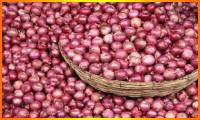
Nepal resumes import of onions from India after 2-week halt.
Traders in Nepal have resumed importing onions from India, more than two weeks after they stopped buying from the neighbouring country following the Nepal government's move to impose a hefty 13 per cent Value-Added Tax (VAT) on vegetables last month.
Vegetable vendors started bringing onions to the Kalimati Fruits and Vegetable Market, Kathmandu's main vegetable trading centre, on Monday, with the largest consignments of onions being poured in on Tuesday and Wednesday.
'Onions have started arriving in the Kalimati Fruits and Vegetable Market,' said Arjun Prasad Aryal, Deputy Executive Director of the market's Development Committee.
'In total, 145 metric tonnes of onions arrived in Kathmandu's major vegetable wholesale market on Tuesday and Wednesday,' Aryal said, adding that there is a smooth supply of the vegetable in the market as traders have started bringing onions by paying VAT.
Source: moneycontrol.com
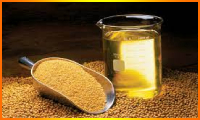
India s non-genetically modified oil meal exports shoot up.
India’s non-Genetically engineered oil meal are in demand from Europe, and Middle-East and South-East Asian countries. The export of oil meals has increased by 72 per cent in 2023 May compared to May 2022.
India’s non-Genetically Modified (non-GM) soybean meals are preferred mainly by certain European countries and the USA over Genetically Modified (GM), mostly grown in Brazil, Argentina and the USA.
'Indian Soybean Meal being non-GM has an advantage and being preferred by especially western nations where awareness of environmental impacts are high,' said BV Mehta, Executive Director, The Solvent Extractors’ Association of India.
The major importers of Indian oil meals in Western countries are the USA, followed by Canada, France, New Zealand, and the rest of Europe.
The exports of oil meals for May 2023 reported 4.36 lakh tonnes (LT) compared to 2.54 LT in May 2022. It is up by 72 per cent. The overall export of oil meals from April to May 2023 was reported at 930,044 tons compared to 586,415 tons during the same period of last year, mainly due to the sharp increase in soybean and rapeseed meal exports. Out of it, the export of rapeseed meals has set a new record since the export started.
'It is hearting to note that this financial year (2022-23), the export of rapeseed meal has set a new record and reported at 2.3 million tonnes, ever highest since export started,' said Mehta.
The major consumers of Indian soybean meal are South East Asia, where India has a logistic advantage and also falls in price. The rupee depreciation also pushed the overall export. 'There is around a 36 percent fall in the price of soybean since April 2022 which also made India’s soybean more lucrative,' says Manoj Shukla, a Mumbai-based oilseeds commodity analyst.
The soybean price fell from over 7600 per quintal in April 2022 to Rs 4900 per quintal in May 2023, helping in reviving the export. Major importers of Indian oil meals are South Korea, Vietnam, Thailand, Bangladesh and other far-east countries.
Source: newindianexpress.com
FSSAI takes first step towards scaling up training & capacity building.
The Food Safety and Standards Authority of India (FSSAI), is conducting a three-week induction training programme, ‘Nurturing Individual Potential and Unleashing Networking’ (NIPUN), for its newly recruited officials. The recently opened National Training Centre was officially inaugurated by Dr Mansukh Mandaviya, Union Minister of Health and Family Welfare, on May 31, 2023.
This is the first step towards enhancing staff training and capacity building for food safety officials, designated officers, and staff members.
The 6th NIPUN was inaugurated by G Kamala Vardhana Rao, CEO, FSSAI, at the National Training Centre for Food Safety and Standards, Ghaziabad. While welcoming the newly hired officials. Rao said, 'Your role is pivotal in maintaining food safety and quality which will impact the lives of 140 crore people.'He added that this training will help enhance the skills and knowledge about the food safety ecosystem of the country.
FSSAI has trained more than 11 lakh food handlers and FBOs as Food Safety Supervisors since 2017, with an average rate of 2 lakh trainees per year. With more than 72 lakh FBOs in the country, FSSAI is gearing up to train 25 lakh food handlers and FBOs in the next three years, beginning with the current financial year.
NIPUN is a flagship induction training programme for direct recruits of FSSAI. The programme design comprising three weeks of classroom training followed by on-the-job exposure to the functioning of FSSAI at regional offices is envisaged to sensitise the direct recruits to the paramount mandate of the apex food regulator.
This training programme aims at fostering fundamental knowledge about food safety and standards, as well as an understanding of the organisational structure of FSSAI, including the Food Authority, Central Advisory Committee, scientific panels/committees, and the general aspects of food safety in terms of products, practices, value chain, and ecosystem. The programme will feature various technical sessions covering topics such as Indian Food Laws, Standardisation, Quality Assurance, Regulatory Compliance, Codex, Food Imports, and more. Additionally, it will cover administrative aspects, including rules, benefits and claims, office procedures, public procurement and financial rules, conduct and discipline rules, and e-office.
A group of 52 recently recruited deputy directors, food analysts, and technical officers will undergo this three-week programmes at the National Training Centre for Food Safety and Standards in Ghaziabad. Following the programme, they will receive two weeks of on-the-job training at the Southern Regional office in Chennai and the Northern Regional office in Ghaziabad.
Source: fnbnews.com