FSSAI directs laboratories to strengthen testing infrastructure for organic products.
The Government has decided to promote organic products in India by encouraging and strengthening cooperative societies. The success of this depends on reliable testing to ensure the authenticity of the organic products. Therefore, all food testing laboratories need to optimize their facilities and procedures to handle organic testing efficiently and accurately.
FSSAI has directed notified laboratories under sections 43(1) and 43(2) of the FSS Act 2006 for Organic testing to review their current capabilities and take the necessary steps to enhance the infrastructure and scope of the testing for organic products. All the testing facilities to make an application to APEDA for recognition of the laboratory for testing organic products.
FSSAI has also asked them to apply to the National Referral Laboratory of APEDA for participation in proficiency testing as a pre-requisite to qualify for pre-export testing of organic products.
Source: foodtechbiz.com
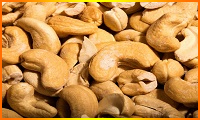
Govt announces grant of GI tag for Goan Cashew .
Acting on the long pending demand of cashew producers for protecting the Goan cashew and its unique identity, the State government on Friday announced grant of Geographical Indication (GI) tag for ‘Goan Cashew’ (nuts and apple).
The Director of Industries, Trade and Commerce Swetika Sachan informed about the imminent granting of a GI tag for ‘Goan Cashew’.
She said that the prestigious recognition, made possible through the completion of necessary formalities, will officially brand the renowned local product.
Sachan further said that the GI tag is expected to significantly enhance the reputation and marketability of Goan cashews, providing a tremendous boost to the cashew industry as a whole.
The Director of Industries was speaking during the One District One Product (ODOP) Sampark programme in Panjim.
'In line with the shared objective of highlighting Goa's diverse range of handicrafts, art, and cultural heritage, the State government, in collaboration with Invest India, is embarking on a pioneering project —the establishment of a ‘Unity Mall’,' Sachan said.
This 'dynamic retail space' will serve as a comprehensive destination for visitors to immerse themselves in the essence of Goa, she added.
The ‘Unity Mall’ will not only feature 'One District One Product' offerings but also showcase an extensive range of local handicrafts and provide exhibition spaces for state emporiums.
'To further expand the scope of local product identification, the Government of Goa, in partnership with Invest India, is considering the implementation of the 'One Taluka One Product' scheme. This initiative aims to identify and promote specific agricultural produce and handicrafts from each Taluka in the State,' she said.
'By diversifying the range of products associated with each taluka, the government seeks to unlock the untapped potential of local industries and foster sustainable economic growth across the region,' the senior official informed.
Source: heraldgoa.in
India backs exceeding WTO farm sops limit.
India has said the existing global trade rules do not adequately address market failures such as food hoarding and market speculation that drive up food prices and inflation during crises.
At a meeting of the Committee on Agriculture last week, India agreed with the 44-member African Group, which proposed to provide flexibilities to developing countries facing food insecurity crises to subsidise farmers beyond the minimal amount of subsidies allowed at the World Trade Organization (WTO), called ‘de minimis’ in trade parlance.
'India agreed that providing some flexibility to developing countries to exceed de minimis limits could be useful during a food insecurity crisis,' said a Geneva-based official, who did not wish to be identified. The de minimis level for India and developing countries is 10% of value of food production and 5% for developed countries.
'India also reiterated its stance on reducing aggregate measurement support beyond de minimis – which, at present, only 32 members are entitled to – before addressing other types of support,' said the official.
India, China and South Africa, along with five others, emphasised the urgency of starting text-based negotiations on the need to find a permanent solution on public stockholding for food security as soon as possible due to the limited time remaining before MC13, which is to be held next year.
The proposal, now supported by two-thirds of WTO members, should serve as the basis for negotiation, they argued and asked those opposing the proposal to refrain from repeating old questions. As per the proposal, a permanent solution for public stockholding should account for inflation and also be based on a recent reference price instead of an old one, which is based on 1986-88 prices.
India’s representative cited the country’s successful efforts to eliminate hunger domestically and provide food assistance to other countries such as Sri Lanka during the food crisis, as per the official.
Source: economictimes.indiatimes.com

UP: CM to flag off flight carrying GI tagged Banarasi mango to Sharjah.
Geographical Indication (GI) tagged juicy and aromatic Banarasi Langra mango will soon fly directly from the newly built pack house in Varanasi to Sharjah. Uttar Pradesh Chief Minister Yogi Adityanath will flag off a perishable food product prepared according to international standards and send it abroad for the first time.
The government is making efforts to turn farmer entrepreneurs into exporters by eliminating middlemen from their businesses. It will increase farmers’ income. In order to achieve this, the Agricultural and Processed Food Products Export Development Authority (APEDA) is working nonstop.
There will be single window clearance for export from pack houses. Here, perishable food items will be prepared in accordance with global standards. The pack house is accredited by APEDA for export as per international standards.
Uttar Pradesh Chief Minister Yogi Adityanath will give a big gift to the ‘annadata’ farmers of Purvanchal on June 26. Vegetables and fruits of Purvanchal will now be exported directly from the pack house in Varanasi. Perishable food products will be prepared in the pack house according to international standards.
Pack house has been completed in about 4461 square feet area at a cost of Rs 15.78 crore. Here, farmer entrepreneurs will also be given training to prepare products according to the demands of the international market. This will be the third integrated pack house in Uttar Pradesh after Saharanpur and Lucknow.
APEDA’s Deputy General Manager Dr CB Singh stated here on Saturday that the CM will flag off the first shipment of four to five metric tonnes of Banarasi Langra mangoes and other products from Varanasi airport to Sharjah.
Dr CB Singh, Deputy General Manager, APEDA, stated that in order to produce a product of an international standard, fruits and vegetables must go through a number of processes in the integrated pack house. Because of this, their flavour, freshness, and other qualities remain unaltered.
Source: thestatesman.com
Union Minister of Commerce and Industry Shri Piyush Goyal lauds the support and encouragement provided to exporters by ECGC Ltd.
Union Minister of Commerce and Industry, Consumer Affairs, Food & Public Distribution and Textiles, Shri Piyush Goyal lauded the support and encouragement provided to exporters by ECGC Ltd. Addressing the media in New Delhi today, the Minister emphasized the importance of transparency and simplification of procedures and said that all the procedures at ECGC Ltd. will be made completely digital in the next few months. The Minister said that the digitisation of processes at ECGC will enhance the convenience for the exporters. Shri Goyal also said that a new grievance redressal mechanism at ECGC Ltd. will be established where a Live video-conference facility will be available daily for one hour on the website of ECGC Ltd.
Last year ECGC Ltd. extended cover under Export Credit Insurance for banks (ECIB) scheme for the accounts with export credit working capital limits up to Rs. 20 crore sanctioned by the banks (excluding Traders and GJD Exporters) with enhanced cover of 90%. Four banks namely SBI, Central Bank of India (CBI), Bank of Maharashtra and Saraswat Bank have so far opted for the enhanced cover. The experience under the cover has been satisfactory in terms of low default ratio in the last one year. Shri Goyal said that the extended cover under the scheme has resulted in easing of interest rates on the credit/loans obtained from the banks.
The Minister announced that the benefit of the enhanced cover will be extended to the accounts with limits up to Rs. 50 crore for above four banks without any additional cost. It is expected that around 3000 exporter-borrower accounts will benefit from this.
For nine banks where six-year claim to premium ratio (CPR) is less than 70%, cover for accounts with export credit working capital limits up to Rs. 20 crore will be offered enhanced cover of 90% without any additional cost provided the banks are extending the export credit at an interest rate corresponding to the accounts rated ‘AA’ (or with equivalent rating). Around 3000 exporter- borrower accounts will be supported by the enhanced cover under WT-ECIB for such banks. This product was first of its kind in the export credit insurance industry all across the globe. The product facilitates the borrower accounts to be treated equivalent to ‘AA’ rated accounts with reduced cost of export credit to the exporters.
ECGC Ltd. will provide enhanced cover under the policy covers (providing protection against commercial and political risks on account of the overseas buyers) issued to the exporters in the policies available for sale in all the channels. 100% cover will be provided for existing policyholders where ‘No Claim Bonus (NCB)’ is 50% and the policy proposal has been received directly from the exporters and not through insurance brokers. 5% additional cover under the policies will be given where the proposal is received directly from the exporter and not through insurance brokers.
During FY 2022-23, ECGC Ltd. supported more than 16,000 exporters with an aggregate value of business covered to the tune of Rs.6.68 lakh crore. CMD, ECGC Shri M. Senthilnathan said that the business covered value is expected to increase to more than Rs.10 lakh crore in the current FY.
ECGC Ltd. envisages to provide claim and other insurance related services to exporters and banks digitally after implementation of the upgraded software system (ERP system) which is likely to be implemented within the next six months.
ECGC Ltd., a premier Export Credit Agency (ECA) of the Government of India, was set up in 1957 under the Companies Act to promote exports from India by providing export credit insurance services to exporters and banks. It functions under the administrative control of the Ministry of Commerce and Industry. Over the years, the Company has designed different export credit risk insurance products to suit the requirements of Indian exporters to protect them against credit risk involved in exports. The Company also provides insurance to commercial banks extending export working capital loans to exporters. The products to banks are aimed at ensuring availability of adequate and affordable working capital for exporters. The products to exporters help them in retaining the existing markets in addition to expanding exports to new and emerging markets by extending adequate credit to buyers.
Source: pib.gov.in

India-UAE sign pact for AEOs for faster customs clearances.
India and UAE on Friday signed Mutual Recognition Arrangement (MRA) for authorised economic operators (AEOs) of both countries, the CBIC said. The AEO programme enables Customs administration to identify safe and compliant exporters and importers and to provide them better facilitation. Under MRA, Customs authorities recognise AEOs of both countries, which in turn helps expedite customs clearances.
'In pursuance of greater trade facilitation & ease of doing business, India & UAE signed the Mutual Recognition Arrangement for Authorised Economic Operators of both countries today, on sidelines of the 141st/142nd sessions of WCO Customs Co-operation Council meeting, in Brussels,' the Central Board of Indirect Taxes and Customs (CBIC) tweeted.
Earlier in September 2021, India and the US had signed a MRA AEO. The Customs authorities of both countries have already evaluated each other's AEO programme and is working to quickly implement the reciprocal arrangement for authorised economic operators.
Source: economictimes.indiatimes.com

US, India decision to end trade disputes a big victory, mutually beneficial: Piyush Goyal.
The decision of the US and India to end six major trade disputes at WTO is a 'big victory' and will be mutually beneficial for both countries, Commerce and Industry Minister Piyush Goyal said on Friday. He said resumption of talks at the Trade Policy Forum has started yielding significant results.
India and the US have agreed to end six trade disputes at the World Trade Organization while New Delhi will also remove retaliatory customs duties on certain American products such as almonds, walnuts, and apples.
A joint statement issued after the meeting of Prime Minister Narendra Modi and US President Joe Biden in Washington said the two leaders welcomed the resolution of six outstanding WTO disputes through mutually agreed solutions.
'It is a big victory for India and is a mutually beneficial arrangement for both countries,' Goyal told reporters here.
He said, now there are no pending India-US disputes at WTO.
On the poultry case, he said both sides are discussing it and will find a solution by end of this year.
'So, India and the US by the end of this year will have no disputes. All the six major ones have gone,' the minister said adding 'for the first time bilaterally we are ending the disputes.'
In 2015, India lost a long-pending dispute over poultry imports from the US at WTO's dispute settlement body. India had 12 months to comply with the WTO order. The US had sought trade sanctions against India in this case.
Goyal informed the reporters that US Trade Representative Katherine Tai will be coming to India by end of this year for next TPF meet.
'Before that, we will be in a position to solve that (poultry case) also,' he added.
Talking about the six trade disputes, he said it's a 'package deal'. The six disputes include three initiated by India and as many by the US.
In 2018, the US imposed 25 per cent and 10 per cent import duties on certain steel and aluminium products, respectively, on grounds of national security. In retaliation, India in June 2019 imposed customs duties on 28 American products, including chickpeas, lentils, almonds, walnuts, apples, boric acid, and diagnostic reagents. India had also filed a complaint against the US in WTO on imposing these duties.
On the steel and aluminium case, there were requests by Indian players to exclude certain products from the high duty list.
On this, the US has given 'us an assurance that at least 70 per cent of all such requests of steel, and 80 per cent of all such requests for aluminium applications for products originating in India will be excluded from the additional process of Section 232 (of a US law)'.
In 2018, then US President Donald Trump had imposed these duties using Section 232 of an act that permits the president to restrict imports.
The six disputes include countervailing measures on certain hot-rolled carbon steel flat products from India, certain measures relating to solar cells and modules, measures relating to the renewable energy sector, export-related measures, certain measures on steel and aluminium products, and additional duties on some products from the US.
According to trade experts, both countries can resolve the disputes on mutually agreed terms and later inform the Geneva-based WTO about the same.
On April 12, 2012, India requested consultations with the United States with regard to the imposition of countervailing duties by the US on certain hot rolled carbon steel flat products from India. New Delhi had claimed that the countervailing duty investigation and related measures are inconsistent with WTO trade norms.
On February 6, 2013, the US requested consultations with India concerning certain measures of India relating to domestic content requirements under the Jawaharlal Nehru National Solar Mission for solar cells and solar modules. America claimed that the measures appear to be inconsistent with global trade provisions.
Similarly, on September 9, 2016, India requested consultations under the aegis of the WTO with the US regarding certain measures of the US relating to domestic content requirements and subsidies instituted by the governments of the states of Washington, California, Montana, Massachusetts, Connecticut, Michigan, Delaware and Minnesota, in the energy sector.
On March 14, 2018, the US asked for consultations with India concerning certain alleged export subsidy measures of New Delhi under Merchandise Export from India Scheme (MEIS), Export Oriented Units (EOU), Electronics Hardware Technology Parks (EHTP), Special Economic Zone (SEZ) and Export Promotion Capital Goods (EPCG). The WTO dispute panel ruled against India, and New Delhi in 2019 appealed against the ruling at the appellate body.
On May 18, 2018, India requested consultations with the US concerning certain measures imposed by America to allegedly adjust imports of steel and aluminium into the US. India had claimed that these measures appear to be inconsistent with the WTO rules.
Similarly on July 3, 2019, the US asked for consultations under the WTO dispute settlement mechanism with India regarding India's imposition of additional duties with respect to certain products originating in the US.
The US is the largest trading partner of India. In 2022-23, the bilateral goods trade increased to USD 128.8 billion as against USD 119.5 billion in 2021-22.
Source: economictimes.indiatimes.com
FSSAI likely to tone down order on mandatory testing norms.
In a relief to small food business operators, the Food Safety and Standards Authority of India (FSSAI) has agreed to tone down its recent order that called for mandatory testing of products manufactured by all food business operators (FBOs).
Responding to the concerns expressed by activists and small FBOs, the FSSAI said it examines options to provide minimal parameters for testing in the respective product category.
'Keeping in view a large number of representations received from stakeholders, especially the micro, small, and medium enterprises (MSME) sector, that expressed concerns such as testing costs, we are exploring options to provide minimal parameters to be tested without compromising the food safety,' Ganesh Vishweshwar Bhat, Technical Officer (Regulatory Compliance), FSSAI, said.
In a response sent to Alliance for Sustainable & Holistic Agriculture (ASHA), he said the tweak in the order would ease the burden of FBOs, especially regarding the testing fees.
A recent FSSAI order directed all the FBOs to get tests done on their products and upload the results every six months. The ASHA lodged a strong protest with the authority early this month, alleging that the move would cause a severe financial burden on small FBOs, who don’t have the financial wherewithal to conform to the order.
Stating that it’s the government’s responsibility to test the food products, he said the order puts the onus on small FBOs. It pointed out that small FBOs (with less than a turnover of Rs 12 lakhs) are only required to register with the FSSAI. (Small operators have a production ceiling of 100 litres or kilograms a day).
The FSSAI, however, said that the order provisions align with FSSAI’s mandate to ensure the availability of safe and wholesome food for human consumption.
'In order to ensure food safety by the manufacturers, testing of food products at least once in six months by the licensed food manufacturers has been made mandatory since August 5, 2011,' the FSSAI official said in his letter.
'One of the conditions that a licensed manufacturer must meet is to ensure testing of relevant chemical and/or microbiological contaminants in food products in accordance with these regulations as frequently as required,' he said.
These tests will are t be conducted at the NABL-accredited FSSAI-notified laboratories at least once in six months.
He said the FSSAI’s January 2023 order directed the licensed players to follow the regulations and upload test reports on the Food Safety Compliance System portal.
Activists’ response
The FSSAI’s response, however, didn’t enthuse the activists much. 'It appears that FSSAI has agreed to have a relook at the provisions made in its order. We continue to believe that there is no scientific basis for this order, even if they reduce the parameters for testing,' an ASHA constituent member said.
Source: thehindubusinessline.com

India in bilateral talks with Brazil to resolve sugar dispute at WTO.
India is in negotiations with Brazil to resolve a sugar dispute at the World Trade Organisation (WTO) and the commerce ministry is coordinating with concerned departments for the same, government sources said. India is also following a similar process for other complainants of the sugar dispute at the Geneva-based WTO, they said.
In 2019, Brazil, Australia and Guatemala dragged India into the WTO's dispute settlement mechanism alleging that New Delhi's sugar subsidies to farmers are inconsistent with global trade rules.
The Department of Commerce is coordinating with all the concerned line ministries to arrive at possible alternatives, one of the sources, who is aware of the development, said.
The exercise assumes significance as a WTO dispute settlement panel on December 14, 2021, ruled that India's support measures for the sugar sector are inconsistent with the global trade norms.
In January 2022, India appealed against the panel's ruling at the WTO's appellate body, which is the final authority on such trade disputes.
Brazil is the largest producer and exporter of sugar in the world. India is the world's second-largest sugar producer after Brazil.
Brazil, Australia and Guatemala, which are members of the WTO, had complained that India's support measures to sugarcane producers exceed the de minimis level of 10 per cent of the total value of sugarcane production, which according to them was inconsistent with the WTO's Agreement on Agriculture.
They had also flagged India's alleged export subsidies, subsidies under the production assistance and buffer stock schemes, and the marketing and transportation scheme.
According to WTO rules, a WTO member or members can file a case in the Geneva-based multilateral body if they feel that a particular trade measure is against the norms of the WTO.
Bilateral consultation is the first step to resolve a dispute. If both sides are not able to resolve the matter through consultation, either can approach the establishment of a dispute settlement panel. The panel's ruling or report can be challenged at the World Trade Organization's Appellate Body.
Interestingly, the appellate body of the WTO is not functioning because of differences among member countries to appoint members in this body. Several disputes are already pending with the appellate body. The US has been blocking the appointment of the members.
The bilateral trade between India and Brazil increased to USD 16.6 billion in 2022-23 as against USD 12.2 billion in 2021-22. Trade gap is in the favour of India.
India has exported 37.75 lakh tonnes of sugar till March 9 of the 2022-23 ongoing marketing year ending September out of 60 lakh tonnes allowed by the government, trade body All India Sugar Trade Association (AISTA) has said in March. Mills have exported 37,75,684 tonnes of sugar between October 1, 2022, and March 9 of the 2022-23 marketing year.
The sugar marketing year runs from October to September. The government has allowed the export of 60 lakh tonnes for the 2022-23 marketing year. The industry is demanding that the government should increase the export quota.
WTO member countries can resolve disputes outside the dispute settlement mechanism and later inform the multi-lateral body about the same.
Recently, India and the US have agreed to end their six major trade disputes at the WTO.
Source: economictimes.indiatimes.com

Kashi becomes hub of agriculture exports in East UP, witnesses 420% growth.
Before chief minister Yogi Adityanath flags off the first consignment of mango and green chilli packed at Kashi's Integrated Pack House (IPH) for export to Gulf countries, the figures of export of agriculture and horticulture products reveal that east UP has emerged as a major hub of agri export.
Since the time IPH became functional after inauguration by PM Narendra Modi on March 24, Varanasi's export has risen from 4 metric tonnes in 2020-21 to 561 MT in 2022-23, ensuring growth of 420%. Lucknow, which had export figure of 111.47 MT in 2020-21 had exported 703.30 MT of agri products in 2022-23 and its growth percentage was 6%.
Busy in preparations for the flagging off ceremony at IPH in Karkhiyao area on Sunday, the Agricultural and Processed Food Products Export Development Authority (APEDA) deputy general manager CB Singh said, 'After IPH's inauguration by the PM, process to operationalise it has been intensified in Varanasi in order to achieve the goal of developing east UP as a hub of export of agriculture and horticulture products.'
He said, 'With flagging off by the CM, the IPH Varanasi packed first consignments of mango and green chilli will leave for markets of Gulf, including Dubai and Doha via air and sea routes, respectively.'
Recalling the journey of ma king East UP region a hub of agri export, Singh said, 'Till 2019, there was nil export of agri cargo from Varanasi airport and negligible export from Lucknow airport. Now, flights are fully loaded with agri air cargo at Varanasi and Lucknow.'
Highlighting the trend of growth in export of agri products from international airports of UP, he said, 'In 2019-20 Lucknow had exported 99 MT of green vegetables and mangos while export from Varanasi was nil. In 2020-21 Lucknow exported 111.47 MT while only four MT vegetables were exportedfrom Varanasi. I n 2021-22 export of these agri and horticulture produces from Lucknow was 661.50 MT and Varanasi exported 157 MT. In 2022-23 Lucknow’s export was recorded as 703.30 MT while Varanasi’s export figures jumped to 561 MT.'
'The growth percentage of agri export from Varanasi airport in 2022-23 was 420% compared to 2021-22 figures while this growth at Lucknow airport was 6%', said Singh adding that between April and Jun this year Varanasi’s export figure was 120.5 MT while Lucknow has exported 169.9 MT of agri products. He also referred the measures initiated to achieve the goal of developing East UP as an export hub by making Varanasi its centre. The IPH established here fulfils requirements of international standard, which i s a must, especially for exporting agri products to European Union, Japan and Korea.
Source: timesofindia.indiatimes.com