
GI recognition. Kerala tops GI tag list in FY 2022-23.
Kerala has topped the list of States in the country with the most number of products securing the Geographical Indication (GI) tag in FY23, data shared by the GI Registry said on Wednesday.
Attappady Aattukombu Avara (beans), Attappady Thuvara (red gram), Onattukara Ellu (sesame), Kanthaloor Vattavada Veluthuli (garlic), and Kodungallur Pottuvellari (snap melon) were picked for the GI recognition tag as per the data released by the registry.
Besides the 6 products from Kerala, Mithila Makhana (aquatic fox nut) from Bihar was selected for GI recognition followed by Alibag white onion from Maharashtra.
Tandur Redgram from Telangana, the local variety of pea, Ladakh Raktsey Karpo Apricot from Ladakh, and Gamosa handicrafts from Assam were also chosen for the honours.
The Geogrphical Indication relates to particular location and product manufactured from that region.
Accordingly, between April 2022 and March 2023, 12 products were selected for the recognition with two of them from overseas.
Brandy De Jerez from Spain, which is locally manufactured was selected, while Provolone Valpadana from Italy also received GI recognition.
In FY22, as many as 50 products from domestic and overseas markets were selected for the recognition, with Uttar Pradesh topping the list with seven GI tags, followed by Uttarakhand at six.
Handcraft products like Chunar Glaze Pottery, Banaras Zardozi, Mirzapur Pital Bartan, Banaras Wood Carving, Banaras Hand Block Print, Rataul Mango, and Mau saree were selected for the GI recognition from Uttar Pradesh.
Other handcraft products from Uttarakhand the Aipan, Munsyari Razma, Uttarakhand handcraft Ringal Craft, Tamta from Uttarakhand, Thulma (Handicraft), and Kumaon Chyura Oil were selected with the GI tag recognition.
The famous Kanniyakumari Clove, wood carving from Kallakurichi, Karuppur Kalamkari paintings, and Narsinghapettai Nagaswaram (a wind instrument) also were chosen for recognition from Tamil Nadu between 2021-22, the data said.
Source: thehindubusinessline.com

Bihar's aromatic 'Marcha Rice' gets GI tag.
Bihar's famous 'Marcha Rice' which is known for its aroma and palatability was awarded the Geographical Indication tag, according to the GI registry. Marcha is a short indigenous cultivar of rice found in West Champaran district of Bihar. By its size and shape, its grain appears like black pepper so it is known as 'Mircha' (pepper in Hindi) or 'Marcha Rice'.
The Journal of GI Registry said it has accepted the application seeking the GI tag for the rice.
A GI is a sign used on products that have a specific geographical origin and possess qualities or a reputation that are due to that origin.
'It (the rice) is also known as Mircha, Marchaiya, Marichaetc locally. Plants, grains and flakes have a unique aroma that makes it different,' said the journal.
Expressing happiness over the development, Bihar agriculture minister told PTI: 'This will further boost the production of Marcha Rice. It will also help farmers, engaged in the cultivation of Marcha rice, get a decent price for their produce'.
The major growing areas of Marcha rice include Mainatand, Gaunaha, Narkatiyaganj, Ramnagar and Chanpatiya blocks of West Champaran district.
Source: economictimes.indiatimes.com

Logistics Has Become The Centerpiece Of India s Policy: Union Minister Of Commerce And Industry Piyush Goyal.
Union Minister of Commerce and Industry, Consumer Affairs, Food and Public Distribution and Textiles, Shri Piyush Goyal said that logistics has become the centerpiece of India’s policy making in its journey towards becoming a developed nation and a leader in international trade. He also said that express delivery of services has transformed through innovative ideas under the leadership of Prime Minister Shri Narendra Modi.
During his address at the ICRIER Release of the Report on Express Delivery Services in New Delhi, the Minister praised the Indian Council for Research on International Economic Relations (ICRIER) for a report which aims to improve the overall logistics system by partnering with industry and government. He said that ICRIER acts as a bridge between government and industry. He added that it must work with industry experts on the roadmap for fruitful realization and implementation of the recommendations of the report.
The Minister noted that the growth in overall exports over the last two years despite challenges like inventory pileup, high raw material costs, freight issues, and the COVID-19 pandemic’s impact is commendable. He said that the government is making a conscious effort to change the mindset of looking at things from the old perspective and living in hesitations of history. It is the result of these efforts that the overall exports from India in 2022-23 are expected to be about US$ 765 billion, he said.
The Minister said that the government is focused on taking digital connectivity across the length and breadth of the country, with 4G and broadband internet reaching almost every corner of the country. He observed that the seamless digital connectivity enabled India to deliver services on time during the COVID period by facilitating work from home. He said that this express delivery of services through an expansive digital network created over the last 8 years must be duplicated in the logistics sector for timely delivery of goods.
He said that Express Delivery Services is yet to come to terms with the huge potential India holds. The Minister noted that scale, efficiency, and building blocks through technology must be utilized to bring down the cost in logistics. He said that the government is taking steps in this direction through massive infrastructure development through PM GatiShakti for smarter and faster planning and implementation of projects, Unified Logistics Interface Platform and dedicated freight corridors.
He highlighted that when the Prime Minister said that India can be the trusted partner to the world at the G20 Summit, the message went out that India is ready to do business with its transparent and rule based ecosystem and its highly talented and committed human resource. The Minister said that trust, transparency, and talent will help us in our trade.
He said that the Prime Minister’s vision for India is big and bold, and the entire world is looking up to India with hope and confidence that the country can deliver. He appreciated the role played by youth in the startup sector and encouraged them to think big and work towards making India a developed country.
The Minister said that the Prime Minister’s innovative ideas, including transporting liquid medical oxygen by trains and empty containers by air transport during the COVID-19 pandemic, led to a significant reduction in delivery time and saved numerous lives. He emphasized the importance of speed in determining the success of India and called for newer ideas and ways of doing work in the spirit of togetherness for the country.
Source: orissadiary.com

Goods exports touch $447 billion in FY23, says Minister Piyush Goyal.
India's goods exports touched $447 billion till the last count for 2022-23 fiscal year against $422 billion in 2021-22, commerce and industry minister Piyush Goyal said on Tuesday.
The final export and import data for 2022-23 would be released by mid April. At present, the ministry is in the process of collating the data. The trade data for goods comes with a lag of about 15 days and in the case of services data, it is 45 days.
Goyal said services exports are estimated to cross $320 billion in 2022-23.
Growth in merchandise goods would be around 6% for the last fiscal, he said, adding that it has grown from '$422 billion to $447 billion at last count (as the) final numbers are still awaited'.
He said the country's exports are growing despite global challenges such as rise in raw material prices, restrictions in exports of certain products like wheat and Russia-Ukraine war.
'The final numbers (exports of goods and services will be closer to $765 billion... I would not be surprised if we actually go up to $772 billion which we figured while drawing the road map for $2 trillion of exports by 2030,' the minister said.
If the data reaches $772 billion, Goyal said, 'then, I will probably reset the $2 trillion target also'.
Speaking at an event, he also said that the express delivery services sector had huge potential for growth in India.
'To bridge the cost in logistics, we need to look at scale, efficiency and the building blocks through technology,' he added.
Going by the strong foundation which the government is building in terms of high expenditure for developing modern infrastructure, internationalisation of trade , free trade agreements and growth in exports of goods and services, the economy may reach $35-40 trillion by 2047, he added.
Source: economictimes.indiatimes.com

India to be a developed country by 2047 thru robust agriculture: ICAR.
Describing the coming together of Centre, states, industry, and Civil Society organization in the welfare of agriculture sector a healthy thing, Dr. Himanshu Pathak, Director General of ICAR said that in the next 25 years, by the time India’s Amritkal is complete, India will write a better and spectacular story wherein agriculture sector will play an important role.
He was speaking at a seminar in New Delhi on 'Unlocking the Potential of India’s Agriculture: Key to Unleash A Thriving Economy' organized by the Foundation for the Growth of New India or FGNI.
Dr. Pathak who himself was a farmer in his early growing up years said that he feels the pain of India’s farmers, particularly the small and marginal farmers. If India is to be a developed nation by 2047, it cannot happen without agriculture and the contribution of small and marginal farmers, he stated.
Pathak was joined by Dr. R. B. Singh, a well-known figure in India’s agriculture policy field, ‘Padma Bhushan’ awardee, Chancellor of Central Agricultural University, Imphal and President & Founding Member of FGNI and Shri R. G. Agarwal, Advisor, FGNI.
Calling for making 'New India' a truly New India which is equitable, prosperous and happy too, Dr. R. B. Singh said, 'World is looking towards India for direction, G20 presidency being one of such instances, however rather than being complacent, we should empower our farmers and rural populace, who constitute about 50% of population with technology to increase their income from being one fourth in comparison to non-farmers to being equal to any other group.
R. G. Agarwal candidly spoke at length on a number of issues faced by Indian farmers, including use of injurious pesticides imported from China which is damaging the soil and crops, lack of technology in hands of farmers, different treatment to fertilizer and pesticides by the government etc.
Binod Anand, who spoke on the plight of small and marginal farmers, proposed to organize four deliberations on the issues faced by farmers. The same was agreed upon by all scientists and eminent personalities. DG ICAR Dr. Himanshu Pathak also accepted to be a patron of the foundation.
FGNI will compile the suggestions and inputs presented by the participating scientists, industrialists and other eminent speakers and will bring out a Policy Paper to be presented to government, said Anand.
Several scientists and eminent persons were present on the occasion including B. V. Rao, Group Consulting Editor (Digital), India Today Group.
Source: indiancooperative.com
FSSAI permits use of words in local languages for curd on label.
The Food Safety and Standards Authority of India (FSSAI) has issued an order regarding the usage of ‘words’ along with 'curd' in local languages for the purpose of labelling after it has notified the provisions for omission of the term 'curd' from the Standards of Fermented Milk Products vide notification dated Jan 11, 2023.
The food businesses can now use word from the local language like 'Curd (Dahi)' OR 'Curd (Mosaru)' OR 'Curd (Zaamut daud)' OR 'Curd (Thayir)' OR 'Curd (Perugu)’ etc.
According to the FSSAI, ‘General Standard for Milk and Milk Products’ under the ‘Food Safety and Standards (Food Products Standards and Food Additives) Regulations, 2011 clearly lay down guidelines for use of dairy term(s)in the nomenclature of dairy products including milk, milk product or a composite milk product and related prohibitions for such use in non-dairy products.
'Accordingly, when term 'curd' was written along with 'Dahi' in the said regulation, it was restricting its use for non-dairy products. As many representations were received recently on omission of the term 'curd', from the Standards of Fermented Milk Products, it has been decided that FBOs may use the term Curd along with any other designation (prevalent regional common name) in brackets on the label,' reads the order.
The order added that ‘accordingly, Curd can also be labelled as per following examples: 'Curd (Dahi)' OR 'Curd (Mosaru)' OR 'Curd (Zaamut daud)' OR 'Curd (Thayir)' OR 'Curd (Perugu)’.
It is pertinent to note that the food authority has notified the changes through the Food Safety and Standards (Food Products Standards and Food Additives) First Amendment Regulations, 2023 wherein under the standards for fermented milk products applied on fermented milks, including, heat-treated fermented milks, concentrated fermented milks and composite milk products based on these products, the food authority has amended that the name 'Fermented Milk? may be replaced with designations Dahi, and Yoghurt if the product complies with the relevant provisions of Standard specified for these products.
'Provided further that in case of fermented products complying with the relevant provisions of Dahi, any other designation (prevalent regional common name) may be used together with the term ‘dahi’ in brackets on the label,' reads the amended notification.
These amendments shall come into force on August 1, 2023, the notification added.
Source: fnbnews.com
APEDA to consult stakeholders on UK s new trade rules for basmati rice.
The Agricultural and Processed Food Products Export Development Authority (APEDA) will hold detailed discussions with the All-India Rice Exporters’ Association, major exporters, experts and other stakeholders on the new code of practice (CoP) document the United Kingdom has come out with on basmati rice.
APEDA will discuss the CoP documents and its provisions to analyse the short and long-term impacts on India’s basmati exports, if any.
Responding to businessline’s report on UK’s new CoP for basmati triggering a controversy, APEDA said it was brought out by the British Retail Consortium and The Rice Association, UK, the representative organisation for the UK rice sector.
Not regulatory document
'Its main aim is to promote the interests of members in all matters pertaining to the import, preparation, processing, packaging and marketing of rice. This has also been discussed with the Federation of European Rice Millers (FERM), AIREA and Rice Exporters Association of Pakistan (REAP),' the authority said.
Stating that CoP was not a regulatory document, it said rather the associations had agreed with regard to basmati rice trade in the UK. AIREA, India’s major association engaged in basmati export, was involved in bringing out the CoP.
The scope of the CoP was limited to labelling of basmati rice sold in the UK and the code is voluntary. '...those choosing not to follow its provisions are required to meet the similar minimum legal requirements to ensure that their basmati rice is authentic,' APEDA said.
The authority said the CoP lists varieties that are currently approved by Indian and Pakistani authorities. It covers most of the popular basmati varieties notified under the Indian Seeds Act, 1966, provisions. The new CoP has included certain newly-notified basmati varieties.
Deletion of 5 varieties
On the CoP deleting five varieties grown in India, APEDA said four varieties — Malviya Basmati Dhan, Pant Basmati 1, Vallabh Basmati 21 and Vallabh Basmati 24 — were not being cultivated. Thus, exports will not be affected.
However, the deletion of Punjab basmati in the list seemed to be an error as India had no such notified variety. 'All the notified varieties having Punjab Basmati as prefix have some numeral as suffix in the varietal name like Punjab Basmati 1, 2, 3 etc and hence does not have an impact on Indian basmati exports,' it said.
On dilution of the growing area, particularly the Indo-Gangetic Plains, APEDA said, 'The document has also referred to the February 2003 publication by the Food Standards Agency as the basis for the Code with the emphasis on ‘specific areas of Indo Gangetic Plains’'.
On basmati Geographical Indication (GI) tag expert S Chandrasekaran questioning on APEDA not being consulted over the new CoP, the authority said 'it would have been prudent on the part of the UK Association to discuss the CoP document with APEDA as owner of the basmati GI tag which is also registered in UK.'
A geopolitical issue
APEDA has registered Basmati name and logo as Certification Trade Mark (CTM) in the UK, it pointed out. On DNA fingerprint, the authority said the Food Safety and Standards Authority of India has framed the requirement of purity and it will be implemented soon.
APEDA concurred with AIREA views that the new CoP will strengthen India’s hold in the UK basmati market.
When contacted, Chandrasekaran said basmati GI is a geopolitical subject involving the country’s boundary and sovereignty. Though the CoP said the code is voluntary, it says those not following it must 'meet the same minimum legal requirements' for the rice to be authentic. 'The voluntary nature is being indirectly made mandatory,' he said.
The new CoP has strategic implications on the ownership of the fragrant rice. 'If a precedent is created by modifying the label of basmati (by any other organisation or foreign organisation), it encourages similar actions in the future if it suits a particular interest,' Chandrasekaran said.
Nepal opposed India
On the deletion of varieties, he wondered what if in the future the CoP deleted an active commercial variety, though it has now done away with only a non-commercial one. 'It will have serious ramifications in North-West India. Also, by accepting the DNA testing protocol today, India will lose the right to question the delisting of varieties in the future,' the expert said.
On the dilution of the Indo-Gangetic Plain description, Chandrasekaran said Nepal has opposed India’s application for a Basmati GI tag in the European Commission.
'There must be some reasons for the change of position in the area. For example, the Code of Practice of Basmati Rice (CoP), United Kingdom, issued in June 2017 did not consider Himachal Pradesh and Delhi as growing areas,' he said.
APEDA’s application with the GI Registrar included Himachal Pradesh and Delhi from the start. 'Why did CoP 2017 drop these areas? Dropping of the varieties and the growing areas is creating a precedent where in the future, other countries could do the same,' he said.
Also, the DNA testing protocol developed by the University of Bangor, Wales, is funded by DEFRA. 'It is imperative to challenge the protocol.
Source: thehindubusinessline.com

Trust, transparency and talent will help us grow in global trade: Sh. Goyal.
Union Minister of Commerce and Industry, Consumer Affairs, Food and Public Distribution and Textiles, Shri Piyush Goyal said that logistics has become the centerpiece of India's policy making in its journey towards becoming a developed nation and a leader in international trade. He also said that express delivery of services has transformed through innovative ideas under the leadership of Prime Minister Shri Narendra Modi.
During his address at the ICRIER Release of the Report on Express Delivery Services in New Delhi, the Minister praised the Indian Council for Research on International Economic Relations (ICRIER) for a report which aims to improve the overall logistics system by partnering with industry and government. He said that ICRIER acts as a bridge between government and industry. He added that it must work with industry experts on the roadmap for fruitful realization and implementation of the recommendations of the report.
The Minister noted that the growth in overall exports over the last two years despite challenges like inventory pileup, high raw material costs, freight issues, and the COVID-19 pandemic's impact is commendable. He said that the government is making a conscious effort to change the mindset of looking at things from the old perspective and living in hesitations of history. It is the result of these efforts that the overall exports from India in 2022-23 are expected to be about US$ 765 billion, he said.
The Minister said that the government is focused on taking digital connectivity across the length and breadth of the country, with 4G and broadband internet reaching almost every corner of the country. He observed that the seamless digital connectivity enabled India to deliver services on time during the COVID period by facilitating work from home. He said that this express delivery of services through an expansive digital network created over the last 8 years must be duplicated in the logistics sector for timely delivery of goods.
He said that Express Delivery Services is yet to come to terms with the huge potential India holds. The Minister noted that scale, efficiency, and building blocks through technology must be utilized to bring down the cost in logistics. He said that the government is taking steps in this direction through massive infrastructure development through PM GatiShakti for smarter and faster planning and implementation of projects, Unified Logistics Interface Platform and dedicated freight corridors.
He highlighted that when the Prime Minister said that India can be the trusted partner to the world at the G20 Summit, the message went out that India is ready to do business with its transparent and rule based ecosystem and its highly talented and committed human resource. The Minister said that trust, transparency, and talent will help us in our trade.
He said that the Prime Minister's vision for India is big and bold, and the entire world is looking up to India with hope and confidence that the country can deliver. He appreciated the role played by youth in the startup sector and encouraged them to think big and work towards making India a developed country.
The Minister said that the Prime Minister’s innovative ideas, including transporting liquid medical oxygen by trains and empty containers by air transport during the COVID-19 pandemic, led to a significant reduction in delivery time and saved numerous lives. He emphasized the importance of speed in determining the success of India and called for newer ideas and ways of doing work in the spirit of togetherness for the country.
Source: pib.gov.in
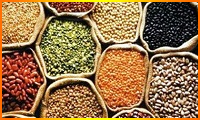
In a first, China s imports of pulses from India top $100 million.
China has stepped up purchases of pulses such as kidney beans and Kabuli chana (chickpea) from India in recent years to meet its growing demand. In the 2022-23 fiscal, China emerged as the biggest buyer of Indian pulses, displacing UAE, with the import value exceeding $100 million for the first time.
APEDA data reveal that Chinese imports of Indian pulses stood at $102.41 million during the April-January period of 2022-23 over $89.03 million in the entire 2021-22, a 15 per cent growth. During this period, India’s overall pulses exports increased to $476 million, an increase of 25 per cent over $379 million in the previous fiscal.
Chinese purchases of Indian pulses in sizeable quantities, which started during the Covid pandemic, have sustained and grown multi-fold over the past couple of years. There is a five-fold increase in the volume of pulses exports to China from India over the past four years, while in terms of value, they have more than trebled during the last three years ( see table).
Changing food habits
'China is coming up as a very big consumer of pulses in the past few years. Their food habits are changing and consumption is increasing year by year,' said Harsha Rai, Vice President – Sales at Mayur Global Corporation, an international broker of pulses.
Source: thehindubusinessline.com
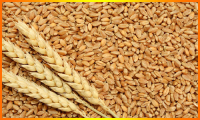
Despite unseasonal rains, India wheat output to be record high.
India’s wheat production is unlikely to drop from the estimated record high of 112.18 million tonnes (mt) despite unseasonal rains lashing many parts of the growing regions, according to an official assessment. However, wary over a possibility of drop in yield or lower realisation by farmers, the government has advised not to harvest in a hurry.
About 10 per cent damage is estimated in those areas that were affected by lodging after hailstorms and high-velocity winds in last few weeks, according to Agriculture Commissioner PK Singh. However, he said the rain has helped improve yield in the late-sown crop in regions where there have been no hailstorms and strong winds.
High moisture
According to Gyanendra Singh, Director of Karnal-based Indian Institute of Wheat and Barley Research (IIWBR), wheat production could have gone to 115-116 mt this year had there been no unseasonal rains as the crop was in good condition everywhere. 'We advise farmers to keep the crop get dried on the field as with high moisture the harvest will not get the normal rate. There is even a chance of damage if it remains with high moisture for a long time,' the director said.
He said currently there are reports of 20-22 per cent moisture and it will come down to 10-12 per cent in the field itself after which wheat can be harvested.
Almost entire North-west and Central India, where wheat is grown, have been receiving unseasonal rains accompanied by hailstorms and gusty winds sporadically in past few weeks due to the Western disturbances.
On Monday, the agriculture commissioner reviewed the crop situation with officials of the major wheat-growing States. The country had wheat acreage of over 34 million hectares (mh) this year.
MP, Rajasthan harvest
In Madhya Pradesh and Rajasthan, 80 per cent of the wheat crop has been harvested and the damage could be minimal there. The worry is about 75 per cent area in Uttar Pradesh, Punjab and Haryana which had early or timely sowing, officials said.
State governments have reportedly informed the Centre about crop damage in 0.52 million hectares in Madhya Pradesh, Rajasthan and Uttar Pradesh while Punjab and Haryana are yet to convey the actual damage to the wheat crop. Even in those damaged areas, the extent is not more than 15 per cent, officials said.
Source: thehindubusinessline.com