FSSAI notifies additional absorbency for olive oil under food additives norms.
The FSSAI has notified additional requirement of absorbency for olive oil under the regulation 2.2.1 through Food Safety and Standards (Food Products Standards and Food Additives) Second Amendment Regulations, 2023.
These requirements will be additional to the quality characteristics prescribed by the FSSAI and shall come into force on September 1, 2023.
According to the notification, the ‘Absorbency in ultra-violet at 270 nm for Extra virgin olive oil should be = 0.22 with delta K value at = 0.01, for Virgin olive oil it was set at = 0.25 & = 0.01, for Ordinary virgin olive oil = 0.30* (after passage of the sample through activated alumina, absorbency at 270 nm shall be equal to or less than 0.11) & = 0.01, for Refined olive oil = 1.10 & = 0.16, for Olive oil = 0.90 & = 0.15, for Refined olive-pomace oil = 2.00 & = 0.20 and for Olive-pomace oil, the absorbency in ultra-violet at 270nm was set at = 1.70 and the delta K value was set at = 0.18.
Also, the food authority has added provisions for moringa oil which is obtained from moringa seeds.
The parameters include refractive index at 40°c with limit of 1.4520 – 1.4680, saponification value at 167-192, iodine value at 65-70, and unsaponifiable matter not more than 1.5 per cent by mass 5 with acid value not more than 6.0.
Further, the amendment regulations prescribe standards for Solvent Extracted Crude Vegetable Oils (not for direct human consumption).
The regulations define ‘solvent extracted crude vegetable oils’ as vegetable oils extracted using food grade hexane from sources mentioned in standards of respective edible oils under sub-regulation 2.2.1 of the Food Safety and Standards (Food Products Standards and Food Additives) Regulations.
'These oils as such are not for direct human consumption and shall be refined before human consumption, which shall conform to the standards specified for refined vegetable oils laid down under clause 16 of regulation 2.2.1,' reads the notification.
Source: fnbnews.com
APEDA encourages exporters to increase exports of millets.
Exporters must utilise the opportunity of IYoM & increase the exports of millers, as Telagana is major millet producing state, said the Chairman, of APEDA Dr. M. Angamuthu.
He was speaking at an interactive meeting with exporters of Telangana state in the premises of its Regional Office in Hyderabad.
The chief further added that exporters can also promote unique products of the state like Neera, Palm fruits and its products like Jaggery, Honey and GI products like Banganapalli mango and natural and tribal products. He assured all support from APEDA.
Exporters from cereals, millets, processed food sectors and fruits sectors took part in the meeting and interacted with the Chairman of APEDA.
Senior officials of APEDA & other stakeholders like Directorate General of Foreign Trade, Export Inspection Agency, Plant quarantine were present in the meeting.
Exporters discussed the present status, export opportunities from the Telangana state, issues in exports and future export strategies to boost the exports from the state.
Source: knnindia.co.in
Tax refund scheme for exports may be extended beyond September.
The government is likely to extend the expanded duty remission scheme for exporters beyond the September deadline, providing relief to the pharmaceuticals, steel and chemicals sectors, said officials.
The Remission of Duties and Taxes on Exported Products (RoDTEP) scheme was expanded in December last year to include pharmaceuticals, chemicals and select steel products.
The commerce department had stipulated that the additional products would be eligible for tax refunds up to September 30, 2023. The department wanted to gauge if it had adequate budgetary outlay to fund the tax remission for the full financial year 2023-24.
The government now feels the budgetary allocation would be sufficient for the entire 2023-24, according to officials.
'Currently, the monthly refund claims under the RoDTEP scheme are about Rs.1,200 crore. So, the budgeted allocation of Rs.15,069 crore for FY24 should be enough to continue to extend this benefit to the sectors that were included later,' a senior official told ET on condition of anonymity.
However, if the department decides to further expand the scheme and include the entire iron and steel segment, it will require an additional Rs 1,000 crore for this fiscal, said the official.
In 2022-23, the government had disbursed Rs.13,699 crore through the scheme.
The government will review the scheme before September 30 and notify its decision, said the official.
Launched on January 1, 2021, the scheme refunds central, state and local levies incurred in the manufacture and export of products not covered by any other incentive scheme.
The move will help exporters of these goods as they compete for orders amid a demand slowdown in key developed markets. Exports of chemicals and pharmaceuticals, and select steel products, totalled $61 billion until February last fiscal year, constituting about 15% of the overall merchandise despatches, showed the official data.
The Foreign Trade Policy 2023 announced last week flagged timely tax remission for exporters, as it seeks to move away from any incentive-based regime. The RoDTEP scheme is compliant with the World Trade Organization (WTO) norms.
The expanded RoDTEP scheme covers 10,342 export products, against 8,731 earlier. The scheme is based on the globally accepted principle that exports can be exempt from taxes, and levies imposed can be refunded.
Experts see the remission scheme as critical to improving the country's export competitiveness and achieving the $1 trillion merchandise export target by 2030 from $447 billion in 2022-23.
Source: economictimes.indiatimes.com
Prime Minister Shri Modi has given a new identity to India - Shri Tomar.
Union Agriculture and Farmers Welfare Minister Shri Narendra Singh Tomar inaugurated the Startup Conclave-2023 organized by the Laghu Udyog Bharati in Gwalior today. On this occasion, Shri Tomar said that today we have come out of the slavery mentality of the British era, today the whole scenario has changed and this has become possible because of the Prime Minister Shri Narendra Modi.
Union Minister Shri Tomar said that there was a time when there was talent in our country and we were not able to recognize it. There was no environment for these talents to showcase their talent. This is the reason why the talented were getting frustrated with the country and they were forced to go abroad, but today it is not so. Prime Minister Shri Modi grasped this situation and created a positive environment in the country, due to which not only India but the whole world has changed.
Shri Tomar said that before 2014, there used to be only 31-32 Startups in the country, but today their number has increased to more than 6,500. In the Agriculture sector alone, their number is above 2,000. He said that today the whole world is recognizing the power of India and also accepting its stature.
Union Minister Shri Tomar said that under the leadership of Prime Minister Shri Modi, India's identity has been established in the whole world and India's position has also improved in the world. This is the reason why the Prime Minister of India could pause the war between Ukraine and Russia by saying that first let our citizens be evacuated, proving India's growing clout in the world affairs. Similarly, while introducing our Prime Minister, the US President Mr. Biden said that there is one sun, one world and one Modi, that reinstates India's pride of place in the world community.
The Startup Conclave was also attended by MSME Minister in the Government of Madhya Pradesh, Shri Omprakash Sakhlecha, Member of Parliament Shri Vivek Shejwalkar and office bearers of the Laghu Udyog Bharati, - National Organising Secretary Shri Prakash Chandra, National President Shri Baldevbhai Prajapati, All India General Secretary Shri Ghanshyam Ojha and All India Secretary Shri Sameer Mundra.
Source: pib.gov.in

Tamil Nadu is an engine of India s growth: PM Modi.
Prime Minister Modi Narendra Modi on Saturday said Tamil Nadu is one of India’s growth engines, and the Centre has been supporting the State’s infrastructure projects as he inaugurated and laid the foundation stone for Rs.5,200 crore worth of airport, highway, and railway projects in the State.
After launching the national highway road projects and unveiling plaques for new national highway projects in the State, Prime Minister Modi said Tamil Nadu’s development is a great priority for the Centre and the State has been allocated an all-time high budget of Rs..6000 crore this year for railway infrastructure.
'The average amount allocated to the State during 2009-2014 was less than Rs.900 crore. Also, the length of the national highway in the State was about 800 km during 2004-2014. But, between 2014 and 2023, nearly 2,000 km of national highway was added in Tamil Nadu. In 2014-15, the investment in the development and maintenance of the national highways in Tamil Nadu was around Rs.1,200 crore. In 2022-23, it increased six-fold to over Rs.8,200 crore, pointed out Modi.
Several projects
In the last few years, Tamil Nadu has seen several projects such as the defence industrial corridor and the recent PM-MITRA mega textile park, Bengaluru-Chennai Expressway, and the Construction of a Multimodal Logistics Park, among others. These will support the growth of the State while generating a huge number of jobs. 'I am sure the projects inaugurated today will also benefit the State and its people,' he added.
Thanking Prime Minister for inaugurating many development projects for Tamil Nadu, MK Stain, Chief Minister of Tamil Nadu, said the State government has been focusing on implementing various infrastructure projects to support the growth of the State. Amid a tight financial situation, the State government has improved its spending on infrastructure projects to Rs.44,365 crore now from Rs.33,068 crore earlier.
He requested Prime Minister Modi to expedite the ongoing road and railway projects in Tamil Nadu. He urged the Prime Minister to direct the NHAI to speed up ongoing road projects as the State is required to boost its infrastructure to support its economic growth. Stalin also urged Modi to announce new railway projects and allocate funds for the railway projects announced earlier.
Reiterating his earlier request for the Centre’s support for Metro Rail Projects in Tamil Nadu, Stalin requested the Prime Minister for the speedy approval of funds for the second phase of Chennai Metro Rail Project works and support the newly announced Metro rail projects for Madurai and Coimbatore also.
Source: thehindubusinessline.com
Stoutly defending. India argues at WTO in favour of its MSP scheme for foodgrain.
India has stoutly defended its minimum support price (MSP) scheme for foodgrain at the World Trade Organization arguing that its public stock holding programme (PSH) not only supported small and marginal farmers and fed the poor but also kept global prices in check ensuring food security for LDCs and vulnerable countries, an official said.
In a presentation on its PSH experience at a seminar at the WTO Agriculture Committee meeting on March 27-28, India’s representative explained how the programme was helping to keep global prices in check and had nothing to do with subsidised exports, the official tracking the matter told businessline.
'Some members keep attacking our MSP programme and say that our PSH subsidies affect food security of other countries. We said in our presentation that it is the other way round.
'Since we were maintaining these stocks, when the crisis (pandemic) came, we could feed (provide free foodgrains) to our 800 million plus vulnerable population. Had we not been maintaining our stock, we would have been dependent upon rest of the world,' the official said.
The Bali ‘peace clause’
Members are specifically attacking rice subsidies as India was the first country to use the Bali ‘peace clause’, which allows developing countries to breach the subsidy ceiling of 10 per cent for agriculture produce without being dragged to dispute by members, for rice.
'If you look at rice, the global export supplies in 2020-21 were 56 million tonnes, while we distributed 58 mt to 800 million people through PSH. So, India’s public distribution was more than global supplies. Had we required that 58 mt from outside, the prices of rice in global market would have skyrocketed. Everybody would have hiked their prices. Then food security of LDCs and vulnerable would have been actually hit,' the official said, adding that some rice exporting countries were disappointed that prices did not spike during the crisis.
New Delhi also struck off demands made by some countries seeking procurement data and information for all food crops that were under MSP. 'India will certainly not share information on any crop other than rice where the actual subsidy cap breach has happened. The Bali agreement only seeks information for the item for which the peace clause has been invoked,' the official said.
The peace clause, which is saddled with a lot of tough notification requirements and conditions such as not affecting food security of other members, was invoked by India for rice support provided in 2018-19 and 2019-20.
Nine countries, including the US, Australia, Canada, Thailand, Brazil, Japan, New Zealand, Paraguay and Uruguay, sought consultations with India over the use of the peace clause and have been seeking a lot of information.
While some, including the US, have been accusing India of habitually not including the full required information in its notifications, some members have indicated that the country did not have an adequate monitoring mechanism to ensure no stocks were exported.
'There were certain areas, where India has said it will provide information at a later date as it was not available. We cannot cook it for them. We are anyway notifying what is required as per the notification requirement of the AoA (Agreement on Agriculture). If they are not satisfied, we can’t help it,' the official said.
Concerns around exports
On concerns around exports of subsidised rice, the official said India procured common paddy under PSH while it exported premium rice.
The nine countries will continue holding consultations with India on its PSH programme as they were entitled to under the peace clause.
Source: thehindubusinessline.com
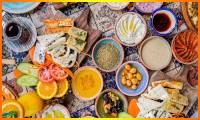
National Food Conclave in Hyderabad on April 28-29.
The Telangana government will host a Food Conclave-2023 on April 28 and 29. The annual brainstorming event is expected to host 100 thought leaders from the agri-food industry.
'They will have intense deliberations to identify the key challenges and opportunities for the growth of the Indian agri-food sector in this decade,' a senior government official said.
The event will have five thematic tracks covering agriculture (green), edible oil (yellow), dairy (white), meat and poultry (pink), and aquaculture (blue).
'We are collaborating with the World Economic Forum-India, Indian Vegetable Oil Producers Association (IVPA), Indian Dairy Association, Heifer International, and Society of Aquaculture Professionals to conduct these sessions. 'The conclave will have 27-panel discussions, five roundtables, and more than 40 one-on-one meetings between government and industry leaders,' a senior leader from the organising committee said.
'The current global situation presents a unique set of challenges and potential opportunities. It, however, will take a coordinated and calculated effort to capitalise on these opportunities for the State and country,' he said.
He asked key stakeholders to get together and chart out a clear path to cash in on the opportunity. 'Through this event, we intend to create such a platform,' he said.
Source: thehindubusinessline.com
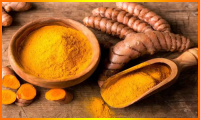
Turmeric gained as export demand is good.
Turmeric yesterday settled up by 0.46% at 7014 on short covering as export demand is good amidst lukewarm domestic demand. Turmeric harvesting has started in the key growing regions and farmers and stockists are releasing their stocks, in the fear of further decline in prices. In the AP (Nizamabad) Turmeric market around 5,000-7,000 bags are arriving on an average daily basis. In the Erode spot market 400-600 bags are reported daily, In the Sangli district it is around 3500-7000 bags. Coupled with weak demand in the export and domestic markets prices are trading at lower levels (in the current season).
Turmeric exports during Apr-Jan 2023, rose by 7.76 percent at 1,36,492.59 tonnes as compared to 1,26,659.01 tonnes exported during Apr-Jan 2022. In January 2023 around 12,484.25 tonnes of turmeric was exported as against 12,039.57 tonnes in December 2022 showing a rise of 3.69%. In January 2023 around 12,484.25 tonnes of turmeric was exported as against 10,558.26 tonnes in January 2022 showing a rise of 18.24%. Production of spices in India is likely to have declined 1.5% on year to 10.9 mln tn in 2021-22 (Jul-Jun), according to data from Spices Board India. The country had produced 11.0 mln tn of spices in the previous year. The Spices Board has pegged turmeric production at 1.33 mln tn, up 18.4% on the year. In Nizamabad, a major spot market in AP, the price ended at 6956.25 Rupees gained 55.2 Rupees.
Technically market is under fresh buying as the market has witnessed a gain in open interest by 15.15% to settle at 7980 while prices are up 32 rupees, now Turmeric is getting support at 6974 and below same could see a test of 6934 levels, and resistance is now likely to be seen at 7052, a move above could see prices testing 7090.
Source: in.investing.com
Banarasi Langda mango, Banarasi paan are latest entrants to GI tag club.
Famous Banarasi paan and langda mango of Varanasi have entered the Geographical Indication (GI) list recently. As many as 33 products were granted GI certification on March 31 by the GI Registry, Chennai, as per news reports. Among them, 10 belonged to UP, including two from Varanasi.
Besides, Banarasi paan and langda mango two more products from the region, Ramnagar Bhanta (brinjal) and Chandausi's adamchini chawal (rice) were given the GI tags.
As per the GI Registry list, the newly added items from Varanasi include Aligarh Tala, Bakharia Brassware, Banda Shazar Patthar Craft, Nagina Wood Craft, Pratapgarh Aonla, and Hathras Hing.
A geographical indication (GI) tag is a sign used on locally produced products that have a specific geographical origin and possess qualities that are due to that origin. A product can be given a GI tag if it is a specialty of a given place.
The tags were first introduced in 2003, wherein Darjeeling Tea was the first Indian product to get a GI tag.
The GI tag recognition is a significant achievement for the people associated with the production and trade of these crops. Talking about the GI tags, Dr Rajnikant, a GI specialist, told India Today: 'All four products are related to agriculture and horticulture. The National Bank for Agriculture and Rural Development and the Uttar Pradesh government have played a pivotal role in the process to obtain the GI tags. '
He added that over 20 lakh people are involved in the trade of the four products with an annual business of approximately Rs 25,500 crore.
Earlier, two varieties of betel leaf were given the tag from the GI Registry. The first is the Maghai paan from Bihar, a distinctive variety grown in four districts of the state, which fetches a high price.
The second is the Mahoba Desawari paan, which grows in the Mahoba district of Uttar Pradesh and Chhatarpur in Madhya Pradesh.
More GI tags
In the last few years, the Uttar Pradesh government with its One District One Product (ODOP) scheme is trying to promote the special products of the region, such as Banarasi sarees and metal crafts, and obtain GI tags for them.
Some of the 15 handloom and handicraft items, which already have the GI tag, are Banaras Brocade and Banarasi Saree, wooden toys, metal repoussé craft items, soft stone Jali craft, Gulabi Meenakari, hand block print, wood carving and glass beads produced by local craftsmen living in different areas of Varanasi.
PM Narendra Modi, who represents the Varanasi constituency, has been trying to push local Varanasi products at the international level. During his to the G7 summit, he gifted GI products, including Banarasi Gulabi Meenakari and wood carving, to foreign dignitaries.
Source: businesstoday.in

India may consider dairy products' import on tight supply amid stagnant milk output: Government.
The country may look at importing dairy products if needed as there is a supply constraint for such items due to milk production remaining stagnant in the last fiscal, a top government official said on Wednesday. The government will intervene to import dairy products like butter and ghee, if required, after assessing the stock position of milk in Southern states, where the flushing (peak production) season has started now, he added.
Milk output in the country stood at 221 million tonne in 2021-22, up 6.25 per cent from 208 million tonne in the previous year, as per the official data.
Addressing a press conference, Animal Husbandry and Dairy Secretary Rajesh Kumar Singh said the country's milk production remained stagnant in the 2022-23 fiscal due to lumpy skin disease in cattle, while the domestic demand grew by 8-10 per cent in the same period because of a rebound in the post-pandemic demand.
'There is no constraint in milk supply as such in the country...There is an adequate inventory of skimmed milk powder (SMP). But in the case of dairy products, especially fats, butter and ghee etc, the stocks are lower than the previous year,' he said.
The government will intervene to import dairy products like butter and ghee, if required, after assessing the stock position of milk in Southern states, where the flushing (peak production) season has started now, he said.
Singh, however, observed that the imports may not be beneficial at this point in time as international prices in recent months are ruling firm.
'If global prices are high, there is no point in importing. We will assess the flush season in the rest of the country and then take a call,' he said.
The shortage will be less in north India where the lean season has been postponed with temperature cooling down due to untimely rains in the last 20 days, he added.
According to the secretary, the country's milk output remained stagnant due to the impact of lumpy skin disease that killed 1.89 lakh cattle last year and the post-pandemic rebound in milk demand.
'The impact of lumpy skin disease on cattle can be felt to the extent that the total milk production is a little stagnant. Normally, milk production has been growing at 6 per cent annually. However this year (2022-23), it will be either stagnant or grow at 1-2 per cent,' Singh said.
Since the government takes into account the milk production data of the cooperative sector and not the entire private and unorganised sector, 'we assume it will be stagnant,' Singh said.
It is a true rise in fodder prices that has led to milk inflation. There is a problem in fodder supply as the fodder crop area has remained stagnant in the last four years, while the dairy sector has been growing annually at 6 per cent, he added.
India last imported dairy products in 2011.
Source: economictimes.indiatimes.com