
Kohima, Nagaland to host fourth B20 conference of the Northeast Region from 4th-6th April 2023.
B20 Conferences in the North East Region of India in partnership with the Confederation of Indian Industries (CII), Department for Promotion of Industry and Internal Trade (DPIIT), Ministry of External Affairs and North Eastern State Governments under India’s G20 Presidency have been organized for exploring partnerships among business communities. The conferences would aid the development of critical sectors of the economy in the North East and would facilitate economic growth.
The B20?is the official G20 dialogue forum representing the global business community. It is among the most prominent engagement groups in G20, with companies and business organizations as participants.
The Northeast region of India has been of significant focus for B20 India Initiatives, with four conferences planned across the region to showcase the vast potential and opportunities within the region. The first three conferences held in Imphal, Aizawl, and Gangtok have been successful in their objective of highlighting the untapped potential of the Northeast.
Opportunities for Multilateral Business Partnerships in Agriculture and Food Processing, Tourism, and Information Technology will be the main theme of the forthcoming conference, which will take place in Kohima, Nagaland, from April 4–6, 2023. On this theme, addresses and plenary sessions will be held at the conference, along with business to business (B2B) and business to government (B2G) meetings. The state administration will bring attention to the major developments and activities in these fields while highlighting investment opportunities.
After the delegates arrive on the initial day of the three-day conference, dinner and a cultural program will take place at the Capital Cultural Hall. The B20 conference will be held on day two, followed by B2B and B2G meetings. The state government has also organised excursions and site visits. This includes a tour of the mini-Hornbill festival, an excursion to a WWII museum and a visit to a Heritage Village, Kisama Village. The third day will bring the event to a close with a trip to the Kohima War Cemetery and the departure of the participants from Kohima.
Source: pib.gov.in

Rupee widens global footprints as India, Malaysia agree to trade in Rs..
India and Malaysia have announced a major breakthrough in their bilateral trade relations. The two Asian countries can now settle trade in Indian Rupee (INR) in addition to the other currencies currently in use.
In July last year, the Reserve Bank of India (RBI) made the announcement to allow merchants to trade in INR with other countries with the aim of supporting the growth of global trade and the interests of the global trading community in INR.
The announcement comes a day after India’s ministry of commerce launched the Foreign Trade Policy (FTP) 2023, with the intention of making the rupee a global currency. This is a significant move towards India’s goal of increasing the acceptability of the rupee in the international market.
A currency is deemed to be “international” if it is widely acknowledged as a medium of exchange across the globe. While India has been successful in conducting trade in rupee with a limited number of countries, it is actively collaborating with several others to extend its reach.
India International Bank of Malaysia (IIBM) has operationalized the mechanism by opening a special Rupee vostro account through its corresponding bank in India, the Union Bank of India. This mechanism is expected to benefit traders on both sides as they can directly trade in INR and save on currency conversion spreads.
The facility enables exporters and importers from India and Malaysia to invoice trade in INR, resulting in better pricing for goods and services traded. IIBM has said it will facilitate traders in Malaysia for settlement of this trade in INR. Banks from 18 countries have opened 30 special vostro accounts for trade in INR, with Sberbank and VTB Bank, the largest and second-largest banks of Russia, respectively, being the first foreign lenders to receive approval.
The new mechanism is also aligned with Malaysia’s Foreign Exchange Policies (FEP) which allows Malaysian banks to undertake settlement of international trade in goods or services in any foreign currency, subject to the rules and regulations of Bank Negara Malaysia.
The development of trade between India and Malaysia in INR is an indication of the growing acceptance of the currency internationally. India has been able to conduct rupee-denominated trade with a few nations and is working closely with several others to expand it. The move towards making the rupee an international currency will give Indian businesses a competitive advantage in the global market.
The new mechanism will also reduce transaction costs and currency risks for traders, making trade between India and Malaysia more attractive. It is expected to boost economic activity between the two countries and provide a major fillip to their trade relations.
Source: newindian.in
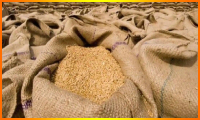
India plans to relax wheat procurement norms to replenish stocks.
India has been planning to relax norms to procure wheat from farmers amid untimely rainfall and hail which damaged the crop just before harvesting in key producing central and northern states, government officials and traders told Reuters.
The world's second biggest wheat producer plans to buy 34.15 million tonnes of new-season wheat from local farmers to shore up state reserves after purchases dropped 53% last year to 18.8 million tonnes because of a poor harvest.
New season wheat has started arriving on the market, but the harvest has lost lustre in some districts because of the recent rainfall, said a senior government official, who declined to be named.
'We have allowed Madhya Pradesh state to procure wheat even with 10% loss in lustre. If required we would take call for other states and other parameters such as moisture,' the official said. The source didn't wish to be identified in line with official rules.
Madhya Pradesh is the second biggest producer of wheat after Punjab.
Wheat crop has also been damaged in Punjab and Haryana because of rainfall in the past few days and the government would be forced to make similar changes in the procurement rules for these states, said a New-Delhi-based trader with a global trade house.
Punjab, Haryana and Madhya Pradesh accounted for more than 98% of the total wheat procured in 2022.
Crop with lower lustre was getting sold at a big discount to good quality crop in the market and the government buying would stop this distress sale, the trader said.
The state-run agencies have procured 260,000 tonnes of wheat from farmers as on April 2, up from the last year's 46,000 tonnes, another government official said.
'Buying would gain momentum in the next few weeks. It didn't pick up desired momentum because of rainfall,' the official said.
The government-backed Food Corporation of India (FCI) buys wheat from farmers at state-set prices to run the world's biggest food welfare programme.
Source: economictimes.indiatimes.com
Goods exports touch $447 billion in FY23, says Minister Piyush Goyal.
India's goods exports touched $447 billion till the last count for 2022-23 fiscal year against $422 billion in 2021-22, commerce and industry minister Piyush Goyal said on Tuesday.
The final export and import data for 2022-23 would be released by mid April. At present, the ministry is in the process of collating the data. The trade data for goods comes with a lag of about 15 days and in the case of services data, it is 45 days.
Goyal said services exports are estimated to cross $320 billion in 2022-23.
Growth in merchandise goods would be around 6% for the last fiscal, he said, adding that it has grown from '$422 billion to $447 billion at last count (as the) final numbers are still awaited'.
He said the country's exports are growing despite global challenges such as rise in raw material prices, restrictions in exports of certain products like wheat and Russia-Ukraine war.
'The final numbers (exports of goods and services will be closer to $765 billion... I would not be surprised if we actually go up to $772 billion which we figured while drawing the road map for $2 trillion of exports by 2030,' the minister said.
If the data reaches $772 billion, Goyal said, 'then, I will probably reset the $2 trillion target also'.
Speaking at an event, he also said that the express delivery services sector had huge potential for growth in India.
'To bridge the cost in logistics, we need to look at scale, efficiency and the building blocks through technology,' he added.
Going by the strong foundation which the government is building in terms of high expenditure for developing modern infrastructure, internationalisation of trade , free trade agreements and growth in exports of goods and services, the economy may reach $35-40 trillion by 2047, he added.
Source: economictimes.indiatimes.com
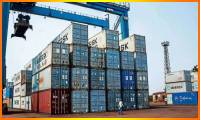
Agri exports up 6.04% during April 22-Jan 23, Parliament told.
The Ministry of Commerce and Industry has told Parliament that during the current financial year (April 2022 – January 2023), the agricultural exports have registered an increase of 6.04% amounting to USD 43.37 billion over the exports of USD 40.90 billion during the corresponding period of the previous financial year i.e April 2021 to January 2022.
However, during the financial year 2021- 22, India’s agricultural export touched the highest ever level of USD 50.21 billion.
The statement of Commerce Ministry added that the Government has been monitoring export performance including that of agricultural and processed food products in the current financial year i.e. 2022-23 vis a vis 2021- 22 however no targets have been fixed yet for export for the year 2023-24.
According to the Ministry, the Government is utilising the District as Export Hub (DEH) Initiative to achieve the objectives of Agriculture Export Policy. Under the DEH initiative, products including agricultural and processed food products with export potential have been identified in all 733 districts across the country and a State Export Strategy has been prepared in 28 States & UTs.
'To address the issue of stakeholders’ participation in the decision-making process for export promotion activities, the Department of Commerce has established Export Promotion Forums (EPFs) for individual products under the aegis of the APEDA. The EPFs have representation from trade/industry, line ministries/departments, regulatory agencies, research institutes, state governments etc. In all 9 EPFs have been formed for rice, banana, grapes, mango, onion, dairy products, nutri-cereals, pomegranate and floriculture respectively,' reads the statement by the Ministry of Commerce.
The ministry stated that APEDA has also played an important role in opening of new markets for agricultural products in the recent past such as Canada, China, South Korea, Taiwan, Portugal, Indonesia and Iran.
Source: fnbnews.com

Government to identify 100 districts to develop as export hubs: DGFT.
The government will identify close to 100 districts across the country to turn them into export hubs by adopting a 'bottom-up approach', Director General of Foreign Trade (DGFT) Santosh Kumar Sarangi said on Friday.
'Our idea is to involve more youngsters at the district level (like collectors) so that they see the initiative to boost export as a core function, and not a peripheral function,' Sarangi said.
The phase one of the plan will cover 75-100 districts, which could go up in the next leg.
It will focus on both goods and services exports, and will cover multiple products or services, unlike the One District One Product programme, Sarangi said.
AMNESTY FOR EXPORTERS
The special amnesty scheme for default in export obligations proposed in the new Foreign Trade Policy (FTP) will allow pending cases to be settled by exporters by paying customs duties that were exempted in proportion to their unfulfilled export obligation, the DGFT said.
No interest will be charged on the exempted portion of additional customs duty or the special additional customs duty.
Entities that were unable to meet their export obligation after importing inputs or capital goods at zero duty under the Advance Authorisation and the Export Promotion Capital Goods (EPCG) schemes will be able to tap this window. It will remain open for six months through September 2023.
The scheme is along the lines of the 'Vivad se Vishwas' initiative of the government, which sought to resolve tax disputes amicably.
CLEARING DUES TO EXPORTERS
The government will likely incur a 'notional saving' of Rs.7,000-8,000 crore from its allocation of Rs.56,027 crore announced in September 2021 to clear all the pending dues owed to exporters until FY21 under various schemes, Sarangi said.
The DGFT has already cleared about Rs.42,000 crore of dues so far. Arrears in respect of disputed cases are yet to be settled, while most other pending claims have been cleared, , he said.
The dues amount is being disbursed in the form of scrips. The exporters can use these scrips to pay import duties or can sell these to importers who, in turn, can use them to pay the customs duties. So, these are 'notional gains' for the government, the DGFT explained.
FTP'S GREEN PUSH
In a green push, electric vehicles, vertical farming equipment, waste water treatment, rain water harvesting systems, and green hydrogen will be eligible for reduced export obligation requirement under the EPCG scheme, as per the new Foreign Trade Policy.
Source: economictimes.com

India's farm exports likely to touch record $56-57 billion: Official.
Agriculture exports are expected to touch a new record of $56-57 billion in the 2022-23 financial year, a senior commerce ministry official said on Friday. 'We reached $50 billion in FY22 and are confident of easily surpassing that to touch $56-57 billion in FY24 as except for cashew, all other components have done well,' the official said on the sidelines of a press event on Friday to mark the re
Source: business-standard.com
Geographical Indication. European Commission grants GI tag for Himachal s Kangra tea.
The European Commission (EC) has granted protected geographical indication (PGI) for India’s unique Kangra tea, which is grown in Himachal Pradesh’s Kangra district.
The EC notified granting PGI on March 22 and this will come into effect from April 11, 2023.
The granting of PGI for Kangra tea comes at a time when the EC has been dragging its feet on granting a similar status to Basmati rice. India had filed for the GI tag in 2018 but the European Union (EU) wants India and Pakistan to hold talks so that the latter’s Basmati rice also gets due recognition. However, Islamabad is far off from meeting the requirements.
No ‘statement of opposition’
In its notification, the EC said it was granting the PGI as it had not received any 'statement of opposition' and hence it 'should therefore be entered in the register'.
Grown since the mid-19th Century, Kangra tea is known for its unique flavour and taste. It is available as black and green teas.
According to the Tea Board, Kangra tea is grown at an elevation ranging from 900 to 1,400 metres above sea level with the annual rainfall being 270-350 cm.
Unique characteristics
'For Kangra, the ‘Valley of Gods’, nothing less than the majestic Dhauladhar mountain range could have served as the backdrop. And to toast its beauty, there is nothing finer than Kangra tea,' the Board says about one of India’s finest teas.
The climate, the characteristic terrain and soil conditions, and the coolness of the snow-clad mountains in the Kangra region all play a role in crafting a delightfully distinct cup of quality tea.
'Particularly the first flush with an aroma and flavour has an unmistakable tinge of fruitiness,' the Board says.
The history of Kangra tea dates back to 1849 when Dr Jameson, then superintendent of the Botanical Tea Gardens, pronounced the region ideal for tea cultivation.
Being one of India’s smallest tea regions makes Kangra green and black teas all the more exclusive.
'While the black tea has a sweet lingering after-taste, the green tea has a delicate woody aroma. The demand for Kangra tea has been increasing steadily and much of it is bought by natives and exported to Kabul and Central Asia via Peshawar,' it says. Kangra tea is a registered Geographical Indication (GI).
According to the Tea Board, Kangra tea is a little milder than Darjeeling tea in terms of flavour and has more body and liquor.
Source: thehindubusinessline.com
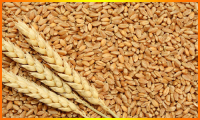
Centre relaxes wheat procurement norms in Madhya Pradesh.
The Centre has relaxed norms for procuring wheat in Madhya Pradesh with a rider that payment should be lower than the minimum support price (MSP) of Rs.2,125/quintal if the grain has a lustre loss of more than 10 per cent. No other State government has requested any relaxation in quality norms after unseasonal rains and hailstorms hit several parts of the wheat-growing States.
In a communication to the Principal Secretary (Food) in Madhya Pradesh, Viswajeet Haldar, a deputy commissioner in Food Ministry, said, 'In order to reduce the hardship of farmers and to avoid distress sale, it has been decided to procure wheat in Madhya Pradesh' with certain relaxations in Uniform Specifications during the 2023-24 marketing season (April-March).
The Ministry said there will be no 'value cut' for lustre loss of up to 10 per cent, and a flat 25 per cent reduction from 1 per cent of MSP on lustre loss10 to 80 per cent. Thus, for every quintal of wheat with more than 10 per cent lustre loss, the farmer in MP will receive Rs.5.31 lesser than the MSP.
Uniform specifications
According to the Uniform Specifications approved by the Food Ministry, wheat to be purchased should have natural size, shape, colour and lustre. It further said the grain should be sweet, clean, wholesome and free from obnoxious smells, discolouration, admixture of deleterious substances, including toxic weed seeds, and all other impurities, except to the extent provided separately.
For fair and average quality (FAQ) wheat, the maximum permissible limit for foreign matter is 0.75 per cent, other foodgrains 2 per cent, damaged grains 2 per cent, slightly damaged grains 4 per cent, shrivelled and broken grains 6 per cent, and moisture up to 12 per cent.
Meanwhile, official data shows wheat procurement in the State has touched 98,485 tonnes in three days since purchase under MSP started on March 28. On the other hand, arrivals between March 15 and March 30 stood at 7.81 lakh tonnes (lt). The average mandi prices are ruling between Rs.1,800/quintal and Rs.2,260/quintal, which traders attributed to higher than normal moisture.
The State aims to purchase 80 lt for the Central Pool this season. In the 2022-23 season, purchase dropped to 46.03 lt, against the target of 129 lt, whereas procurement was over 128 lt during 2021-22.
According to traders, a similar allowance for wheat procurement was made in 2002-03 by the Centre.
Source: thehindubusinessline.com

Jammu & Kashmir s agriculture, allied sectors get Rs 3156 Crore.
An amount of over Rs 3100 crore has been allocated to Jammu and Kashmir agriculture and allied sectors in order to increase farmer income, ensure food security and to accelerate the Union Territory’s economic growth, said an official release on Friday.
The announcement of the amount came days after the Parliament passed the ‘The Jammu and Kashmir Appropriation (No 2) Bill, 2023’ in the Union Budget.
'To create an enabling environment for transforming JandK agriculture and allied sectors in order to increase farmer income, ensure food security and accelerate UT’s economic growth, Rs 3156 crore has been allocated in Budget 2023-24,' said an official release from the Department of Information and Public Relation JK.
According to the release, a Holistic Agriculture Development plan (HADP) will be rolled out, with 29 proposed projects at an outlay of Rs 5012 crore over a period of the next five years.
Speaking on the initiative, an official said, 'The novel initiative will create additional job opportunities for 2,87,910 people in agriculture, horticulture and allied sectors besides 18,861 new business enterprises will be created over the period of next five years.'
'To empower the farmers to store their produce for better returns, the government will create 67000 Metric tons of Controlled Atmosphere (CA) storage capacity,' said the release.
As per the release, Jammu and Kashmir government is encouraging and aiding private players to set up cold storage (CA) facilities in order to reduce post-harvest losses by increasing the shelf life of various agriculture and horticulture products, as well as to address the issue of distressed crop sales by farmers.
The government has taken several concrete steps to increase agriculture and horticulture production, as well as to improve crop quality, with a special emphasis on post-harvesting management infrastructure, particularly in the private sector,' further read the release.
Highlighting the government’s initiative to promote beekeeping in the state, the release said, 'Jammu and Kashmir’s government has launched a Rs 46.65 crore for `Promotion of Beekeeping’ project to triple the honey production over the next five years.'
'Monitoring and traceability will be done through Governance Innovation (GI) labs. 20 Custom Hiring centres (CHCs) will be also established to extend pollination facilities. Jammu and Kashmir will have a full-fledged centre of excellence for constancy, capacity building, and post-harvest management,' the release said.
Under the project, the value addition of honey is also being envisioned coupled with efficient growth of the bee sector using native honey bees.
Informing about investment in fish farming, the release said, 'To make fish farming a prosperous sector, the UT government has approved Rs 176 crore project to boost fish production.'
'The project involves importing genetically improved fish seed, upgrading existing hatcheries and fish rearing units, introducing species diversity in aquaculture through RandD, and commercializing trout and carp fish production using modern technologies such as Recirculatory Aquaculture System (RAS) and Biofloc and is estimated to double trout and carp production over the next five years,' added the release.
Talking about the dairy sector, the release said, 'Dairy is the biggest component of livestock husbandry and plays a pivotal role in sustaining agriculture income and acts as a growth engine for agriculture, allied sectors in JandK.'
'The milk production is expected to reach 45 Lakh metric tons from 25 Lakh metric tons over the next five years and will be achieved through a range of measures, including the expansion of breeding coverage and increasing per-animal productivity,' added the release.
'One of the key elements of the dairy under the HADP project is to increase per-animal productivity from 2400 litres to 4300 litres, which is a significant increase. This will be achieved through various interventions, including the expansion of Artificial Insemination (AI) centres from 1389 to 2189,' added the release further.
Source: theprint.in